
When your double glazed windows start showing signs of wear and tear, getting them repaired quickly is key to keeping your home comfortable and your energy bills in check. A timely fix for things like condensation or drafts can stop a small issue from becoming a major headache, potentially saving you the cost of a full window replacement down the line.
Your Guide to Spotting a Failing Double Glazed Window
Think of your double glazing as your home's invisible shield, quietly protecting you from the elements and outside noise. But like any shield, it can weaken with age. Learning to spot the early warning signs of failure is a bit like a regular health check-up for your windows—it lets you catch problems early before they start affecting your home’s comfort and efficiency.
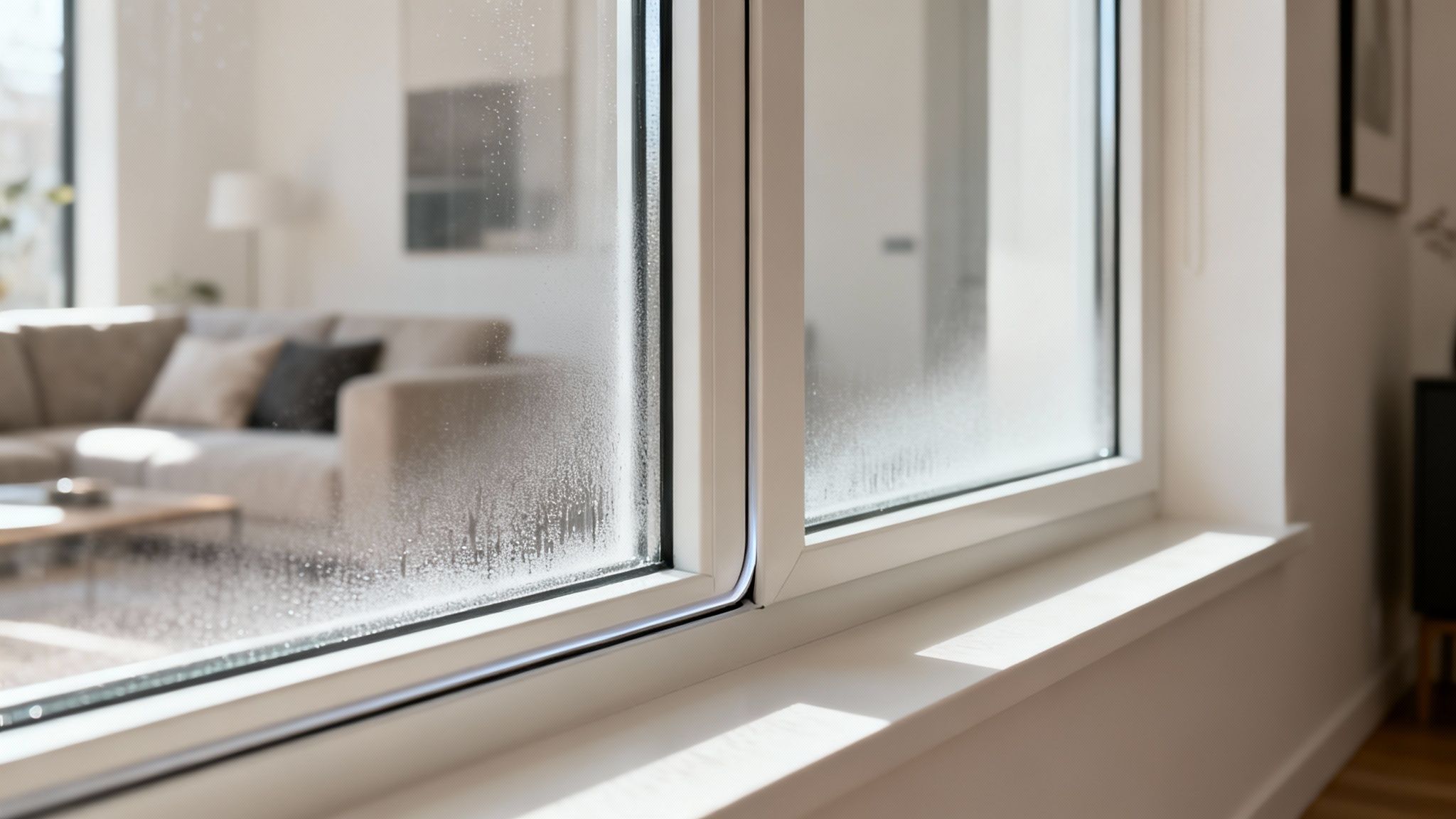
This is especially true with Australia’s diverse and often harsh climates. We’re seeing a growing need for double glazing repairs across the country as older installations start to fail. Common issues, particularly moisture trapped between the panes, have a direct impact on how your home feels and how much energy it uses.
In coastal areas like Sydney, for example, the combination of high humidity and salt-laden air can really speed up the breakdown of window seals. It's not uncommon to see problems emerge after just 10 to 15 years. Getting these issues sorted promptly doesn't just prolong the life of your windows; it also keeps your home up to standard.
The Telltale Signs of Window Failure
So, what exactly should you be on the lookout for? The key is to spot the problem before it gets serious. Think of yourself as a detective, searching for clues that your windows need a professional eye.
The most glaringly obvious sign is that milky, foggy look or condensation trapped between the two panes of glass. This means the airtight seal has been compromised, letting moist air seep into the gap. It’s more than just an ugly view—it's a clear signal that the insulating gas has escaped, and your window's energy efficiency has plummeted. If you're dealing with this, you can learn more about what causes it and how to fix it in our guide on foggy double glazing.
Another dead giveaway is a noticeable draft. If you can feel a chill coming off a window even when it's shut tight, the seals have likely shrunk or cracked, creating a tiny pathway for outside air to sneak in.
A Quick Diagnostic Guide
To make things easier, we've put together a simple table to help you match what you're seeing with what it likely means.
| Quick Guide to Diagnosing Window Problems | ||
|---|---|---|
| Symptom | What It Looks Like | What It Means |
| Condensation or a 'foggy' haze | Moisture, droplets, or a milky film trapped between the glass panes. | The airtight seal has failed, allowing humid air in. The insulating gas is gone. |
| Drafts | A noticeable cold spot or a breeze coming from a closed window. | The seals around the glass or the window frame have degraded or shrunk. |
| Increased noise | Street sounds like traffic or conversations seem much louder than before. | The sound-dampening qualities are lost because the insulating gas has escaped. |
| Physical damage | Cracks, chips, or water stains on the sill or surrounding walls. | The glass integrity is compromised, or the seals are allowing water to leak in. |
| Stiff or difficult operation | The window is hard to open, close, or lock properly. | The frame might be warped, which can strain and break the glass seal. |
This table is a great starting point for figuring out what's wrong with your windows and what your next steps should be.
Auditory and Physical Clues
Don't just rely on your eyes; your ears can be a great diagnostic tool as well. Has the outside world suddenly gotten a lot louder? If you’re hearing more traffic or your neighbours' weekend plans in detail, it’s a strong hint that your window's soundproofing has failed. The inert gas in a healthy double glazed unit is a fantastic sound barrier, and when it’s gone, you’ll notice the difference.
Finally, give the window a physical inspection. Keep an eye out for:
- Visible cracks or chips: Even a tiny impact can compromise the whole unit's integrity and break the seal.
- Water leaks: Puddles on the windowsill or water stains on the wall are major red flags that point to a serious failure.
- Difficulty opening or closing: If a window jams or won't shut properly, the frame itself could be warped. This stress can easily break the airtight seal of the glass unit.
By being aware of these warning signs, you can make a smart, informed decision about when it’s time to call in the professionals for double glazing repairs and keep your home the comfortable sanctuary it should be.
So, Why Does Double Glazing Fail?
Figuring out why your double glazing has given up the ghost is the first real step to getting it fixed properly. The best way to think about it is to picture the seal on your fridge door. If that seal is broken, it can't keep the cold in and the warm out. It’s the exact same principle with your windows – once that airtight seal is compromised, your window just can't insulate your home effectively anymore. Several things can cause this critical seal to break down.
More often than not, the main culprit is simply age. The sealant holding the two panes of glass together and creating that insulating gap gets old, brittle, and eventually cracks. This whole process gets a serious hurry-up from our harsh Australian climate. The constant cycle of expansion in the blazing summer sun and contraction during cooler nights puts a huge amount of stress on those window seals, day in and day out.
What Usually Causes the Seal to Break?
Here in New South Wales, we see a few common culprits responsible for most double glazing repairs. Each one plays a part in slowly wrecking your window’s ability to insulate.
- Sun Damage: That relentless Aussie sun is a killer for sealants. Over the years, UV exposure breaks them down, making them lose their elasticity until they just give up.
- A Dodgy Install: If a window isn't put in perfectly square and level, the frame twists and puts uneven pressure on the glass unit itself. This is a surefire way to cause a seal to fail long before its time.
- Physical Knocks: It doesn't take much. A stray cricket ball or even a bump while you're whipper-snipping can create a tiny, almost invisible fracture that's enough to break that all-important airtight seal.
- Warping Frames: Timber frames are notorious for warping if they get damp. Even aluminium frames can distort with the extreme temperature swings we see, and both can put enough pressure on the glass to break the seal.
At Awesim, we're not just about patching up the problem you can see. We dig deeper to find the root cause, making sure our repairs last. This is especially crucial for homes in rural NSW, which face their own unique set of environmental challenges.
The Tyranny of Distance: Rural Properties and Repair Headaches
If you live out in a remote or rural part of New South Wales, you’ll know that getting quality repairs for your double glazing comes with a whole extra layer of difficulty. It’s one thing to find a technician who knows what they're doing; it’s another thing entirely to get them, their tools, and the right materials out to your property without it turning into a logistical nightmare. Your average service van just isn't built for rough terrain or covering huge distances, which often leads to frustrating delays and half-baked jobs.
This is a problem we’ve specifically geared up to solve. We have a 10 tonne 4×4 truck to bring in materials and supplies for the most remote properties around New South Wales, allowing us to bring in labour, materials and equipment where and when it's needed the most. This unique setup means that no matter how far out you are, you get the same top-tier, efficient service without any of the logistical dramas. We get your double glazing repairs done right, on-site, when you need it.
Deciding Between DIY and Professional Repair
When you spot trouble with your double glazed windows, it’s natural to want to grab your tools and have a go yourself. For some very minor issues, a DIY approach can work just fine. But with double glazing, it's crucial to know when to step back and call in an expert. Getting it wrong can turn a small fix into a costly mistake.
Simple upkeep is usually well within a homeowner's ability. A stiff hinge or a sticky lock, for instance, can often be sorted out with a bit of lubricant. Clearing leaves and grime from the window tracks is another easy job that can make a big difference to how smoothly they operate. These are the kinds of quick fixes that don't mess with the window's core structure.
When to Call the Professionals
Everything changes, however, when the problem is with the sealed glass unit itself. Replacing a failed Insulated Glass Unit (IGU)—that’s the technical name for the double-paned glass panel—is absolutely not a weekend DIY project. Think of it more like minor surgery on your home; it needs specialised tools, exact measurements, and the right expertise to get a perfect, airtight seal and restore your window’s insulating power.
Trying this yourself without the proper skills is asking for trouble. Here’s what can easily go wrong:
- Incorrect Measurements: Being out by even a millimetre means the new unit won't fit or seal properly, and you've just wasted your money.
- Damage to the Frame: Trying to pry out the old unit without the right equipment can quickly damage the surrounding uPVC, timber, or aluminium frame.
- Improper Sealing: A professional glazier has the techniques and materials to create a seal that’s as good as the original. A DIY job will almost certainly fail, letting moisture back in before you know it.
To help you decide, here’s a quick guide on what’s generally safe to tackle yourself versus what really needs a professional touch.
Repair Decision Guide: DIY vs Professional
| Window Issue | DIY Feasibility | Professional Recommendation |
|---|---|---|
| Fog or condensation inside the panes | Not recommended | Essential. The IGU seal has failed and the entire unit needs replacement. |
| Cracked or shattered glass (one pane) | Not recommended | Essential. Requires precise replacement of the sealed unit to maintain insulation. |
| Stiff hinges or handles | Good | Call if lubrication doesn't solve it. It may indicate a deeper alignment issue. |
| Clearing debris from tracks | Excellent | Not usually required. A simple maintenance task. |
| Damaged or warped window frame | Not recommended | Essential. Frame integrity is critical; this often calls for a full window replacement. |
| Draughts around a closed window | Maybe | Call if simple seal checks don't work. Could be a failed gasket or frame problem. |
Ultimately, knowing when to call for help is key.
The decision between a quick fix and a professional repair really boils down to the integrity of the window's seal. Once that seal is broken, only a professional replacement of the glass unit can truly get its energy efficiency and performance back on track.
If you're weighing up whether to repair a single unit or replace the whole window, it’s worth looking into what modern installations offer. This is especially true when you're choosing the best replacement windows that will best suit your home. Sometimes, if the frame is also in bad shape, a full replacement is the smarter long-term investment.
We cover this in more detail in our guide to door and window repairs or replacement. Making the right call here will keep your home secure, comfortable, and energy-efficient for years to come.
What Does a Professional Repair Actually Involve?
So, you’ve decided to call in the experts. Good choice. When you bring in a professional for your double glazing repairs, you're not just getting a new pane of glass; you're getting a complete service designed to bring your window back to its original performance, minus the stress. It’s a methodical process, and knowing what to expect can make the whole experience a lot smoother.
It all starts with a thorough on-site assessment. A glazier will pop over to measure up the window, but they’re doing much more than that. They’ll be checking the frame for any hidden rot or warping and taking incredibly precise measurements. We're talking down to the millimetre, because that level of accuracy is what makes or breaks a perfect seal.
This handy flowchart breaks down the decision you'll face after that initial assessment – whether it's a quick fix you can handle or a job best left to the pros.
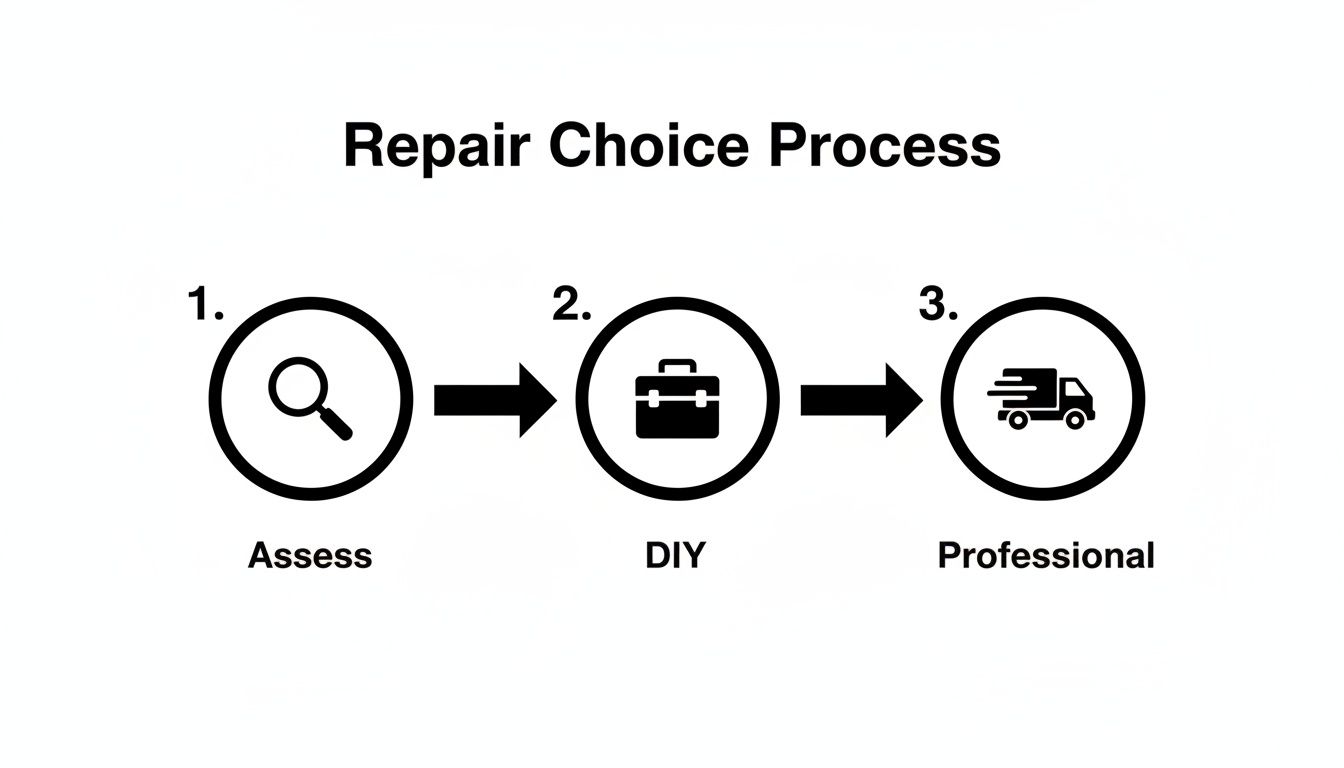
As you can see, the path forward really depends on the complexity of the problem at hand.
Ordering and Getting Ready
With the exact specifications nailed down, the new Insulated Glass Unit (IGU) is custom-made. This is a crucial point – these units aren’t sitting on a shelf somewhere. Each one is fabricated to perfectly match your window’s dimensions, glass thickness, and specific type. It’s the only way to guarantee a flawless fit and top performance.
While your new glass is being manufactured, the technician is already preparing for installation day. They’ll be lining up all the right tools, safety gear, and the specific sealants needed for your frame material, whether that’s uPVC, timber, or aluminium.
The secret to a long-lasting repair lies in the seal. Professionals use specialised glazing tapes and high-grade silicone sealants specifically formulated to stand up to the tough Australian climate. This attention to detail is what prevents the new unit from failing prematurely.
The Big Day: Installation
When installation day arrives, the real work begins. The first job is to get the old, failed unit out without causing any damage. It’s a careful, precise operation.
- First, the glazing beads are removed. These are the timber or plastic strips that hold the glass in place. They’re gently pried off to avoid marking the window frame.
- Next, the old IGU is lifted out. This is done carefully to ensure everyone's safety.
- Then, the frame is prepped. The recess where the glass sits, known as the rebate, is cleaned meticulously. Every last bit of old sealant and debris has to go, ensuring the new unit sits completely flat.
With a clean frame, the new IGU is positioned on special setting blocks that keep it perfectly centred and supported. The glazing beads are snapped back into place, and the final touch is a continuous bead of weatherproof silicone applied around the outside. This is your window’s ultimate defence against drafts and moisture, locking in all that energy-saving goodness.
After a final clean-up and quality check, the job is done. Your window is back to looking and performing as if it were brand new.
Servicing Rural and Remote NSW Properties
Living on a rural or remote property in New South Wales has its perks, but getting quality trades out to your door can feel like a logistical nightmare. This is especially true when you need something as specialised as double glazing repairs. Most standard service vans just aren't cut out for long distances and unsealed roads, which often leads to frustrating delays, multiple trips, and even rushed workmanship.

We saw this exact problem and built our business to solve it. Our promise to serve regional NSW isn't just talk; we've invested in a unique capability designed specifically to overcome the tyranny of distance.
Our All-Terrain Mobile Workshop
The heart and soul of our remote service is our custom-built 10-tonne 4×4 truck. This beast isn’t just for transport—it’s a fully kitted-out, all-terrain mobile workshop, engineered to reach properties that other companies simply can't.
This impressive setup means we can bring absolutely everything needed for the job directly to your property in one efficient visit. It doesn't matter how far off the beaten track you are; we arrive ready to go.
Our 4×4 truck is our answer to the logistical headache of remote work. It guarantees homeowners in isolated areas get the exact same high standard of service and materials as someone in the city, with no compromises or delays.
We load the truck with everything required to complete your repairs on the spot, including:
- Skilled Labour: Our experienced glaziers travel with the workshop, ready to get straight to work.
- Specialised Equipment: We carry all the precision tools needed for safe glass removal and flawless installation.
- High-Quality Materials: Your custom-measured glass units, sealants, and other components are all securely transported.
This self-sufficient approach allows us to handle your double glazing repairs without fuss, minimising the disruption to your life. Whether you’re in a regional centre or a remote corner of the state, you can find your local team and explore the glass repairs near me available in your area. Our mission is simple: to make sure every property in NSW has access to expert window repairs, no matter where it is on the map.
How to Extend the Life of Your Windows
So, you’ve had your window repaired and it’s back to performing at its best. That's great! But the real secret to keeping it that way for years to come is a little proactive care. Think of it as preventative medicine for your windows; a few simple habits can protect your investment and help you sidestep future double glazing repairs.
It all starts with something surprisingly simple: keeping your windows clean. This isn't just about aesthetics. As you'll see when you read about the benefits of regular window cleaning for window longevity, clean windows last longer. A gentle wipe-down prevents corrosive dirt and grit from building up and slowly eating away at the seals. Just be sure to use a soft cloth and a pH-neutral cleaner, as harsh chemicals can do more harm than good to the glass coatings and rubber seals.
Your Essential Maintenance Checklist
Beyond a good clean, a few other checks should be part of your seasonal home maintenance routine. Taking ten minutes to do this every few months can help you spot small issues before they snowball into costly repairs.
- Clear the Drainage Channels: Look for the small holes or slots at the bottom of your window frames—these are called weep holes, and they’re designed to let water escape. Use a soft brush or a vacuum cleaner to clear out any gunk so water doesn’t get trapped and damage the frame or seals.
- Inspect and Lubricate Hardware: Twice a year, give the moving parts—hinges, locks, and handles—a quick check. A light spray of silicone lubricant keeps everything moving smoothly, which reduces the strain on the entire window unit every time you open and close it.
- Check the Seals Regularly: Gently run your fingers along the rubber gaskets that frame the glass. Are they still soft and flexible, or do you feel any cracking, shrinking, or brittleness? Damaged seals are the number one culprit behind drafts and condensation.
Think of your window seals as the gatekeepers of your home’s comfort. Keeping them clean and intact is the single most important step in maximising the lifespan of your double glazing.
This kind of proactive maintenance is a huge focus in Australia's glazing industry, which has seen its revenue climb to an estimated $3.8 billion. A massive slice of that market comes from repairs and upkeep, largely driven by the push to improve energy efficiency in the millions of older Australian homes that lack modern insulation. It’s this focus on maintenance that ensures homeowners have access to reliable services to keep their windows in top shape for the long haul.
Answering Your Double Glazing Repair Questions
As we wrap things up, let's go through some of the most common questions people ask when their double glazing starts to play up. Getting straight answers can help you figure out the best way forward for your home.
How Much Do Double Glazing Repairs Actually Cost?
The price for fixing double glazed windows can swing quite a bit. A simple fix, like sorting out a stiff handle or a tricky lock, might only set you back a couple of hundred dollars. On the other hand, replacing a blown sealed unit—which is the usual culprit behind foggy windows—can run anywhere from $400 to over $1,000 for a standard-sized window.
What you end up paying really depends on the size and type of glass, plus how easy it is to get to the window. The best approach is always to get a detailed quote from a professional glazier after they’ve had a proper look at the job themselves.
Should I Replace the Whole Window or Just the Glass?
This is a big one, but the news is usually good. In most situations where the seal has failed or one of the panes is cracked, you don't need to rip out the entire window frame. A skilled technician can simply swap out the Insulated Glass Unit (IGU), which is the sealed glass panel itself.
This method is so much cheaper and causes far less mess and disruption than a full window replacement. You'd only really need to replace the whole frame if it's badly rotted, warped, or has some other major structural issue.
Being able to replace only the glass unit is one of the best things about modern double glazing. It means you can do a targeted, efficient repair that brings back full performance without the huge cost and hassle of a total refit.
How Long is Double Glazing Supposed to Last?
Well-made double glazed units are designed for the long haul, typically lasting anywhere from 15 to 25 years. Of course, a few things can affect that lifespan. If your home is constantly battered by extreme weather, harsh sunlight, or salty coastal air, the window seals might give up a bit sooner.
The quality of the initial installation is also a massive factor. Following the simple, regular maintenance tips we covered earlier is your best bet for helping your windows reach the top end of that lifespan.
Is it Worth Repairing Older Double Glazed Windows?
Without a doubt. Fixing a failed unit is a sound investment. It instantly gets your window's insulation and soundproofing back on track, making your home more comfortable and bringing down your energy bills. With heating and cooling costs always seeming to climb, a repair often pays for itself in energy savings alone. It's also a far more affordable and environmentally friendly choice than a full replacement.
For a no-obligation quote or just to chat about what you need, get in touch with the team at Awesim Building Contractors. We handle expert double glazing repairs all across New South Wales, from suburban homes to the most remote rural properties. You can learn more and book an assessment at https://awesim.au.



1 Comment