Building a house on your own patch of land in rural NSW is an incredible experience, but it’s a world away from a typical suburban build. This isn't just about picking a design; it's about tackling council approvals, navigating unique site challenges, and planning for logistics that city projects never face. Honestly, the secret to a successful rural build is getting all your ducks in a row before you even start daydreaming about floor plans.
From Paddock to Paradise: Your Guide to Building in Rural NSW
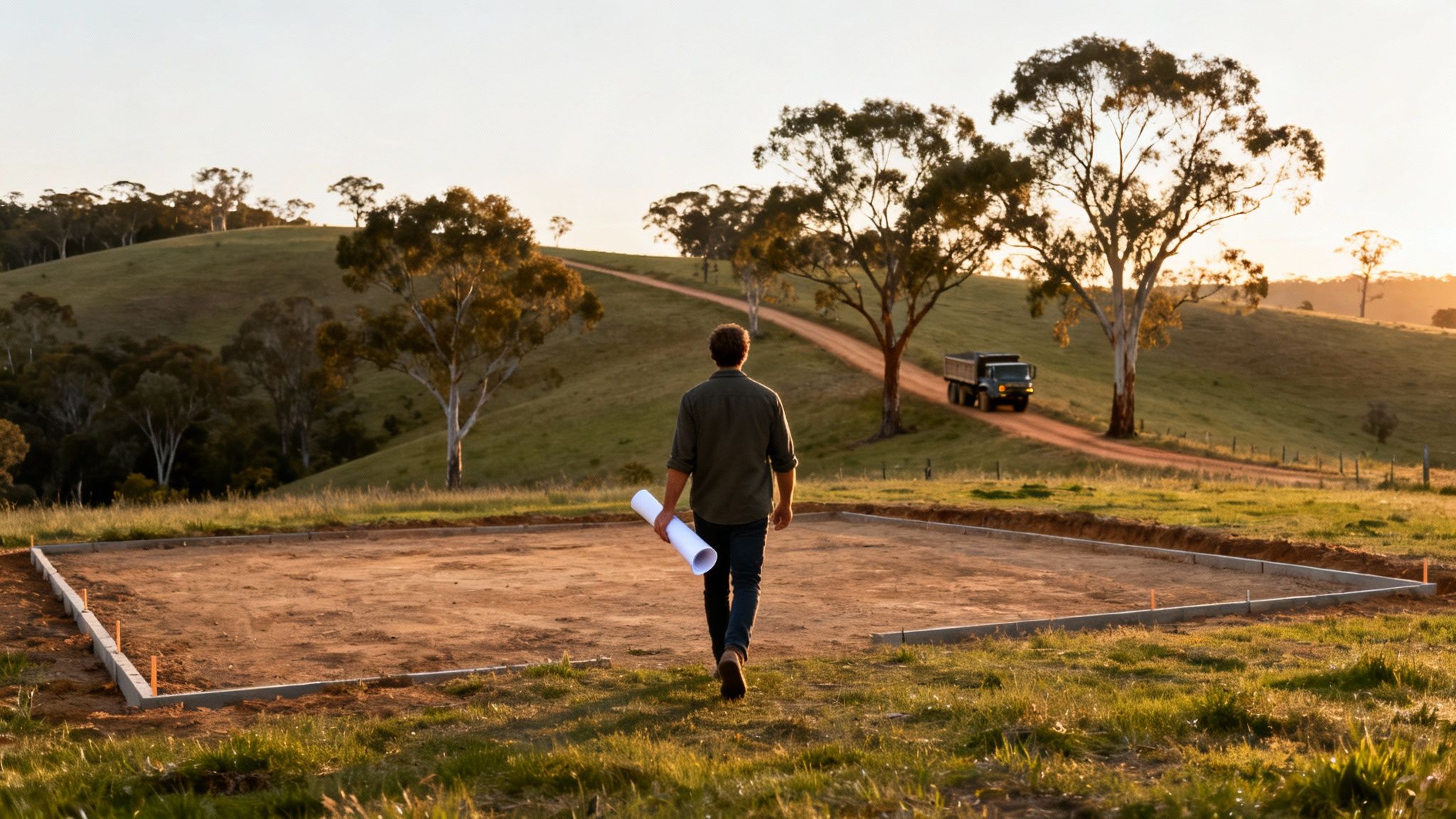
Starting a build in the New South Wales countryside is about more than just putting up four walls; it’s about creating a home that’s truly connected to the landscape. But turning that vision into a reality involves a unique set of hurdles you just don't find in the city. From making sure you even have the legal right to build a house, to satisfying environmental protection rules, the process has layers of crucial checks and balances.
Think of this guide as your no-nonsense roadmap. We'll cut through the jargon and complexities, walking you through the entire journey so you can make confident, informed decisions every step of the way.
What Makes a Rural Build Different?
Unlike building in town where services are conveniently waiting at the kerb, a rural project forces you to think self-sufficiently from day one. You're not just constructing a house; you’re often creating its entire supporting infrastructure. This can mean building access roads, figuring out power, and sorting out your own water and waste systems.
Here are a few of the big-ticket items that set rural builds apart:
- Dwelling Entitlement: This is the absolute first step. You must confirm with your local council that your block of land actually has a 'dwelling entitlement'. It’s the official green light that says you're legally allowed to build a home there. Without it, you can’t go any further.
- Environmental Constraints: Rural properties often come with strict environmental regulations. You’ll likely need a Bushfire Attack Level (BAL) assessment, and depending on the location, you might also need flood studies or biodiversity reports. These will heavily influence where you can build on your land and what materials you have to use.
- The Tyranny of Distance: The very isolation that draws us to the countryside is also its biggest construction challenge. Simply getting materials, machinery, and skilled tradespeople out to a remote site can add significant complexity and cost to your project.
Getting Around Remote Access Issues
One of the most common—and frustrating—obstacles when building a house on rural land nsw is simply getting to the site. Many dream blocks are accessed via unsealed roads, steep farm tracks, or across creek beds that are a nightmare for standard delivery trucks. This is where having a builder with the right logistical setup is non-negotiable.
We’ve invested in a 10 tonne 4×4 truck for this exact reason. This beast is the workhorse of our rural projects, allowing us to bring in labour, materials, and equipment to the most remote properties around New South Wales. Whether it’s getting steel frames up a muddy track or delivering kitchen cabinets across a paddock, we can navigate the toughest terrain to bring in supplies where and when they're needed the most, keeping your build on track and avoiding expensive delays.
Laying the Groundwork: Site Assessment and Due Diligence
Before you start dreaming about floor plans and paint colours, the single most important investment you'll make is in a proper site assessment. This is the due diligence phase, where you get down to the brass tacks and uncover the real potential—and pitfalls—of your block. Getting this groundwork right is what separates a smooth build from a project plagued by costly, heartbreaking surprises.
The absolute first hurdle is to confirm your property has a dwelling entitlement. You can't just assume you can build a house on a piece of rural land; you need the legal right to do so. A quick call to your local council is all it takes to find out, and it's a non-negotiable step that can make or break your entire project before it even starts.
While you've got the council on the phone, ask them for a Section 10.7 Planning Certificate. Think of this document as your property's biography. It's a goldmine of information, detailing everything from zoning rules and environmental overlays to any tricky land covenants. It’ll flag potential deal-breakers like heritage restrictions or biodiversity protection areas that could seriously limit what, where, and how you can build.
Evaluating Your Site’s Practicalities
Once you know you're legally in the clear, it’s time to get your boots muddy and really look at the land itself. A massive factor out here is the soil. In rural NSW, you can find everything from reactive clay that swells and shrinks with the seasons to sandy loam or solid rock.
You'll need a geotechnical engineer to come out and do soil testing. The report they produce is critical—it tells you exactly what kind of foundation your home needs, which can have a massive impact on your budget. Trying to skimp on this step is just asking for structural problems down the track.
Then there’s the issue of access. A lot of rural properties are reached via long, unsealed tracks that can turn to mush after a bit of rain. You have to think practically: how are you going to get concrete trucks, heavy machinery, and delivery drivers to your build site? A beautiful, secluded spot is no good if you can't get materials to it.
One of the biggest logistical headaches we see on remote properties is just getting people, materials, and equipment where they need to be, when they need to be there. It’s why we run a specialised 10 tonne 4×4 truck, kitted out to bring in labour, materials, and equipment to even the most challenging sites across New South Wales. It means a boggy track or a tricky creek crossing won't bring your project to a standstill.
Planning for Essential Services
Unlike building in town, your rural block won't come with neat little pipes and wires ready to connect. You're responsible for planning all your essential services, which usually means deciding between connecting to the grid or going fully self-sufficient.
- Power: Is there mains power anywhere near your boundary? If not, the cost to run poles and lines can be eye-watering. Often, an off-grid solar and battery setup ends up being the smarter, more resilient, and even more cost-effective choice in the long run.
- Water: A reliable water source is non-negotiable. For most rural builds, this means installing large rainwater tanks and a good quality pressure pump system. You'll need to do the sums to figure out your household's likely usage and make sure you have enough storage to get through the dry spells.
- Wastewater: With no town sewer to connect to, you’ll need an on-site sewage management system. This could be a traditional septic tank or a more modern aerated wastewater treatment system (AWTS). Either way, it needs to be properly designed and approved by the council.
These initial checks are absolutely fundamental. As you're laying the groundwork, digging into a complete guide on what to look for when buying land can give you a real head start on things like legal access and zoning. It's also worth thinking about other structures you'll need; our guide on https://awesim.au/building-a-shed-on-rural-land-nsw/ breaks down the specific rules for outbuildings, which almost always go hand-in-hand with a new homestead. Taking this comprehensive approach gives you a complete picture of your land's potential and its limitations before you’re financially committed.
Decoding NSW Planning Approvals and Environmental Rules
This is often where the dream of building on your own patch of land meets the hard reality of red tape. Navigating the New South Wales planning system can feel like wading through mud, but getting your head around the main approval pathways and environmental hurdles is the only way forward.
Get this part wrong, and you're looking at serious delays and budget blowouts. Get it right, and you're well on your way to breaking ground.
In NSW, you'll generally go down one of two paths: a Development Application (DA) or a Complying Development Certificate (CDC). The right one for you depends entirely on your block's zoning, any environmental constraints, and the design of the house you want to build.
Development Application (DA) vs. Complying Development (CDC)
So, what's the difference between a DA and a CDC? Think of a DA as the traditional, more comprehensive route, while a CDC is a faster, streamlined option for projects that tick all the right boxes.
| Factor | Development Application (DA) | Complying Development (CDC) |
|---|---|---|
| Process | A merit-based assessment by your local council. | A checklist-based process against state-wide codes. |
| Who Approves? | Local council. | Council or a private certifier. |
| Timeline | Can take several months, sometimes longer. | Often issued in a matter of weeks. |
| Flexibility | More flexibility for unique or complex designs. | Very rigid; your project must meet pre-set standards. |
| Suitability | Necessary for properties with significant constraints. | Best for straightforward builds on uncomplicated land. |
A DA involves submitting a full set of plans to your local council. They’ll pour over everything, checking it against their Local Environmental Plan (LEP) and Development Control Plan (DCP). It’s thorough, and it takes time.
A CDC, on the other hand, is a fast-track approval for projects that meet a clear set of standards under the State Environmental Planning Policy (SEPP). If your build fits the criteria, a private certifier can give you the green light much faster.
The catch? Many rural properties have overlays flagging them as bushfire-prone or sitting on a floodplain. These constraints often make you ineligible for the quick CDC path, pushing you straight into the full DA process.
The flowchart below is a great starting point, outlining the critical first checks to understand what you're dealing with before you get too deep.
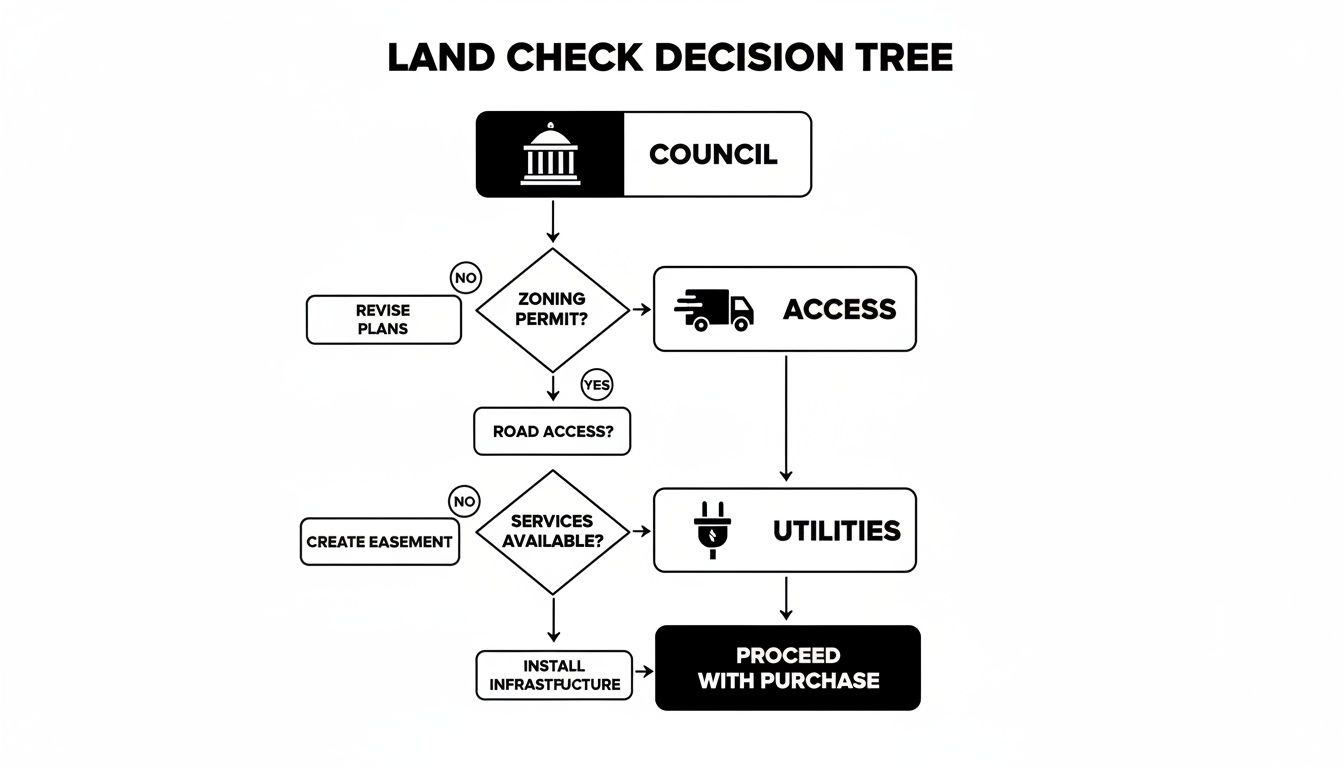
As you can see, confirming council zoning, legal access, and the availability of services are the foundational steps. They dictate not just your approval path, but the entire feasibility of your project.
Tackling Environmental Compliance Reports
Building in the bush means proving your project won't harm the local environment. These specialist reports aren't just box-ticking exercises; they are mandatory assessments that will fundamentally shape your build.
- Bushfire Attack Level (BAL) Assessment: This is the big one for most rural properties. A qualified consultant will assess your site's bushfire risk and give it a BAL rating, from BAL-LOW right up to BAL-FZ (Flame Zone). This rating dictates everything—from the exact spot you can build to the fire-resistant materials you must use.
- Flood Study: If your land is on a floodplain or near a creek, you'll need a flood study. This report determines potential flood levels and ensures your home’s finished floor level is high enough to keep you dry and safe.
- Biodiversity Report: These reports are all about the local ecology. They identify any protected plants or animal habitats on your land, which directly ties into what you're allowed to clear.
On these remote and sensitive sites, logistics are everything. Our specialised 10 tonne 4×4 truck is a game-changer. It allows us to bring in labour, materials, and equipment to your property, no matter how rugged the terrain. It means compliance checks don't stall your project just because the site is hard to reach.
Navigating Land Clearing Regulations
Clearing native vegetation for your house pad and Asset Protection Zone (APZ) is one of the most tightly controlled parts of any rural build. And for good reason.
The NSW Government's Statewide Land and Tree Study (SLATS) found that a staggering 66,498 hectares of bush were cleared in a single year, a 47% jump from the previous year. While 77% of this was for agriculture, it shows just how much pressure is on our native landscapes. You can read more about these trends from the Nature Conservation Council.
This is why you must work within the rules of the Biodiversity Conservation Act 2016 and the Local Land Services Act 2013 before a single tree comes down.
Get it wrong, and you're facing massive fines and stop-work orders. The smart move is to talk to your council and an environmental consultant early. They can help you figure out what can and can't be cleared, ensuring your project moves ahead legally and sustainably. A bulletproof application that addresses these issues from the start is your fastest path to getting that approval.
Designing a Home for Off-Grid Resilience
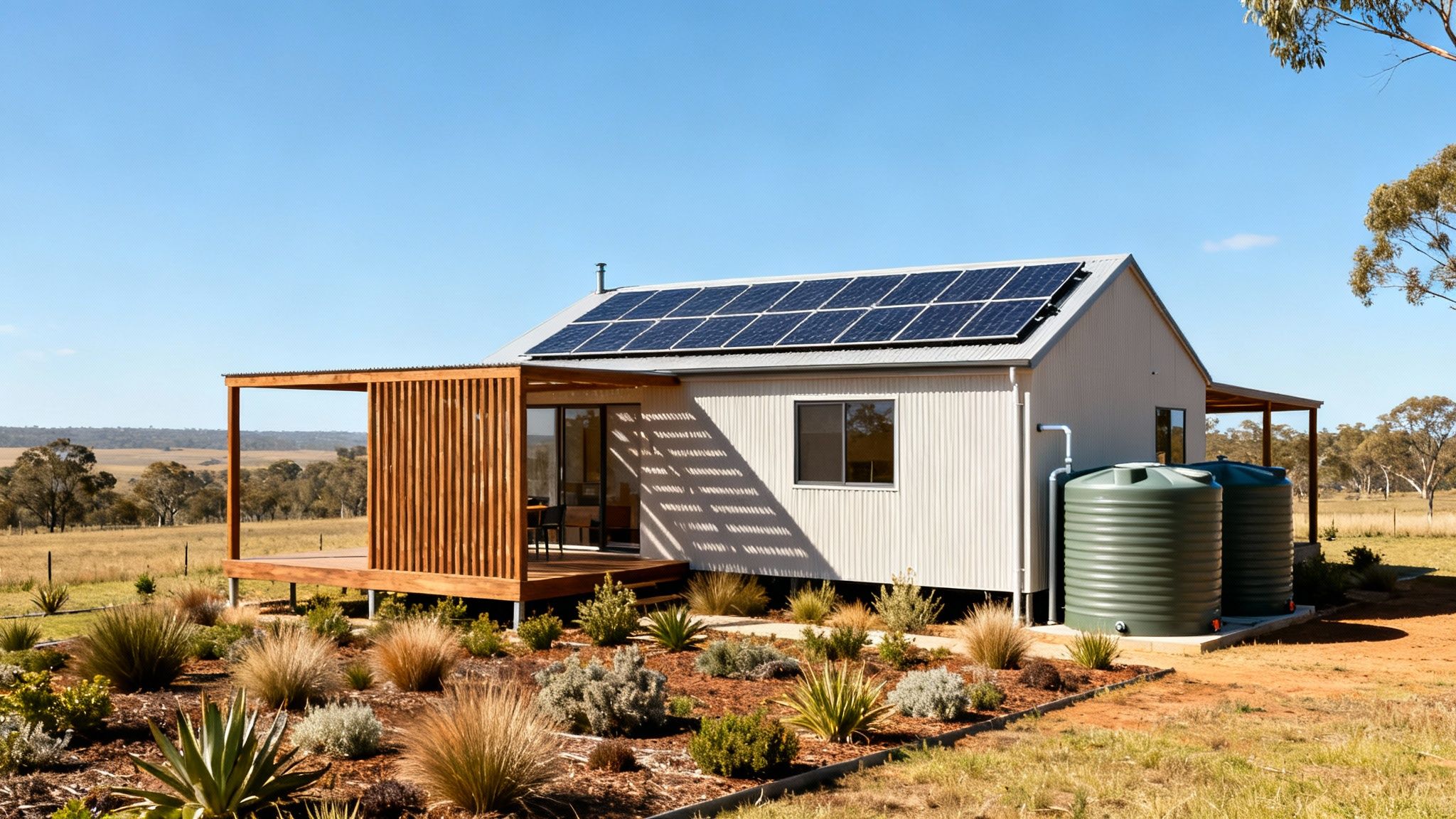
A home in the NSW countryside needs to be more than just a pretty picture; it has to be tough, smart, and genuinely self-reliant. Designing for rural conditions isn’t about making compromises. It’s about creating a home that works with the environment, not against it.
This means thinking ahead about everything, from scorching summer heat to those crisp, frosty winter mornings, all while making sure your power, water, and waste systems are rock-solid.
True resilience starts well before the first slab is poured. It begins with a design that embraces the unique challenges of your land. By focusing on passive design, self-sufficiency, and bushfire safety right from the start, you'll build a home that's comfortable, cheaper to run, and secure, no matter what nature throws its way.
Harnessing Nature for Comfort and Efficiency
Before you start pricing solar panels or water tanks, remember that the most powerful tool for off-grid living is the design of the house itself. Passive design is a clever approach that uses the natural environment to heat and cool your home, which drastically cuts your reliance on power-hungry air conditioners and heaters.
It all starts with orientation. By positioning your main living areas to face north, you can capture the low winter sun for free, natural warmth. In summer, when the sun is high in the sky, well-designed eaves, verandahs, and strategically placed windows can block out the heat, keeping the inside surprisingly cool.
Some of the key passive design strategies we always incorporate include:
- Cross-ventilation: Cleverly placing windows and doors to create natural breezes that flush out hot air on a summer afternoon.
- Thermal Mass: Using materials like a polished concrete slab or a feature stone wall. These materials absorb heat during the day and release it slowly overnight, which helps to stabilise the indoor temperature.
- High-Performance Glazing: Installing double-glazed windows is non-negotiable for superior insulation against both the summer heat and winter cold.
- Serious Insulation: We specify high R-value insulation in the ceiling, walls, and even under the floor. It's one of the single most effective ways to maintain a comfortable temperature inside all year round.
Planning for Complete Self-Sufficiency
When you're building a house on rural land nsw, you effectively become your own utility provider. This demands meticulous planning to ensure your systems can meet your needs without ever letting you down.
Power Systems
An off-grid solar and battery system is the heart of any modern rural home, and sizing it correctly is absolutely critical. You’ll need to work out your expected daily electricity use (in kWh) and choose a system with enough panel generation and battery storage to get you through several cloudy days in a row. For those thinking long-term, looking into concepts like sustainable community microgrids can offer some great insights into future-proofing your energy independence.
Water Security
Calculating your water needs involves much more than just what you’ll use in the kitchen and bathroom. You have to factor in water for your garden and, most importantly, a dedicated supply for firefighting as dictated by your BAL rating. A good starting point is often 100,000 litres of storage, but this figure can change based on your roof size, local rainfall, and how many people are in your household.
Wastewater Management
You’ll need an on-site sewage management system, which will have to be approved by your local council. The options range from a basic septic tank and trench setup to a more advanced Aerated Wastewater Treatment System (AWTS). An AWTS treats wastewater to a much higher standard, meaning you can often reuse it for irrigating the garden.
Unlocking Design Potential in Remote Locations
One of the biggest headaches for rural builds has always been logistics. Trying to get large or prefabricated components to a remote site with standard trucks can be a nightmare, often forcing architects to simplify their designs. This is a barrier we’ve worked hard to overcome.
Our specialised 10 tonne 4×4 truck is the key to unlocking ambitious designs on the most remote properties around New South Wales. It allows us to bring in oversized structural steel, prefabricated wall frames, or high-end architectural glazing where and when it's needed most. This capability means you don't have to compromise on your vision just because your property is off the beaten track. We can deliver the necessary labour, materials, and equipment to make it happen.
The Build: From Breaking Ground to Getting the Keys
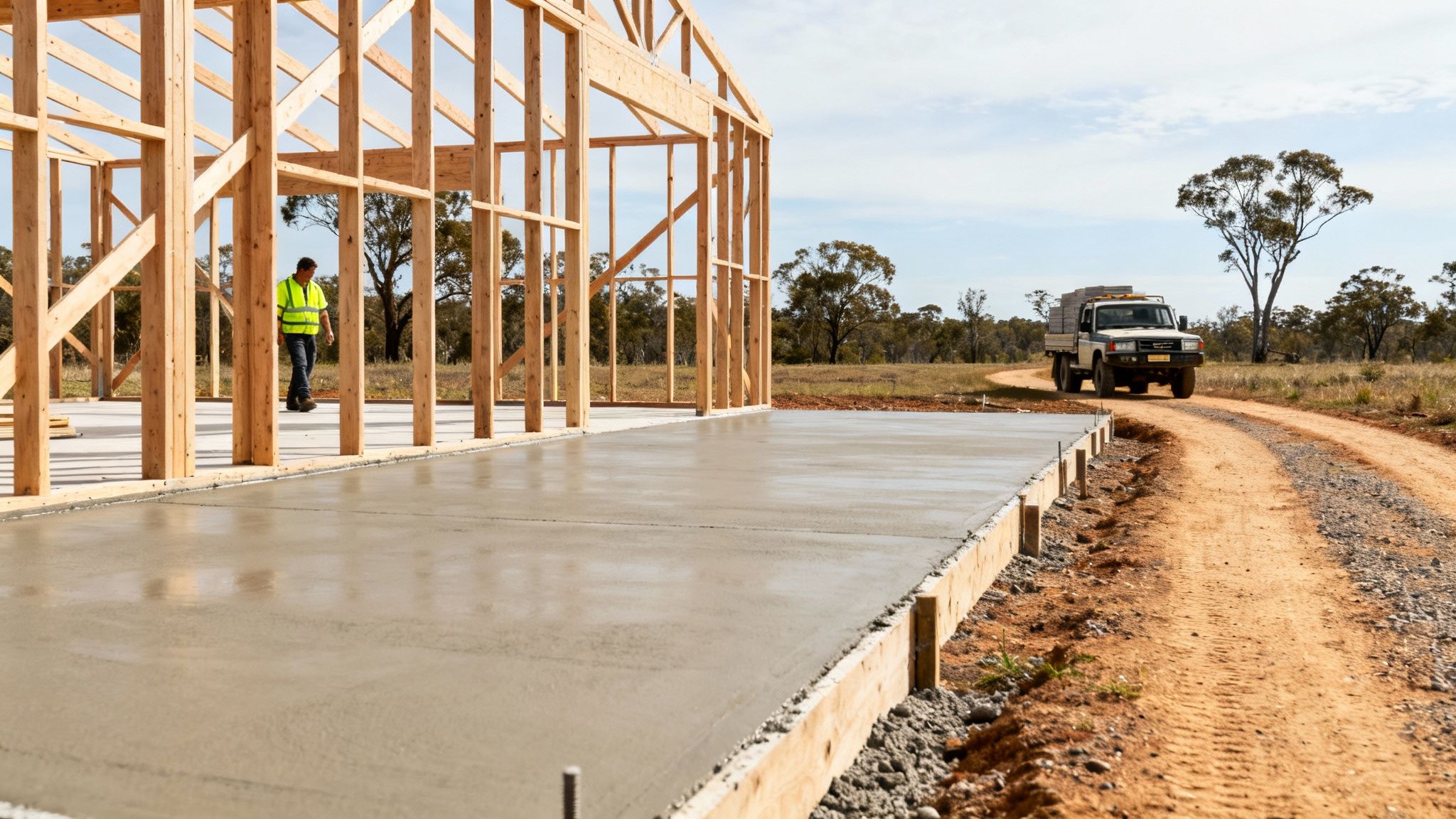
With your plans finally approved, the real work begins. This is where the paperwork gets put away and you start to see your home take shape on the land. It's an exciting time, but it's also a process that hinges on careful planning and expert coordination, especially when you're building out in the country.
The first step is establishing the site. This isn't just about clearing a bit of land; it's about creating a safe and functional work zone that can handle months of heavy traffic and construction activity. A builder who knows rural projects will tell you that cutting corners here always leads to costly delays down the track. If you haven't locked in your team yet, our guide on how to choose a builder has some practical tips for finding someone with genuine rural experience.
From Earthworks to Lock-Up
Before any foundations can be poured, you need reliable access. That means building a proper all-weather track capable of handling everything from concrete trucks to crane deliveries, come rain or shine. While that's happening, your build site—the "pad"—will be cleared, levelled, and prepared for the slab.
From there, the build unfolds in a series of major milestones:
- Slab and Foundations: After the in-ground plumbing is laid, the formwork goes in and the concrete slab is poured. It’s a huge day on site and forms the literal foundation of your entire home.
- Frame Up: This is when the skeleton of the house is erected. Whether you've chosen timber or steel, seeing the walls and roof trusses go up gives you the first real sense of the rooms and the overall scale of your home.
- Reaching 'Lock-Up': A massive milestone. This is when the roof, windows, and external doors are installed, making the house secure and weatherproof. Now, the internal trades can get started without being at the mercy of the weather.
- Internal Fit-Out: The inside starts to look less like a construction site and more like a home. Electricians and plumbers complete their rough-in, insulation is installed, and plasterboard goes on the walls, followed by joinery, tiling, and painting.
The Reality of Remote Construction Logistics
Building on a rural block in NSW comes with its own set of logistical headaches. You don't have a hardware store just down the road, and a bit of rain can turn a dirt track into an impassable bog. A single delayed delivery can throw the whole schedule out, leaving trades waiting and costs mounting.
This is where having the right equipment and a bulletproof plan makes all the difference. You have to anticipate the challenges before they happen.
We ran into this problem so often that we built a solution for it. Our 10 tonne 4×4 truck was specifically designed to service remote properties across New South Wales. It gets people, materials, and equipment in and out of sites that would stop a standard delivery vehicle cold, navigating everything from muddy paddocks to creek crossings. It allows us to bring in labour, materials, and equipment where and when it's needed the most.
Having this kind of capability means we aren't waiting on suppliers or weather. It keeps the project moving, protecting the timeline and the budget, and makes even the most isolated builds possible.
Getting It Signed Off: Compliance and Handover
As the build progresses, your builder will work with a private certifier to conduct mandatory inspections at key stages. These are non-negotiable checks required under your Construction Certificate (CC)—the document that legally allows construction to start.
Inspections happen at critical points, like before the slab is poured and after the frame is complete, to ensure everything is being built to code and matches your approved plans.
Once the final touches are done and every inspection has been passed, the certifier issues the Occupation Certificate (OC). This is the final piece of paper you've been waiting for. It confirms your new home is compliant, safe, and officially ready for you to move in.
With the value of rural land steadily rising—the NSW government's latest Report on Land Values showed a 1.6% increase over 12 months, bringing the state's total to $309 billion—a properly executed build is more than just a home; it's a major investment. You can see more of the land value trends on the official NSW Government website. After handover, you can finally walk through the front door of a home built to last, ready for your family to enjoy.
Budgeting Your Rural Build: Costs, Timelines, and Investment
A successful rural build lives and dies by its budget. It's a simple truth, but one that's easy to overlook. You have to understand that the real cost of building a house on rural land in NSW goes way beyond the bricks and mortar. A realistic budget is one that honestly accounts for every single expense, from the first bit of paperwork to the final coat of paint.
Unlike a straightforward suburban project where many costs are predictable, a rural build throws a whole lot of variables into the mix, all tied directly to your specific block of land. These aren't optional extras; they're fundamental costs that have to be factored in from day one to avoid some serious financial headaches down the track.
The True Cost of Building in the Bush
It often comes as a surprise, but the cost per square metre for a rural home can be significantly higher than its urban equivalent. This isn't about using fancier materials, but rather the hard-and-fast logistics of building somewhere remote. Everything from getting tradespeople to your site to having materials delivered adds a premium to the final invoice.
Here are just a few of the major budget items you absolutely must account for:
- Council and Consultant Fees: This isn't just the Development Application (DA) fee. You've got certifier costs, mandatory geotechnical soil tests, and those all-important Bushfire Attack Level (BAL) assessments.
- Extensive Site Works: Think bigger than just a bit of digging. You're likely paying for major earthworks to create a level building pad, clearing land for your Asset Protection Zone, and possibly trenching hundreds of metres for power and water.
- Access Road Construction: If your property doesn't already have an all-weather driveway, you'll need to build one. This is a substantial cost, and it needs to be tough enough to handle heavy vehicles like fully-loaded concrete trucks.
- Utility Connections or Off-Grid Setups: Connecting to the grid can run into tens of thousands of dollars if new poles and lines are needed. The alternative, a full off-grid system with solar, batteries, and a backup generator, is also a significant upfront investment.
For a deeper dive into all the potential expenses you might face, our guide on how to estimate house construction cost is a great place to start your calculations.
How Logistics Impact Your Bottom Line
One of the biggest wildcards in your budget is logistics. Poor site access, unexpected weather delays, and unreliable deliveries can blow out costs in a heartbeat. This is where working with a builder who is properly equipped for rural work can save you a lot of money and stress.
We learned early on that you can't fight the bush, you have to work with it. That's why we invested in a 10 tonne 4×4 truck specifically to tackle the logistical challenges of remote NSW builds. This beast allows us to get labour, materials, and equipment to even the most isolated properties, ensuring that a steep, muddy track doesn't derail your project. It means we deliver what's needed, when it's needed, keeping your build on track and protecting your budget from costly delays.
A Sound Long-Term Investment
While the upfront costs can feel daunting, building on rural land is also a solid long-term investment. Rural property in NSW has a strong history of appreciation, meaning your new home isn't just a place to live, but a valuable asset for your future.
A comprehensive study by the Pacific Rim Real Estate Society (PRRES) analysed years of rural sales data and found that NSW rural land averaged a 5.4% annual capital return over a 15-year period. This research really highlights the consistent growth and financial stability of investing in rural property. You can learn more about the long-term trends in NSW rural land value in their detailed report.
The final piece of the puzzle is creating a realistic timeline that builds in a buffer for those inevitable delays. Getting this right from the start ensures your investment journey begins on the best possible footing.
Common Questions About Building on Rural NSW Land
Building a home out in the country is a different beast altogether. It brings up a lot of questions that you wouldn't even think to ask with a standard suburban block. Here are a couple of the most common ones we hear from landowners.
Can I Actually Build a House on My Land?
This is the big one, and the first thing you absolutely must confirm. You need to find out if your property has a ‘dwelling entitlement’.
Start by talking to your local council. They'll help you check the land zoning under their Local Environmental Plan (LEP) and get a Section 10.7 certificate. This document is crucial—it spells out exactly what you can and can't do on your land. Don't spend a dollar on plans until you have this sorted.
What Are the Biggest Hidden Costs I Should Plan For?
The costs that catch people off guard are almost always tied to the site itself, long before the first wall goes up.
The big-ticket items are often things like constructing a long, all-weather driveway and doing the earthworks for a stable house pad. Another shock for many is the price of extending the mains power grid to your site—it can run into the tens of thousands if the connection point is far from your boundary.
You also need to budget properly for off-grid infrastructure. The upfront investment for a complete system—solar panels, batteries, water tanks, and a modern septic system—can be significant.
We’ve seen firsthand how getting materials and labour to a remote site can derail a project. It’s exactly why we invested in a specialised 10 tonne 4×4 truck. This rig is built to handle the toughest tracks across New South Wales, letting us bring in labour, materials, and equipment to even the most isolated properties where and when it's needed the most. This keeps the build on track and avoids those frustrating and expensive delays.
Ready to start your rural building journey? The team at Awesim Building Contractors has the experience and specialised equipment to bring your vision to life, no matter how remote. Get in touch with our team to discuss your project.