
Looking for a bathroom renovation builder near you? Mid-range refurbishments generally range from A$15,000–A$40,000, with the national average hovering around A$26,700. Having that budget range in mind up front really streamlines your builder search. Plus, our dedicated 10-tonne 4×4 truck ensures we can bring in materials, supplies, and labour to the most remote properties around New South Wales whenever and wherever it’s needed.
Planning Bathroom Renovation Budgets
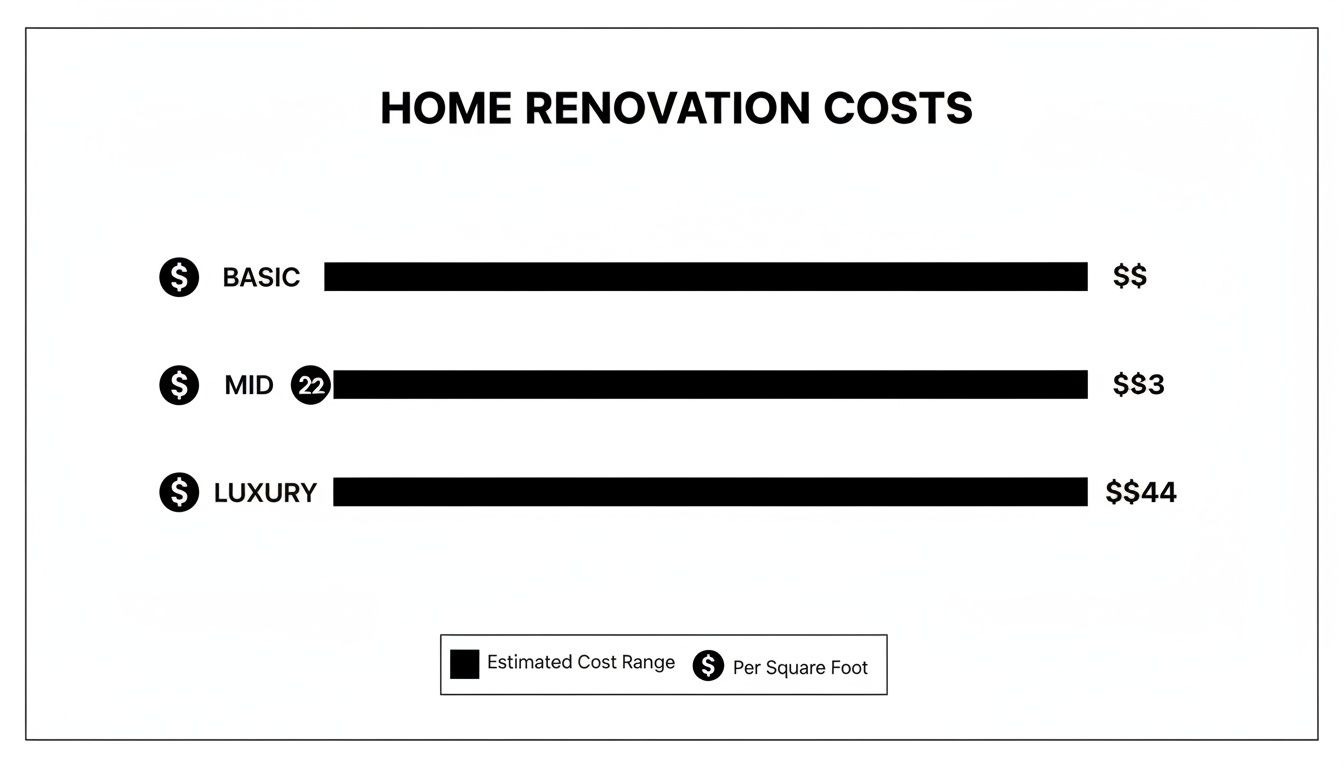
When you’re gathering quotes, it helps to anchor your expectations with broad cost brackets:
- Basic Refit (A$5,000–A$15,000): Simple plumbing tweaks, a fresh coat of paint and swapping out budget fixtures.
- Mid-Range Full Refurb (A$15,000–A$40,000): New tiles, a vanity unit, shower screens and standard sanitaryware.
- Luxury Finishes (A$35,000+): Underfloor heating, custom joinery and top-tier taps.
Even in more remote locations, deliveries and labour can be organised efficiently. For instance, our 10-tonne 4×4 truck makes site access across rural NSW manageable—keeping extra travel fees and hold-ups to a minimum. Moreover, this truck brings in materials and supplies for the most remote properties around New South Wales, allowing us to deliver labour, materials and equipment where and when it’s needed the most.
Since 2024, labour and material inflation have nudged project costs upward. Any quote you see today typically reflects those higher subcontractor rates and supplier mark-ups. Plus, specific features—like heated flooring—can add roughly 10–15% per square metre to your overall spend.
Key Cost Drivers
Below is a snapshot of how budgets usually break down for bathroom renovations across Australia. Use this as a quick reference when comparing multiple quotes.
Bathroom Renovation Cost Brackets
| Scope | Typical Cost (A$) | Description |
|---|---|---|
| Basic | 5,000–15,000 | Essential updates: fixtures, repainting, minor plumbing |
| Mid-Range | 15,000–40,000 | Full refurb with standard finishes: tiles, vanity, shower |
| Luxury | 35,000+ | Premium materials, custom joinery, tech features |
This table gives you clear budget benchmarks. Comparing your builder’s quote against these figures makes it easy to spot any outliers.
Keep in mind that most mid-range bathroom projects in NSW settle in that A$15,000–A$40,000 bracket. Recent industry tracking shows the average full renovation hit A$26,700 in 2025, pushed up by rising labour and material costs Learn more about renovation cost findings.
For a deeper dive into every line item, visit our detailed breakdown at Bathroom Renovation Cost Breakdown.
By measuring your quotes against the A$15k–A$40k mid-range band and the A$26.7k average, you’ll avoid overpaying and find a builder who fits both your budget and your vision.
Searching for Local Builders

Finding a reputable bathroom renovation builder nearby begins with a mix of online sleuthing and on-the-ground feedback. Start by scanning Google Maps for builders in your postcode, noting office locations and 4.5-star reviews.
Pair that with local directories and social media to see who really delivers:
- Rural business directories such as LocalPages and Yellow uncover specialists you might miss elsewhere
- Industry bodies like the Housing Industry Association list fully licensed professionals in NSW
- Community groups on Facebook connect you with neighbours who’ve just finished projects
This strategy helps you avoid unlicensed operators, especially on smaller or remote properties. For instance, narrowing your search on Google Maps can reveal builders who consistently earn top marks and have verified contact details.
Builder Site Visits
There’s no substitute for seeing work firsthand. Knock on a neighbour’s door to inspect their new bathroom and ask about the details that don’t show up online.
Questions that always help:
- How long did the full renovation take?
- Were any extra travel fees added for remote access?
- How did the builder manage unexpected site conditions?
These real-world conversations will guide you toward a shortlist of trustworthy renovators.
Checking Online Profiles
Next, head to NSW Fair Trading to verify licences and insurance certificates. Then browse project photos on Houzz or the builder’s own portfolio page—this confirms they can deliver the style and quality you want.
In rural NSW, logistics can make or break a renovation. Look for a contractor who owns their fleet, for example a 10-tonne 4×4 truck, because it means:
- Easy access along rugged dirt roads and through creeks
- On-time delivery of heavy tiles, fixtures and materials without third-party delays
- Fewer hidden fees for travel to off-grid sites
A builder who can mobilise on-site logistics ensures your project stays on schedule, especially in remote NSW.
Combining digital checks with on-the-ground inspections should leave you with around five qualified NSW professionals.
Building Your Final List
Now it’s time to compare those finalists side by side. Look at:
- Licence and insurance status to confirm legal compliance
- Local project examples with clear before-and-after photos
- Detailed quotes that break down costs and timelines
- Responsiveness and clarity in their communication
Finally, arrange quick phone calls or video chats to discuss budgets, and ask for two local references. Don’t forget to confirm any travel arrangements for your rural site.
Happy renovating and success!
Vetting Builders With A Checklist
Finding the right bathroom renovation builder nearby requires digging into their credentials. Skipping this vetting risks budget blowouts or shoddy finishes.
Before you dive into quotes, narrow your field with a simple checklist.
Essential Licence And Insurance Checks
Have the builder show you their licence certificate in person, not just a phone screenshot. Then confirm that it covers residential renovations in NSW.
Verify public liability insurance and home warranty insurance cover rural work and your property’s specific location. Ask:
- Does this policy cover dirt‐road access and water crossings?
- Will the performance bond protect my deposit if there’s a hiccup?
Seeing valid insurance on site gives you peace of mind and shields your investment.
Reviewing Past Work And References
Plan to visit a minimum of two finished projects, ideally on rural properties similar to yours. That walkthrough reveals how they tackle real-world challenges.
During each visit, probe with questions like:
- How did you adapt when the site threw up unexpected issues?
- What form of communication can I expect each week?
- Were any subcontractors flagged for re-inspection?
Quick checks:
- Tile finishes, waterproofing seams and plumbing fixtures.
- Neighbour feedback on travel fees or setup delays.
- Arrival setups—did crews rock up fully kitted or missing gear?
| Credential | What To Look For |
|---|---|
| Trade Licence | Valid, current and unrestricted |
| Subcontractor Records | Written scopes and signed agreements |
Spotting Red Flags In Reviews
A string of identical glowing reviews can tell you nothing. Instead, hunt for varied feedback that mentions timelines, costs or on-site logistics.
Watch for:
- Reviews that skip details on budgets or deadlines.
- Sharp jumps in overall ratings over a short period.
- Silence on remote-area challenges like travel times.
For the most remote properties around New South Wales, our 10-tonne 4×4 truck brings labour, materials, and equipment exactly where and when they’re needed the most.
Check the performance bond clauses for clear payout conditions if work stalls. That document shows they intend to finish on agreed terms.
Take a deeper dive with our guide on top questions to ask your contractor before starting work
Keep meticulous records of every chat and all receipts. This audit trail cuts confusion and helps settle disputes fast.
With this level of scrutiny, you can hire a bathroom renovation builder near you with confidence and sidestep nasty surprises down the track.
Comparing Builder Quotes
Going through builder quotes with a fine-tooth comb reveals where extra charges can pop up. A clear comparison saves you from unwelcome surprises once work begins.
Fixed Price Or Cost Plus Contracts
Contracts come in two flavours: fixed-price and cost-plus. A fixed-price agreement means you lock in one total figure. That certainty is a relief when budgets are tight.
Cost-plus agreements, on the other hand, pass actual expenses to you plus a builder margin. There’s more transparency, but material costs can push the final bill higher than expected.
“A fixed scope prevents surprise fees,” notes an NSW project manager with rural experience.
Key points to weigh up:
- Fixed-price caps your overall spend
- Cost-plus breaks down every cost element
- Variations on a fixed-price deal often incur extra charges
- Cost-plus requires close oversight of invoices
Dig deeper by checking if things like equipment hire or project management are bundled under “labour” rather than listed separately. A detailed quote shines a light on true cost drivers:
- Equipment hire charges
- Travel or travel-time fees
- Waste disposal and skip-bin hire
Real Quotes And Negotiation Tips
Seeing actual figures brings clarity. For example:
- Quote A covers disposal, plumbing, tiling and fixtures at A$28,500
- Quote B lists core works at A$25,000 but leaves out demo fees
- Quote C packages premium sanitaryware for A$32,000
To tip the balance in your favour, try these negotiation moves:
- Combine tile and fixture orders with other projects for volume discounts
- Ask if unused materials can be returned for credit
- Link payments to milestones so you only pay for completed stages
- Insist on a cap for variable tasks such as wall removal
Align payments to clear deliverables:
- 10% deposit when you sign the contract
- 30% once rough-in plumbing is done
- 30% after tiling
- 30% on final handover
Quote Comparison Table
Here’s a side-by-side look at what each builder is offering. Compare scope, price and timing to find the best match for your bathroom upgrade.
| Builder | Scope Of Work | Fixed Price (A$) | Estimated Timeline |
|---|---|---|---|
| Builder A | Full demo, plumbing, tiling, fixtures | 28,500 | 4 weeks |
| Builder B | Demo, tiling, basic fittings | 25,000 | 3 weeks |
| Builder C | Demo, premium fixtures, waterproofing | 32,000 | 5 weeks |
This comparison highlights where costs vary and which timeline suits your schedule best.
Evaluating Staged Renovations
Breaking the project into phases can ease cashflow and adapt to your farm’s busy periods.
Pros of staging work:
- Spreads payments over time
- Matches budgets to each chunk of work
- Reduces interference with other on-site activities
Challenges to watch for:
- Overall project duration may lengthen
- Prices can rise between stages
- You need well-defined scopes for each phase
A possible phasing plan:
- Demolition and rough-ins
- Waterproofing and plumbing
- Tiling and fixtures
- Final fit-out and testing
Try to schedule around harvest and lock in wet-weather buffers early to avoid hold-ups.
Checking Remote Access Fees
If your site’s a few hours from town, travel surcharges quickly add up. Ask if the builder owns a 10 tonne 4×4 truck. Having that on-site can cut out third-party haulage costs.
Advantages of an in-house fleet:
- Faster delivery of materials
- No extra charges for off-road access
Compare travel and lifting fees as separate line items to prevent surprise rural mark-ups.
When you line up quotes, factor in the savings from self-managed logistics versus outsourcing haulage. Choose the builder who makes remote work feel like they’re just next door.
Securing Contracts And Permits
When you’re hunting for a bathroom renovation builder near you, having legal safeguards in place is non-negotiable. Clear, well-drafted contracts stop cost blowouts in their tracks and prevent frustrating hold-ups.
A solid agreement spells out variation clauses, retention schedules and a defined dispute resolution process. That way, any tweaks to scope, materials or timelines don’t turn into budgetary or scheduling nightmares.
Developing Contract Terms
Begin by spelling out the variation clause, so every extra task or design tweak comes with written sign-off. Pair it with a retention clause that holds back a portion of each payment until snagging is complete.
Key clauses to lock in:
- Variation: Any additions or reductions must be documented and signed.
- Retention: Typically 5–10% of payments is withheld until final inspection.
- Dispute Resolution: Outline steps—mediation or arbitration—to resolve disagreements fast.
“A clear variation clause prevents $2k surprises,” says a solicitor in Tamworth who’s seen plenty of small jobs spiral out of control.
Don’t forget warranty details and insurance cover. Spell out public liability and home warranty insurance to protect your deposit if something goes sideways.
Here’s a field-tested tip: our team’s 10-tonne 4×4 truck shows up even on rough, remote NSW properties. Adding its delivery windows into an appendix keeps everyone on the same page about material arrivals.
Navigating NSW Permits
Council approvals can throw a spanner in the works, especially if you’re outside city limits. Start by deciding whether your project needs a Development Application (DA) or a Complying Development Certificate (CDC).
A smooth permit process might look like this:
- First, review local council codes for environmental overlays.
- Then, lodge your DA or CDC with scaled plans and soil reports.
- Next, arrange fire safety certification if you’re in a bushfire-prone zone.
- Don’t forget proof of a $5,000–$10,000 bond lodgement.
- Finally, wait for council sign-off—usually 6–8 weeks for a DA.
In one recent rural project, extra bushfire assessments pushed DA approval out to eight weeks, and the bond rose to $8,500.
Here’s how those timelines often compare:
| Approval Type | Typical Timeframe |
|---|---|
| CDC Approval | 2–4 weeks |
| DA in Bushfire Zone | 6–10 weeks |
Plan bond lodgements early to keep cashflow steady.
And if your site borders a watercourse or heritage area, arrange flora and fauna surveys as part of your DA package. This upfront work helps you avoid last-minute scope expansions.
Stash every permit document in a shared cloud folder. Label versions clearly and back everything up.
Keep each permit reference number on your contract and site noticeboard. It’s a small detail that saves big delays.
With these permissions sorted, you’ll breeze into the tiling and fittings stage. Your builder can hit the ground running, and your renovation stays firmly on schedule.
Managing Rural Renovations And Logistics
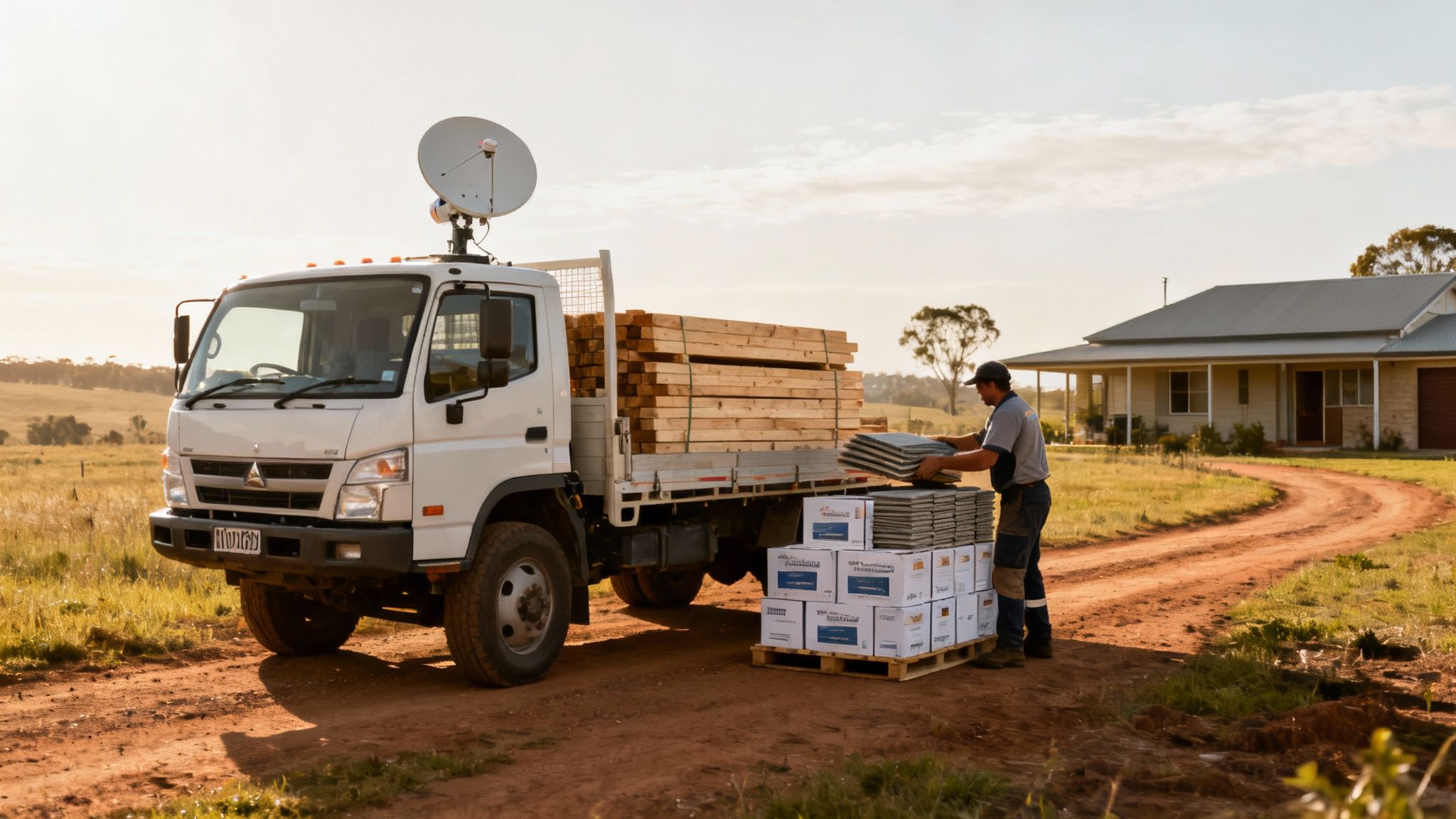
Working on remote properties often means tackling unsealed tracks, creek crossings and long runs back to town.
That’s why our 10-tonne 4×4 truck carries labour, materials and equipment directly to job sites across New South Wales.
- Plan deliveries around peak farm activity to avoid clashes with harvests or livestock movements
- Combine tiles, fixtures and tools into batch loads to cut down on repeat trips
- Slot weather-sensitive tasks like plasterboard install and tiling into dry spells
On a sheep station near Moree, we halved our journey count—from four trips to two—and slashed travel costs by 20%. The bonus? Fewer weather delays and tiling crews working through without hold-ups.
Staying connected across vast paddocks is equally crucial. We deploy mobile boosters to stretch cellular signals, then switch to satellite backup when coverage vanishes. That way, your builder team stays in touch even 200 km from the nearest town.
Yet as renovation goals evolve, demand for a bathroom renovation builder near me has climbed sharply. A national survey found planned bathroom remodels jumped from 30% in 2024 to 43% in 2025. Meanwhile, 89% of homeowners flagged rising costs as a top worry and 49% delayed work due to budget constraints. For full details, Read the full research.
Organise Remote Teams
Coordinating trade crews over long distances calls for crystal-clear timelines. We assign a dedicated project manager who keeps electricians, plumbers and tilers in sync with weekly check-ins.
- Share a live digital schedule that updates in real time
- Set clear on-site contact points for every phase to tackle surprises
- Build in buffer days at each stage to absorb travel or weather-related delays
On an on-farm renovation near Bourke, staging demolition, waterproofing and tiling into tight 48-hour sprints between seasonal rains kept downtime to a minimum. That approach saved nearly $5,000 in idle labour and equipment costs.
You might be interested in our full guide to rural renovations and logistics Explore the detailed guide
“Having the right truck and comms setup transforms a remote bathroom renovation from a headache into a smooth, scheduled process,” says Glen.
Proper logistics make your search for a bathroom renovation builder near me more reliable and cost-effective.
Frequently Asked Questions
Planning a visit to remote sites always involves logistical puzzles. We sync our team’s availability via a shared calendar and boost mobile signals so you get instant confirmations. Thanks to our 10-tonne 4×4 truck, even the most off-grid farms in NSW are within reach—meaning we slot in your project at a time that suits you.
Here’s what to check before booking:
- Local road conditions for heavy vehicles
- Seasonal floodplain restrictions
For instance, once everything’s in place, we can have materials delivered in 48 hours. You won’t be left waiting weeks to start the demolition.
Payment Plan Options
Cash flow is often a concern on rural builds. We break payments into clear stages tied directly to visible progress.
- Initial deposit capped at 10%
- Progress payments aligned with completed tasks
- Final 20% held until you’re satisfied
This approach keeps every dollar accounted for and avoids surprises. Plus, our variation clause is crystal clear, and mobile updates mean everyone stays on the same page.
“Linking payments to milestones prevented a cost overrun on our last rural job,” says a Tamworth client.
Missed Milestone Steps
Weather delays or late deliveries happen. When a milestone slips, we don’t waste time:
- Issue a revised schedule within 24 hours
- Share updated ETAs, factoring in our 4×4 logistics
- Rebalance crew rotations to claw back lost time
By acting quickly, we keep your bathroom renovation moving forward.
Early notification and schedule updates cut downtime by up to 30%.
Temporary Facility Solutions
On a working farm, basic amenities can’t pause. We set up temporary facilities so everyone stays comfortable without interrupting progress.
- Portable toilets with handwash stations
- Mobile shower units delivered by our 10-tonne 4×4 truck
- Greywater management system for shower runoff
This lets your crew focus on quality work while your family carries on as usual.
Tip: Confirm water supply hookups for mobile showers before delivery to avoid draining farm resources.
Contact Awesim Building Contractors for a tailored quote.