Think of your homestead's foundation as the chassis on a trusty farm ute. It’s the single most important part holding everything else together—the walls, the floors, the roof. When that foundation starts to fail, the whole structure is at risk.
This is where restumping (sometimes called reblocking) comes in. It’s the process of replacing the original foundation stumps—which are usually old timber—with new, far more durable supports like concrete or steel. It’s not just a repair; it’s a critical investment in your property's future.
Why Restumping Is Critical for Rural NSW Properties
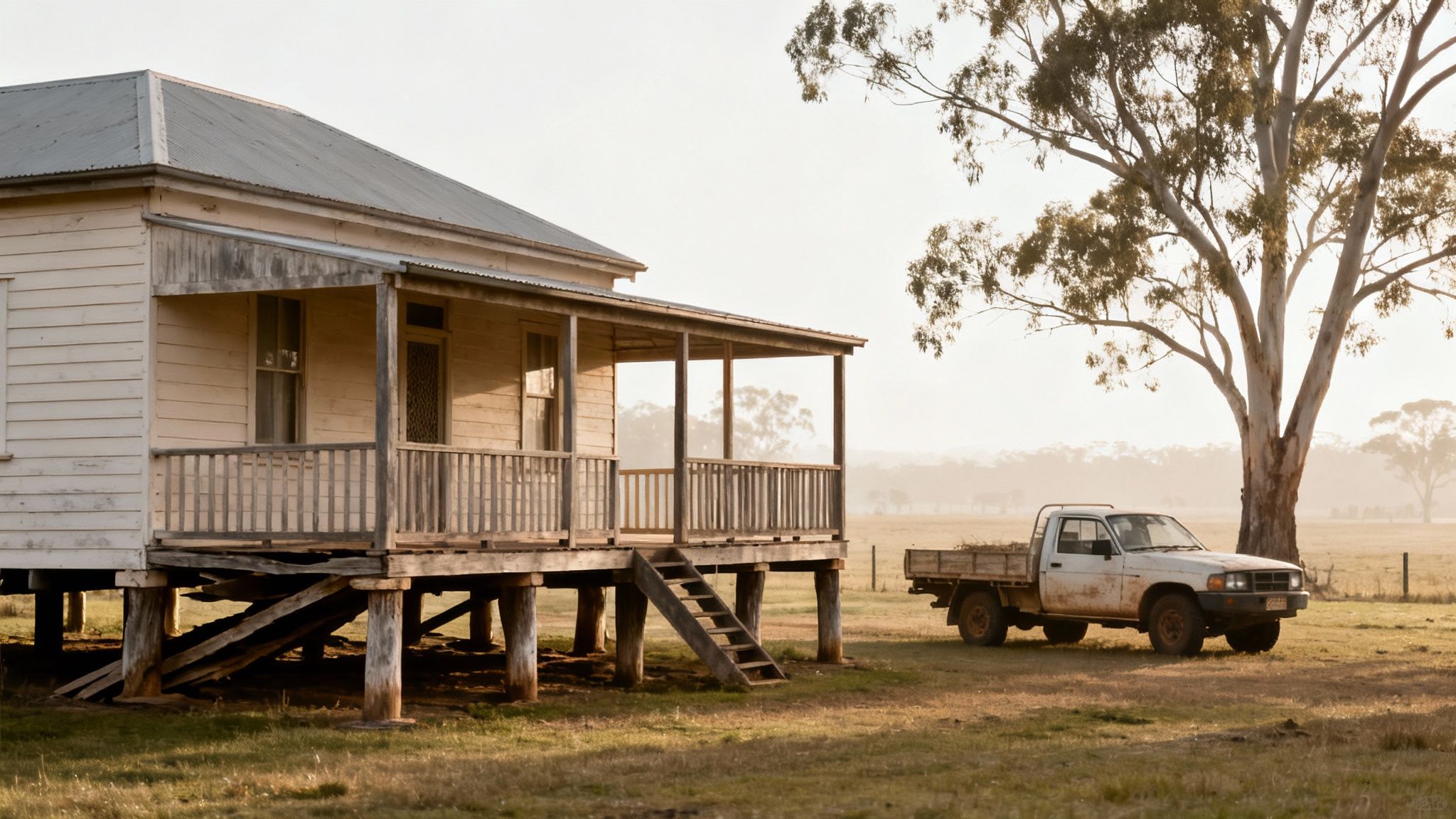
Out here in rural New South Wales, our homes face a unique set of challenges. The original timber stumps, which seemed like a good idea at the time, are constantly battling moisture, termites, and the notoriously reactive soils that shrink and swell with every drought and downpour.
Over the years, this constant pressure causes the stumps to rot, shift, or weaken. It’s a gradual process, but it eventually compromises the entire home. Restumping is essentially giving your house a brand-new set of legs, ensuring it stands strong for generations to come.
Spotting the First Signs of Trouble
Your house will usually give you a few hints that something is wrong underfoot. Catching these early signs can save you a fortune in more complicated repairs later on. Think of them as your home's first cry for help.
Here’s a quick guide to what you should be looking for.
Early Warning Signs Your Foundation Needs Attention
| Warning Sign | What to Look For | Level of Urgency |
|---|---|---|
| Uneven Floors | Marbles or balls rolling to one side of a room. A noticeable slope when you walk. | High – Indicates significant sinking or lifting. |
| Sticky Doors & Windows | Doors that jam in their frames or windows that are suddenly hard to open or close. | Medium to High – The frame is twisting out of square. |
| Cracks in Walls | Fine, spiderweb cracks or larger, jagged cracks appearing in plasterboard or brickwork. | High – A clear sign of structural movement. |
| Bouncy Floors | A noticeable spring or sponginess in the floor as you walk across it. | Medium – Suggests bearers or joists have lost support. |
These aren't just cosmetic quirks; they're direct symptoms of a foundation that’s no longer level and secure.
The Unique Challenges of Rural Properties
Restumping a rural property isn't the same as a job in the city. Many classic homesteads and farmhouses were built between the 1920s and 1960s, often on timber stumps to deal with sloping land and pests in places like Tamworth and Dubbo. You can find some great historical context on forums like this restumping thread on PropertyChat.
The biggest hurdle, however, is often just getting to the site. Bringing heavy materials, specialised gear, and a skilled crew down dirt tracks or across creek beds is a serious logistical challenge. It requires more than just a standard truck.
That’s why we have a 10-tonne 4×4 truck to bring in materials and supplies for the most remote properties around New South Wales. This allows us to bring in labour, materials, and equipment where and when it's needed the most, ensuring your project stays on schedule, no matter how far off the beaten track you are.
Choosing the Right Material: Concrete, Steel, or Timber
Once you’ve confirmed your homestead needs restumping, the next big decision is what to use. Think of it like choosing tyres for the farm ute; you wouldn't put road tyres on for a muddy paddock. The right choice depends on your property's specific conditions—the soil type, the weight of your house, and how long you want the fix to last.
The three main players in the game are concrete, steel, and timber. Each has its place, and understanding the pros and cons is key to making a smart investment in your home's future. This isn't just about the initial quote; it's about securing your foundation for decades to come, which is why we always insist on high-quality, Australian-made materials built for our tough climate.
The Modern Standard: Concrete Stumps
These days, concrete stumps are the go-to for most restumping jobs, and for very good reason. They're incredibly tough, completely termite-proof, and won't rot or warp, no matter how damp it gets under the house. For anyone on the land in NSW, those are three massive ticks.
Concrete is a fantastic all-rounder that handles most soil types we see around here, from the reactive clays out near Tamworth to the sandier country closer to the coast. It just provides a solid, reliable base you can depend on.
A well-installed concrete stump is a 'set and forget' solution. When put in by a professional, you're looking at a lifespan that can easily push past 75 years. That’s genuine peace of mind.
While they might cost a little more upfront than timber, their sheer longevity and zero-maintenance nature make them the most economical choice over the long haul. If you're interested in how we tailor concrete for other farm applications, you can read more about our specialised rural concrete services.
The Strength of Galvanized Steel Stumps
Galvanized steel stumps are another top-shelf option, especially valued for their massive strength and adjustability. This is where they really shine. Unlike a concrete stump that's set at a fixed height, steel stumps can be fine-tuned on-site, allowing us to get your floors perfectly level. It’s a huge advantage for homes on sloping blocks or uneven ground.
The galvanizing process—coating the steel in a protective layer of zinc—gives them fantastic protection against rust and corrosion, so they hold up well even in damp underfloor spaces.
Key benefits of steel stumps include:
- High Load-Bearing Capacity: Perfect for supporting bigger, heavier, or multi-storey homes.
- Precision Adjustment: Lets us dial in the levels with pinpoint accuracy.
- Termite and Rot Proof: Just like concrete, pests and moisture won't touch them.
We often turn to steel for more complex jobs or when the engineer’s plans call for adjustable, high-strength support.
Traditional Yet Evolved: Treated Timber Stumps
It’s true that old, untreated timber stumps are the reason many of us are in this situation in the first place. But the treated timber we use today is a completely different beast. Modern timber stumps are pressure-treated with powerful preservatives that make them resistant to decay and unappealing to termites.
Treated timber can be a solid, budget-friendly choice, and it's certainly lighter and easier to work with than concrete or steel. It works best in stable, well-drained soil. However, if your property deals with constant moisture or highly reactive clay, you’ll get far better long-term performance from concrete or steel. It’s a decent option, but only if the ground conditions are just right.
To make the choice clearer, here’s a straightforward comparison of the three materials.
Comparing Restumping Materials for Rural Properties
| Material Type | Key Advantages | Potential Drawbacks | Best Suited For |
|---|---|---|---|
| Concrete | Exceptionally durable (75+ year lifespan). Immune to termites, rot, and fire. Low maintenance. | Heavier and requires more labour to install. Higher upfront material cost than timber. | The vast majority of rural properties, especially those with reactive clay soils or termite risks. |
| Galvanized Steel | Extremely strong and adjustable for precise levelling. Lightweight for its strength. Immune to pests and rot. | Highest material cost. Requires specialised installation skills. | Homes on sloping or uneven ground, complex architectural designs, or where high load capacity is essential. |
| Treated Timber | Most affordable upfront cost. Lightweight and easier to handle during installation. | Shorter lifespan than concrete/steel. Can still be vulnerable in very wet or termite-heavy areas. | Budget-conscious projects on stable, well-drained soil with low moisture and minimal termite pressure. |
Ultimately, the best material is the one that best suits your home, your land, and your budget for the long term. A good contractor will walk you through these options and recommend the right fit based on a proper site assessment.
The Restumping Process: From Assessment to Final Sign-Off
Knowing what to expect during a restumping project can take a lot of the stress out of it. While it's a major undertaking, a good team follows a clear, methodical process to get your home’s foundations right with as little fuss as possible. It all moves in a logical sequence, from the first look under the house to the final checks and handover.
It all starts with a thorough site assessment. This isn't just a quick peek; it's a proper evaluation of your existing stumps, a look at your soil type, and a complete health check of your home's structure. This is the crucial first step to figure out why you're having foundation issues and what the best fix will be for your specific property.
The Initial Planning and Engineering Phase
Once the initial assessment is done, we move into detailed planning. We'll often bring in a structural engineer to draw up a formal plan, which spells out the exact requirements for the job. This plan dictates the number, type, and placement of the new stumps needed to comply with Australian Standards.
Think of this engineering report as the project's blueprint. It guarantees the work is not just going to solve the problem, but that it's also fully compliant with local building codes. You'll need this document to get council approval, which is a non-negotiable step for any major structural work in NSW. A professional contractor should handle all of this for you—from dealing with the engineer to lodging the application with your local council.
Site Preparation and Logistics
With the green light from council, the real work can get underway. First up is site prep, which means clearing access under your home so the team has a safe and efficient space to work. For properties out in the sticks, this phase is heavy on logistics—we need to make sure every last nut, bolt, and piece of equipment gets to you without a hitch. Modern approaches are helping here; understanding the benefits of drone use in construction is becoming more common for things like mapping out tricky sites and keeping an eye on progress.
This is where having the right gear is make-or-break. We rely on a purpose-built 10 tonne 4×4 truck to get everything to site. This beast is designed for the kind of access challenges we see all the time on NSW farms, from rough-as-guts dirt tracks to creek crossings. It lets us get our crew, materials, and machinery exactly where they need to be, right on schedule, sidestepping the logistical nightmares that can derail projects in remote areas.
The image below shows the typical material options we'd be bringing to your property.
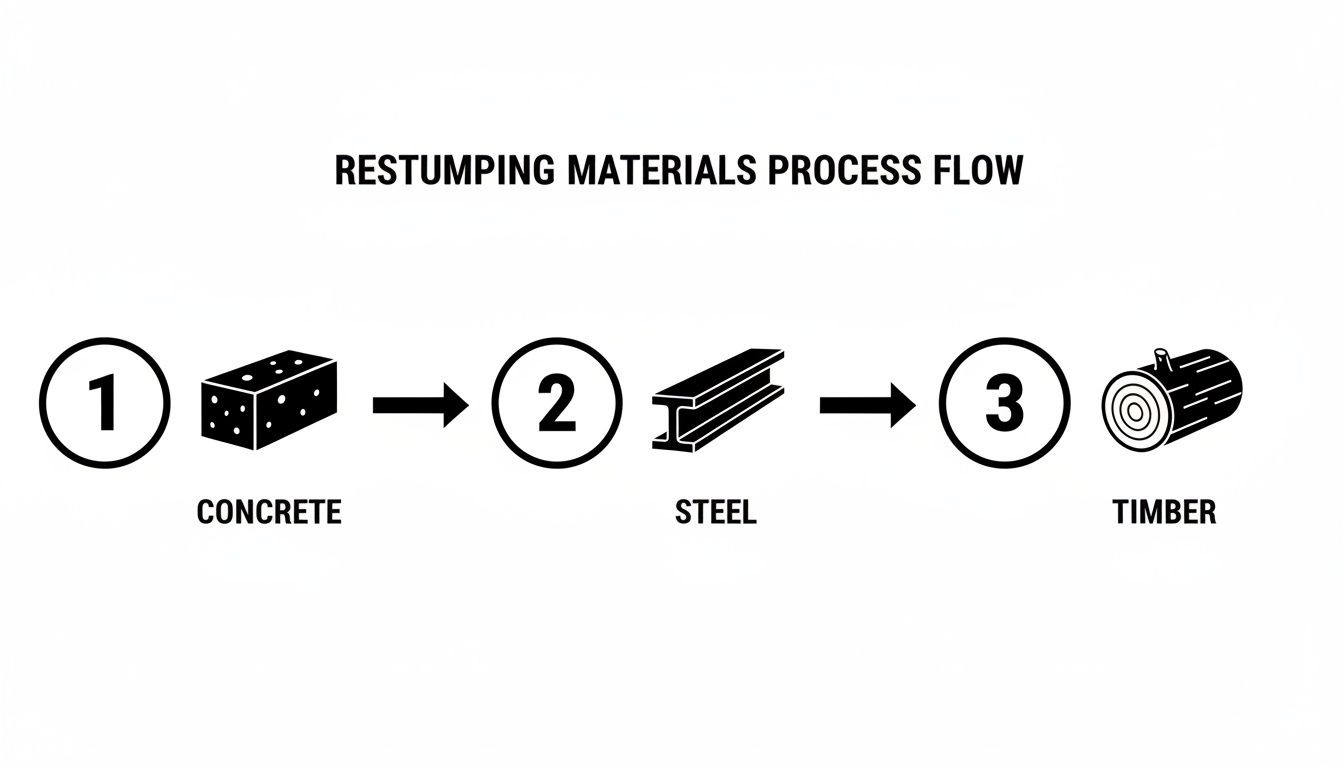
Each material—concrete, steel, or timber—has its own installation path and unique advantages for securing your foundation.
The Core Restumping Work
Now for the main event: lifting the house and swapping out the old stumps. It’s a carefully managed process that unfolds step-by-step.
-
Hydraulic Jacking: We strategically place a series of powerful hydraulic jacks under your home. The house is then raised slowly and uniformly—just enough to lift the load off the old stumps. It’s a job that demands absolute precision to prevent any strain on the structure.
-
Removing Old Stumps: With the house securely supported, we get to work removing the old, failing stumps. New holes are then dug out, strictly following the depth and specs laid out in the engineering plan.
-
Installing New Stumps: The new stumps—whether they're concrete, steel, or timber—are carefully set in place. For concrete stumps, this means pouring fresh footings to create an unshakable base. For steel stumps, they're bolted down and fine-tuned to get the levels perfect.
-
Lowering and Final Checks: Once the new stumps are locked in, the house is gently lowered back down onto its brand-new foundation. Our team then carries out meticulous checks to make sure every part of the house is perfectly level and stable. We repeat this process, section by section, until your entire home is sitting solid.
A well-run restumping job is all about precision and control. The whole point is to leave your home safer and more stable than it was before, ready to stand up to the unique challenges of rural NSW for decades to come.
What Does Restumping Cost in Rural NSW?
Let's get straight to the two questions every property owner asks first: "How much will this set me back?" and "How long will it take?" There’s no simple, off-the-shelf answer, because the final cost is shaped by the unique character of your home and your land. Getting your head around these factors will help you budget properly and see this project for what it is—a critical investment in your home's future.
The price is a direct reflection of how many stumps need replacing, the size and style of your home, and the soil you're built on. A big, heavy homestead sitting on reactive clay is a completely different job to a small cottage on stable ground. The key is to frame this not as a cost, but as an investment. Good stumps prevent far more expensive structural nightmares down the track and genuinely add to your property's long-term value.
Key Factors That Drive the Final Price
Every restumping job is different, but the things that determine the cost are always the same. If you understand these variables, you’ll have a much better idea of what to expect on your quote.
Here’s what we look at when pricing a job:
- Number and Type of Stumps: It's simple maths—more stumps mean more materials and more labour. Your choice of stumps, whether concrete, steel, or treated timber, will also have a big impact on the final figure.
- House Size and Weight: A sprawling homestead or a two-storey house needs more support. That means more stumps and often a more involved jacking process to lift and level the structure safely.
- Underfloor Access: The amount of room we have to work with underneath your house is a huge factor. A tight, cramped crawlspace makes everything slower and harder, which can push up the labour costs.
- Soil Conditions: We need to know what's happening in the ground. The soil type determines how deep the new footings have to go. Reactive clays, which are common across rural NSW, demand more engineering and deeper excavation to get it right.
The Rural Reality: Site Access is a Major Cost Factor
For rural properties, one of the most significant—and often overlooked—costs is simply site access. Getting tonnes of concrete, steel, heavy jacks, and a skilled crew out to a remote homestead down dirt tracks and across creek crossings is a serious logistical exercise. This complexity inevitably adds to the project’s cost.
This is exactly why you can't just send any old crew out to a rural job. Our specialised 10-tonne 4×4 truck is built for these challenging conditions. It allows us to get our team, materials, and all the necessary equipment right where they need to be, right on time. This capability is crucial for keeping your project on schedule and avoiding expensive delays caused by getting bogged or stuck.
The history of rural NSW properties often dictates the need for such specialised access. Many homesteads were built following early 20th-century land clearing for farming, often on flood-prone paddocks from Parkes to Nyngan. Today, with a significant number of Australian homeowners renovating, rural NSW sees thousands of annual restumping jobs. For our clients on remote properties like cattle stations, a full job can range from $30,000 to $70,000, a figure that accounts for this specialised 4×4 access. If you're interested in the history, you can read the full research about the historical context of land use in NSW.
Why Restumping is a Long-Term Investment, Not Just a Cost
It’s easy to look at a restumping quote and see it as just another bill to pay. But it's far more accurate to see it as a fundamental investment in the health and value of your property.
Putting off restumping allows small annoyances, like a sticky door, to grow into massive problems—think cracked walls, broken plumbing, and a house that is literally failing.
Fixing your foundations proactively is almost always cheaper than repairing the widespread damage that a failing structure causes. A properly restumped home gives you incredible peace of mind, but it’s also a powerful selling point. It shows potential buyers that your home has been maintained from the ground up. For a wider view on building expenses, take a look at our guide on understanding home build costs in rural areas.
Solving Access Challenges for Remote Properties
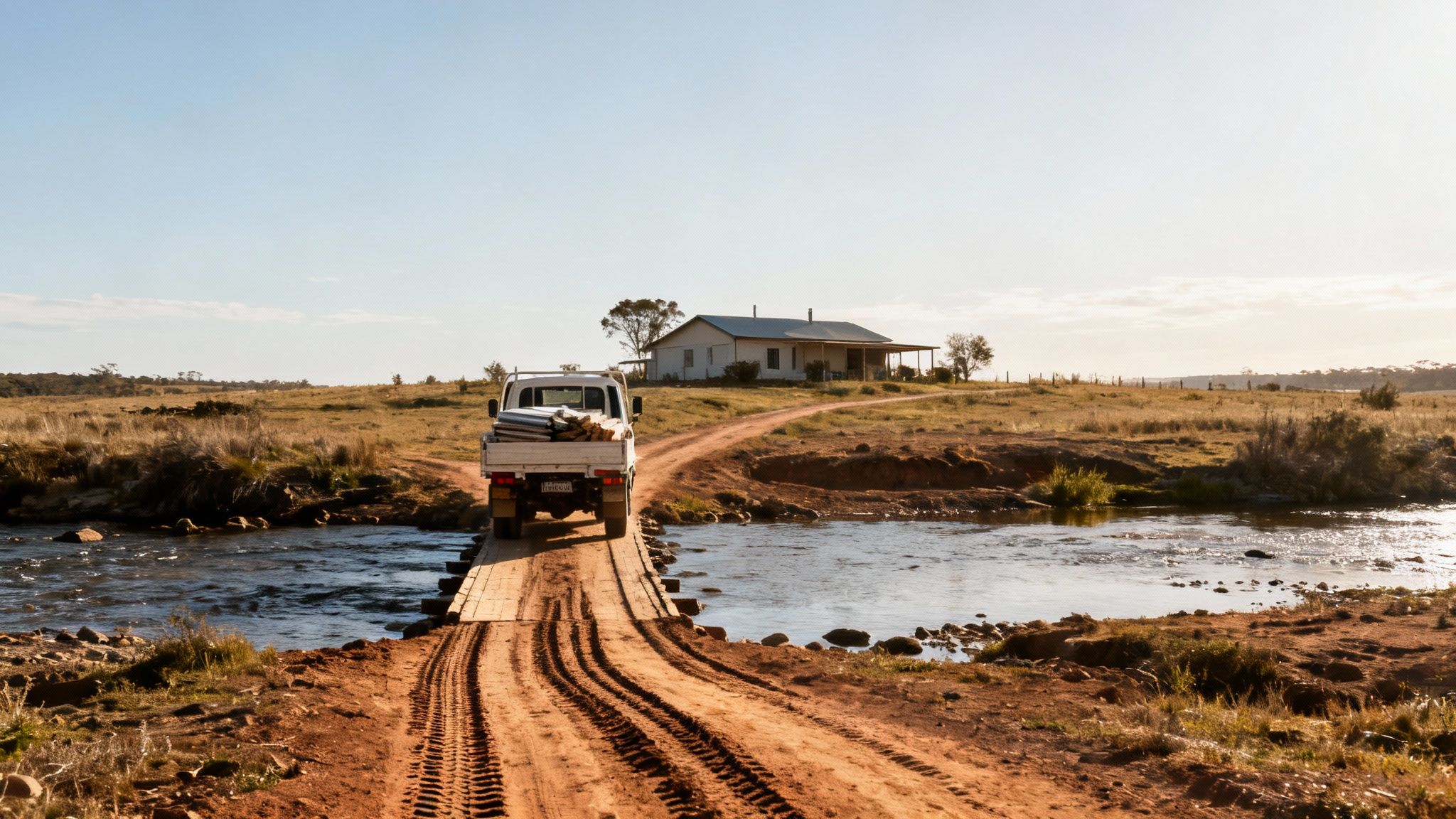
Restumping a home in town is one thing. Taking on the same job on a remote farm or station somewhere in regional New South Wales? That’s a completely different beast. Often, the biggest hurdle isn’t the work itself—it’s just getting everything and everyone there in one piece.
We’ve all seen it. Dirt tracks that turn to slick mud after a bit of rain, unexpected creek crossings, and sheer distance from suppliers can bring a project to a grinding halt. Standard delivery trucks and the average tradie ute just aren't built for that kind of punishment, leading to costly delays and massive frustration. It’s a story we hear all the time, and it can turn a critical repair into a logistical nightmare.
This is exactly why a contractor’s transport and planning are just as crucial as their building skills. Getting the job done right out in the bush requires a specific approach, built from the ground up for rural conditions.
The Game Changer: A Purpose-Built Fleet
To pull off a restumping project in a truly remote spot, you need more than just good intentions. You need machinery designed to handle the unique obstacles the Australian bush throws at you. For us, having the right fleet is non-negotiable.
We learned early on that standard vehicles simply don't cut it. That's why we invested in a specialised 10-tonne 4×4 truck. This isn't just a delivery vehicle; it's our mobile supply line, built specifically to navigate the challenging terrain we find on properties from Tamworth to Broken Hill.
Our heavy-duty 4×4 truck is the backbone of our remote operations. It lets us bring our crew, materials, and all the necessary gear exactly where it's needed, ensuring your project moves ahead smoothly, no matter how far off the beaten track you are.
This capability takes the guesswork out of rural jobs. We aren't relying on third-party couriers who might get spooked at the sight of a dirt road. We can confidently promise that everything will arrive on-site, keeping your project firmly on schedule.
How Specialised Access Benefits Your Project
Having a dedicated all-terrain fleet brings real, tangible benefits to your project. It's about more than just convenience; it's about delivering a professional and reliable service, no matter your postcode.
Here’s how our logistical setup makes a real difference:
- Reliable Material Delivery: We can haul tonnes of concrete stumps, steel supports, heavy-duty jacks, and everything else we need directly to your doorstep. No excuses.
- Project Efficiency: By getting rid of access-related delays, we keep the project timeline tight and predictable. This minimises the disruption to your home and your day-to-day farm operations.
- Reduced Risk: Our fleet of 4×4 utes and our heavy truck dramatically cuts the risk of vehicles getting bogged or stranded by a rising creek—common causes of expensive downtime.
- Complete Self-Sufficiency: We roll up with everything needed to start and finish the job. Our skilled team and all the materials arrive in one coordinated effort, ready to get to work.
At the end of the day, solving the access puzzle is fundamental to successful rural restumping. Our investment in the right vehicles means your property's location is never a barrier to giving your home the safe, stable foundation it deserves.
How to Choose a Qualified Restumping Contractor
Picking the right contractor is easily the most critical decision you'll make for your restumping project. It's not just about getting the job done; it's about safeguarding your home's entire foundation for decades to come. The quality of their work directly impacts the safety and stability of your house, so this isn't the time to look for the cheapest option.
You need a partner who truly gets the unique challenges of working on rural properties. They're more than just builders—they’re project managers, logistics coordinators, and compliance experts rolled into one. A true professional will carry all the right insurance, like Public Liability and Home Building Compensation Fund coverage, which protects you if anything goes wrong. Checking these details isn't just bureaucratic box-ticking; it's your safety net.
Verifying Credentials and Experience
Before you even think about looking at a quote, it's time to do some homework. The first step is simple: jump online and check that their builder's licence is current and valid for New South Wales. Next, ask to see their certificates of insurance. Any contractor worth their salt will have these documents ready to go without any fuss.
Beyond the paperwork, you're looking for someone with a solid track record on properties like yours. A crew that spends all its time in the suburbs might not have a clue how to handle the reactive clay soils or tricky site access common on a farm.
Get straight to the point and ask them directly:
- How many rural homes have you restumped?
- Can I speak to a few of your recent clients in this area?
- What sort of gear do you have for getting into remote or difficult sites?
The need for genuinely skilled contractors has never been clearer, especially with the wild weather we’ve been having. The numbers tell a sobering story. An ASIC review of insurance claims after the 2022 floods found that foundation damage was a major factor in 22% of claims facing long delays. With so many older farmhouses out there, finding the right builder isn't just a good idea—it's essential. You can dig into the specifics in the insurance claim findings from the ASIC report.
Interpreting the Quote and Asking the Right Questions
A professional quote should be clear, detailed, and leave nothing to the imagination. It needs to break down all the costs: materials, labour, engineering reports, council fees, and any other specific charges for your site. If you get a vague, one-line quote, be very cautious. That’s often a sign that extra costs are hiding around the corner.
A detailed quote is a sign of a professional operation. It shows the contractor has thoroughly assessed the job and is confident in their pricing, leaving no room for nasty surprises down the track.
The quote should also spell out exactly what materials will be used—the type and grade of concrete, the galvanisation on the steel, or the treatment on the timber. It's also a good sign when a builder can demonstrate strong general practical skills that go beyond just one trade.
Taking these steps will help you confidently choose the right rural builder to protect your most valuable asset.
Frequently Asked Questions About Restumping
Restumping is a big job, and it’s completely normal to have a list of questions before you start. It's a major structural project, after all, and you need clear, honest answers. We've put together some of the most common questions we get from rural property owners across New South Wales.
Can We Live in the House During the Project?
Yes, in almost all cases, you can absolutely stay put. A professional team knows how to work systematically, tackling one section at a time, to keep your home safe and liveable throughout the entire job. The goal is always to minimise the disruption to your family and your daily routine on the farm.
Of course, there will be some noise and vibration during the day. A good crew will communicate their work schedule clearly. If the job is particularly complex and might cause more significant interruptions, they’ll discuss this with you well in advance to figure out the best approach for everyone.
Is Council Approval Required for Restumping in NSW?
Yes, it is. Restumping is considered a major structural alteration, so you absolutely need council approval in New South Wales. This ensures the work meets the strict safety and quality standards set by the Building Code of Australia and your local council.
A seasoned rural contractor will handle all of this for you. They'll take care of the engineering plans, lodge the development application, and deal with the council inspectors. It takes the stress and paperwork off your plate and guarantees your project is compliant from the get-go.
How Often Should a House Be Restumped?
How long your stumps last really comes down to the material they’re made of and the soil conditions on your property. Old-school, untreated timber stumps might last anywhere from 20 to 80 years, but that lifespan can be cut short by damp ground, shifting soil, or termites.
Modern materials are a completely different story.
- Concrete Stumps: Properly installed, high-quality concrete stumps can easily last for 75 years or more.
- Galvanized Steel Stumps: Steel offers incredible durability and also boasts a lifespan of well over 75 years.
As a rule of thumb, it's smart to have a professional check your foundations every 10 to 15 years. This helps you catch any small issues before they snowball into big, expensive problems.
What Happens If I Delay Necessary Restumping?
Putting off a restumping job is one of the worst things you can do for your home. It’s a classic case of letting a manageable repair turn into a structural nightmare. What starts as a slightly sticky door can quickly escalate into serious, widespread damage.
Ignoring the early warning signs of foundation failure is a false economy. The secondary damage—such as severe wall cracks, broken plumbing, warped window frames, and an unstable structure—is almost always more complex and expensive to fix than the initial restumping project.
Tackling it early not only secures the structural integrity of your house but also protects its value. Think of proactive restumping as a wise investment that saves you from a massive financial headache down the track.
If you're dealing with foundation issues on your rural property, you need a team that gets the unique challenges involved. At Awesim Building Contractors, we have the experience and specialised equipment to deliver a solid, long-lasting solution, no matter how remote you are. Contact us today to secure the foundation of your home for generations to come. Find out more at https://awesim.au.