
If you own an older home, you’ve probably heard the term restumping. At its core, it’s the process of replacing the old, original foundation stumps—which are usually timber—with new, far more durable ones made from galvanised steel or concrete.
Think of your home's stumps as its legs. When they start to wobble or weaken, the entire structure above is at risk. Restumping isn't just a repair; it's a fundamental upgrade to secure your home's stability for decades to come.
Understanding the Foundations of Your Home
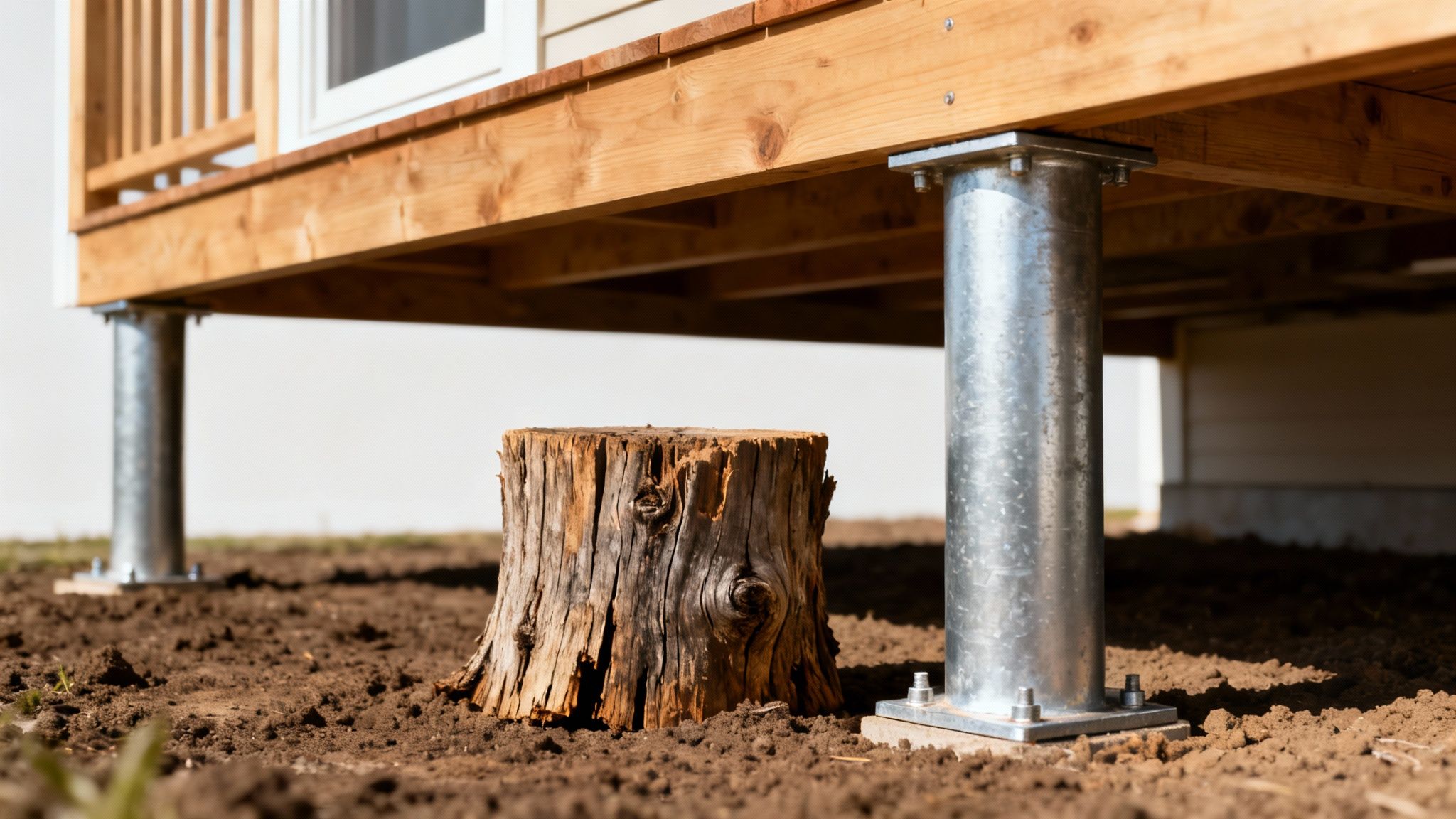
Many classic Australian homes, especially the beautiful old homesteads dotted across rural New South Wales, were built on timber stumps. It was the standard practice for a long time, but those original stumps were never meant to last forever. Over the years, they face a constant battle against the elements.
The main enemies of timber stumps are moisture, shifting soil, and, of course, termites. Damp ground leads to wood rot, slowly eating away at the stumps' strength. On top of that, the clay-rich soils found in much of NSW are notorious for shrinking and swelling with the seasons, which pushes and pulls at the foundations, causing them to shift and sink.
The Inevitable Decline of Old Foundations
This deterioration is a slow burn, but it's relentless. A single failing stump can start a chain reaction. It might cause the floor joists to sag, which in turn can pull window frames out of square and open up cracks in your walls. What starts as a small problem underneath the house eventually shows up as serious, and often expensive, damage inside.
It's easy to write off the symptoms as just "the house settling," but these are clear signs that your foundation is in trouble. Keep an eye out for these tell-tale indicators that you might need restumping a house:
- Uneven or Bouncy Floors: Do you feel a definite slope when you walk across a room, or a spongy, spring-like feel underfoot?
- Sticking Doors and Windows: Are they suddenly hard to open or close? That's often because the frames are being warped by foundation movement.
- Cracks in Walls: New cracks appearing in the plaster, particularly radiating from the corners of doors and windows, are a classic red flag.
Ignoring these early warnings is a risk you don’t want to take. A failing foundation affects more than just your home's resale value; it can become a genuine safety hazard. Getting on top of it with professional restumping is the only way to properly secure your home for the long haul.
Servicing Even the Most Remote NSW Properties
Living out in the bush has its perks, but getting trades and materials to your property isn't always one of them. Unsealed roads, tricky creek crossings, and remote locations can be a deal-breaker for many construction companies and their standard vehicles. We knew this was a major hurdle for rural homeowners, so we equipped ourselves to solve it.
Our operation is built around a 10 tonne 4×4 truck that can handle the tough terrain, allowing us to bring in labour, materials and equipment where & when it's needed the most. It allows us to bring our entire crew, all the materials, and the specialised equipment we need straight to your door, no matter how far off the beaten track you are. This self-sufficiency means your location is never an obstacle to getting the job done right.
A failing foundation can also cause secondary problems, like warped and damaged floorboards. You can learn more about how these issues are connected in our guide to timber floor repairs.
Key Warning Signs Your Foundation Is Failing
Your home has its own way of telling you when something is wrong. When it comes to the foundation, these little clues are your first and best defense against serious structural problems. Learning to spot these signs early can save you a world of headaches and expense down the track.
These symptoms usually start small but get progressively worse. They're a direct result of the ground moving beneath your home, causing old stumps to sink, rot, or just give up the ghost. Knowing what to look for means you can step in and protect your biggest asset before the damage gets out of hand.
The Most Common Symptoms of Foundation Failure
Be on the lookout for a pattern of issues cropping up inside your home. A single problem might not mean much, but when you start seeing several of these signs at once, it’s a pretty clear signal that your foundation needs a professional look.
Here are the big three:
- Sloping or Uneven Floors: This is the classic sign. You might feel a distinct slope as you walk through a room, or notice your furniture sits on a lean. An old-school trick is to place a marble on the floor; if it rolls away on its own, you've got uneven floors.
- Bouncing or Spongy Floors: If walking across the room feels like you’re on a mini-trampoline, the stumps and bearers underneath have likely lost their strength. That sponginess is a dead giveaway that the floor lacks solid support, causing it to flex under your weight.
- Doors and Windows That Stick: As a house shifts, the frames around doors and windows get pulled out of square. This distortion is why they start to jam, become a nightmare to open or close, or just won't latch properly anymore.
These aren't just minor quirks—they're your house telling you that it's moving in ways it shouldn't be.
Cracks Are More Than Just Cosmetic
Cracks in your walls and ceilings are another major red flag. Sure, tiny hairline cracks can be a normal part of a house settling over time, but the cracks caused by foundation failure are a different beast entirely.
You should be worried about:
- Jagged, diagonal cracks running out from the corners of door and window frames.
- Cracks showing up in the exterior brickwork or zig-zagging along mortar lines.
- Gaps opening up between the walls and the ceiling or floor.
These aren't just surface-level blemishes; they are symptoms of serious structural strain. As the foundation sinks, it drags the house frame with it, putting so much pressure on your plasterboard and brickwork that they eventually fracture. Ignoring them is like ignoring a warning light on your dashboard—the problem only gets worse.
For many homeowners in rural New South Wales, this is a familiar story. A lot of homesteads built before the 1970s sit on timber stumps that were only ever meant to last 40-50 years. So, if you're in a place like Tamworth, Armidale, or Dubbo, those cracking walls and creaky floors are often the first sign that it's time for restumping a house. You can dig deeper into the standards for these kinds of repairs by checking out this guidance from Australian engineering experts.
To help you get a clearer picture, here’s a quick checklist to diagnose what might be happening with your home.
Foundation Distress Symptom Checker
| Symptom | What to Look For | Potential Severity |
|---|---|---|
| Sloping Floors | A marble rolls on its own; furniture looks tilted; a noticeable sag in the room's centre. | Moderate to High: A classic sign of sinking stumps needing immediate attention. |
| Sticking Doors/Windows | Doors jam in their frames; windows are hard to open/close; latches no longer line up. | Moderate: Indicates the house frame is being twisted out of square. |
| Wall & Ceiling Cracks | Jagged, diagonal cracks from corners; zig-zag cracks in brickwork; gaps appearing. | High: A direct sign of structural stress and movement. |
| Spongy or Bouncy Floors | The floor gives or flexes when you walk on it, particularly in the middle of a room. | Moderate: Suggests rotting or failing stumps and bearers beneath the floor. |
| Exterior Gaps | Gaps opening up between the house and additions like verandahs, steps, or chimneys. | Moderate to High: Shows the main structure is pulling away from attached elements. |
This table is a starting point. If you're ticking off more than one of these boxes, it’s a strong signal that you need a professional opinion.
Because the health of your foundation underpins the stability of everything else, it’s a central part of our approach to property and building maintenance. A solid foundation is the best way to prevent a whole host of other problems from ever starting.
When you start noticing these warning signs, the best thing you can do is act. A proper assessment will get to the bottom of the issue and lay out a clear plan to get your home level and secure for years to come.
The Complete House Restumping Process Explained
Restumping your house might sound like a massive undertaking, but when you break it down, it's a logical, step-by-step process. A professional crew doesn't just show up and start ripping things out; it's a carefully planned operation to safely reset your home's foundation from the ground up, making sure every detail meets Australian Standards.
The real work starts long before the first old stump is ever touched. It all begins with a detailed plan to map out the project, which helps keep things running smoothly and minimises the disruption to your life. Most importantly, it ensures your home's structural integrity is protected at every turn.
Initial Assessment and Preparation
First things first, we need a thorough site inspection. A structural engineer or a highly experienced contractor will come out to properly evaluate your home’s condition. They'll figure out exactly how many stumps need replacing, what type of new stumps are best for your property, and what the soil is like underneath. This assessment becomes the blueprint for the entire job, dictating everything from stump placement to the best way to lift the house.
After that, it's all about site prep. We'll need clear access to the underfloor area, which might mean shifting stored items, garden beds, or any other obstructions. Inside the house, it’s a good idea to take down mirrors, secure valuables, and pack away anything fragile. The house will move slightly during the jacking process, and it's always better to be safe than sorry.
A professional team doesn’t just show up and start lifting. The preparation phase is about risk mitigation. By creating a clear plan and a safe work area, we ensure the process is as controlled and predictable as possible, protecting both your property and our team.
This visualisation shows the progressive signs of foundation failure, starting with uneven floors, leading to cracked walls, and finally causing jammed doors.
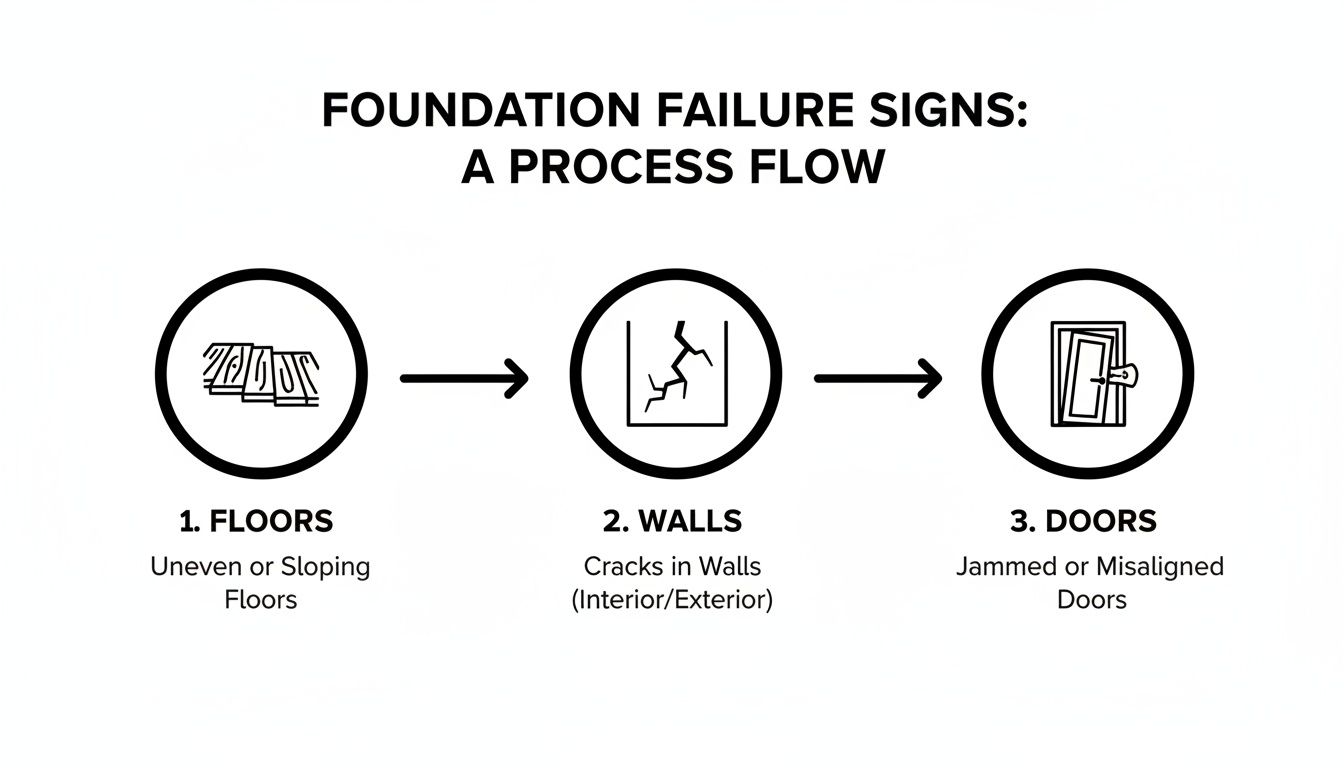
This process flow highlights how symptoms escalate, reinforcing why early intervention in the restumping a house process is crucial to prevent widespread damage.
The Lifting and Replacement Stage
With the plan locked in, the real work begins. It’s a methodical process where we work section by section—not one big, dramatic lift. Here’s how it unfolds:
- Hydraulic Jacking: We strategically place powerful hydraulic jacks under your home’s main structural bearers. These jacks gently and evenly lift a section just enough to take the load off the old, failing stumps.
- Temporary Supports: The moment a section is lifted, we position heavy-duty temporary supports to hold the structure securely. Safety is always our top priority, so the house is never left without support.
- Stump Removal and Installation: With the weight off, we can now dig out and remove the old stumps. We then prepare new footings—often pouring fresh concrete pads for maximum stability—and install the new stumps at the exact height specified in our plan.
- Lowering and Levelling: The house is then carefully lowered back down onto the new, solid stumps. We use laser levels and other precision tools throughout this stage to make sure your floors are brought back to being perfectly level.
We simply repeat this cycle across the entire footprint of your home until every last failing stump has been replaced with a new one.
Navigating Remote Site Logistics
For homesteads out in regional NSW, just getting materials and equipment to the site can be a major headache. Dirt tracks, creek crossings, and sheer distance from suppliers can stop a project in its tracks. This is exactly the kind of challenge we’ve built our operation to handle.
We use a 10 tonne 4×4 truck to bring all our people, materials, and gear directly to you, no matter how remote your property is. This self-sufficiency means we aren't at the mercy of local suppliers or sealed roads. We bring it all, from the galvanised steel stumps right down to the concrete for the footings. You can learn more about how we manage this with our specialised rural concrete services.
Once the final stump is in place and your house is sitting level, we conduct a final inspection. This is to confirm that all the work meets the engineer's specifications and the relevant building codes. After that, you'll receive the official certification—your proof that your home's foundation is secure, compliant, and built to last for decades to come.
Choosing the Right Materials: Steel vs Concrete
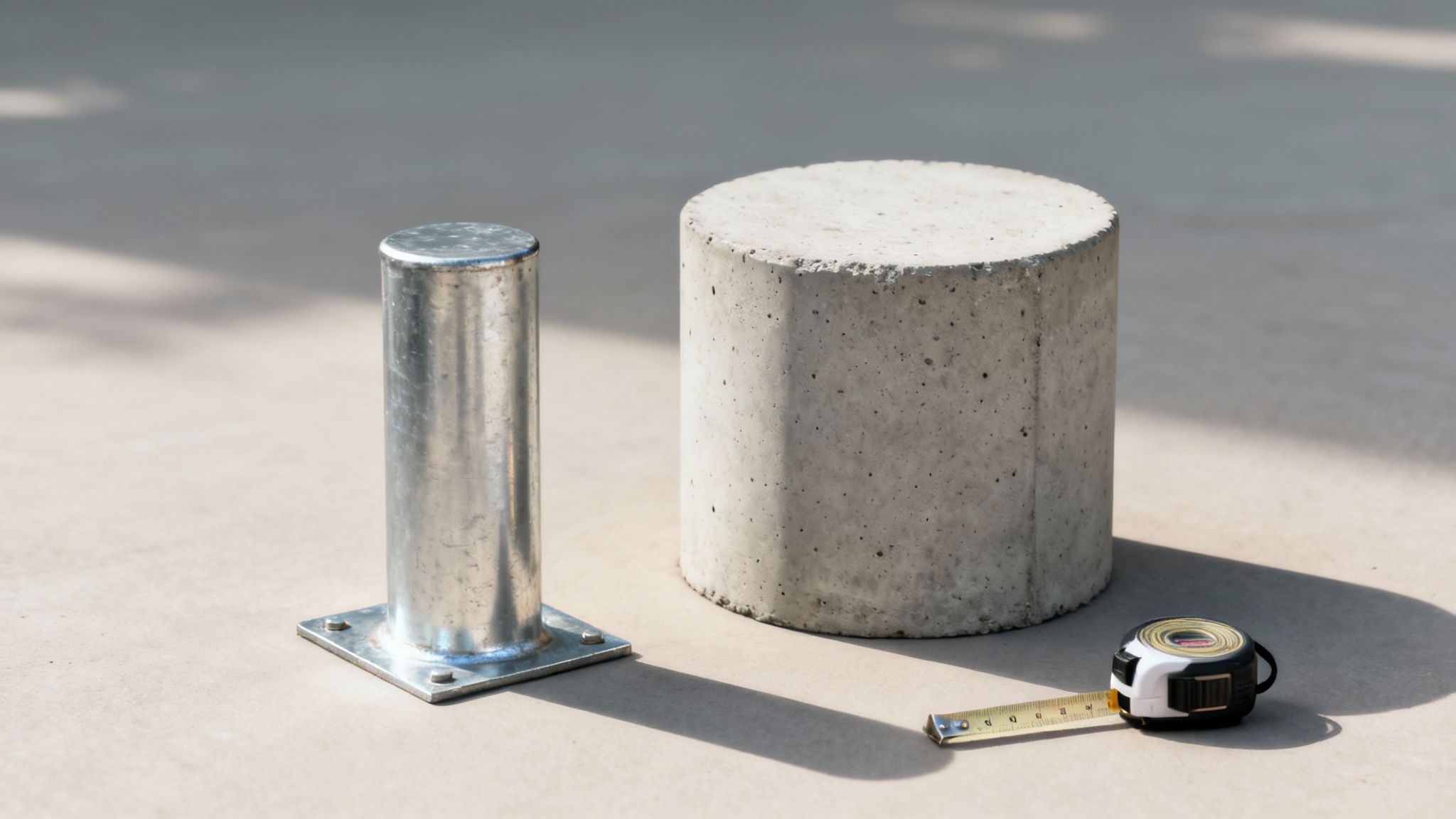
The success of restumping a house really comes down to choosing materials that can handle whatever your property throws at them. For most homes in New South Wales, the choice is between traditional concrete stumps and modern galvanised steel stumps. While both have their uses, one is almost always the better bet for rural homesteads.
This decision is about more than just the upfront cost. It's an investment in a foundation that needs to last for decades, battling against reactive clay soils, unpredictable weather, and the ever-present threat of termites. Getting this right means you won't have to think about it again for a very, very long time.
The Old Guard: Concrete Stumps
Concrete stumps have been the go-to for generations, and for good reason. They're strong, they won't rot, and they're generally cheaper to buy than steel. For a standard suburban block, they often do the job just fine.
But they have their weak spots, particularly out in the country. Concrete is heavy and rigid, which means it can be prone to cracking under the immense pressure of shifting, swelling soils. And while termites can't eat concrete, they have no problem building their hidden mud tunnels right up the side of a stump to find their way into your home's timber frame.
The Modern Champion: Galvanised Steel Stumps
This is where galvanised steel really shines. Steel stumps are engineered for both strength and resilience. Unlike concrete, they have a slight give, allowing them to move with the expansion and contraction of NSW's infamous reactive clay soils without cracking. That durability is a huge plus for any rural home.
Their biggest advantage, though? They are 100% termite-proof. For any rural property owner who’s had to deal with white ants, this feature alone is worth its weight in gold.
The hot-dip galvanised coating on these stumps creates an incredibly tough barrier against rust and corrosion. It ensures they'll last for generations, even in the damp, dark environment under your house. This makes steel a true 'set and forget' solution for your foundation.
It's this long-term, worry-free performance that leads us to recommend galvanised steel for almost every restumping project we undertake. It delivers a level of peace of mind that concrete just can't offer.
A Head-to-Head Comparison of Restumping Materials
Choosing the right stump material is a crucial decision for the longevity of your home's foundation. To help you weigh the options, this table compares concrete and galvanised steel across the factors that matter most to rural property owners in NSW.
| Material | Pros | Cons | Best Suited For |
|---|---|---|---|
| Concrete | Lower initial cost, strong, rot-proof. | Heavy, brittle (can crack with soil movement), allows hidden termite access. | Standard suburban homes on stable soil with low termite risk. |
| Galvanised Steel | Completely termite-proof, extremely durable, flexible to handle soil movement, lighter weight. | Higher initial purchase price. | Rural properties, homes on reactive clay soils, and high-risk termite areas. |
As you can see, while the upfront cost of steel is higher, its superior durability and total termite immunity make it a far smarter long-term investment, especially for the unique challenges of a rural property.
Getting the Gear to You: Overcoming Rural Access Hurdles
Of course, picking the best materials is one thing; getting them to your property is another challenge entirely. We know many rural homesteads are tucked away down long dirt tracks, behind creek crossings, or in places a standard delivery truck wouldn't dare go.
This is where our specialised setup makes all the difference. We run a 10 tonne 4×4 truck, which is basically an all-terrain workshop on wheels. It allows us to be completely self-sufficient, carrying our crew, all the galvanised steel stumps, concrete for the footings, and our heavy-duty equipment directly to your site.
With this rig, your remote location is never an obstacle. We can get the job done right, with the best materials, no matter where you are.
Getting to Grips with Costs and Council Rules in NSW
Sorting out the money and the paperwork is every bit as critical as the physical restumping itself. When you get a quote, you'll quickly realise there's no standard price tag; it's always tailored to the specific state of your home's foundations. At the same time, councils across New South Wales have rules in place to make sure any structural work is done safely and to code.
Getting a clear handle on these two things right from the start means you can budget properly and sidestep any bureaucratic headaches down the track. It’s all about making sure the project kicks off on the right foot and runs without a hitch.
Breaking Down the Cost of Restumping a House
So, what goes into the final price? A few key things will shape the quote, with the number of stumps being the biggest factor. For rural properties, though, a few other elements can really come into play.
Here’s what typically drives the cost:
- House Size and Layout: It’s simple maths, really. A sprawling homestead with lots of corners will need more stumps and more labour than a simple four-waller.
- Number of Stumps: This is the heart of the quote. The price is often broken down on a per-stump basis, which usually includes the new stump, the labour to install it, and all the fixings.
- Underfloor Access: If your home is low to the ground, it's a much tougher and slower job for the crew to work underneath. That extra time and difficulty will be reflected in the cost.
- Site Accessibility: How easy is it to get machinery and materials to your house? A straightforward delivery is one thing; navigating tricky country tracks is another.
With the cost of building from scratch going through the roof, it’s no wonder so many people in the bush are choosing to fix what they've got. For a typical home in regional centres like Parkes, Dubbo, or Broken Hill, you're generally looking at $500 to $700 per stump. Most full restumping projects land somewhere between $10,000 and $25,000, making it a much more realistic option than a complete rebuild.
Navigating Council Approvals in NSW
Because restumping is structural work, it's regulated by your local council and has to meet the standards set out in the Building Code of Australia. This means that for most projects in NSW, you’ll need to get the green light from the council before any work begins. This usually takes the form of a Development Application (DA) or a Complying Development Certificate (CDC).
These approvals aren't just red tape. They’re there to ensure the job is properly designed by an engineer, carried out by licensed professionals, and is completely safe. It’s a crucial step that protects you and the long-term value of your home.
A good restumping contractor takes all this off your plate. They'll handle the engineering plans, lodge the applications, and schedule the required council inspections, so you don't have to get bogged down in paperwork.
Ensuring Access to Remote NSW Properties
For homeowners out in the sticks, just getting a crew and their gear to your property can be a massive hurdle. Many standard delivery trucks simply aren't built for unsealed roads, creek crossings, or far-flung locations. This is where having the right equipment makes all the difference.
We've solved this problem by investing in a purpose-built 10 tonne 4×4 truck. This beast is designed to handle the toughest country New South Wales can throw at it, making us completely self-sufficient. We can load up our whole team, all the steel stumps, and the specialised gear needed for the job and bring it straight to you. It means your home’s location is never an obstacle to getting its foundations professionally restored. As you plan your project, it can be helpful to look at the bigger picture of property ownership costs; you can review some general statistics for NSW homeowners to get a broader perspective.
Navigating the Challenges of Restumping in Remote Rural Areas
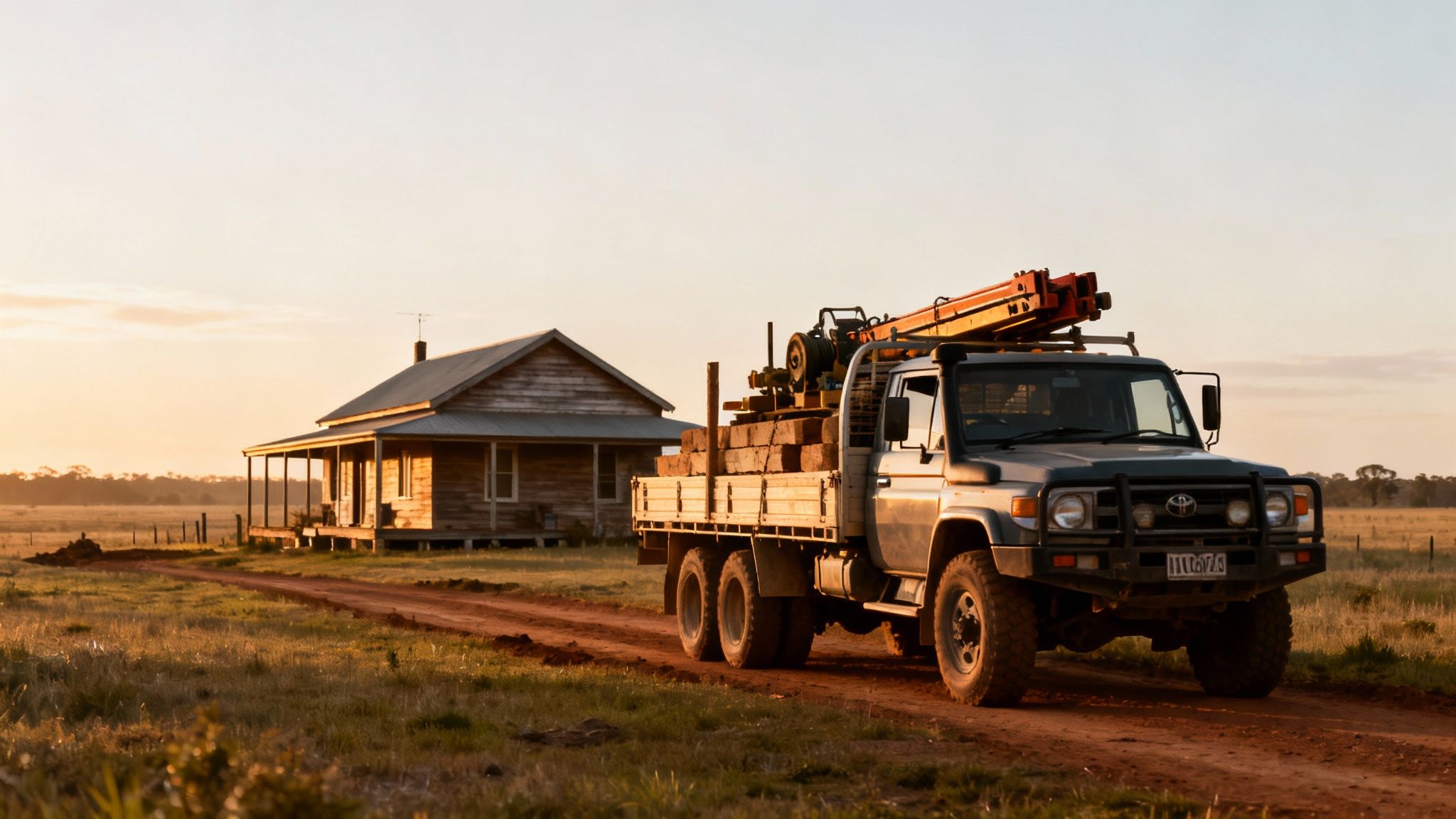
Restumping a homestead out in the bush is a completely different beast to a job in the suburbs. Here in regional New South Wales, the biggest headaches are almost always logistical. Simply getting heavy materials and specialised gear to a property that’s miles down a dirt track or on the other side of a temperamental creek can be a non-starter for many contractors.
This is where real-world experience out on the land makes all the difference. Your average delivery truck just isn't cut out for the rugged terrain we often encounter. A successful remote project hinges on a team's ability to be entirely self-sufficient, tackling access issues head-on without letting it delay the job or cut corners on quality. It takes serious planning and, most importantly, the right kind of heavy-duty equipment.
Our Solution: A Purpose-Built Rig for Remote Access
We figured out pretty quickly that to properly service remote properties, we needed a completely different approach. To solve the access problem once and for all, we invested in a purpose-built 10 tonne 4×4 truck. This beast is the heart of our remote operations, specifically designed to handle the toughest conditions rural NSW can throw at it.
But this truck is much more than just transport; it’s our mobile workshop and supply hub. It means we can bring everything we need for a full restumping a house project directly to your front gate in one go.
- All Your Materials: We load up every single galvanised steel stump, bag of concrete, and structural beam needed for the job. This cuts out any dependence on local suppliers who might not deliver to out-of-the-way locations.
- Specialised Gear: From hydraulic jacks and laser levelling tools to excavation machinery, it all comes with us. We arrive with the right tools from day one.
- Our Skilled Crew: The truck brings our experienced team right to your property, ready to start work immediately.
Our self-contained setup is our promise to you. It guarantees your project will run smoothly and stay on schedule, finished to the highest standard, no matter how far off the beaten track your homestead is. We don't just find a way to get there; we arrive fully equipped to get the job done right.
Why This Self-Sufficiency is a Game-Changer for You
Being able to operate completely independently has a massive impact on your project's success. By bringing our own crew, materials, and equipment, we sidestep the common pitfalls that can derail rural construction work. You won't be left stressing about staggered deliveries, subcontractors getting bogged, or the whole project grinding to a halt because a crucial piece of machinery couldn't make the trip.
This level of preparation puts us in complete control of the timeline and the quality. From the moment our wheels hit your property, our one and only focus is on giving your home the solid foundation it deserves. It’s this commitment that ensures a seamless, successful outcome for even the most isolated properties, delivering strength and stability where it counts the most.
Your Restumping Questions, Answered
If you’re thinking about restumping your house, you’ve probably got a lot of questions. That’s completely normal. It’s a big job, and you want to know what you’re getting into. We’ve put together answers to the most common questions we hear from homeowners across rural New South Wales to help you get a clearer picture.
Think of this as a straightforward chat about everything from timelines to what life is like while the work is underway. Our aim is to give you the practical information you need to plan ahead and feel confident about securing your home’s foundation.
How Long Does a Restumping Job Actually Take?
For a typical rural home, we’re usually on-site for anywhere between one and three weeks to complete a full restumping. Of course, that timeframe can shift a bit depending on a few things.
The size of your house and how many stumps need replacing are the obvious factors. But access underneath is a big one, too. A home that sits very low to the ground, for example, is trickier and takes more time. We map everything out beforehand to work as efficiently as possible, keeping disruptions to a minimum and sticking to the schedule we give you.
Can We Still Live in the House While You Work?
Yes, absolutely. In almost every case, you can stay put while we work. We have a methodical process that keeps your home safe and fully supported the entire time, so you can carry on with your daily routine without too much hassle.
Be prepared for some noise and vibrations during the day – that’s just part of the job. But we’ll always keep you in the loop and do our best to make the process as smooth as we can for you and your family.
The fact that you can stay home is a huge relief for most people. It means you avoid the expense and stress of finding somewhere else to stay, which makes the whole project much easier to manage.
What Should I Expect After the Restumping Is Finished?
Once we’ve packed up, your home will be perfectly level and secure on its new stumps. You might notice a few small cosmetic shifts inside as the house settles into its proper position. Don’t be alarmed by this!
For instance, you might see old plaster cracks reappear or find small gaps have opened up around door and window frames. This is actually a good sign – it means the frame is finally sitting straight. We always recommend waiting a few weeks for the house to fully settle before you tackle any touch-ups like patching or painting.
How Do You Handle Access to Remote Farm Properties?
Getting to remote properties is what we do. It’s a core part of our business, and frankly, we’re set up to handle the kind of logistical challenges that would stop other contractors in their tracks.
We have a heavy-duty 10-tonne 4×4 truck in our fleet for a reason. It gets us through unsealed roads, up steep tracks, and across creek beds without any trouble. This rig lets us be completely self-sufficient, carrying our team, all the galvanised steel stumps, and our specialised gear right to your property. It means that no matter how far out you are, your restumping a house project will get done right and on time.
A solid foundation is everything. It protects your home’s value and gives you peace of mind. If you’ve spotted some of the warning signs we’ve talked about, don’t put it off. The problem will only get worse.
Contact Awesim Building Contractors today. We’ll give you a professional assessment and a clear, honest plan to make your home secure for generations.
Get a Quote for Your Restumping Project