

That little crack or water stain on your ceiling? It’s often telling a much bigger story, especially when you're out on a rural property. When we talk about professional plasterboard ceiling repairs, it’s never just about patching the hole. It's about figuring out why it happened in the first place. That's the key to a fix that actually lasts, particularly for homes and buildings across New South Wales dealing with unique country stresses.
Understanding Why Your Rural Ceiling Is Failing
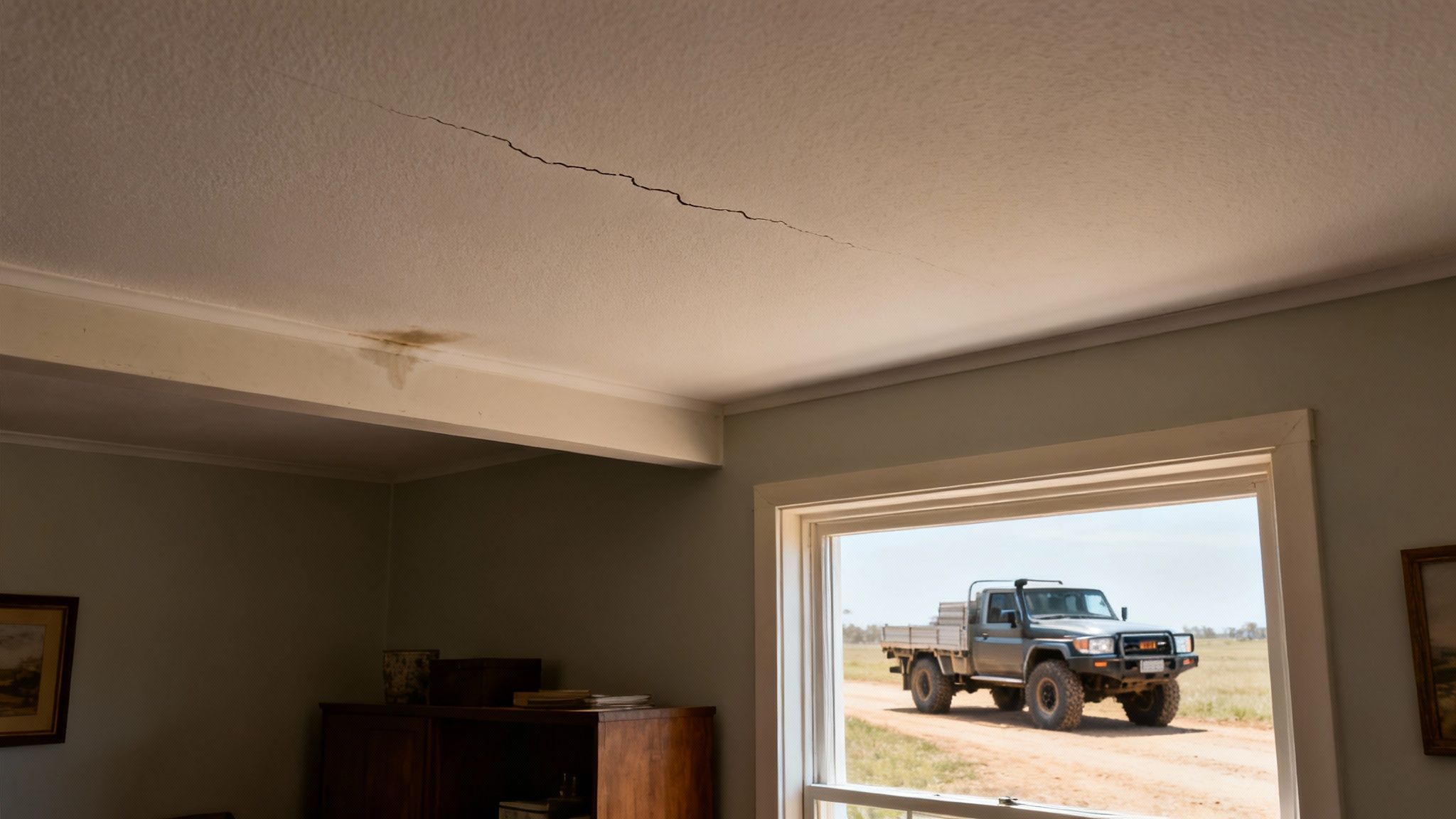
Ceilings in rural homesteads and farm sheds put up with a lot more than their city counterparts. That hairline crack you've been watching, or the brownish patch that appeared after the last big storm, is almost always a sign of something bigger going on. Finding that root cause is always our first move.
If you ignore these early warnings, you’re just setting yourself up for a bigger, more expensive headache later. A small water stain today can easily become a collapsed section of ceiling tomorrow if you don't track down and stop the leak.
Common Causes of Ceiling Damage in NSW
From the heaving black soil plains to the scorching heat of the outback, the diverse New South Wales landscape puts a unique strain on buildings. Your property is constantly moving and adjusting, and that's where most ceiling problems start.
Here are the usual suspects we see on country jobs:
- Structural Movement: Buildings naturally settle over time. Add the seasonal shrink-and-swell of timber frames, and you get stress points that pop up as cracks in the rigid plasterboard sheets.
- Moisture and Water Leaks: This is a big one. A leaky roof, a split pipe in the ceiling space, or even just high humidity can soak the plasterboard, making it soft, saggy, and a perfect home for mould.
- Temperature Extremes: The wild temperature swings common across regional NSW make building materials expand and contract at different rates. This puts immense pressure on plasterboard joints and the screws holding it all up.
- Vibrations: Living and working on the land often means heavy machinery. Over time, constant vibrations can work fasteners loose and cause cracks to form.
A sagging ceiling is a serious red flag. It's a clear sign the plasterboard has lost its strength, usually from a long-term water issue or failing glue, and it could be at risk of coming down.
Overcoming the Tyranny of Distance
Getting anything done on a remote property comes with logistical hurdles, and ceiling repairs are no exception. Trying to get experienced trades, full-sized plasterboard sheets, and the right gear out to a property that's hours from the nearest town can be a nightmare. A standard delivery ute isn't going to cut it on a washed-out track or through a creek crossing.
This is exactly why we run a purpose-built 10 tonne 4×4 truck. It’s the heart of our rural operation, allowing us to bring in labour, materials and equipment where and when it's needed the most. This beast allows us to load up our team, scaffolding, tools, and all the materials for your job and bring it all directly to your front gate in one go, no matter how far off the beaten track you are.
It means we can get started right away and finish the job efficiently, delivering proper, reliable plasterboard ceiling repairs exactly where they’re needed most.
How to Diagnose Common Ceiling Problems
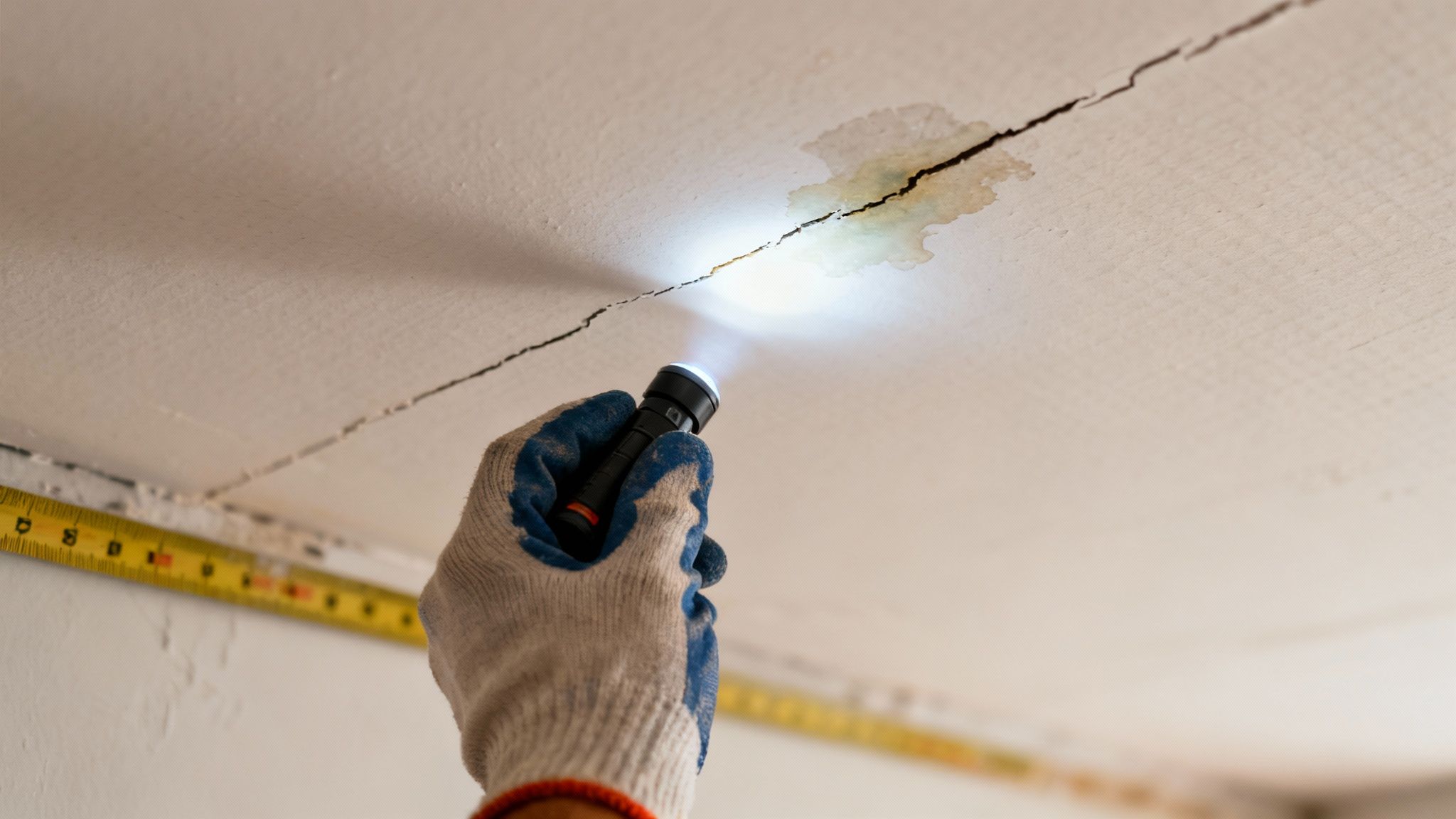
Before you even think about patching a hole or sanding a seam, you need to play detective. Getting the diagnosis right from the start is absolutely crucial. It’s what separates a lasting repair from a cover-up that fails in a few months, and it helps you understand whether you’re dealing with a simple cosmetic flaw or a symptom of a much bigger headache.
Think of it as reading the story your house is trying to tell you. A proper assessment will save you a world of trouble, time, and money down the track. It ensures a small issue doesn't spiral into a major structural problem.
Reading the Signs of Water Damage
Water is, without a doubt, the number one enemy of a plasterboard ceiling. The signs might seem subtle at first, but they always point to a leak somewhere upstream. You absolutely must find and fix the source of that water before any ceiling repair work even begins.
Keep an eye out for these classic clues:
- Discolouration: Those ugly yellow or brown stains are the calling card of a water leak. The spot might feel bone dry now, but that stain is hard proof that moisture has been there.
- Sagging or Bowing: When plasterboard gets properly saturated, the gypsum core turns mushy and it will start to droop under its own weight. This is a serious red flag that the ceiling’s integrity is compromised.
- Peeling Paint or Bubbles: Moisture trapped between the paint and the plasterboard will literally push them apart, creating blisters, bubbles, and peeling.
While we're focused on the ceiling itself, understanding common roofing problems and their solutions can give you a better idea of where that water might be coming from.
Identifying Cracks and Structural Issues
Not all cracks are born equal. Some are just minor cosmetic flaws, but others can be screaming at you about serious structural movement that needs a professional eye, and fast. A thin, perfectly straight crack along a plasterboard join is often just the house settling or responding to seasonal temperature shifts.
The more worrying cracks, however, have a different look:
- Jagged or Spiderweb Cracks: These suggest a much more intense stress on the ceiling, or perhaps a direct impact from above.
- Cracks at Wall and Ceiling Joints: Pay close attention if a crack runs along the corner where the wall and ceiling meet, especially if it continues down the wall. This can be a sign of foundation or framing movement.
Plasterboard is the go-to for ceilings in about 80% of Australian homes, from city apartments to rural farmhouses. A bulletin from the WA Government on ceiling collapses found that a primary cause was shoddy adhesive work that didn't meet national standards. In every single case they looked at, insufficient adhesive was a factor. It’s a stark reminder of how important proper installation and timely repairs are to prevent a total failure.
If you see a crack wider than a hairline, or notice one that's getting longer or wider over time, it’s time to call in a professional. You need to rule out any underlying structural problems before you even think about cosmetic fixes. For a deeper dive, check out our guide on professional Gyprock repairs.
Budgeting for Plasterboard Ceiling Repairs
When you’ve got a damaged ceiling, the first thing on your mind is usually, "What's this going to cost me?" Budgeting for plasterboard repairs isn't just about patching a hole; it's about making a smart investment in a fix that will last, especially when you're on a rural property where logistics can complicate things.
The single biggest factor driving the cost is, without a doubt, the scope of the damage. A few hairline cracks from the house settling over time is one thing. A big, sagging section of ceiling caused by a slow roof leak is another beast entirely. The second scenario requires a lot more than just new plasterboard – it means getting to the bottom of the problem first.
Key Factors That Influence Repair Costs
When we put together a quote, a few key things come into play. Understanding these will help you see where the money goes and avoid any surprises down the track. We look at every job individually to give you a clear, honest estimate.
Here’s what we consider:
- Extent of Damage: Are we talking about a few cosmetic cracks, a decent-sized hole from an accident, or widespread water damage? The bigger the problem, the more time and materials it will take to fix properly.
- Ceiling Height and Access: High ceilings, common in older homesteads and sheds, often need proper scaffolding to work on safely. That setup time and equipment hire naturally adds to the cost.
- Underlying Issues: Before we touch the plasterboard, we have to be sure the root cause is sorted. There's no point in us doing a perfect repair if the leaky roof or structural issue that caused it hasn't been fixed. The new ceiling would just fail again.
- Site Accessibility: Getting our team and all the necessary gear out to remote properties across New South Wales is a big part of the job. Travel time and transport logistics are always factored into the final cost.
One of the biggest hurdles for farm repairs is just getting everything on-site. We’ve solved that with our 10 tonne 4×4 truck, which is kitted out to handle rough rural tracks. It lets us bring the crew, materials, and all our equipment directly to you, no matter how far off the beaten path you are.
Estimated Costs for Common Plasterboard Ceiling Repairs
To help you plan, it's good to have a rough idea of what to expect. Below is a table breaking down some typical costs. Keep in mind that every job is unique, so these are just a guide.
| Type of Repair | Estimated Cost Range (AUD) | Typical Timeframe | Key Factors |
|---|---|---|---|
| Minor Patch Repairs (cracks, small holes) | $250 – $600 | 2-4 hours | Damage size, number of patches, ceiling texture. |
| Medium Repairs (fist-sized holes, minor sagging) | $600 – $1,200 | 1-2 days | Need for back-blocking, texture matching complexity. |
| Large Section Replacement (significant water damage) | $1,000 – $2,800+ | 2-4 days | Size of the area, structural checks, disposal of old materials. |
| Painting & Finishing (post-repair) | $400 – $1,000+ | 1-2 days | Room size, paint quality, number of coats required. |
These figures give you a realistic baseline for what it takes to protect your property and get the job done right. Of course, the best way to get an accurate number is to have us come out and take a look.
Professional plasterers in Australia generally charge between $70 and $100 per hour, but the final bill depends on the specifics. For a deeper dive into what drives these figures, you can learn more about the factors that influence the cost of fixing sagging ceilings.
How We Tackle Your Ceiling Repairs
Getting a professional finish is about more than just slapping some plaster on a hole. I've seen enough quick-and-dirty jobs to know that a lasting, seamless repair comes down to a methodical approach—one that respects your property and the materials themselves. It all starts with careful prep and ends with a surface so well-blended, you'll forget the damage was ever there. Our whole process is built on precision, craftsmanship, and a genuine understanding of the challenges that come with working on rural properties.
First things first, we focus on containment and protection. We’ll lay down heavy-duty drop sheets to cover your floors, furniture, and anything else that needs protecting from dust and debris. It's not just about tidiness; it's about respecting your home and keeping the disruption to an absolute minimum.
This diagram breaks down our straightforward, four-stage approach that we bring to every single job.
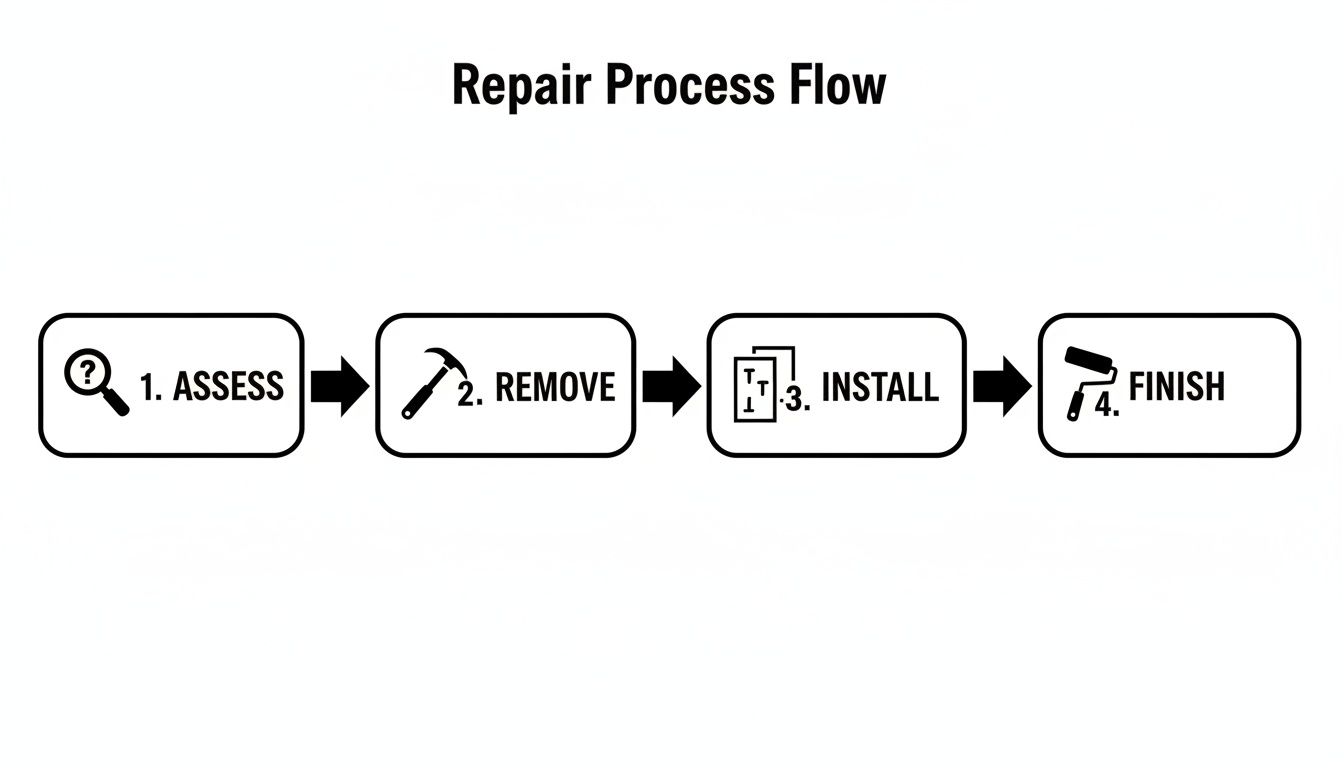
From that first look to the final coat of paint, this structured process ensures nothing gets missed along the way.
Meticulous Repair and Finishing
Once the area is prepped and safe, we get to work. We carefully cut out the damaged section of plasterboard, making sure our cuts are clean and perfectly square. This is a critical step; you can't just patch over a weak or water-damaged area and expect it to last. That’s a recipe for failure.
Removing the old material also lets us get a good look inside the ceiling cavity for any hidden issues like timber rot, pest damage, or lingering moisture. If water was the culprit, this inspection is non-negotiable. For serious situations, it's worth understanding the scope of professional water damage restoration services to ensure the problem is truly fixed.
After we've confirmed the underlying structure is sound, we install a new piece of plasterboard, securing it firmly to the ceiling joists. Sometimes we'll add back-blocking for extra support where it's needed.
The real artistry is in the finishing. We apply fibreglass or paper tape to the new joints, followed by multiple thin coats of plaster compound. Each coat is feathered out beautifully and left to dry properly before being meticulously sanded to a glass-smooth finish, ready for paint.
Reaching The Most Remote NSW Properties
Getting the right team and materials out to a remote farm is often the biggest hurdle. I’ve heard plenty of stories about standard utes and vans getting stuck on rough tracks or being stopped by creek crossings. These logistical headaches can cause delays, force compromises, and ultimately lead to a shoddy job.
We solved this problem a long time ago. Our purpose-built 10 tonne 4×4 truck is the heart of our operation. This beast allows us to bring all the labour, materials, and equipment we need to even the most isolated properties right across NSW.
- No More Multiple Trips: We can load full-sized sheets of plasterboard, scaffolding, tools, and all our supplies in one go.
- True All-Terrain Access: Its 4×4 capability means we can confidently navigate those challenging dirt roads and water crossings that stop others in their tracks.
- Guaranteed On-Site Efficiency: By arriving with everything on board from the start, we eliminate frustrating delays. We can get stuck in and ensure your repairs are completed efficiently and to the highest standard, no matter how far out you are.
This logistical strength is what really sets us apart and is a key reason why we are one of the most trusted rural building companies in the region.
Deciding Between DIY and Professional Repair
Knowing when to tackle a job yourself and when to get a professional on the phone is a crucial first step in any plasterboard ceiling repair. It's tempting to try and save a few dollars, but a botched DIY fix can quickly turn a minor blemish into a much bigger, more expensive headache.
The key is to be realistic about the scale of the damage and your own abilities. If you’re just filling a few old screw holes or dealing with minor scuffs, you can probably get a great result with some pre-mixed filler and a bit of patience. But the moment the damage gets more serious, the equation changes.
Red Flags That Demand an Expert
Some problems are more than just cosmetic. They're warning signs of deeper issues that, if ignored or simply covered over, could lead to serious structural damage or dangerous mould growth.
It’s time to call in a professional if you see any of these:
- Any Sign of Moisture: Water stains, even if they look old and dry, are a dead giveaway. There's a leak somewhere that needs to be located and properly repaired first. Just patching over it is asking for trouble with rot and mould.
- Recurring or Large Cracks: Tiny hairline cracks are often just the house settling. But if you have cracks that keep coming back, are wider than a coin, or run alongside a sagging area, it points to significant structural stress.
- Significant Sagging: A ceiling that is visibly drooping or bowing is a serious safety concern. The plasterboard has lost its structural integrity and could be on the verge of collapse. Don't wait on this one.
- Damage Larger Than Your Hand: Once a hole or damaged section gets to this size, you can't just bog it up. It needs to be cut out cleanly, new plasterboard installed with proper back-blocking, and then expertly flushed for a seamless finish. Our guide to Gyprock repairs goes into more detail on what this involves.
The Australian plastering and ceiling services industry is a $7.5 billion business for a reason. There's real skill involved, especially when dealing with older rural properties battered by the elements. In fact, improper DIY fixes are one of the main reasons homeowners end up with much higher repair bills down the track.
The Awesim Advantage for Rural Properties
Getting a qualified tradie is one challenge; getting them to your farm gate in rural New South Wales is another entirely. This is where we come in. We’ve built our service specifically to handle the logistical realities of working on remote properties.
We operate a purpose-built 10 tonne 4×4 truck, a beast designed to navigate the challenges that stop other crews in their tracks. Dirt roads, creek crossings, and rough tracks are no obstacle.
This setup means we can bring everything needed for a professional job—our skilled team, full-sized plasterboard sheets, scaffolding, and specialised tools—directly to you in a single trip. No delays, no excuses. Just high-quality ceiling repairs, delivered right where you need them.
Common Questions About Ceiling Repairs
When you're dealing with a damaged plasterboard ceiling on a rural property, a lot of questions come up. We get calls all the time from property owners across New South Wales who just want straightforward, practical answers to figure out what they're up against.
Let's walk through some of the most common things we get asked.
How Can I Tell If a Ceiling Crack Is Serious?
It’s easy to get worried about every little line you see, but a truly serious crack has some tell-tale signs. You're not just looking at a faint hairline crack. Instead, keep an eye out for jagged lines, cracks that are getting wider, or any noticeable sagging or bowing in the plasterboard itself.
One of the biggest red flags is a crack that runs from the ceiling down the wall, especially in a corner. That often points to structural movement. A good rule of thumb? If you can slide a coin into the crack, or if you notice it changing over time, it's time to call in a professional. You have to rule out foundation problems before you even think about a cosmetic fix.
Is It Safe to Just Paint Over Old Water Stains?
I'll be blunt: absolutely not. A water stain is more than just a cosmetic issue; it's a warning sign. It tells you that moisture has soaked right into the plasterboard's core, weakening it and creating the perfect environment for mould.
Even if the ceiling feels bone dry, the original leak has to be found and properly fixed first. From there, the water-damaged section of plasterboard needs to be cut out and replaced. It’s the only way to be sure the ceiling is structurally sound again and to prevent nasty health issues from hidden mould growth down the track.
How Do You Service Remote Properties with Difficult Access?
Getting to remote and hard-to-reach properties is what we're all about. We know that a standard ute just won't cut it when you're dealing with rough farm tracks, creek crossings, or boggy ground. That’s precisely why the backbone of our operation is a 10-tonne 4×4 truck.
This beast of a vehicle was purpose-built to let us haul everything we need – labour, materials, and equipment – in a single, efficient trip.
We can load up full-sized plasterboard sheets, scaffolding, all our tools, and our entire crew and get them directly to your site, no matter how challenging the access is. This unique capability means we can handle your plasterboard ceiling repairs properly, right where you need us, without cutting corners.
Can You Match the Texture of My Older Ceiling?
Yes, and honestly, this is where real craftsmanship comes into play. Matching an existing ceiling texture is what makes a repair completely disappear. It’s a non-negotiable part of a professional finish. Our plasterers have spent years honing the skills needed to blend new work seamlessly with the old.
It doesn't matter if your ceiling is perfectly smooth, has a classic stippled finish, or features one of the more decorative patterns you often find in older homesteads. We take the time and care to get this final step just right, ensuring the character of your home is preserved and the repair is invisible once the paint goes on.
For reliable, professional plasterboard ceiling repairs designed for the unique demands of rural NSW properties, trust the team at Awesim Building Contractors. We have the experience and the specialised equipment to get the job done, no matter how remote you are. Get in touch with us today to discuss your project.