When you're planning a new shed on your rural property, the first question on your mind is usually about the bottom line. So, what's the real cost to build a storage shed in New South Wales? For a quality, fully installed structure, you can expect to invest anywhere from $80,000 to over $160,000, depending on the size, materials, and how much work your site needs.
That price isn't just for a shed kit; it covers the entire project from start to finish—from the first scoop of dirt moved to the last bolt being tightened.
Your Guide to Rural Shed Building Costs
Putting up a shed in the bush is a whole different ball game to assembling a flatpack in a suburban backyard. It’s a genuine construction project, and it comes with its own set of challenges, from tricky terrain to the logistics of getting everything to your property.
The final price tag is a mix of several key factors, and each one is crucial for making sure your new shed is durable and does the job you need it to. Getting a handle on these costs is the best way to set a realistic budget and avoid nasty surprises later on.
For anyone on the land in NSW, you need to think beyond just the shed design. Your budget needs to account for:
- Shed Size and Materials: This is the biggest driver of your cost. A bigger shed naturally costs more, and your choice of materials makes a huge difference. Opting for premium, Australian-made materials like Colorbond steel might cost more upfront, but it pays for itself in longevity against our harsh weather.
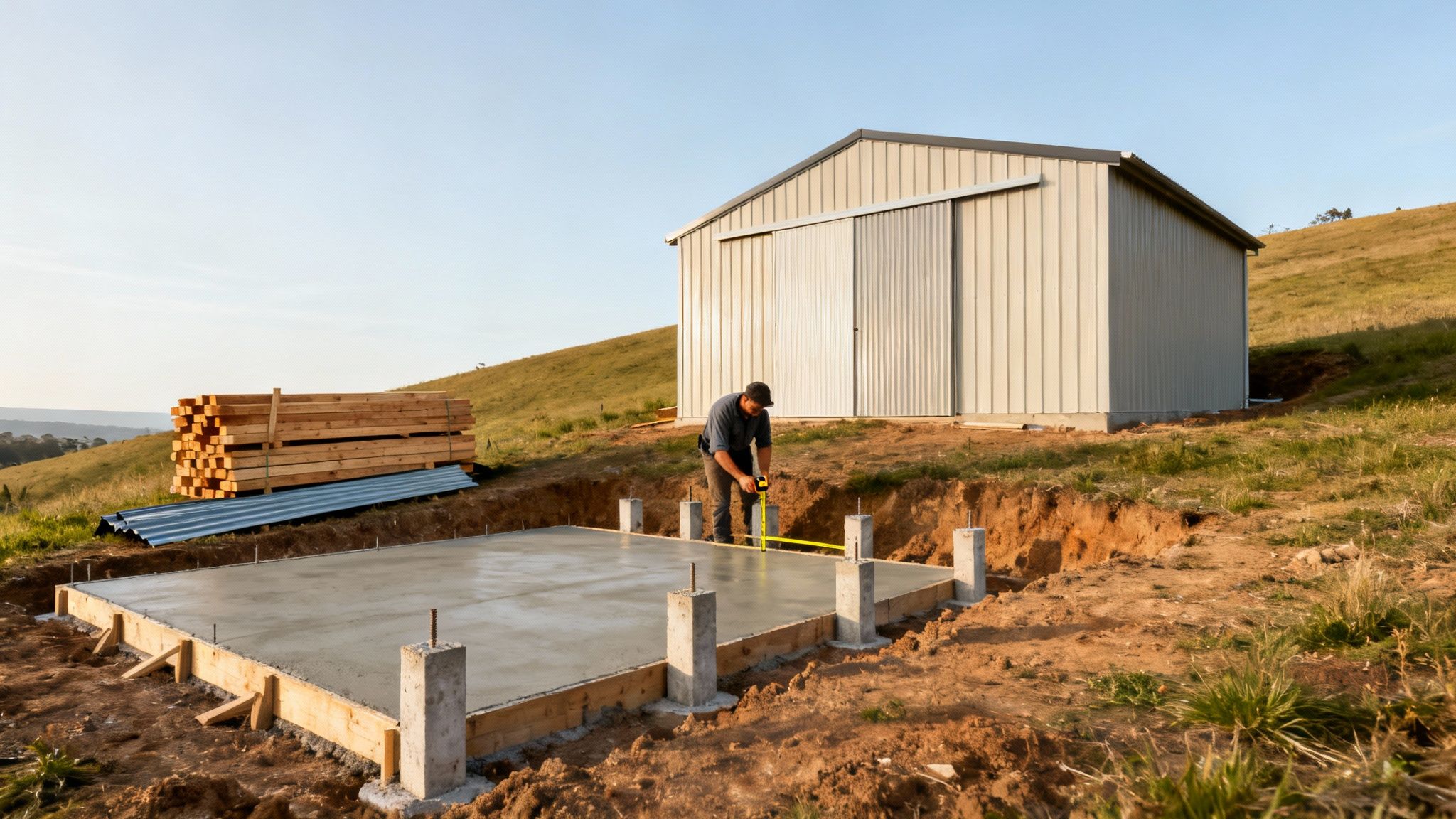
- Site Preparation and Foundation: Let's face it, rural land is rarely a billiard table. You'll need to budget for excavation, levelling, and pouring a solid concrete slab. The foundation is everything.
- Labour and Erection: You need a skilled crew to put it all together properly and ensure it meets Australian Standards. Professional erection means your shed will be safe, secure, and built to stand the test of time.
- Logistics and Access: This is a big one for remote properties. Just getting the materials, machinery, and team to your site can be a significant expense.
Servicing the Most Remote NSW Properties
Getting supplies to a remote property is often one of the biggest headaches. Standard delivery trucks just aren't built for unsealed roads, creek crossings, or boggy paddocks. That can lead to frustrating delays and blow out your costs.
We solve this problem with our specialised 10-tonne 4×4 truck. It's the workhorse of our remote operations, allowing us to bring in labour, materials and equipment where & when it's needed the most. It lets us bring all the labour, materials, and equipment directly to the most isolated properties across New South Wales—right where you need it, when you need it.
This unique capability means your project stays on track, no matter how far off the beaten track you are.
To give you a clearer picture, here's a quick look at what you might expect to pay for common rural sheds, fully installed.
Estimated Shed Building Costs in Rural NSW (Fully Installed)
| Shed Type and Size | Estimated Total Cost (Including Labour and Materials) |
|---|---|
| Open-Front Hay Shed (12m x 18m x 4.5m) | $80,000 – $130,000 |
| Enclosed Machinery Shed (15m x 24m x 5m) with Doors | $120,000 – $180,000 |
| Large Rural Workshop (20m x 30m x 6m) with Concrete | $170,000 – $260,000+ |
These figures give you a solid ballpark. For instance, a typical 12m x 18m x 4.5m open-front hay shed will generally land somewhere between $80,000 and $130,000 fully installed. With the steel market having stabilised, that works out to about $320–$640 per square metre. This pricing considers the specific challenges of building in regions like Tamworth and Armidale.
Of course, a precise quote always needs a detailed site assessment, but understanding these key parts gives you a strong starting point. If you're looking to get started, our complete guide on building a shed on rural land in NSW has a lot more detail to help you plan.
Breaking Down the Cost of Your New Shed
Figuring out the final price for a new shed is a bit like buying a new ute – the base price is just the beginning. It's the sum of all the parts, from the Colorbond sheets right down to the last tek screw, that determines the final number on the invoice. For anyone on the land in rural New South Wales, getting a handle on this breakdown is the key to budgeting properly and avoiding nasty surprises.
To really see where the money goes, it helps to look at a detailed construction cost breakdown. Think of it as an itemised receipt for the whole job, making it clear what every part of the project actually costs.
This chart gives you a good visual sense of the typical price ranges you can expect, from a basic build to a high-spec shed, along with the average cost per square metre.
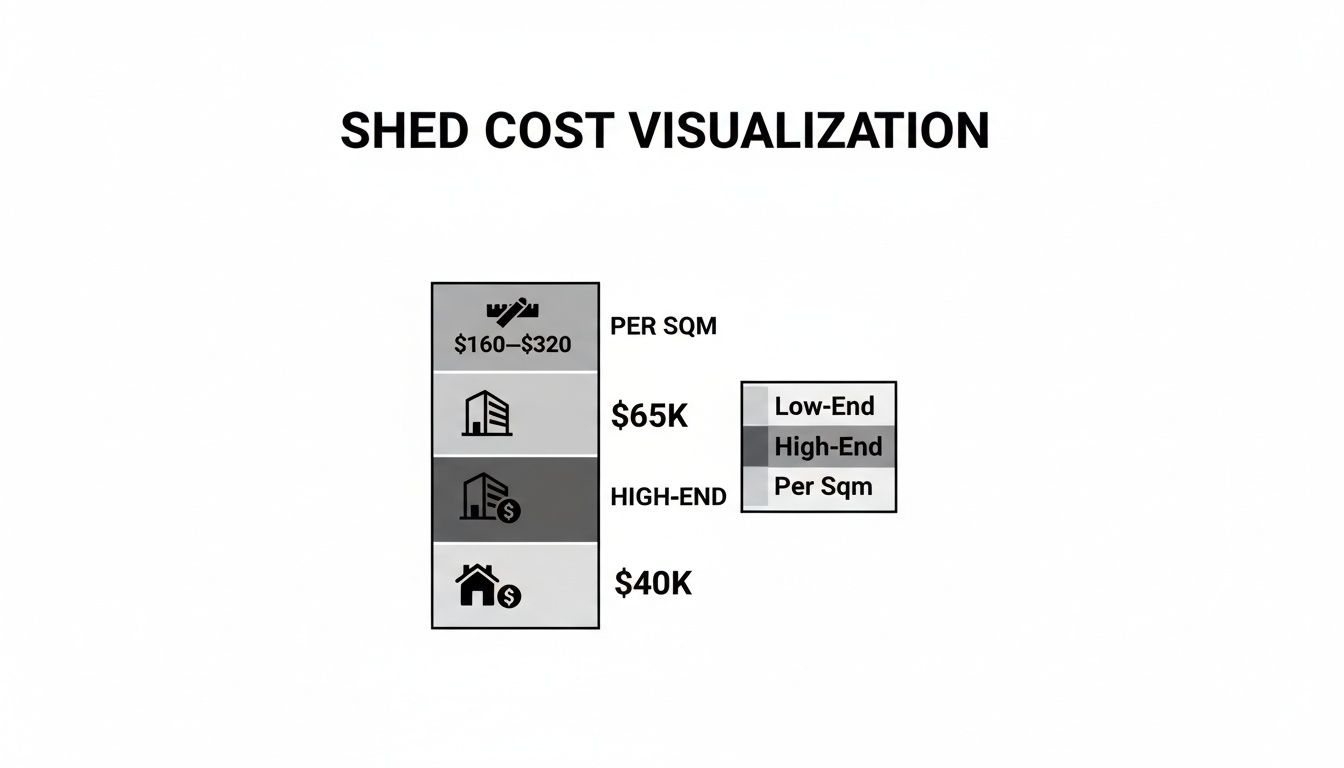
As you can see, a straightforward shed might start in the ballpark of $80,000, but a larger, more kitted-out structure can easily push past $130,000. The price per square metre really tells the story of the quality of materials and the complexity of the build.
The Core Cost Components
At its heart, your shed's final price tag is built on a few key pillars. When we put together a quote, we look at the core costs and build in a contingency to cover all the variables, giving you a clear, fixed price you can rely on. Here’s where your investment typically goes.
-
High-Quality Materials: This is the skeleton and skin of your shed, and you don’t want to skimp here. We insist on using Australian-made materials like genuine Colorbond steel for the roofing and walls – it’s proven to stand up to our harsh climate. The frame is built from tough, treated timbers or galvanised steel to guarantee it’ll be standing strong for decades. Materials generally make up about 40-50% of the total project cost.
-
Skilled Labour: A pile of steel is just a pile of steel until a skilled team puts it together. Professional labour rates for qualified builders in areas like Dubbo or Parkes ensure your shed is erected safely and meets all Australian Standards. This covers everything from assembling the frame to final sign-off, and usually accounts for 30-40% of the budget.
Site Preparation and Foundation Work
Before a single sheet of steel goes up, the ground beneath it needs to be perfect. This is a critical stage that’s often underestimated, especially on the kind of rolling or uneven country we see so often on rural properties.
The cost of your foundation will depend on what you need. A reinforced concrete slab is the gold standard, giving you a tough, level floor that’s ideal for a workshop or storing heavy machinery. For simpler structures like open-sided hay sheds, concrete piers can be a more budget-friendly option.
But site prep is more than just pouring a slab. It can also involve:
- Excavation and levelling the pad
- Cutting in an access track for heavy vehicles
- Clearing trees, old fences, or other obstacles
These jobs need the right gear and know-how, and they're a crucial part of the investment in building a shed that’s made to last.
The Logistics of Building in the Bush
Getting a full crew, tonnes of material, and heavy equipment out to remote properties around places like Bourke and Walgett is a logistical exercise that stops a lot of builders in their tracks. This is where our experience and specialised setup really makes a difference to your project’s success and budget.
We run a 10-tonne 4×4 truck that’s been purpose-built for the tough conditions of rural NSW. This rig lets us haul in the crew, all the materials, and the necessary equipment in one go, tackling everything from corrugated dirt roads to creek crossings without a drama. It allows us to bring in labour, materials and equipment where & when it's needed the most.
This capability means your project won't get bogged down by costly delays because of access problems. It’s a core part of our service that gives you certainty and keeps the build on track, no matter how far off the beaten path you are. We factor this into our quotes from the start, so there are no hidden transport fees later on.
Understanding the Factors That Shape Your Final Cost
Pinning down the exact cost of a new shed isn't as simple as picking a model from a catalogue. The final price tag is a sum of many parts, with every decision you make—from the size of the slab to the style of the roller doors—influencing the total investment.
No two properties in rural NSW are the same, and neither are the sheds they need. The final quote really comes down to a handful of key drivers, and getting your head around these is the first step to planning a build that works for your budget and your operation.
Shed Size and Complexity
Naturally, the biggest factor influencing your shed's cost is its overall size. A straightforward, three-sided hay shed is always going to be a more modest investment than a large, fully enclosed workshop or stable complex. As the square meterage goes up, so do the costs for materials and labour.
But it’s not just about the footprint. The complexity of the design plays a huge role, too. An open-front machinery shed is one thing; a multi-bay workshop with internal walls, windows, and personal access doors requires more engineering, more materials, and more specialised labour, all of which adds to the final bill.
Materials and Custom Features
Choosing the right materials is a classic balancing act between the upfront cost and long-term durability—something that’s especially important out here in the harsh Australian climate. While there are standard options, investing in heavy-duty, Australian-made materials like genuine Colorbond steel will always pay dividends in how it stands up to the sun, wind, and rain over the years.
Beyond the frame and cladding, custom features are where the shed really becomes yours. Just remember that each addition affects the budget.
- Insulation and Ventilation: If you're planning a workshop or stables, you'll need climate control. Roof insulation and whirlybirds are fantastic, but they add to both material and installation costs.
- Extra Roller Doors: Every extra roller door, whether it’s manual or automated, bumps up the price because of the mechanism itself and the extra structural framing needed to support it.
- Internal Fit-Outs: Things like partition walls, mezzanine floors for extra storage, or putting in electrical and plumbing will significantly increase the scope and cost of the project.
We understand that managing these costs is crucial. With 35 years of experience building in rural NSW, we've learned how to give practical advice. We can help you prioritise the features that will deliver the most value and find cost-effective solutions without ever cutting corners on quality.
Site Challenges and Remote Access
The lay of your land is a massive variable. A flat, clear block with easy access is the dream scenario, but most rural properties have their own unique character. Sloping sites often require 'cut and fill' earthworks to create a level pad, while rocky ground might mean swapping a standard slab for more complex footings.
Then there’s the big one that people often underestimate: remote access. Getting materials, heavy equipment, and a skilled crew out to a property far from the nearest town takes serious logistical planning and specialised transport.
This is exactly why we invested in our own purpose-built 10-tonne 4×4 truck. It means we can get all the labour, materials, and machinery to even the most isolated properties across New South Wales. Allowing us to bring in labour, materials and equipment where & when it's needed the most, it ensures that a tricky driveway or a remote location doesn't blow out your timeline or budget. You can get a better sense of the crucial groundwork involved in our guide to concrete slab thickness for sheds on NSW farms.
Recent industry data shows that these site-specific issues can add anywhere from $40,000 to $200,000 to a project. This is particularly true for farmers in areas like Tamworth who are dealing with reactive clay soils that demand extensive soil testing and engineering. With labour hikes contributing to a 5.50% year-on-year increase in farm shed installation costs, getting on top of these variables is more critical than ever. For more detail on market trends, you can explore detailed Australian construction material price outlooks.
Navigating Council Approvals and Building Codes
Building a quality shed is one thing, but making sure it’s legal is another. You have to get the compliance side of things right, which means understanding what your local council and the Building Code of Australia (BCA) require. It’s a crucial step, and skipping it can lead to massive fines or, even worse, being ordered to pull the whole structure down.
Let's be honest, the paperwork can be a real headache, especially when you’ve got a property to run. Trying to get your head around rural zoning laws, environmental overlays, and specific shed rules takes time you probably don't have.
Do All Sheds Need Council Approval?
The first question nearly everyone asks is, "Do I really need a DA for this shed?" It's not a simple yes or no answer. It really depends on the shed's size, its height, how you plan to use it, and where it’s positioned on your block.
In NSW, some very small sheds might get a pass as exempt development, meaning no council approval is needed—but only if they tick a very specific set of boxes. For the kind of substantial sheds most people on rural properties need, like for machinery, a workshop, or hay storage, you’re almost certainly going to need to go through the approval process.
- Exempt Development: Usually for tiny, non-intrusive structures. The rules are strict and change from one council to the next.
- Complying Development: A faster, streamlined approval for projects that meet all the standard, pre-determined criteria.
- Development Application (DA): This is the full, standard process for most larger builds. It requires detailed plans and a proper assessment by the council.
Trying to work out which category your shed falls into can be confusing. To get a better handle on it, it's worth taking the time to learn more about when you need council approval for a shed in NSW, because getting this right from the start saves a lot of trouble.
How an Experienced Builder Manages the Process
This is where a good rural builder earns their keep. Instead of you spending your evenings deciphering council jargon and filling out forms, a professional team can manage the entire process for you. We see this as a fundamental part of our job—taking that stress right off your shoulders.
Our end-to-end management of the approval process means we take full responsibility. We prepare and lodge all the necessary plans and documents with your local council, ensuring the design meets the Building Code of Australia and any local rural codes.
Working this way saves you a huge amount of time and gives you confidence the job is being done properly. We become your representative, dealing directly with council planners and building certifiers to get all the permits signed off. This ensures your shed is 100% compliant from day one, protecting your investment and preventing any frustrating delays or legal dramas. You can keep your focus on the property while we cut through all the red tape.
Getting a Feel for Real-World Shed Project Budgets
It’s one thing to talk about percentages and average costs, but it’s another thing entirely to see how it all comes together on a real project. To give you a practical sense of what to expect, let's break down the numbers for a couple of common rural builds. This will help you see where the money really goes and how the final figure is more than just the price of a shed kit.
Just remember, the figures we're looking at below have been doubled to give you a realistic, all-inclusive estimate for your own planning.
Machinery Bay Project Near Armidale
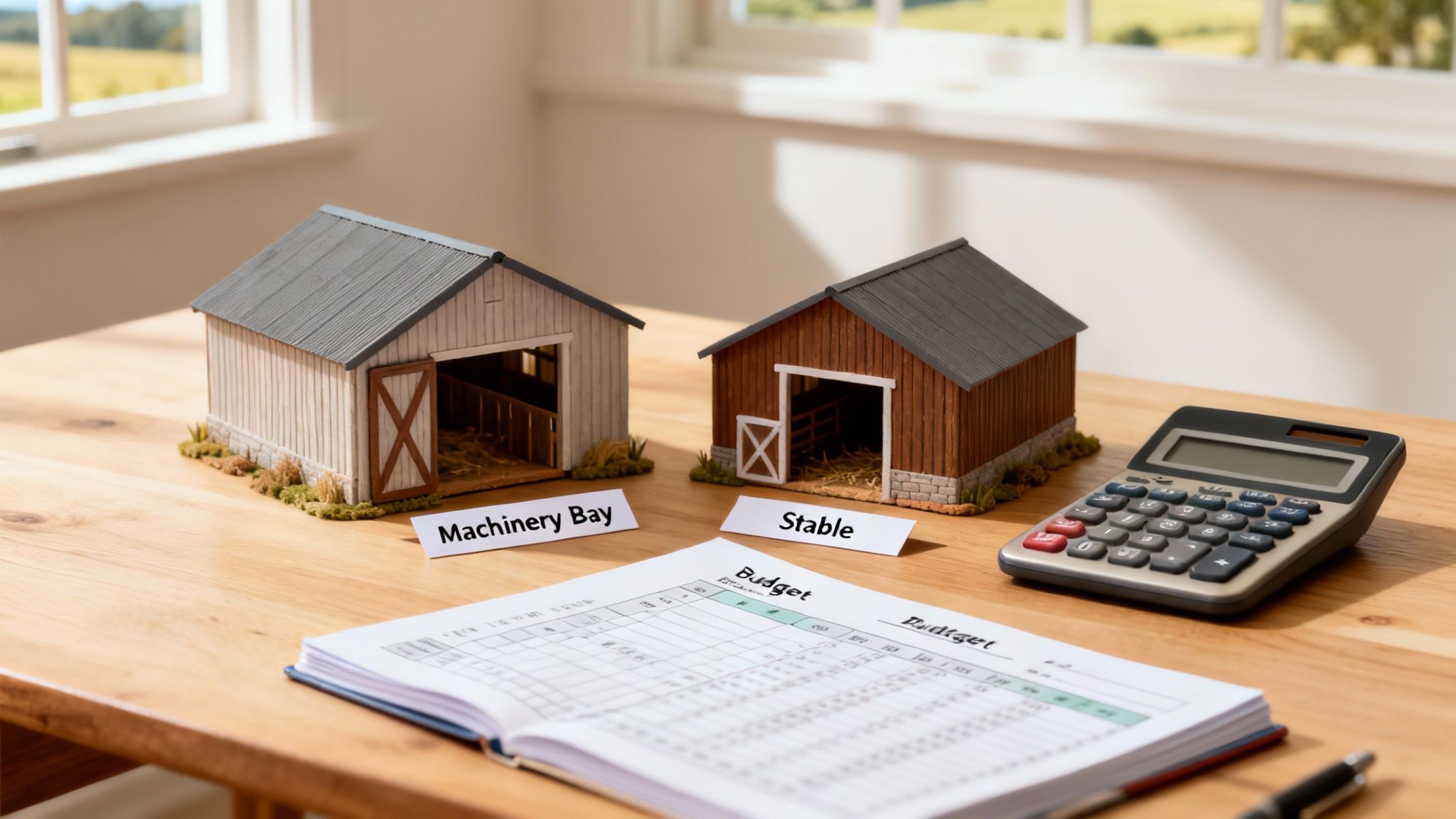
Let's start with a classic: a 15m x 24m open-front machinery bay. This is the kind of bread-and-butter shed you see on properties all over the New England region. For this particular project, the property had decent access, but the site still needed a fair bit of earthworks to get a properly level pad.
The budget here is for a full turn-key job. That means everything is covered—from supplying the Australian-made shed kit to the final site clean-up. This approach gives you a clear, fixed price without any nasty surprises down the track.
One of the biggest costs people forget about on remote builds is logistics. We always factor this in from the start, using our 10-tonne 4×4 truck to get all the crew, materials, and machinery to site. It allows us to bring in labour, materials and equipment where & when it's needed the most, making all the difference when you’re dealing with dirt roads and tricky access points across New South Wales and keeping the project on track.
Here’s how the doubled costs stack up for a typical machinery shed.
Example Project Budget Machinery Bay (Rural Armidale)
| Cost Component | Estimated Doubled Cost |
|---|---|
| Shed Kit (15m x 24m, Colorbond) | $72,000 |
| Site Preparation & Earthworks | $20,000 |
| Engineered Concrete Slab (150mm) | $54,000 |
| Professional Erection & Labour | $36,000 |
| Delivery & Remote Site Logistics | $16,000 |
| Council Application & Certification Fees | $8,000 |
| Total Estimated Project Investment | $206,000 |
As you can see, the shed kit itself is only part of the story. The professional installation, a rock-solid foundation, and the logistics of getting everything to a rural site are all significant investments that guarantee a compliant, long-lasting structure.
Stable Complex Project Near Tamworth
Now for something a bit more involved: a 20m x 30m fully enclosed stable complex near Tamworth. This isn't just a shed; it's a specialised facility. The project had to contend with challenging soil conditions, which meant a more complex foundation design. On top of that, it included a major internal fit-out with stables, a tack room, and all the plumbing for wash bays.
Projects like this require careful planning to meet the specific needs of livestock. You have to think about ventilation, the right kind of flooring, and durable internal walls. Each custom feature adds to the price tag, but they're absolutely essential for creating an equestrian facility that's both functional and safe.
Even with complex projects, finding ways to save is important. Sometimes you can draw inspiration from general backyard design ideas on a budget to find clever solutions.
Let’s look at the adjusted budget for this more complex build.
Example Project Budget: Stable Complex (Rural Tamworth)
| Cost Component | Estimated Doubled Cost |
|---|---|
| Shed Kit (20m x 30m, Colorbond) | $130,000 |
| Site Prep & Complex Foundation | $48,000 |
| Engineered Concrete Slab with Drains | $108,000 |
| Internal Fit-Out (Stables, Walls, Plumbing) | $140,000 |
| Professional Erection & Labour | $60,000 |
| Delivery & Remote Site Logistics | $20,000 |
| Council Application & Certification Fees | $12,000 |
| Total Estimated Project Investment | $518,000 |
These real-world examples really drive home why a detailed, itemised quote from an experienced builder is so crucial. It gives you the clarity you need to budget properly and shows the true value of a professionally managed build from start to finish.
So, Why Go Professional Instead of DIY?
It's tempting to look at a DIY shed kit and see a bargain. On paper, the numbers look great. But the real cost of putting up a shed that will still be standing strong in a few decades goes far beyond the price tag on a flat-pack. Choosing a professional build is less of an expense and more of an investment in something that’s durable, compliant, and won’t give you headaches down the track.
When you bring in an experienced team, you’re not just buying steel and screws; you’re buying know-how. With 35 years of hands-on experience building in the bush, we’ve seen pretty much everything. We understand what it takes to put up a structure that can handle the extremes of an NSW climate – from blistering heatwaves to wild storms – and we only use quality Australian-made materials that are up to the job.
We Handle Everything, Especially for Out-of-the-Way Properties
Our job doesn't stop at the construction site. We manage the entire process for you, from sorting out the initial designs and getting the plans through council to the moment we hand you the keys. This approach is designed to save you the significant time and stress that comes with juggling a building project yourself.
A huge part of making this work is our ability to get everything to your property, no matter how remote it is. We know that one of the biggest hurdles for rural builds is simply getting the materials and a skilled crew on-site.
That’s exactly why we run a purpose-built 10-tonne 4×4 truck. This beast is kitted out to carry all the labour, materials, and gear we need, directly to your property, anywhere in New South Wales. Unsealed tracks, creek crossings, tricky access – it doesn’t matter. It allows us to bring in labour, materials and equipment where & when it's needed the most, so we get there and get the job done on schedule.
This isn't just a convenient extra; it’s fundamental to how we operate. It's our way of guaranteeing a smooth, reliable build, regardless of your address. By opting for a professional crew with the right equipment and experience, you can be confident your shed is built properly, meets all the codes, and is genuinely built to last.
Ready to talk about a shed that will add real, long-term value to your property? Let’s have a chat about what you need. We can put together a detailed, obligation-free quote and show you what it’s like to work with a team that knows rural construction inside and out.
Your Questions, Answered
Planning a new shed always brings up a few questions. Here are some quick answers to the things we get asked most often by folks on rural properties across NSW.
How Long Does a Farm Shed Take to Build?
Once we're on-site, the actual construction of a standard rural shed is surprisingly quick, usually taking somewhere between 2 to 4 weeks.
But the whole journey, from the first chat about design to getting council approvals and handing you the keys, is a longer process. You should probably plan for a timeframe of 2 to 6 months from start to finish. We handle all the scheduling to keep things moving along as smoothly as possible.
Does My Shed Absolutely Need a Concrete Slab?
For most sheds, especially if you're storing heavy machinery, vehicles, or anything valuable, a professionally engineered concrete slab is the way to go. It gives you the best foundation for stability and long-term durability.
That said, it's not always a must. For simpler, open-sided structures like a hay shed, we can often use concrete piers instead, which can be a practical and cost-effective alternative. We'll walk you through the pros and cons to figure out what's right for your build.
Can You Build on Sloping or Tricky Sites?
Absolutely. We've built sheds on all sorts of challenging rural blocks, and it's something we specialise in. Getting a level, stable base is critical, so we start with a proper site assessment.
From there, we can engineer the right solution, whether that's 'cut and fill' earthworks to create a level pad or designing specialised pier foundations to suit the terrain.
We've built our business on being able to get to sites that other builders might turn down. A big reason we can do this is our specialised 10-tonne 4×4 truck. It carries our whole crew, all the materials, and every piece of equipment we need to even the most remote properties in New South Wales. Allowing us to bring in labour, materials and equipment where & when it's needed the most, dirt tracks and creek crossings don't stop us.
This unique setup means your project isn't held up by access issues, keeping everything on schedule and on budget, no matter how far off the beaten track you are.
For a reliable partner who understands the demands of building in the bush, trust Awesim Building Contractors. Get a comprehensive, obligation-free quote for your project by visiting us at https://awesim.au.