

When you're searching for "gyprock repairs near me," you need more than just a plasterer. You need a team that gets the unique challenges of living in rural New South Wales. We specialise in expert, seamless repairs for everything from a tiny hairline crack to major wall damage, making sure your home is structurally sound and looks its best.
Your Guide to Gyprock Repairs in Rural New South Wales
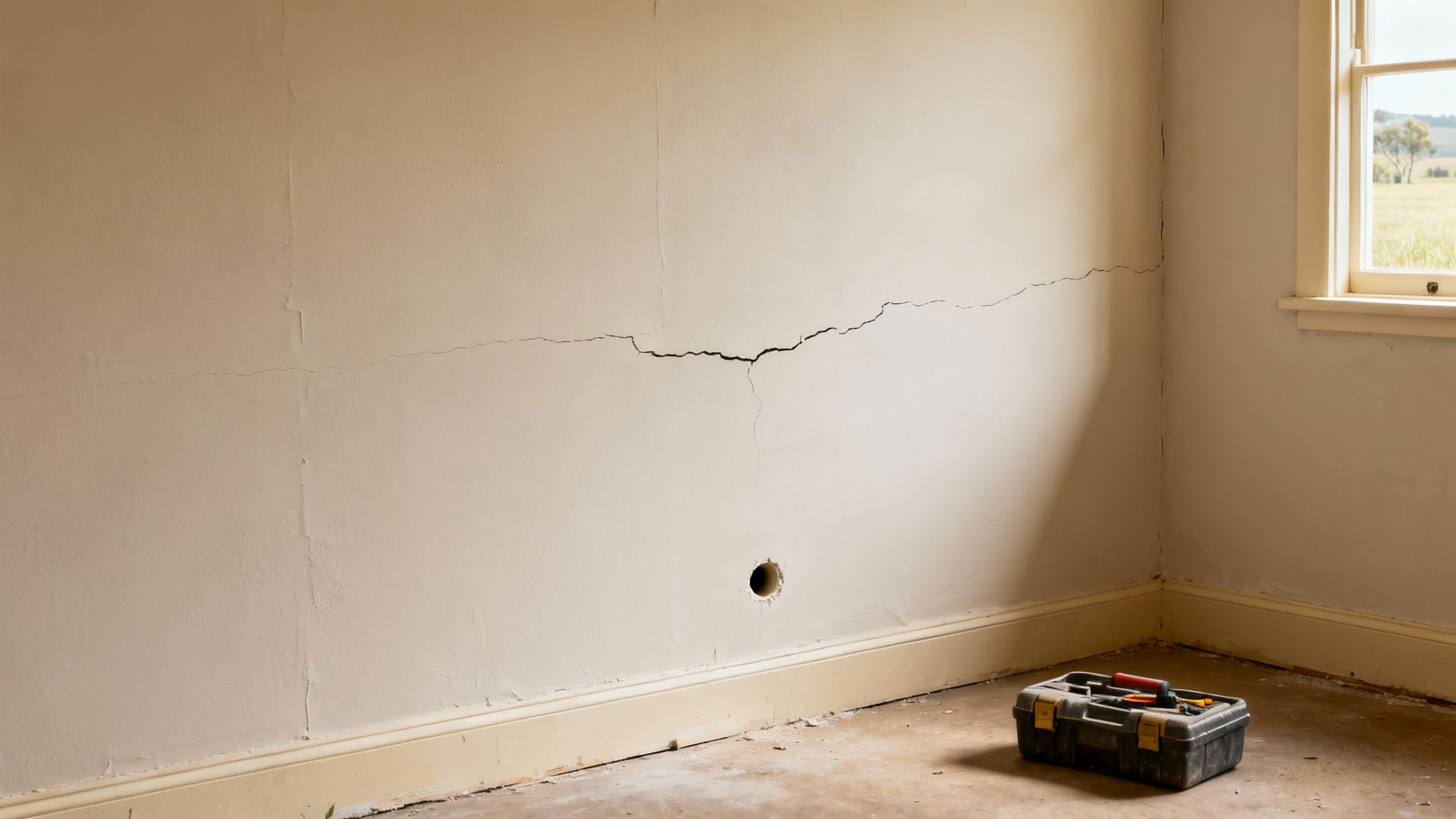
Looking after a property in regional NSW is a different game altogether. The ground beneath us is constantly moving, especially on those expansive clay soils, and that's before you even consider accidental knocks from farm gear. Gyprock damage is a common headache, but it’s one you can’t ignore. What looks like a small crack today could be a sign of a much bigger issue.
In rural New South Wales, where our homes face everything from harsh weather to the daily demands of farm life, gyprock repairs are a fact of life. Cracks often appear due to foundation shifts, a problem that can affect up to 40% of older rural homes built before 1990. If you leave these issues, they only get worse. Putting off a fix can lead to 25% higher repair costs within just two years as moisture inevitably finds its way in. This can lead to mould growth in an estimated 30% of cases. You can find out more about the most common gyprock issues and their impact.
Addressing the Challenges of Rural Repairs
Living out on a property often means a standard repair service just won't cut it. The distance from suppliers, navigating unsealed roads, and dealing with tricky terrain can turn a straightforward job into a logistical nightmare. This is where you need a specialist—a team that not only knows plasterboard inside and out but also understands the reality of your environment.
That’s precisely why we’ve set ourselves up to handle these situations. We have a 10 tonne 4×4 truck to bring in materials and supplies for the most remote properties around New South Wales. This purpose-built vehicle allows us to bring in labour, materials, and equipment where and when it's needed the most. This beast of a vehicle lets us carry all the essentials in one go:
- Labour: Our skilled technicians arrive on-site, ready to get stuck in.
- Materials: We stock all the gyprock sheets, compounds, and tapes required.
- Equipment: From scaffolding to specialised tools, we're completely self-sufficient.
This unique capability means we can navigate challenging access routes and bring our workshop to your door, ensuring your gyprock repairs are completed efficiently and to the highest standard, no matter how remote your property is.
Spotting the Telltale Signs of Gyprock Damage
Before you even think about searching for "gyprock repairs near me," it’s worth taking a moment to properly diagnose the problem yourself. Your walls and ceilings are great at telling you what’s wrong; you just need to know what to look for. Think of it like a doctor looking at symptoms—learning to read the signs helps you figure out if you're dealing with a simple fix or something that needs an expert eye.
Not all damage is created equal. A small dent from moving a sofa is one thing, but a spiderweb crack creeping out from a window frame could be a sign of something more serious, like your house settling. Knowing the difference is the first step to getting a repair that actually lasts.
To help you get a clearer picture, here’s a quick rundown of common gyprock issues and what usually causes them.
Common Gyprock Damage and Its Causes
| Type of Damage | Common Appearance | Likely Cause |
|---|---|---|
| Water Damage | Blistering/bubbling paint, soft or spongy spots, dark discolouration, mould. | Leaking pipes, roof leaks, storm damage, high humidity, blocked gutters. |
| Stress Cracks | Fine, hairline fractures near windows, doorways, or where walls meet ceilings. | Minor shifts in the building's foundation or timber frame, temperature fluctuations. |
| Impact Damage | Holes, gouges, dents, and punctures of varying sizes. | Accidental knocks from furniture, equipment, or everyday mishaps. |
| Joint/Seam Issues | Visible tape, cracks along the seam between two plasterboard sheets. | Poor initial installation, house movement, moisture affecting the joint compound. |
Understanding these distinctions will put you in a much better position when discussing the repair with a professional.
Water Damage: The Silent Destroyer
Water is easily one of gyprock’s biggest enemies. Here in rural NSW, with our heavy summer downpours and irrigation systems, it's no surprise that water damage is a leading issue, accounting for around 35% of all repair jobs we see. It often sneaks up on you, but eventually, the signs become impossible to ignore.
You might first spot some blistering paint, or a section of the wall that feels a bit soft or spongy to the touch. Dark, discoloured patches are another dead giveaway, often pointing to hidden mould. For rural homeowners tackling a bathroom or laundry reno, peeling paint or visible mould are the first red flags in 50% of water-related cases. The gypsum core inside the board, protected by its paper facing (as per standard AS/NZS 2588), needs to stay bone dry to do its job. A quick annual check-up can help you catch up to 80% of these problems early before they turn into a major headache.
Cracks and Holes: Signs of Stress and Impact
Aside from moisture, good old-fashioned physical damage is something we see all the time on rural properties. These issues usually break down into two main types, and each needs a slightly different approach.
-
Stress Cracks: These are the thin, hairline fractures you’ll often find near windows, doors, or in the corners where walls join the ceiling. They're typically caused by the natural, minor shifts in your home's foundation or timber frame—a common event in areas with reactive soils.
-
Impact Damage: This is the straightforward stuff. From an accidental run-in with a piece of farm equipment to dents from shifting furniture, these are the holes, dings, and punctures that break the plasterboard surface. While they can look pretty bad, they're usually not as structurally worrying as stress cracks or widespread water damage.
A great repair is one you can't see. Beyond fixing the big structural issues, getting the surface perfect is key. That includes tackling things like repairing peeling paint on ceilings, which is a crucial step for a truly professional finish. For a closer look at how we handle different fixes, our guide to professional plasterboard repairs has more detail.
Our Step-by-Step Gyprock Repair Process
A professional gyprock repair is far more than just slapping on some filler. Think of it as minor surgery for your walls. Every step is precise, building on the last to create a mend so seamless you’ll forget the damage was ever there. Understanding how we work shows why getting it right the first time saves you headaches down the track.
The first thing we do is a proper damage assessment. This isn't a quick glance; we need to diagnose the problem correctly to choose the right repair strategy.
This flowchart gives you a good idea of how we identify the most common types of gyprock damage we see day in, day out.
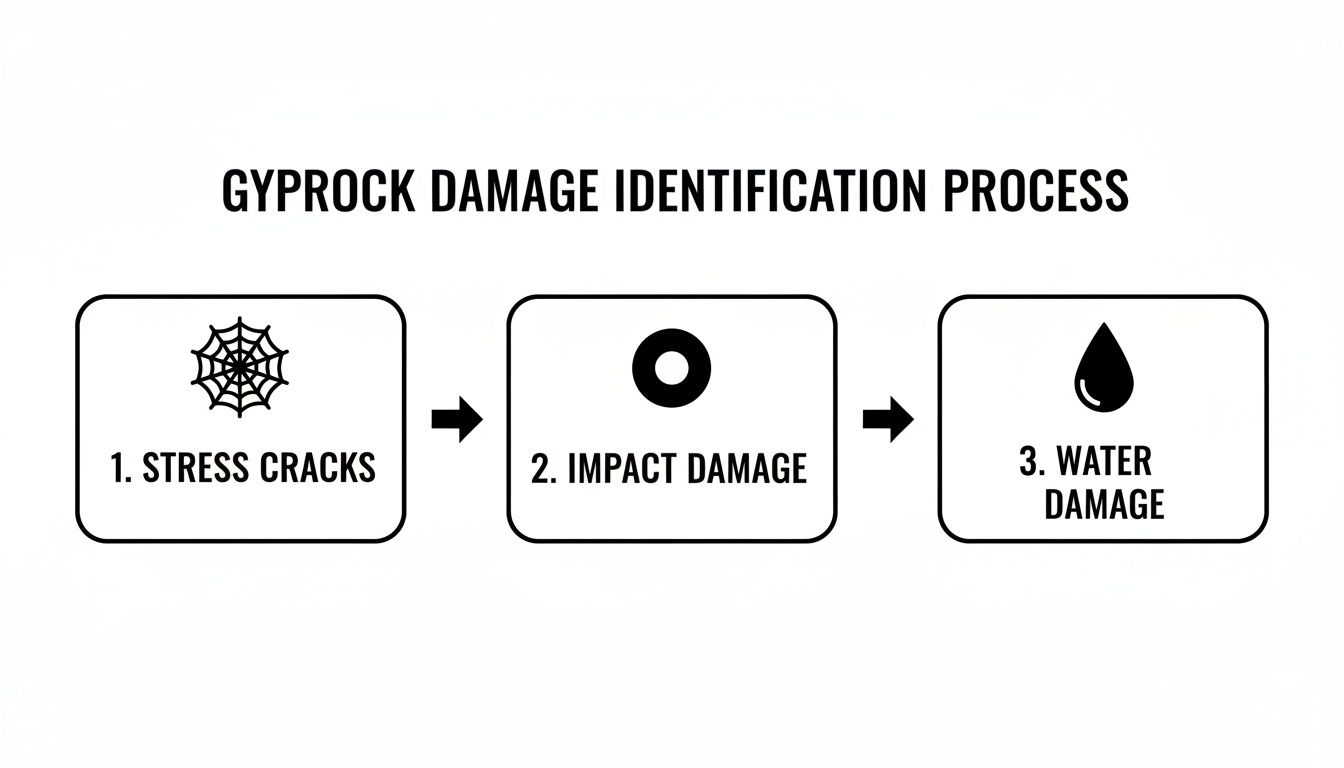
By figuring out if the problem is from structural movement, a direct hit, or moisture, we can fix the root cause instead of just covering up a symptom.
Preparation And Containment
Before a single tool touches the wall, our first priority is protecting your home. We meticulously lay down drop sheets and use plastic sheeting to seal off the work area, making sure all the dust stays exactly where it should—with us. It’s a simple but crucial step that minimises the mess and keeps your home clean.
Next, we get the damaged area itself ready for surgery. This means carefully cutting away any loose or crumbling plasterboard to create a clean opening with solid, straight edges. A neat, stable cut is the foundation of a good patch and stops cracks from reappearing around the edges later on.
Patching And Finishing
With the area prepped, we get into the structural part of the repair.
- Securing the Patch: For anything bigger than a small dent, we often fit timber backing behind the existing gyprock for support. Then, we cut a new piece of plasterboard to the perfect size and screw it in, creating a rock-solid, flush surface.
- Taping and First Coat: We apply special jointing tape over the seams of the patch. This tape is then embedded in the first layer of base coat compound, giving the join the strength it needs to prevent cracking as the house moves.
- Building the Layers: This is where the real artistry comes in. We apply at least two more coats of topping compound. Each new layer is feathered out wider than the one before it, gradually building up a completely smooth surface that blends invisibly into the rest of the wall.
- Final Sanding: After the final coat has fully cured, we give it a very light, detailed sand. The goal is a flawless finish that’s perfectly smooth and ready for a lick of paint.
Around here in NSW’s farming heartland, it’s not uncommon to see holes from machinery or even a rogue sheep. In fact, 28% of our regional repairs involve large punctures. While DIY attempts fail in 70% of cases due to cracking or sinking, a professional job is built to last.
For those keen on learning more about home maintenance, exploring trusted general home repair guides can offer some great insights. Our detailed approach ensures every job, from a tiny ding to a full wall restoration, gets the same high standard of care for a durable, invisible result.
Why a Rural Repair Specialist Is Essential

Fixing a wall in a city apartment is one thing. Repairing gyprock on a remote homestead in New South Wales is another challenge entirely. Rural properties come with their own set of logistical hurdles that can stop a standard repair job dead in its tracks. The sheer distance from suppliers, navigating unsealed roads, and dealing with unpredictable terrain requires more than just plastering skills—it demands specialised planning and equipment.
This is where a true rural repair specialist makes all the difference. When you search for "gyprock repairs near me" from a regional location, you need a team that understands these challenges aren’t an excuse for delays; they’re just part of the job. A specialist arrives prepared for anything, ensuring the project moves forward smoothly without ever compromising on the quality of the work.
Bringing the Workshop to You
The biggest obstacle for many rural repairs is simply getting the right people, tools, and materials out to the property. A standard ute loaded with a few sheets of plasterboard often isn’t going to cut it for a significant repair, leading to multiple trips, wasted time, and added costs.
We’ve solved this problem with our purpose-built 10 tonne 4×4 truck. This isn't just a delivery vehicle; it's a completely self-sufficient mobile workshop, engineered for the rugged conditions of the NSW countryside. This heavy-duty truck lets us bring everything needed for your project directly to your doorstep in a single, organised trip, allowing us to bring in labour, materials, and equipment where and when it's needed the most.
Our mobile capability means we can bring:
- A full crew of skilled tradespeople, ready to get started the moment we arrive.
- All necessary materials, including gyprock sheets, compounds, tapes, and structural supports.
- Specialised equipment, from scaffolding and ladders to precision tools and dust containment systems.
This approach completely eliminates the logistical headaches that often plague rural projects. We can cross creeks, handle tough terrain, and operate independently, making sure your gyprock repair is completed on time and to the highest standard, delivering a farm-tough finish built to last.
The Advantage of Self-Sufficiency
Being self-sufficient is more than just a convenience—it’s crucial for delivering a reliable service in remote areas. When a contractor has to rely on the local hardware store for supplies, a project can be delayed for days if one specific item is out of stock. Our truck, on the other hand, carries a comprehensive inventory, insulating your project from these common setbacks.
This means we never have to compromise by using substitute materials or cutting corners. Every repair is done with the correct, high-quality products specified for the job, guaranteeing a durable and seamless result. It's this level of preparation that allows us to provide the same standard of excellence whether you're just outside of Tamworth or deep in the bush.
This logistical strength is just one aspect of our professional service. For other property maintenance jobs, our expert Tamworth handyman services are just as well-equipped. When you need a reliable team that comes to you fully prepared, a rural specialist is the only logical choice.
Getting to Grips with Gyprock Repair Costs in NSW
Let's be honest, the first question on everyone's mind is, "How much is this going to cost?" When you're searching for "gyprock repairs near me," you need a straight answer on budgeting. The truth is, there’s no simple price list for professional plasterboard repairs because every job is different. A good, transparent quote should break down exactly what you're paying for, reflecting the unique challenges of your project.
Several key variables will always shape the final price. We're talking about the size of the damage, how tricky the repair will be, and even how easy it is to get to your property. Each of these elements helps determine the labour, materials, and time needed to get the job done right and make the repair disappear.
What Shapes Your Repair Quote
The biggest driver of cost is always the extent and type of damage. A few nail pops or small stress cracks are on a completely different scale than replacing a whole ceiling panel that's been ruined by a water leak. A simple patch is one thing, but a complex job that involves fixing structural issues, treating mould, or perfectly matching an old, ornate cornice is naturally going to be more involved and cost more.
Another huge factor, particularly for us here in regional New South Wales, is accessibility. Many properties are tucked away down long dirt roads, sometimes with creek crossings or rough terrain that a standard vehicle just can't handle. This reality of rural life directly impacts the time and cost of getting our team, materials, and gear to your doorstep.
This is where our specialist setup really shines. We run a 10 tonne 4×4 truck that acts as a fully self-contained mobile workshop. By bringing everything we need—labour, materials, and all our specialised tools—in a single trip, we can service even the most remote properties efficiently. It cuts down on the logistical headaches and costs that often come with rural jobs.
To help you understand how these factors affect your bottom line, we've put together a table that breaks it all down.
Factors Influencing Your Gyprock Repair Quote
This table outlines the key variables that affect the final cost and duration of a professional gyprock repair project.
| Factor | Impact on Cost | Impact on Timeline |
|---|---|---|
| Damage Size & Type | Minor cracks are low-cost. Large holes, water damage, or structural issues significantly increase costs due to more materials and labour. | A small patch might take a few hours over 2-3 days (for drying). A whole ceiling replacement could take a week or more. |
| Repair Complexity | Simple wall patches are straightforward. Ceiling work, cornice matching, or repairs requiring scaffolding are more expensive. | Complex jobs add significant time for setup, detailed finishing, and multiple layers of compound. |
| Property Accessibility | Easy access in town keeps costs standard. Remote sites with unsealed roads or difficult terrain increase transport and labour time costs. | Travel to remote locations can add hours to each day's work, extending the overall project timeline. |
| Finishing Requirements | A basic, paint-ready finish is standard. Matching complex textures or preparing for specialised coatings adds to the labour cost. | Intricate finishing requires extra steps and longer drying times between coats, adding days to the project. |
As you can see, every element plays a part in building the final quote, ensuring it accurately reflects the work required for a seamless, lasting repair.
A Tale of Two Repairs: Patch vs. Ceiling
To put this into a real-world context, let’s compare two very different jobs.
Imagine a small, five-centimetre hole in a living room wall—maybe from a doorknob. That’s a relatively quick fix. We’d cut a clean patch, tape the joins, float a few coats of compound over it, and sand it back smooth, ready for you to paint. It's a textbook repair.
Now, picture a sagging, water-stained ceiling. This is a whole different ball game. The job starts with carefully removing the damaged plasterboard and, most importantly, finding and fixing the source of the leak. We might even need to replace some of the structural timbers if they've been affected. Only then can we install fresh plasterboard, finish the joins, and seal it all up. The complexity, combined with the need for scaffolding and a flawless finish, naturally adds to the cost, but it ensures the problem is gone for good and your home's value is protected.
Servicing Tamworth and Remote Regions Across NSW
Typing "gyprock repairs near me" into a search bar can feel like a waste of time when you live miles down a dirt track. We get it. While our home base is in Tamworth, we’ve built our entire business around serving the vast, beautiful, and often remote expanse of regional New South Wales.
Our team is specifically set up to reach the farms, stations, and homesteads that other contractors might see as being 'too far out'. We're committed to bringing top-tier workmanship to every corner of our region, whether you're near a major hub like Dubbo or Armidale, or much further afield towards Moree, Walgett, or even on a remote station near Bourke.
One Trip, No Matter the Distance
So, how do we do it? The secret is our specialised fleet. We've invested in a purpose-built 10 tonne 4×4 truck that’s essentially a mobile workshop on wheels. This beast of a vehicle lets us haul all the labour, materials, and equipment we need directly to your front door in a single, efficient trip.
This self-sufficient setup means we can tackle rough terrain and unsealed roads without a second thought, delivering the same high standard of work you'd expect in town. There are no logistical headaches for you to worry about. We don’t just fix walls; we solve the problem of distance.
If you've been putting off those repairs because you thought no one would come out, think again. Our expertise isn't just limited to plasterboard, either. We bring this same level of can-do attitude to other jobs, as you can see in our guide to professional timber floor repairs.
Wondering if we can get to you? The answer is almost certainly yes. Give us a call to confirm we service your specific location, and let's get your gyprock repairs sorted.
Got Questions About Gyprock Repairs? We've Got Answers
When you're dealing with damaged walls or ceilings, a few questions always come up. It's completely normal to want to understand the process before you commit to a repair. We've put together some straight answers to the most common queries we get from property owners just like you.
Think of this as a quick guide to help you know what to expect.
How Long Until I Can Paint the Repair?
This is probably the number one question we hear! You’ll need to wait at least 24 to 48 hours after the final sanding before you even think about picking up a paintbrush.
The plaster compound needs to cure properly. If you paint too soon, you trap moisture inside, which can lead to bubbling, peeling, and a finish you’ll regret. We’ll always give you specific advice on the day, as things like humidity and airflow can affect drying times.
Can You Match My Existing Wall Texture?
Absolutely. The whole point of a professional repair is that you shouldn't be able to see it afterwards.
Our team has years of hands-on experience matching everything from a standard flat finish to more complex, textured surfaces. We take a lot of pride in making the patch blend in so perfectly that once it's painted, you'll forget it was ever there.
Does Water-Damaged Gyprock Always Need Replacing?
This is a big one, and the honest answer is: it depends on how bad the damage is.
If the board has gone soft, is sagging, or you can see even the slightest hint of mould, it has to be replaced. There's no way around it—that's a matter of structural integrity and health. For a minor stain on a board that's still solid, a repair might be an option, but only after you are 100% certain the leak is fixed for good. We’ll always give you a thorough assessment and recommend the solution that will last.
My Property Is Remote. Can You Still Get to Me?
Yes, we can. In fact, getting to properties that others can't is what we do best. We've built our business around servicing rural and hard-to-access locations across New South Wales.
We run a purpose-built 10 tonne 4×4 truck that’s basically a mobile workshop on wheels. It gets us down rough dirt tracks and into challenging sites without any drama. We bring every single thing we need—labour, materials, and all the gear—straight to your door. Being remote doesn't mean you have to settle for less.
Ready to get those cracks and holes sorted out properly? Contact Awesim Building Contractors for a detailed quote and experience the difference that genuine rural expertise makes. Head over to https://awesim.au to find out more.