Building your dream home in the Bathurst region is an incredible venture, but getting it right starts long before the first slab is poured. The real secret to a smooth, successful build is understanding the local landscape—from how busy the best builders are to the unique challenges of building in Central West NSW. Getting this groundwork right from the beginning will shape every decision you make down the line.
Why Build Your New Home in Bathurst?
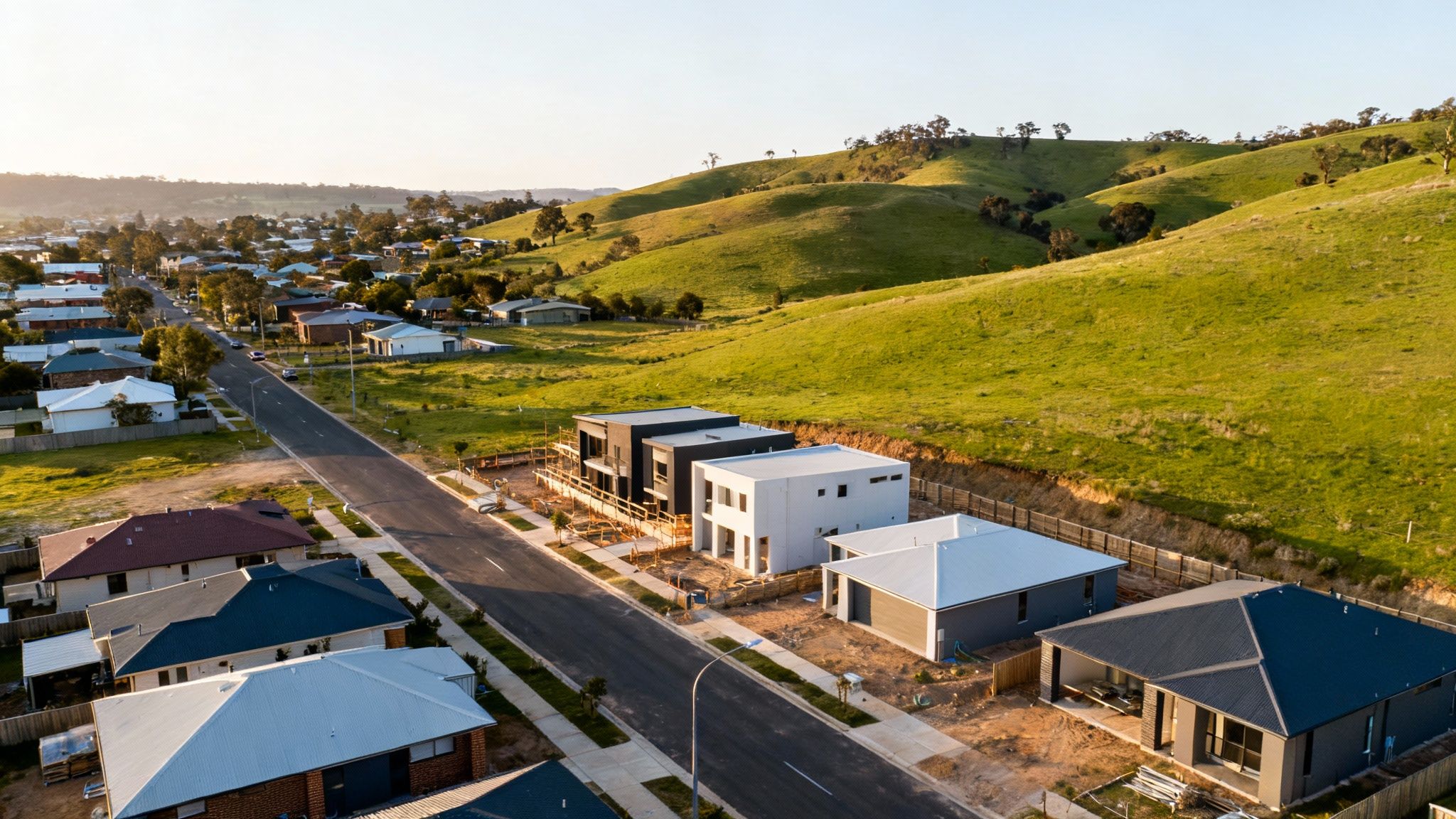
Choosing to build in Bathurst isn't just about bricks and mortar; it's about investing in a lifestyle that blends country charm with all the conveniences you need. The area has become a magnet for people wanting to escape the squeeze of capital city prices without giving up on great amenities.
The local property market has been running hot, and that’s no secret. We've seen firsthand how strong the buyer demand is. CoreLogic data highlighted one recent January where property transactions tripled compared to the year before. A staggering 50% of those buyers were moving from Sydney. This wave of new owner-occupiers shows just how appealing the region is, but it also means the competition for skilled builders and quality materials is fierce. You can read more about the growth in NSW regional cities and see the bigger picture.
A Thriving Market Means High Demand
This intense demand has a direct knock-on effect on the building industry. The most reputable home builders in Bathurst are often booked solid for months, sometimes even a year out. If you have your heart set on a particular builder, you need to start the conversation early. Planning ahead is non-negotiable.
It's not just about builder availability, either. The region's popularity puts pressure on the entire supply chain. While we have excellent local suppliers, the boom can lead to longer waits for certain materials or specialised trades. This is where a builder with deep local roots and strong relationships really proves their worth—they know how to navigate these hurdles and keep your project moving forward.
The Unique Appeal of Regional Living
So, what’s really pulling people to build in Bathurst? It’s a powerful mix of lifestyle factors you just can't find in the city:
- Room to Breathe: The chance to build on a larger block of land is a massive drawcard, whether it’s a generous lot in a new estate or a sprawling rural acreage.
- A Real Community Feel: Bathurst is famous for its welcoming atmosphere, stunning historic streetscapes, and a genuinely vibrant local culture.
- Growing Infrastructure: With ongoing investment in local services, schools, and healthcare, it’s an ideal spot for families and professionals to plant their roots.
One of the biggest logistical puzzles for rural builds is simply getting materials to the site. We’ve seen it all. That’s why we have a 10-tonne 4×4 truck to bring in materials and supplies for the most remote properties around New South Wales. It allows us to bring in labour, materials, and equipment where and when it's needed the most, overcoming hurdles that would bring other projects to a standstill.
How to Find and Vet Potential Home Builders
Finding the right builder is easily the most important decision you'll make when building a new home. A quick search for "home builders Bathurst" will give you a list, but the real gems are often found by tapping into the local network. You need to look beyond the first page of Google and start talking to people.
Who knows the local building scene best? The people who work in it every day. Chat with local building suppliers, real estate agents who specialise in land sales, and even architects across the Central West. They have their finger on the pulse and know who consistently delivers quality work, communicates well, and has a solid reputation. A referral from them is worth more than any glossy brochure.
The Australian house construction industry is a massive part of our economy, valued at around AUD 90.1 billion with nearly 60,000 businesses in operation. A huge chunk of that comes from builders constructing homes for people just like you, which means you have plenty of options. For a deeper dive, you can find some fascinating insights into the national house construction market.
Verifying Credentials and Experience
Once you've got a shortlist, the real homework begins. This goes way beyond just scrolling through photo galleries of finished homes. It’s about making sure they’re legitimate, insured, and genuinely the right fit for what you want to build.
Your first move is a simple but critical one: verify every potential builder's licence with NSW Fair Trading. This is a non-negotiable step that confirms they’re legally allowed to take on your project. Right after that, ask to see proof of their insurances, especially public liability and home building compensation fund (HBCF) insurance.
A builder's portfolio should do more than just look good—it needs to resonate with your vision. If you’re dreaming of a modern country homestead, a portfolio packed with suburban project homes probably means they aren't the right match in style or experience.
Dive deep into their past projects. Look for consistency, quality finishes, and an obvious pride in their work. Don’t be afraid to ask for addresses so you can see their work in person. A drive-by gives you a much better feel for their craftsmanship than a perfectly staged photo ever will. For more tips on what to look out for, our guide on how to choose the right builder for your project is a great resource.
Checking References and Reading Between the Lines
Talking to past clients is where you get the unvarnished truth. A builder who is confident in their work will have no problem handing over a list of references.
When you make those calls, get specific. Go beyond a simple "Were you happy?" and ask the questions that really matter.
- Communication: How did they keep you in the loop? Were they easy to get hold of when you had questions?
- Budget Management: Did the project stay on budget? If not, how were unexpected costs explained and managed?
- Problem Solving: Building is never perfect. When issues popped up, what was their approach to fixing them?
- The Big Question: Knowing what you know now, would you hire them again?
This kind of honest feedback gives you a real-world preview of what it’s like to work with that builder, allowing you to move forward and make your final choice with confidence.
Navigating Council Approvals and Site Logistics
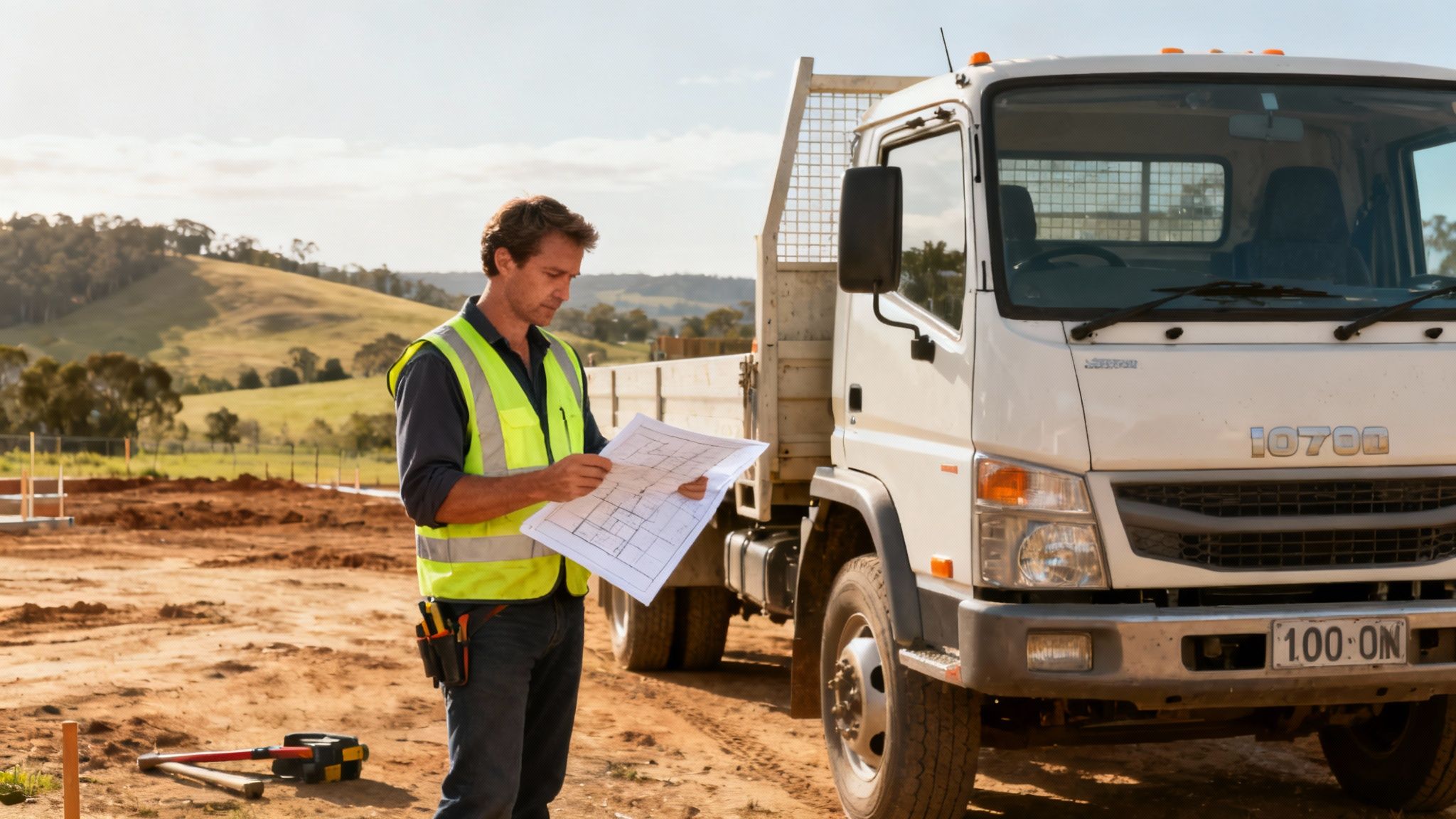
Before any construction can begin, you need to work through the necessary paperwork with local authorities. For anyone building in the area, this means dealing with the Bathurst Regional Council and their specific regulations. The first big step is lodging a Development Application (DA), which is essentially a detailed proposal of your new home that needs the council's green light.
This is where having a seasoned local builder on your team really pays off. They know the ins and outs of the DA process and can make sure your application is rock-solid. A good builder helps you pull together everything from site plans and engineering specs to environmental impact statements, sidestepping the common mistakes that can stall a project before it even starts.
Overcoming Regional Building Challenges
Building in the Central West isn't always straightforward, particularly when you're on a rural or remote block. The single biggest headache? Access. Unsealed roads, sharp inclines, or tricky creek crossings can easily stop a standard delivery truck in its tracks, bringing your project to a grinding halt.
You need a builder who’s equipped for the reality of regional NSW, not just a smooth suburban street. One of the most telling questions you can ask a potential builder is how they plan to get materials to your specific site. Their answer will tell you everything you need to know about their experience and problem-solving skills.
We have a 10-tonne 4×4 truck to bring in materials and supplies for the most remote properties around New South Wales. This allows us to bring in labour, materials, and equipment where and when it's needed the most, ensuring your build stays on track no matter how remote your dream location is.
Having the right gear ensures we can deliver what's needed, when it's needed, keeping your project on schedule. If you're planning to build on a rural block, getting your head around the full scope of the process is crucial. You can find more practical advice right here: https://awesim.au/building-on-rural-land-nsw/
Essential Site Preparation and Management
With approvals sorted and a solid logistics plan in place, the focus shifts to the site itself. Getting the land ready involves far more than just clearing a patch of dirt. A professional home builder takes full responsibility for proper site management, which covers everything from safety to security.
A few key tasks need to be ticked off before the real work begins:
- Access Roads: A solid, reliable track has to be established for heavy vehicles.
- Site Security: The area and your materials need to be secured, usually with temporary fencing.
- Service Connections: Temporary power and water must be coordinated and installed.
Making sure these fundamentals are handled correctly is non-negotiable for a safe and efficient project. For a closer look at a critical part of site safety, this practical guide to temporary fencing for construction sites is a great resource. A professionally managed site from day one really sets the standard for the entire build.
The Big Questions to Ask Every Bathurst Builder
Your first sit-down with a builder is your best chance to see beyond the polished photos and get a real sense of who they are. This is where you find out if their experience, communication style, and overall approach are the right fit for you. Think of it less like an interview and more like a conversation to find a long-term partner for one of your biggest life projects.
It's also worth remembering the bigger picture. The Australian construction scene is always shifting. A recent Australian Bureau of Statistics report noted 223,922 dwellings were under construction across the country in a single quarter. At the same time, completions and new starts have eased back slightly, which tells you that builders are juggling high demand with very real challenges like sourcing materials and skilled labour. This context matters because it directly impacts how a Bathurst builder will approach your timeline and budget. You can dig into the latest building activity in Australia to see these trends for yourself.
Nailing Down Their Process and Communication Style
A stress-free build really comes down to clear, consistent communication. How a builder manages the day-to-day of your project is just as crucial as their craftsmanship. You need to be confident you'll be kept in the loop and that they have a solid plan for dealing with the inevitable curveballs.
-
How do you manage the project and keep me updated? A seasoned professional won't just "wing it." They should be able to point to specific software or a system they use for tracking schedules, budgets, and decisions.
-
What's our communication rhythm going to be? Find out if you can expect a weekly email summary, regular on-site meetings, or ad-hoc phone calls. Establishing this from the get-go prevents a lot of frustration later on.
-
What happens when things change or issues pop up? This is a big one. Their answer should outline a formal variation process—one where you see the costs and sign off on any changes before the work is done.
The best home builders in Bathurst don't just build houses; they build trust. Their answers here should make you feel confident that they are organised, transparent, and proactive.
Gauging Their Team, Quality, and Guarantees
The builder is the conductor of the orchestra, but the quality of their team of subcontractors and suppliers is what makes the music. You need to know that their network is solid and that they stand behind the finished product.
A great way to test their commitment to modern building practices is to ask about their experience with energy-efficient solutions, such as integrating solar panels for new construction.
From there, get into the specifics of their team and the promises they make.
-
Do you use a regular crew of subcontractors? A builder who relies on a consistent, trusted team of trades is a massive advantage. It means they know the quality of work to expect and that everyone works well together.
-
What kind of warranty do you offer on your workmanship? Dig deeper than the standard statutory warranty. What does their personal guarantee cover, and for how long? This shows how much pride they take in their work.
-
Looking at our plans, what's a realistic timeline? Their answer will tell you a lot about their honesty and experience. It’s a reality check that helps you align your own plans for moving, financing, and life in general.
Decoding Quotes and Finalising Your Contract
Getting that first quote from a builder is an exciting moment. It feels like your dream home is finally taking shape. But this is where the real diligence begins. A thorough, itemised quote is your number one tool for keeping the project on budget, so you need to understand exactly what’s in it—and what’s not—before signing on the dotted line.
The trick is to compare quotes on a true "apples for apples" basis, which is harder than it sounds when every builder presents their numbers differently.
I always recommend breaking each quote down into three core sections: inclusions, exclusions, and provisional sums.
- Inclusions cover everything the builder has factored into their total price.
- Exclusions are the items you’ll need to organise and pay for separately, like window coverings, landscaping, or even the driveway.
- Provisional sums are essentially placeholders—an estimated allowance for items where the final cost isn't locked in yet, like your kitchen joinery or tile choices.
Pay very close attention to those last two. A quote that seems attractively low might just have a long list of exclusions or unrealistically tight provisional sums that are guaranteed to blow out later.
Comparing Builder Quotes A vs B
Let's look at a practical example. Imagine you have two quotes that seem close on the surface but have critical differences hidden in the details.
| Item/Feature | Builder A Quote Details | Builder B Quote Details | Key Considerations |
|---|---|---|---|
| Kitchen Joinery | Provisional Sum: $20,000 | Quoted: Custom 2-pac joinery as per plans, stone benchtops included | Builder B's quote is fixed, removing budget uncertainty. Builder A's allowance may not cover your desired finish. |
| Site Costs | Provisional Sum: $35,000 for "standard site" | Fixed Price: $48,000 based on soil report and contour survey | Builder B has done their homework and provided a firm price. Builder A's quote could increase significantly once works begin. |
| Driveway | Excluded. Client to arrange post-handover. | Included: 15m of coloured concrete driveway from garage to boundary. | Builder A's total project cost is actually higher once you factor in organising your own driveway. |
| Appliances | Included: Basic 'Builder's Range' oven, cooktop, and rangehood. | Excluded: Client to supply all kitchen and laundry appliances. | You need to add the cost of all appliances to Builder B's quote for an accurate comparison. Does Builder A's range meet your needs? |
As you can see, the bottom-line number is only part of the story. A fixed-price item is always better than a provisional sum, as it shifts the risk from you to the builder.
The Nuances of a Rural Build Quote
Building on a rural block around Bathurst brings a whole different set of challenges, and the quote must reflect that. The logistics of a regional project introduce significant costs that absolutely must be accounted for from day one. If these aren't explicitly listed, it’s a massive red flag.
Make sure your quote clearly details the costs for:
- Site Access: This isn't just about a bit of gravel. It means building or upgrading an all-weather access road that can handle concrete agitators, delivery trucks, and heavy machinery for the entire build duration.
- Service Connections: The cost to run power from the nearest pole to your building envelope can be eye-watering. The quote must also cover everything needed for water (tanks, pumps, trenching) and wastewater (a complete septic system installation).
- Site-Specific Costs: This bucket includes all the earthworks, cut and fill, soil removal, and any retaining walls needed to make your block build-ready. These costs can vary wildly from one property to the next.
Getting your head around the full financial picture is crucial. Our detailed guide on the factors influencing home builder costs can give you some more perspective as you dig into your quotes.
This infographic gives a great overview of the key things to look for when you're weighing up builders and their proposals.

It’s a good reminder that a builder's project management style, their team, and the warranties they offer are just as critical as the final number on the quote.
Finalising Your Building Contract
Once you’ve picked your builder and ironed out all the details in the quote, the final hurdle is the building contract. Most professional home builders in Bathurst use standard industry contracts, like those from the Housing Industry Association (HIA) or Master Builders Association.
These documents are generally well-balanced, but you still need to read every single word. Don't skim it.
Your contract is the single source of truth for your entire project. It outlines responsibilities, timelines, and processes for when things don’t go to plan. Signing it with total confidence comes from understanding these key components.
Pay special attention to the payment schedule. It should clearly link progress payments to the completion of major construction stages (e.g., slab down, frame complete, lock-up).
Also, find the defect liability period—this is the timeframe after you get the keys during which the builder is legally obligated to come back and fix any issues. Lastly, understand the dispute resolution process. Nobody wants to think about it, but knowing there's a clear pathway for solving disagreements provides crucial peace of mind and protects you throughout the build and beyond.
Your Top Building Questions, Answered
Embarking on a new build is a huge undertaking, and it’s only natural to have a long list of questions. As builders who have spent years on the ground here in Bathurst, we’ve heard just about all of them, especially from clients tackling projects on rural or regional land. Let's get into some of the most common queries we see.
How Long Does It Really Take to Build?
This is always the first question, and the most honest answer is: it really depends on the project.
For a fairly standard, single-storey home on a flat block in one of Bathurst's new estates, you’re generally looking at 6 to 9 months from the moment the slab is poured until we hand you the keys.
But if you're planning a complex custom design, a two-storey home, or building on a rural property with its own logistical hurdles, it's more realistic to expect a timeframe in the 9 to 12-month range, sometimes a bit longer. Things like a particularly wet season, delays getting specialised materials, or even just the council's approval timeline can have a real impact. A good, transparent builder will walk you through a realistic schedule from the start, complete with buffers for those 'just in case' moments.
What Are the Biggest Costs Outside the Builder’s Contract?
Your builder's quote covers the lion's share, but it's crucial to remember it’s not the full picture. You need to budget for several other significant costs that almost always sit outside the main contract.
Be prepared for expenses like:
- Council and Certification Fees: This includes everything from your Development Application (DA) to construction and occupation certificates.
- Service Connections: The cost to get power, water, sewer or septic, and communications connected to your home. On a rural site, this can be a very substantial figure.
- The Finishing Touches: Think landscaping, driveways, fencing, decks, and even blinds or curtains. These are rarely standard inclusions.
- Rural-Specific Needs: If you're on acreage, you'll likely be paying for a septic system, water tanks, pumps, and sometimes a long driveway or access road.
We always tell our clients to set aside a contingency fund of at least 10-15% of the total project cost. It might seem like a lot, but having that buffer gives you a vital safety net to handle unexpected issues without derailing the budget or adding stress.
How Do You Handle Remote or Hard-to-Reach Sites?
Building out here in regional New South Wales often means working with tricky terrain. We've seen it all—unsealed roads, steep slopes, and creek crossings that would stop a standard delivery truck dead in its tracks, causing massive delays. It's a valid concern for anyone with a remote block of land.
We have a 10-tonne 4×4 truck to bring in materials and supplies for the most remote properties around New South Wales. This allows us to bring in labour, materials, and equipment where and when it's needed the most, ensuring your project doesn’t grind to a halt just because the road gets a bit rough.
This capability is a genuine game-changer for rural builds. It means we can get the job done when and where it's needed, taking one of the biggest risks off the table. When you're talking to home builders in Bathurst, make sure you ask them exactly how they plan to manage the unique logistics of your specific property.
Ready to build a home that’s as resilient and practical as its surroundings? At Awesim Building Contractors, we specialise in rural and regional construction across New South Wales. Start the conversation about your project today.