
Restumping is one of those big-ticket items for a homeowner. It's the process of swapping out old, tired foundation stumps for new ones, essentially giving your house a fresh set of legs to stand on. If you've noticed things like sloping floors, cracks creeping up the walls, or doors that just won't close properly, your property might need restumping. Catching these signs early is the key to preventing a small issue from becoming a massive structural headache.
Spotting the Signs: Does Your House Need Restumping?
The integrity of your home literally starts from the ground up. A solid foundation is everything, but the stumps holding it all up can degrade over time, thanks to soil movement, moisture, and pests. Recognising the early signals of foundation trouble is a crucial skill for any homeowner, especially with the varied conditions we see across rural New South Wales.
These clues often start small, but they can quickly point to a much bigger problem if you know what to look for.
Most people first sense something is off from inside. You might drop a marble and watch it roll to one corner of the room, or maybe you've noticed a nagging gap opening up between the skirting boards and the floor. These are tell-tale signs of uneven floors, and they're a direct result of stumps sinking or failing at different rates.
Beyond the Obvious Cracks
A big, jagged crack in a plaster wall is hard to miss, but other signs are more subtle. The way your doors and windows behave is often one of the first giveaways.
- Stubborn Doors: A door that suddenly jams in its frame or becomes a struggle to close is a classic sign the house has shifted.
- Ghost Doors: On the flip side, a door that swings open or shut all by itself is another strong indicator that your floors aren't level.
- Window Troubles: Look for windows that are tough to slide, rattle when it's windy, or show new gaps around the frame.
These aren't just minor annoyances; they're symptoms of the entire house frame being twisted out of shape by a failing foundation. This kind of stress can also cause secondary problems. For example, uneven floors can lead to gaps and squeaks in your floorboards, an issue we cover in our guide to professional timber floor repairs.
A home's foundation is its silent partner. When it starts to fail, it doesn't always shout. Sometimes it just whispers through a jamming door or a slight bounce in the floor. Listening to these whispers is how you act before it becomes a roar.
To help you get a clearer picture, here's a quick checklist of common symptoms and what they might mean.
Foundation Problem Checklist
| Symptom | What to Look For | Severity Level |
|---|---|---|
| Cracks in Walls | Fine hairline cracks vs. large, jagged cracks (especially over doorways). | Low to High |
| Sloping Floors | Items rolling, noticeable slant, bouncy or soft spots underfoot. | Medium to High |
| Sticking Doors/Windows | Difficulty opening/closing, gaps appearing around frames. | Medium |
| Exterior Cracks | Cracks in brickwork, especially in a "stair-step" pattern. | High |
| Visible Stump Damage | Crumbling concrete, rotting timber, or termite damage. | High |
This table is a good starting point, but a proper assessment is always the next step.
Doing Your Own Walk-Around
You can get a good feel for the situation with a basic inspection. Take a slow walk around the outside of your house. If you can see the stumps, look for any obvious decay, crumbling, or cracking. Also, check for poor drainage—water pooling near your foundation after it rains is a major red flag, as it can drastically speed up stump degradation.
Before you call in the pros, it’s a smart move to do a more thorough check yourself. Using a detailed building inspection checklist helps you go through your property methodically, so you can have a much more informed conversation when you do bring in a foundation specialist.
The Complete House Restumping and Levelling Process
Getting your head around house restumping can feel overwhelming, but it doesn't have to be. With over three decades of hands-on experience, we've learned that homeowners need a clear, straightforward explanation, not a wall of technical jargon. Let's walk through how a professional project unfolds, from the first look under the house to the final checks, so you know exactly what to expect.
It all starts with a thorough structural assessment. An engineer or a seasoned restumping contractor will get under your house to gauge the full scope of the job. They'll pinpoint which stumps need replacing and check the overall health of your sub-floor. From there, it's about sorting out the necessary paperwork—council permits and engineering certifications—to make sure every part of the job meets strict Australian Standards.
Securing and Preparing the Site
Before we can even think about lifting the house, the site needs to be properly prepared. This means creating clear, safe access under the house for our crew and equipment. Inside, it's a good idea to secure any fragile items like mirrors, picture frames, or delicate ornaments to protect them from the minor vibrations that can occur.
Next, we establish a network of temporary supports. Using strategically placed hydraulic jacks and heavy-duty acrow props, we carefully take the weight of your home off the old, failing stumps. This is a critical step that demands precision to distribute the load evenly and keep the entire structure stable and secure. It’s a delicate balancing act that only comes with experience.
Lifting, Replacing, and Setting New Stumps
With the house securely supported, the lifting begins. We use hydraulic jacks to gently raise the building by just a few millimetres or centimetres—enough to create the room we need to work. You'll barely notice it from inside, but this uniform lift is essential for what comes next.
Once the house is elevated, our crew gets to work removing the old, decayed stumps. We then clear out the holes and prepare new footings. Whether we're using long-lasting concrete, treated timber, or galvanised steel, each new stump is cut to the precise height and set firmly into place. This is where we lay the groundwork for your home's future stability.
A successful restumping job is defined by precision. It’s not about brute force; it’s about a deep understanding of structural loads and making millimetre-perfect adjustments to bring a home back into perfect alignment.
To help you spot potential issues early, this simple flow chart shows what to look for, listen for, and feel for around your property.
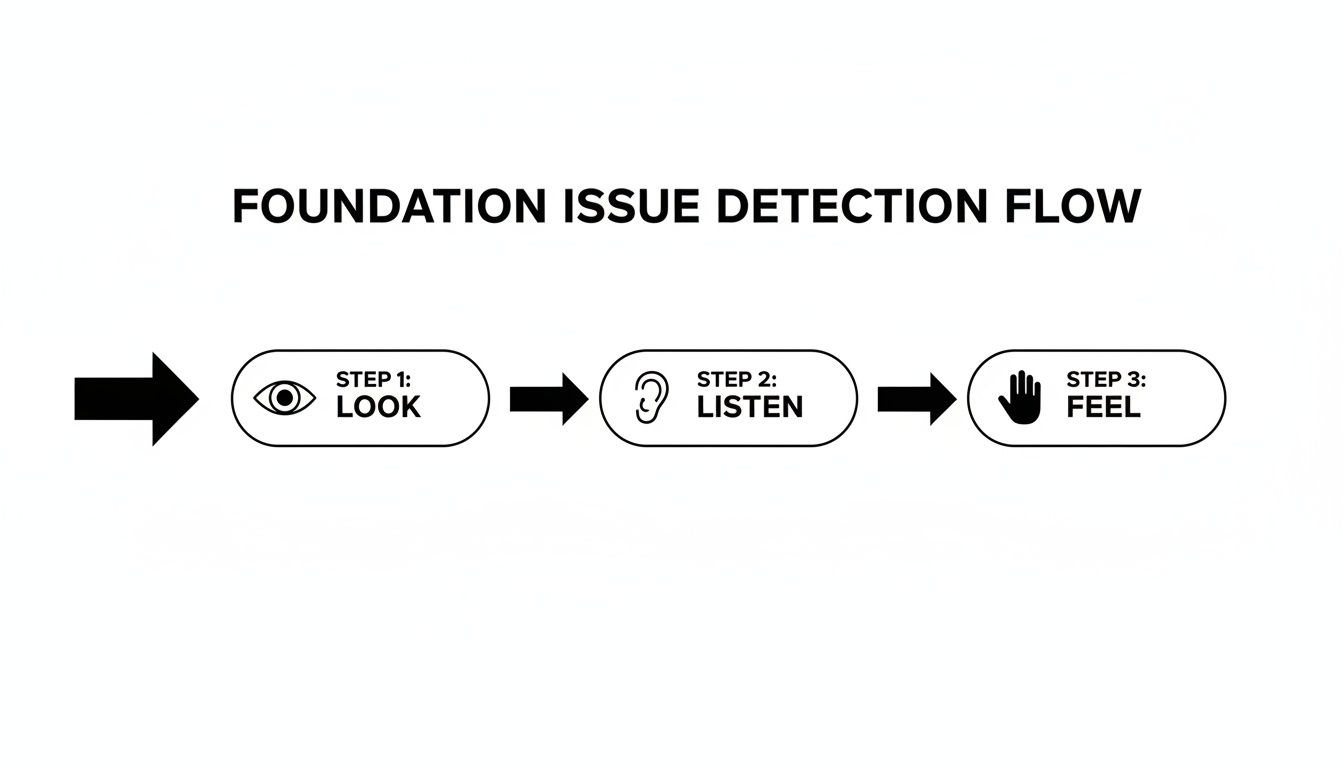
This process encourages you to use your senses—sight, sound, and touch—to pick up on the subtle clues that your foundation might be shifting.
The Final Levelling and Checks
After all the new stumps are installed, we move into the most crucial phase: levelling the house. The hydraulic jacks are slowly and systematically lowered, transferring the building's weight onto its new foundation. All the while, we're using laser levels and other precision tools to monitor the floor levels right across the home.
We make tiny adjustments, stump by stump, until every part of the house is perfectly level. This is the part of the job that finally fixes those sloping floors, jamming doors, and sticking windows. Once everything is perfectly aligned, the new stumps are permanently fixed in place, and all the temporary supports come out. A final inspection ensures the job is secure, compliant, and built to last.
Tackling Remote and Rural Properties
We handle a lot of projects on remote properties across New South Wales, where just getting to the site can be the first challenge. Navigating dirt roads, creek crossings, and isolated locations requires more than just a standard ute. It's a logistical puzzle we are uniquely equipped to solve. We have a 10 tonne 4×4 truck to bring in materials and supplies for the most remote properties around New South Wales. This allows us to bring in labour, materials and equipment where and when it's needed the most.
Whether you need a large delivery of stumps or a specific concrete mix, our truck ensures the project moves forward without a hitch. You can learn more about our specialised rural concrete delivery and how we make it happen. Ultimately, a remote location shouldn't mean you have to compromise on the quality or efficiency of your restumping project.
Choosing the Right Materials and Contractor for the Job
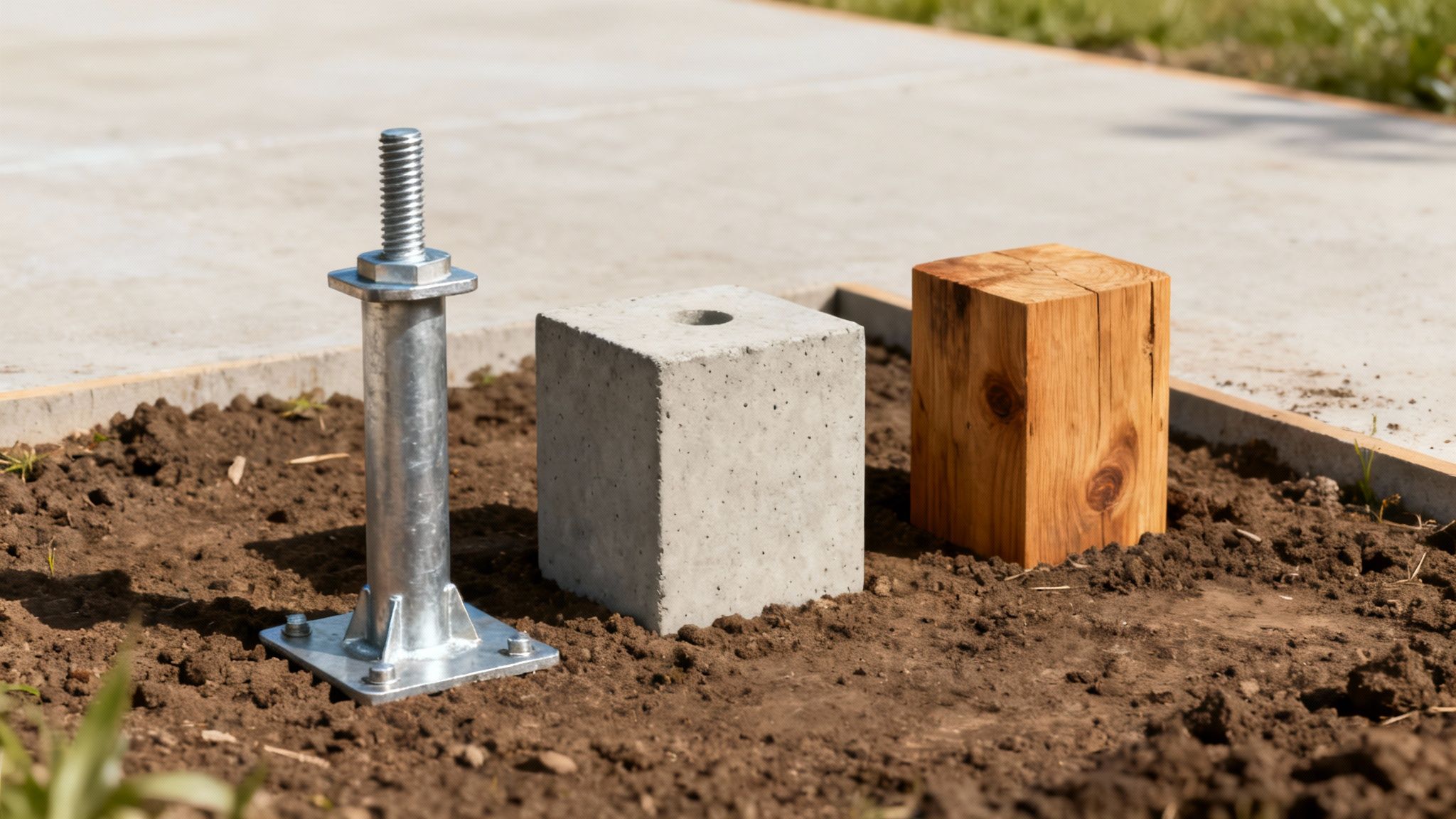
The long-term success of your house restumping project really boils down to two things: the materials you use and the team you hire. Get these right, and you're setting your home's foundation up for decades of stability. Get them wrong, and you could be looking at a world of expensive problems down the track.
Think of it this way: the right materials provide the strength, but it's the right team that ensures they're installed with the precision and expertise your home deserves. Let's dig into the best options for NSW properties and how to find a contractor you can truly rely on.
Comparing House Stump Materials for NSW Properties
New South Wales is home to an incredible variety of soil types. From the reactive black soils of the Liverpool Plains to the sandy loams in the Riverina, what works perfectly for one home might fail prematurely at another. Understanding the real-world pros and cons of each stump material is the first step toward a lasting fix.
Here’s a breakdown to help you select the best option for your home and local conditions.
Comparing House Stump Materials for NSW Properties
| Material Type | Pros | Cons | Best Suited For |
|---|---|---|---|
| Adjustable Galvanised Steel | Highly durable, resistant to termites and rot, and allows for minor adjustments after installation. | Higher upfront cost and requires professional installation to prevent corrosion. | Properties in high moisture or termite-prone areas, and on reactive clay soils where future adjustments may be needed. |
| Solid Concrete | Extremely strong, long-lasting, and completely immune to pests and rot. A very reliable "set and forget" option. | Very heavy and labour-intensive to install. Can be prone to cracking in highly reactive soil without proper footings. | Stable soil conditions where longevity is the absolute top priority. Excellent for properties in flood-prone zones. |
| Treated Timber (Hardwood) | More affordable than steel or concrete, and the traditional choice for many classic Australian homes. | Susceptible to termites and rot if the treatment barrier is compromised. Has a shorter lifespan than its counterparts. | Budget-conscious projects on properties with good drainage and low termite risk. Best used in dry, stable soil. |
Ultimately, choosing the right stump comes down to a careful assessment of your property's specific conditions. However, for most rural NSW homes, especially those dealing with shifting ground or termite pressure, galvanised steel stumps often provide the best balance of durability and adaptability.
Vetting Your Restumping Contractor
Picking a contractor is every bit as crucial as selecting the materials. A skilled team can turn a good project into a great one, while an inexperienced crew can quickly turn it into a nightmare. You need a partner with a proven track record, particularly one who understands the unique challenges of working on rural and remote properties.
When you're interviewing potential contractors, don't be shy about asking direct questions. Their answers (or lack thereof) will tell you everything you need to know about their experience and professionalism.
A contractor’s real value isn't just in their tools and skills; it's in their ability to foresee problems and communicate clearly. The best ones have seen it all and know how to navigate the unique challenges that every rural property presents.
Use this checklist to guide your conversation:
- Licensing and Insurance: "Can I see your current builder's licence and certificate of currency for public liability insurance?" This is an absolute must. No licence, no job.
- Local Experience: "How many restumping jobs have you done in this region? Are you familiar with our local soil type?" You want someone who knows the lay of the land.
- Compliance and Standards: "How do you ensure your work meets Australian Standard AS 2870 for residential slabs and footings?" A professional will know this inside and out.
- Project Management: "Who will be my main point of contact, and how will you keep me in the loop?" Clear communication is key.
- Rural Logistics: "What's your plan for getting equipment and materials to our property? How do you handle difficult terrain?"
This last point is incredibly important for properties off the beaten path. Plenty of contractors are set up for suburban jobs but are completely unprepared for the logistical realities of remote work.
Our Capability for Remote NSW Properties
We get it. Getting labour, equipment, and materials out to isolated sites can be a massive headache. That’s precisely why we’ve invested in a 10-tonne 4×4 truck. This beast is more than just transport; it’s our mobile base of operations, allowing us to bring in labour, materials and equipment where and when it's needed the most. It lets us bring everything we need directly to your site, no matter how rough the road or how many creek crossings are in the way.
This capability means we’re not at the mercy of delivery companies or held up by logistical snags. For homeowners who need a team that truly understands the demands of building in regional NSW, you can learn more about our commitment as a dedicated rural builder in NSW. Our promise is to deliver the same high standard of service, whether you're in the middle of town or hours from it.
Understanding Costs, Timelines, and Council Permits in NSW
Getting your head around the budget, timeline, and council requirements is the bedrock of any successful restumping house project. Nail these details from the outset, and you’ll sidestep those nasty surprises and frustrating delays that can derail the entire job. It’s all about a smooth process from the first phone call to the final sign-off.
When it comes to the cost of restumping in New South Wales, there's no magic number. Every home is different, and the final figure depends on a handful of crucial factors that we need to look at.
Breaking Down the Costs
Think of the final price as a unique equation for your property. The biggest variables are always the size of your house and exactly how many stumps need replacing. It’s simple maths, really—a small two-bedroom cottage is a completely different ball game compared to a big, rambling five-bedroom home.
Access underneath the house is another huge factor. If we can get in and work with plenty of clearance, the job is quicker and more straightforward. But for a low-set home where we might need to excavate or even lift floorboards, the labour and complexity naturally go up.
Here’s a quick rundown of what moves the needle on price:
- Size and Scope: The total floor area of your home is a direct driver of both material and labour costs.
- Site Accessibility: A tricky site with steep slopes, rocky ground, or tight access will add time and, therefore, cost to the job.
- Material Choice: As we’ve covered, your choice between galvanised steel, concrete, or timber stumps will have a significant impact on the budget.
- Structural Complexity: If your home has an unconventional layout or is already showing signs of serious structural damage, it will likely need more detailed engineering and support work.
Remember, restumping can often be part of a bigger renovation. It's smart to think about other potential expenses, like electrical work. Looking into switchboard upgrade costs now can save you from being caught off guard later on.
Navigating Council Permits and Engineering
In NSW, restumping is serious structural work. That means you’ll almost always need council approval before we can even think about touching a stump. This isn't just bureaucratic red tape; it’s a vital safety net that ensures the work is done correctly and to Australian Standards.
The journey usually starts with bringing a structural engineer on board. They’ll come out, assess your home, figure out the best way forward, and then draw up the detailed plans. These plans are what we submit to your local council for a Development Application (DA) or a Complying Development Certificate (CDC).
Getting the right permits and engineering sign-offs isn't just about ticking a legal box. It's your peace of mind that the job is being done properly. It creates a blueprint for quality and gives you a permanent record of compliance that genuinely adds value to your property.
Realistic Project Timelines
Knowing what to expect timeline-wise helps you plan your life and keeps stress levels down. While no two jobs are identical, we find that an average-sized home usually takes somewhere between one and three weeks for the on-site work.
The whole project can be broken down into a few key phases:
- The Prep Phase (1-4 weeks): This covers our initial chat and site visit, the structural assessment, the engineer’s design work, and lodging the council application. Waiting for council approval is often the most unpredictable part of this stage.
- The Action Phase (1-2 weeks): Once we have the green light, the physical work begins. This is when we’re lifting the house, pulling out the old stumps, installing the new ones, and carefully levelling the entire structure.
- The Wrap-Up (1 week): This final stage involves inspections, getting the final certification from the engineer, and taking care of any small cosmetic touch-ups needed once the house has settled on its new stumps.
Of course, things like bad weather, the specific complexities of your job, and council processing times can influence these estimates.
For homes in rural or remote parts of NSW, just getting materials and equipment to the site can be a logistical nightmare that throws schedules into chaos. This is where our specialist setup really makes a difference. We operate a 10-tonne 4×4 truck specifically for this reason, allowing us to bring in all the necessary labour, materials, and equipment to the most remote properties. Being self-sufficient means we aren't at the mercy of third-party couriers, ensuring your project stays on track, no matter how far off the beaten path you live.
Specialist Solutions for Remote and Rural NSW Properties
Restumping a home in regional New South Wales is a different beast altogether. The challenges go way beyond the local soil type or the building’s age; it's the sheer logistics of working out in the bush that can make or break a project.
From the black soil plains near Moree to the rugged country around Broken Hill, simply getting the right crew and materials to your property is often the biggest hurdle. A standard contractor, who might be fantastic in a suburban street, can find themselves completely out of their depth when faced with rural realities.
We've seen it happen. Unsealed roads that turn to mush after a bit of rain, surprise creek crossings, and the huge distances from suppliers can bring a job to a dead stop. This is where having a team that’s built for the country becomes essential. It’s all about being self-sufficient and ready for whatever the landscape throws at you.
Overcoming the Tyranny of Distance
The biggest factor separating a town job from a rural one? Access. A project's timeline and budget can blow out fast because of simple logistical problems. Think of a delivery truck that can’t handle a dirt track, or needing a specific tool that’s a four-hour round trip away. These aren't minor inconveniences; they add real cost and stress to your project.
We saw this problem years ago and built our entire operation around solving it. We don't cross our fingers and hope for the best with third-party transport. We invested in a solution designed specifically for the unique demands of working across rural NSW.
A successful rural restumping project is 90% planning and logistics. The actual work of swapping out the stumps is the straightforward part. The real skill lies in getting the crew, materials, and equipment on-site, on time, without a drama.
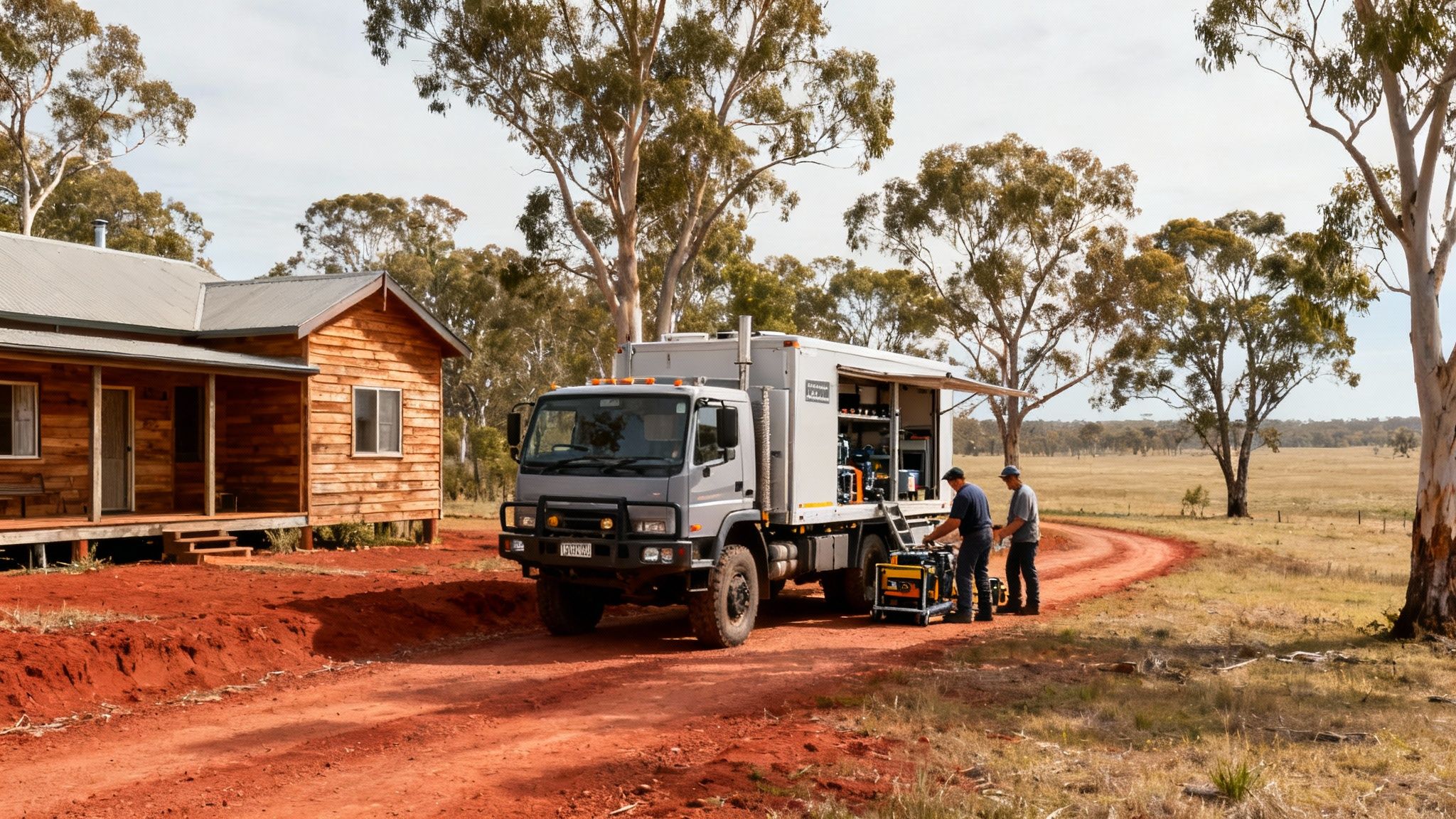
To solve this logistical puzzle, we run our own heavy-duty 10-tonne 4×4 truck. This isn't just a truck—it's a fully kitted-out mobile workshop and supply depot on wheels, allowing us to bring in labour, materials, and equipment where and when it's needed the most.
Our All-Terrain Mobile Workshop
This purpose-built vehicle is our secret to delivering high-quality, reliable results, no matter how far off the beaten track you are. It gives us complete self-reliance, which means your project runs smoothly without the frustrating delays that can plague less-prepared teams.
Here’s what our unique setup allows us to do:
- Bring the Crew to You: We transport our entire skilled team directly to your property. This cuts out the costly and complicated issues of arranging local accommodation and travel.
- Deliver All Your Materials: We haul everything needed for the job in one go—from a full set of galvanised steel stumps and bags of concrete to specialised timber. No waiting around for separate supplier deliveries.
- Carry All Our Own Gear: Our truck is loaded with all the necessary heavy equipment. Hydraulic jacks, laser levelling gear, generators, and excavation tools are all on board, so we always have the right tool for the job.
This capability completely changes how a remote restumping project unfolds. Instead of reacting to problems as they pop up, we arrive with the solution already in hand. It means we can give homeowners in the most isolated corners of NSW the exact same level of professional service they'd expect in Tamworth or Dubbo, ensuring a first-class result every single time.
Got Questions About House Restumping? We Have Answers.
Deciding to restump your house is a big deal. It’s a serious investment in your home's stability and future, so it’s only natural to have a few questions swirling around. To help clear things up, we've put together answers to some of the most common queries we hear from homeowners just like you.
How Long Does This Whole Process Actually Take?
This is usually the first thing people ask, and honestly, it depends. For a standard three-bedroom house, you can expect the on-site work to take anywhere from one to three weeks. That window covers everything from setting up the site and lifting the house to getting the final sign-off.
But a few things can shift that timeline:
- Your Home's Size and Shape: A big, sprawling home or one with a tricky layout will naturally take longer than a simple, rectangular cottage.
- Site Access: If we can easily get our crew and equipment onto the property, things move a lot faster. Homes that are very low to the ground or built on a difficult slope can add a couple of extra days.
- The Weather: We can work through most conditions, but a week of non-stop heavy rain can definitely slow us down, especially when it's time to pour fresh concrete footings.
Can We Still Live in the House While You're Working?
Yes, in almost every single case, you can. We know that packing up and moving out is a massive hassle, so we go to great lengths to make sure your home stays safe and liveable during the entire project. Our team works in a very deliberate way, securing one section at a time to keep disruption to a minimum.
You'll definitely notice some noise and vibrations during the day—that's just part of the job. It's a good idea to take down pictures from the walls and secure any fragile ornaments on shelves before we get started. Our main goal is your safety and comfort, and we'll keep you in the loop every day so you know exactly what’s happening and when.
A professional restumping crew should make the process feel as smooth as possible for you. The work itself is significant, but the impact on your daily life shouldn't be. We always work with our clients to come up with a plan that suits their family.
How Often Does a House Need to Be Restumped?
There’s no magic number here. How long your stumps last really comes down to what they're made of and the ground conditions around your home.
- Old Timber Stumps: These are the real wildcards. If you're in a dry area with stable soil and no termites, they might hold up for 50 years or more. But in a damp, termite-prone spot, you might only get 20 years out of them.
- Modern Concrete and Steel Stumps: When done right, these are in for the long haul. You can count on properly installed concrete or galvanised steel stumps to last 80 to 100 years, sometimes even longer. They’re pretty much a set-and-forget solution.
Instead of worrying about a strict schedule, think about regular check-ups. Having a professional take a quick look every five years is the best way to catch small issues before they turn into major headaches.
Will Restumping Finally Fix the Cracks in My Walls?
This is a great question because it gets right to the point. The main job of restumping a house is to stabilise the foundation and stop the very movement that’s causing those cracks. By getting your house perfectly level again, we're fixing the root cause of the problem.
As we lift and level the house, you'll often see many of those existing cracks close right up as the frame settles back into its proper position. But it's important to remember that restumping is a structural fix, not a cosmetic one. Once the house has had a few weeks to settle on its new stumps, you'll probably still need to do some minor plaster patching and repainting to completely hide the evidence of past movement.
What if My Property is Out in the Sticks?
We hear this a lot from homeowners in rural and remote parts of New South Wales. The logistics of getting a skilled team, materials, and heavy equipment to an isolated property can seem impossible, and it stops a lot of projects from ever getting off the ground. This is exactly the kind of challenge we've built our business to overcome.
We run a heavy-duty 10-tonne 4×4 truck that’s kitted out specifically for the demands of remote work. It's not just for transport; it's a fully mobile workshop that lets us bring absolutely everything we need straight to your property. This self-contained approach means we can deliver the labour, materials, and machinery required where and when it's needed the most, no matter how many dirt roads or creek crossings we have to navigate. It means your project won't be held up by the logistical nightmares that so often plague remote jobs, ensuring a smooth, efficient process from start to finish.
Ready to secure your home's foundation with a team that gets the unique challenges of living in rural NSW? Awesim Building Contractors has the experience and specialised equipment to handle your restumping project with precision and professionalism.
Contact us today for an on-site assessment and a clear plan for your property.