
If you've ever heard the term 'restumping,' it's essentially giving your house a new set of legs. Over the years, the stumps holding up your home's foundation can wear out, rot, or shift. Restumping is the process of replacing these old supports with new, solid ones to make sure your home is stable and structurally sound for the long haul. It's a fundamental job for preserving your property's safety and value, particularly for older homes.
What Does Restumping a House Actually Involve?
Think of your house as a giant, heavy table. The stumps are the legs holding it all up and keeping it perfectly level. But what happens when those legs get wobbly, rotten, or sink into the ground? The whole table starts to tilt. Restumping is the careful, methodical process of swapping out those failing "legs" to create a solid, level foundation once again.
This is a critical bit of maintenance, especially for the charming older and character homes you see all over New South Wales. Many were built on traditional timber stumps, which are unfortunately prone to termite attacks, wood rot, and soil movement. Our region's reactive clay soils, which swell and shrink with every drought and flood cycle, only make things worse. When the stumps start to fail, you'll see the effects all through the house.
From Old Timber to Modern Strength
The good news is that the restumping process replaces those old timber stumps with materials built for the modern era. Today, homeowners have a couple of excellent, long-lasting options:
- Galvanised Steel Stumps: These are the gold standard for strength. They're immune to termites and rot, and their adjustable nature allows for incredibly precise levelling. They offer fantastic long-term stability.
- Concrete Stumps: You can't get much more solid than concrete. Renowned for their durability and total resistance to moisture, concrete stumps provide a rock-solid base that simply won't break down.
Upgrading to steel or concrete isn't just a repair; it's about future-proofing your home against the most common foundation problems. It's a proactive move that protects your property's structural health and value for decades. On rural properties, getting the right materials is even more crucial, which is why having a deep understanding of rural concrete solutions makes all the difference.
A Focus on Structural Integrity
While the news often talks about housing prices and new construction, the structural health of the homes we already live in is a conversation that needs to happen more. Problems like failing stumps directly threaten a property's safety and liveability, yet they rarely make the headlines.
Restumping is more than a simple fix—it's an investment in your home’s core strength. It gets to the root cause of sloping floors, cracked walls, and sticky doors, restoring stability from the ground up.
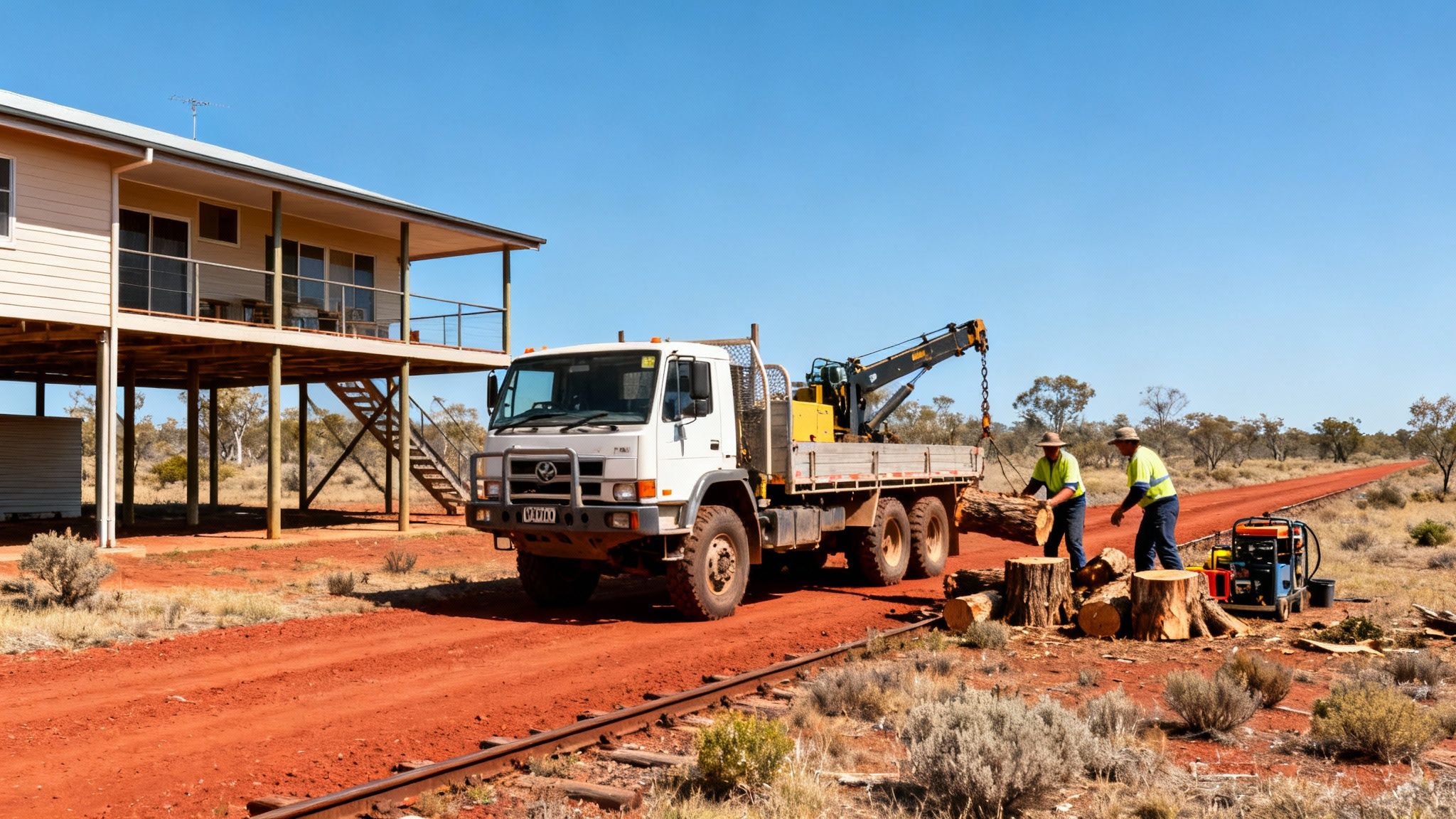
For those living in regional and remote parts of New South Wales, just getting the job done can be a major hurdle. It’s not always easy to get skilled teams, let alone heavy materials, out to an isolated property. That’s precisely why we have a 10-tonne 4×4 truck to bring in materials and supplies for the most remote properties around New South Wales. This beast allows us to bring in labour, materials, and equipment where and when it's needed the most. Whether it's navigating dirt tracks or forging a water crossing, we're equipped to deliver a complete restumping solution to the most out-of-the-way places.
Key Warning Signs Your Foundation Is Failing
Your home’s foundation is the unsung hero of the whole structure. When it’s working properly, you never give it a second thought. But the moment it starts to have problems, the effects ripple through the entire house.
Often, the symptoms of failing stumps begin subtly. You might write them off as just a quirk of an older home. But these little annoyances are your house’s way of sending out an S.O.S., signalling that a restumping project could be in your future. Overlooking these signs can turn a manageable repair into a major structural headache, so it pays to know what to look for.
The Telltale Signs Inside Your Home
Usually, the first clues that your stumps are in trouble show up inside the house. They’re the daily frustrations that point to a much bigger issue lurking underneath the floorboards.
Keep an eye out for these classic indicators:
- Uneven or Bouncy Floors: Ever walked across a room and felt like you were on a slight slope? Or maybe you've noticed a spongy, springy feeling underfoot in certain spots. This is one of the most direct signs that the stumps below are failing to provide solid, even support.
- Cracks in Plaster Walls: Take a close look at the corners of your door and window frames. If you see fine, diagonal cracks spreading outwards, that’s a red flag. These are stress fractures caused by the foundation shifting and pulling your home’s frame in different directions.
- Doors and Windows That Jam: Suddenly finding a door is sticking or a window is a real struggle to open? It’s not always the hardware’s fault. When a house sinks or shifts, it warps the rectangular frames of doors and windows, causing them to bind and jam.
These aren't just cosmetic issues. They are physical evidence that the very structure holding up your home is compromised.
A sloping floor is a dead giveaway. An easy way to check is to place a marble on the floor. If it consistently rolls towards one side of the room, you’ve got a clear sign your foundation is no longer level.
Quick Guide to Spotting Foundation Problems
For anyone on a rural property, being proactive is crucial. This simple checklist can help you do a quick walk-through and spot potential red flags that might need a professional eye.
| Symptom | What It Looks Like | Potential Severity |
|---|---|---|
| Sloping Floors | A noticeable tilt in rooms; furniture may appear slanted or objects may roll across the floor. | Moderate to High |
| Wall Cracks | Zig-zag or diagonal cracks appearing in plasterboard, especially near doors and windows. | Moderate to High |
| Sticking Doors | Doors that jam at the top or bottom of the frame, requiring force to open or close them. | Moderate |
| Bouncy Floors | A springy or soft feeling underfoot when walking across certain areas of the house. | Moderate |
| Cracked Cornices | Gaps or cracks appearing where the walls meet the ceiling. | Low to Moderate |
Spotting these signs doesn't mean your house is about to fall down, but it is a clear signal that something isn’t right beneath the surface.
When to Call a Professional
If you’ve ticked off one or more items on that list, it’s time to get an expert opinion. A professional can get under the house for a direct look at the stumps, checking for things you can’t see from inside, like rot, termite damage, or soil movement. They have the experience to tell the difference between normal minor settlement and a serious structural problem.
Catching these issues early is the best way to manage the restumping houses process. A timely inspection can stop a small problem from snowballing into major structural damage, ultimately saving you a great deal of stress and money.
The House Restumping Process From Start to Finish
Knowing what actually happens during a restumping project can take a lot of the mystery out of it. It’s not some chaotic, disruptive mess; it's a highly methodical engineering task designed to bring your home’s stability back with absolute precision. Every stage is carefully planned to make sure your property is safe and the final result is a rock-solid foundation that’ll serve you well for decades.
This simple infographic points out the first warning signs homeowners usually spot—the things that get the whole restumping journey started.
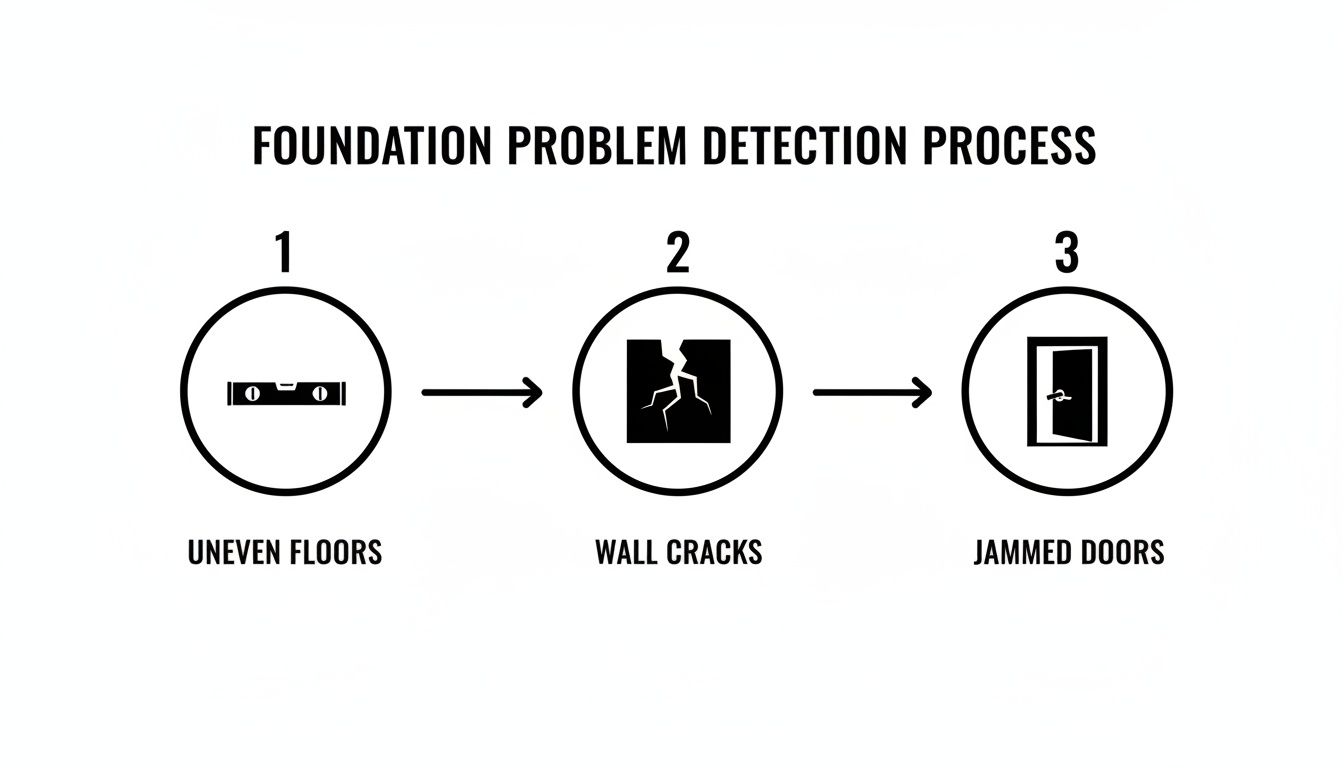
From that bouncy feeling in the hallway to doors that suddenly refuse to close properly, these common annoyances are direct symptoms of a failing foundation. They're often the first clues telling you it’s time to take a closer look.
Stage 1: Site Inspection and Engineering Assessment
It all begins with a thorough on-site inspection. A professional builder will get right under your house to see what’s going on with the existing stumps, bearers, and joists. They’ll be looking for the classic signs of trouble—rot, termite damage, or general decay—and measuring just how much the house has sunk or shifted over time.
After this initial look-see, an engineer is often brought in to map out a detailed plan. This isn't just a rough sketch; it’s a blueprint that specifies the exact number of new stumps, where they need to go, and what materials to use. Whether it's steel, concrete, or treated timber will depend on your home's structure and the local soil conditions. This engineering step is non-negotiable for ensuring the job meets the Building Code of Australia and all local council rules.
Stage 2: Preparation and House Lifting
With a solid plan approved, the prep work can start. First, we need to clear access under your house and get all the necessary equipment in place. Then comes the most critical part of this stage: lifting the house.
Now, this isn't nearly as dramatic as it sounds. We use a series of powerful, synchronised hydraulic jacks, placing them at key points under the main support beams (bearers). These jacks slowly and carefully raise the house by just a few millimetres—just enough to lift the weight off the old, failing stumps. The process is so controlled that it puts minimal stress on your home’s frame.
A common misconception is that the whole house gets hoisted high into the air. In reality, the lift is subtle and incredibly precise, often just enough to slide a new stump into place. The goal here is accuracy, not altitude.
Stage 3: Stump Removal and Foundation Work
Once the house is safely supported by the jacks, our team gets to work removing the old stumps. This can be tough, physical work, especially if the old stumps are anchored in heavy concrete footings. In some spots, particularly where access is tight, we might need to bring in specialised equipment. Experts in tight access excavation solutions have techniques for these tricky situations.
With the old stumps out of the way, we prepare the ground for the new footings. This means digging new holes to the specified depth and pouring fresh concrete pads. These new footings provide a solid, stable base that anchors the new stumps and stops them from sinking in the future.
Stage 4: Installation and Levelling
After the concrete footings have cured, it's time to install the new stumps. Each stump is cut to the exact length required and positioned according to the engineer’s plan. We then gradually lower the hydraulic jacks, transferring the weight of the house from the jacks onto the new, solid stumps.
This is the moment the levelling magic happens. Using laser levels and other precision instruments, we make tiny adjustments to get your floors perfectly flat again. This meticulous process is what eliminates the slopes and sags that were causing all the problems in the first place. It's worth noting that as the house settles into its correct, level position, you might see some minor cosmetic effects inside, like small plaster cracks. This is a completely normal part of the process. Any damage to floors during this process can often be addressed, and you can learn more about our approach to timber floor repairs on our service page.
Once everything is perfectly level, a final, thorough inspection confirms that the structure is secure. We then hand the project over, leaving you with a safe, stable, and level home.
Understanding Restumping Costs and Council Compliance
When you're looking at having your house restumped, two questions always jump to the front of the line: "How much is this going to set me back?" and "What are the rules?" They're the right questions to be asking. The answers will shape your budget and make sure your project is above board, legally speaking.
The final cost isn't a simple, off-the-shelf price. It’s a figure that’s carefully calculated based on the specific needs of your home. Likewise, dealing with council regulations is more than just paperwork; it’s about making sure your home is safe, structurally sound, and compliant for the long haul. Getting your head around these two elements from the get-go is the key to a smooth project that protects your biggest investment.
Breaking Down the Cost Factors
So, what actually goes into the final quote? Several key variables dictate the price of a restumping job, each influencing the amount of labour, materials, and overall complexity required to get your home perfectly level and stable again.
Here are the main cost drivers:
- The Size and Weight of Your Home: It stands to reason that a large, double-brick house needs more grunt to support it than a small timber cottage. This directly impacts both material and labour costs.
- The Number and Type of Stumps: An engineer will figure out the exact number of stumps your home needs for proper support. Your choice of material—be it heavy-duty galvanised steel or classic concrete—is another big factor in the final price.
- Sub-Floor Accessibility: A home with plenty of crawl space underneath is a world away from a low-set house with tight, awkward access. If the team has to squeeze into a cramped space, the job will take longer and potentially require special equipment, bumping up the labour costs.
The condition of your bearers and joists is another piece of the puzzle. If these critical timber supports are showing signs of rot or termite damage, they’ll need replacing, which adds to the scope and cost of the work.
Navigating Council Permits and Australian Standards
Let's be clear: restumping is a major structural job, not a weekend DIY project. It’s governed by strict regulations for a very good reason. Here in New South Wales, any work that changes your home's foundation requires a permit from your local council. This ensures everything is done safely and meets the requirements of the Building Code of Australia (BCA).
Trying to sidestep this process can land you in hot water, with potential for big fines, orders to undo the work, or major headaches when you try to sell your property down the track. The permit process isn't just bureaucratic red tape; it's a critical safeguard for you and your home. While it can be tough to pin down exact restumping cost data for regional NSW, the legal requirements are crystal clear.
Why a Licensed Contractor Is Essential
This is probably the single most important decision you'll make. Bringing in a licensed and insured contractor means you have an expert managing the entire compliance journey for you. They’ll handle everything from lodging the council application to arranging the final engineering inspections and getting that all-important certification. For anyone busy running a farm or a rural business, that service is invaluable.
A qualified builder ensures every new stump is installed with precision and your home is levelled correctly. When working with concrete stumps, it’s also crucial to accurately calculate concrete needs to avoid running short or wasting materials. For those on rural blocks, understanding the local rules is non-negotiable. You can learn more in our guide to the specific challenges of building on rural land in NSW.
Ultimately, putting your project in the hands of professionals gives you the peace of mind that your home is legally compliant, structurally secure, and safe for years to come.
Servicing Remote and Rural NSW Properties
Restumping a house in regional New South Wales is about more than just the work itself; it's a test of logistics. If you're on a remote property, you know the challenge well—getting heavy materials, specialised gear, and a skilled crew out to your place can feel like a nightmare to organise. It's often the biggest roadblock to getting essential foundation repairs done.
Out here, the bitumen often ends abruptly, turning into kilometres of corrugated dirt tracks, washed-out creek crossings, and rugged terrain. Your average delivery truck just isn't built for that. To pull off a major restumping project hundreds of k's from the nearest town, you need a completely different approach.
Our All-Terrain Advantage
We’ve tackled this problem head-on by investing in equipment purpose-built for the demands of rural NSW. The workhorse of our remote operations is our 10-tonne 4×4 truck. It’s much more than a vehicle; it's our guarantee that your project happens on schedule, no matter how far off the beaten track you are.
This beast of a truck lets us haul everything we need for the entire job in one go. We can confidently handle the rough stuff that would bring other crews to a grinding halt.
- Tough Access, No Problem: We can get through corrugated dirt roads, muddy station tracks, and even shallow water crossings to reach your property.
- All Materials Onboard: It has the muscle to carry a full load of galvanised steel or concrete stumps, heavy-duty hydraulic jacks, tools, and all other supplies.
- Our Crew Comes to You: Most importantly, it gets our experienced team directly to your doorstep, ensuring we have the right people on the ground, ready to work.
For farmers and property owners from Bourke to Broken Hill, this self-sufficiency offers real peace of mind. You won't have to stress about organising deliveries or wondering if your contractor can even make it out. We manage the entire journey from our depot to your foundation.
Delivering Quality, Wherever You Are
Just because you're remote doesn't mean you should settle for less. Our ability to bring our own materials means we use the exact same high-quality, Australian-made stumps and supplies on a far-flung station as we would in Dubbo or Tamworth. No shortcuts, no compromises.
This logistical independence is key to maintaining our standards. It means we can stick to the engineered plans with total accuracy and deliver a consistent, reliable result every time. When we book in your restumping job, our 4×4 truck ensures we can meet that timeline without being at the mercy of third-party freight. For anyone in places like Walgett, Nyngan, and beyond, it's the assurance that your foundation work will be done right, done efficiently, and built to last—no matter what your postcode is.
Choosing the Right Partner for Your Restumping Project
Your home is your biggest investment, and its foundation holds everything together. So, when it's time to restump, picking the right contractor isn't just a box to tick—it's one of the most important decisions you'll make for your property's safety and future value. It’s about finding a team who won't just do the job, but will do it right the first time.
A great restumping job is about more than just brute strength and new stumps. It requires a deep, practical understanding of local conditions, which is especially true across rural New South Wales. The unique soil types, weather extremes, and logistical hurdles out here demand real expertise. A contractor who understands the difference between the reactive clay around Tamworth and the sandy loam near Moree is going to make the right calls on materials and methods from day one.
Experience That Builds Confidence
With 35 years of hands-on building experience, we bring a level of seasoned knowledge that’s vital for tricky foundation work. That isn't just a number—it’s three and a half decades of solving real-world problems on properties just like yours, from old country homesteads to modern farmhouses. Our history means we've seen almost everything and know how to spot a potential issue before it turns into an expensive headache.
We are absolutely committed to using only high-quality, Australian-made materials. This is something we never compromise on, because we know firsthand that cheap, imported products just don't last in the tough conditions of rural NSW. By sourcing the best steel and concrete available, we make sure your new foundation is built to stand the test of time.
Choosing a contractor is about trust. You're entrusting them with the future of your home. It’s a partnership that should be built on proven expertise, clear communication, and a shared commitment to restoring your home’s stability for good.
Comprehensive Service from Start to Finish
We look after the entire project from the first phone call to the final sign-off, which makes the whole process straightforward and stress-free for you. Our all-in-one approach means every single detail is covered.
- Initial Design and Engineering: We collaborate with structural engineers to develop a precise plan that’s tailored specifically for your home and its unique challenges.
- Council Approvals: Forget the paperwork nightmare. Our team handles all the applications and council submissions to ensure your project is 100% compliant from the start.
- Final Certification: Once the work is done, we arrange the final engineering certification. This gives you official documentation proving the job meets all Australian Standards.
We’re proud to serve a wide stretch of New South Wales, from Tamworth and Armidale out to Parkes, Moree, and the surrounding regions. Our goal is simple: to provide practical, long-lasting solutions that restore your home’s integrity and protect its value. If you’ve noticed any of the warning signs, get in touch for a professional consultation.
Your Restumping Questions, Answered
Deciding to restump your home is a big step, and it's completely normal to have a few questions before you commit. We get asked these all the time by homeowners across New South Wales, so we've put together some straightforward answers to help you know what to expect.
How Long Does Restumping Take?
The timeline for a restumping job really depends on the house itself. For a typical three-bedroom home with decent access underneath, we can usually get the whole thing done—from the initial lift to the final levelling—in about one to two weeks.
Of course, some things can stretch that out. A larger home, a house that's very low to the ground, or a project that needs a lot of extra work on the bearers and joists will naturally take longer. The property's location can also be a factor, which is where our experience in handling rural logistics really comes into play.
Can We Stay in Our Home During the Work?
Most of the time, yes, you can absolutely stay put. All the action happens underneath the floor, so you can go about your daily life with minimal fuss. You will hear some noise from our tools and equipment, and you might feel the house shift slightly as we lift and level it, but it's generally manageable.
The only thing to keep in mind is that we may need to temporarily disconnect services like water and plumbing for short periods. We always make sure to give you plenty of notice and coordinate a schedule that causes the least disruption possible.
What Are the Best Stump Materials for Rural Properties?
This is a crucial question, because the right stumps will keep your foundation solid for decades, especially in the tough conditions we see across rural NSW. Each material has its pros and cons, depending on your property's soil and location.
- Galvanised Steel Stumps: For precision and sheer durability, you can't beat steel. They are completely termite-proof and will never rot. Because they're adjustable, we can get your floors perfectly level. Steel is a fantastic choice for areas with reactive clay soils, as we can easily make fine-tuned adjustments down the track if the ground moves.
- Concrete Stumps: These are the traditional workhorses for a reason. Concrete is incredibly strong, long-lasting, and immune to fire, rot, and termites. It gives you a rock-solid base that performs well in just about any soil condition you'll find in the state.
- Treated Timber Stumps: While they aren’t as common these days, modern treated timber stumps are still a viable, cost-effective option in some cases. They offer good protection against termites and rot, but for true long-term peace of mind, steel and concrete are generally the superior choice.
Ultimately, the best material for your home will come down to a professional assessment of its structure and the local environment.
If you have more questions or you're ready to get your home’s foundation back on solid ground, the team at Awesim Building Contractors is here to help. We provide practical, lasting solutions built for NSW conditions. Contact us today for a professional consultation.