A farm shed in New South Wales isn't just another building. It's the engine room of your entire operation, a critical piece of infrastructure that stands between your most valuable assets and the harsh Aussie climate. Think of it as a long-term investment in your farm's efficiency, security, and bottom line, protecting everything from your new header to last season's hay.
Why a Good Shed is Worth Its Weight in Gold
On any rural block, the shed is the heart of the action. It’s where you service the gear that keeps you moving, where you shelter livestock during a bitter frost or a summer scorcher, and where you keep your feed and produce dry and safe. It's not just a tin roof; it’s armour for your livelihood.
Here in NSW, the weather can throw everything at you—from the icy winters on the New England tablelands to the blistering heat of the Western Plains. A properly designed shed is non-negotiable in these conditions. It streamlines your workflow, cuts down on expensive repairs by keeping machinery out of the elements, and secures assets that probably cost you a small fortune.
We Go Where Others Won't
Putting up a solid steel shed on a remote property comes with its own set of headaches. Getting materials and crew down corrugated dirt roads, across flooded causeways, or simply over vast distances can be a logistical nightmare. We get it, which is why we’ve geared up to make sure no property is ever out of reach.
To tackle the toughest access challenges, we run a specialised 10-tonne 4×4 truck. It’s our secret weapon for bringing in all the necessary labour, materials, and equipment for the most remote properties around New South Wales, getting them where and when they're needed the most.
This bit of kit means that whether your farm is just outside Tamworth or a few hours from the back of Bourke, your project won't be held up by access issues. We can get everything on-site, exactly when it's needed, to ensure a high-quality build.
This includes:
- Heavy-duty Australian steel frames and roofing.
- All the concrete and supplies for a rock-solid slab.
- The right tools and equipment for the job.
- Our experienced and professional building team.
By taking the drama out of remote logistics, we make sure your build stays on track and meets the highest standards, no matter how far off the beaten track you are. This guide is built on that practical, on-the-ground experience, walking you through everything you need to know to get a shed that truly works for you.
Choosing the Right Shed for Your Farming Operation
Picking the right rural farm shed isn't about buying a big metal box; it's about matching the structure to the job at hand. Think of your shed as a purpose-built tool designed to protect your most valuable assets, streamline your workflow, and support the daily rhythm of your farm. The right design can make a world of difference, whether you're running a sprawling cattle station out past Bourke or a mixed cropping enterprise near Dubbo.
A shed’s real value isn't in the steel itself, but in the machinery, fodder, and livestock it protects from the harsh NSW elements.
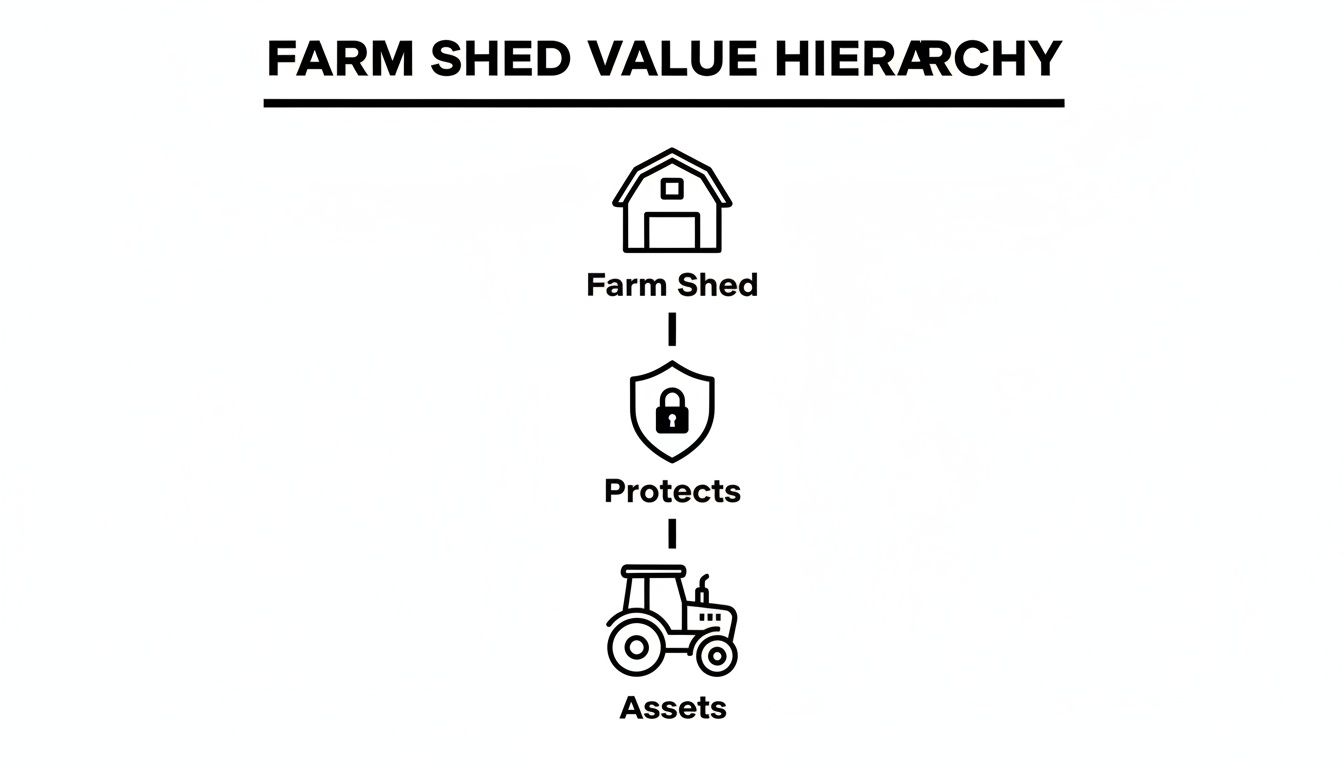
This simple concept is fundamental: your shed is the first line of defence for your most critical on-farm investments.
To help you navigate the options, here’s a quick reference guide comparing common farm shed types and their best applications.
Comparing Farm Shed Designs for NSW Properties
| Shed Type | Primary Use | Key Design Feature | Ideal For |
|---|---|---|---|
| Machinery Shed | Storing tractors, headers, seeders, and implements | Wide, clear-span bays and extra-high eaves for easy access | Cropping operations and farms with large, expensive equipment |
| Hay Shed | Protecting fodder from rain and sun while preserving quality | Open-sided design for maximum ventilation and airflow | Livestock producers and anyone storing large quantities of hay or silage |
| Livestock Shelter | Providing shade and protection from wind and rain for animals | Excellent ventilation, durable materials, and easy-to-clean layout | Sheep, cattle, and horse studs needing welfare-focused shelters |
| General-Purpose Shed | Workshop, secure storage, chemical storage, and vehicle parking | Combination of open bays and enclosed, lockable sections | Virtually any rural property needing a versatile, multi-use building |
Each of these designs serves a unique role on the farm. Let’s dive a bit deeper into what makes each one tick.
Machinery Sheds for Optimal Access and Protection
Your farm machinery represents a massive capital investment. Leaving it out in the baking sun, driving rain, or damaging hail is a surefire way to see that investment degrade. A well-designed machinery shed is built around two simple principles: unrestricted access and maximum protection.
You need to be able to drive your biggest gear—like a header or an air-seeder—straight in and out without a 10-point turn. This means thinking about wide, clear-span bays and extra-high eaves to accommodate modern machinery with its tall cabs and attachments.
Don't forget the doors. You can find all sorts of overhead door solutions for home and business needs that offer a balance of security and convenience. A fully enclosed design with large roller or sliding doors gives you the ultimate defence against weather, theft, and vermin.
Hay Sheds Designed for Fodder Quality
When it comes to a hay shed, the number one job is to protect the nutritional value of your fodder. The biggest enemy of good hay is moisture, which leads to mould, spoilage, and even the very real risk of spontaneous combustion. Because of this, the best designs are all about ventilation and airflow.
There’s a reason open-sided or three-sided structures are the industry standard. They let air circulate freely, stopping heat and moisture from getting trapped in the stacks. Key features to look for include:
- Generous Eave Height: This gives you room to stack bales high and tight, maximising your storage capacity for every square metre of slab.
- Roof-Only Designs: For really large-scale operations, a simple roof-only structure can provide the ultimate in ventilation.
- Strategic Orientation: You’ll want to position the shed to catch the prevailing breezes while ensuring the open side is shielded from driving rain.
A well-ventilated hay shed is more than just storage; it's an insurance policy for your feed reserves. By maintaining fodder quality, you protect your investment and ensure your livestock have the nutrition they need, especially during tough seasons.
Livestock Shelters and Animal Welfare
With livestock shelters, the game changes. Here, the focus is squarely on animal welfare. The goal is a safe, comfortable space that protects your stock from the extremes of an NSW summer and the cold, wet winds of winter.
Ventilation is just as critical here as in a hay shed, but for entirely different reasons. Good airflow is essential for managing ammonia levels and cutting down the risk of respiratory diseases, especially in more intensive setups. The layout also needs to be practical, allowing for easy cleaning and stress-free movement of animals.
The Versatile General-Purpose Shed
For many properties across NSW, the most practical solution is a versatile, multi-purpose shed that can adapt as the farm grows and changes. These sheds are the jack-of-all-trades: part workshop, part chemical store, part general storage area, all under one roof.
The secret to a great general-purpose shed is a clever layout. By combining enclosed, lockable bays with open-front bays, you get secure storage for valuable tools and chemicals right next to easy-access space for everyday gear. A concrete floor in the workshop section is non-negotiable for creating a safe, clean, and functional workspace.
Selecting Materials Built for the Australian Climate
Think of your shed as the armour protecting your most valuable assets. Out here in New South Wales, that means choosing materials is a decision you can't afford to get wrong. A farm shed isn't just a building; it’s your first line of defence against scorching summers, harsh UV rays, corrosive coastal air, and the occasional hailstorm that rolls through.
It can be tempting to save a few dollars with cheaper, imported alternatives, but that's a classic false economy. We've seen it time and again – those initial savings quickly disappear with rust, warping, and expensive repairs. Investing in high-quality, Australian-made materials is hands-down the most critical choice for the lifespan of your shed. Materials engineered for our specific conditions are built to take decades of punishment, ensuring your shed stays a secure, functional part of your operation for generations.
The Steel Backbone of a Durable Shed
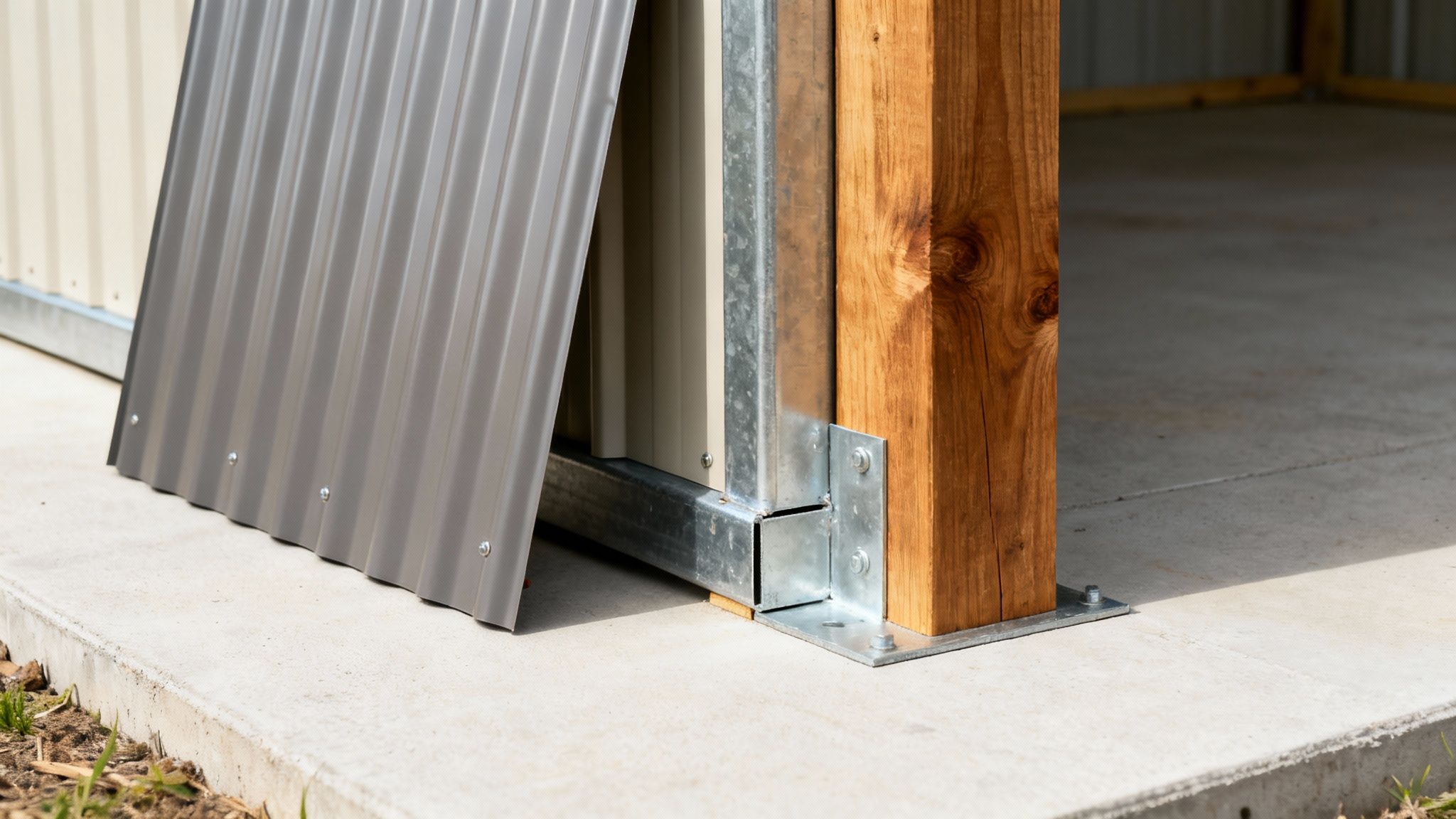
The frame is the skeleton of your shed, and for structural integrity, nothing beats a heavy-duty, galvanised steel frame. The galvanisation process coats the steel in zinc, which acts as a sacrificial barrier against rust. This isn't a 'nice-to-have'; it's essential in rural NSW, where your shed is constantly exposed to moisture, from morning dew to torrential downpours.
A galvanised frame gives you a few key advantages:
- Corrosion Resistance: It provides unbeatable protection against rust, even if you're closer to the coast.
- Structural Strength: It's properly engineered to handle high wind loads and the general rigours of a working farm.
- Longevity: Galvanised steel won’t rot, warp, or get eaten by termites, so the shed's framework stays solid for decades.
This robust framework is the non-negotiable foundation for the rest of your build, giving it the resilience to stand firm against whatever the climate throws at it.
Colorbond Steel for Cladding and Roofing
When it comes to the 'skin' of your shed—the cladding and roofing—Colorbond steel is the undisputed Aussie standard for a reason. It’s far more than just painted steel. It's a purpose-built system where the steel base is coated with metallic layers for corrosion resistance, then a primer, and finally a tough, baked-on paint finish that's made to resist chipping, peeling, and cracking.
This clever engineering means your shed can handle the intense UV exposure of an NSW summer without fading and take a beating from heavy rain without rusting. When installed correctly, Colorbond roofing profiles are designed to channel water away efficiently, preventing leaks and protecting everything you've stored inside. Of course, a solid shed needs a solid foundation, and you can learn more by reading our guide on getting the right concrete slab thickness for your NSW farm shed.
Why Australian-Made Matters
Choosing Australian-made steel and timber isn't just about patriotism; it’s a guarantee of quality. Farm sheds in this country are engineered to last 30–50 years or longer under some pretty brutal conditions. That’s why farmers from Tamworth to Nyngan stick with proven builders who use the right stuff. When you choose materials manufactured to meet strict Australian Standards, you're buying a product that has been tested and proven to work right here.
An investment in quality materials is an investment in peace of mind. By choosing a galvanised frame, Colorbond cladding, and properly treated timbers, you are building a structure that is designed not just to stand, but to last. It ensures your rural farm shed will continue to protect your machinery, fodder, and livestock effectively for many years to come.
Navigating Site Planning and Council Approvals
Before a single shovel hits the dirt, the real work on your new farm shed begins. This is the planning phase, and honestly, it’s where the success or failure of your entire project is decided. Get this part right, and you’ll have a shed that’s functional, compliant, and built for the long haul. Get it wrong, and you're in for a world of costly delays, council headaches, and a structure that just doesn't do the job you need it to.
Think of this stage as laying the groundwork—literally and figuratively. It’s about taking a hard look at your site, getting a handle on your local council's rules, and making sure everything lines up with Australian Standards. Do this, and your shed won't just serve a purpose; it'll add real, lasting value to your farm.
Strategic Site Selection for Rural Properties
Choosing the perfect spot for a farm shed is a bit of a balancing act. It's about finding that sweet spot between easy access, day-to-day practicality, and the realities of the local environment. It’s tempting to just pick the flattest patch of ground available, but the best site is one that works with the land, not against it.
A poorly chosen location can turn into a swamp every time there’s a downpour, cop the full force of a westerly gale, or become a logistical nightmare when you’re trying to get the header in. A bit of careful thought now will save you a mountain of frustration later on.
Here’s what you need to be thinking about:
- Drainage and Water Flow: Always aim for higher ground. This stops water from pooling around the foundations or turning your shed entrance into a bog. A good tip is to watch where the water runs after a heavy shower.
- Prevailing Winds: Think about how you can orient the shed to minimise its exposure to the strongest winds. This takes a lot of stress off the structure and offers better protection for what’s inside, especially crucial for open-sided hay sheds.
- All-Weather Access: Can a fully loaded B-double get to and from the shed, even in the middle of winter? Your access track needs to be solid, wide enough for the biggest machinery, and free from any tricky corners.
- Proximity to Utilities: If your shed needs power or water, siting it closer to existing services can make a massive difference to your connection costs.
The ideal site is a strategic compromise. It balances easy access for your largest machinery with natural protection from the elements, ensuring your shed is a functional asset year-round, not a seasonal liability.
This sort of planning is what prevents common problems, like poor drainage cracking your slab or a muddy track making the shed useless when you need it most.
Demystifying Council Approvals and Compliance
Let's be honest, navigating the paperwork for a new build can feel like a chore, but it’s a non-negotiable step. In nearly every corner of New South Wales, a decent-sized farm shed will require a Development Application (DA) to be lodged with your local council. This isn't just bureaucracy for the sake of it; it’s about ensuring your shed is safe, legal, and meets the Building Code of Australia (BCA).
Sticking to Australian Standards and local codes is vital. It guarantees the structural integrity of your building, which is something your insurance company will definitely care about. A fully compliant shed also protects your property's resale value—you don't want an unapproved structure causing headaches when it’s time to sell. To get into the nitty-gritty, you can learn more about whether you need council approval for a shed in our detailed guide.
Overcoming Remote Access Challenges
One of the biggest hurdles for any rural project in NSW is simply getting to the site. We’re talking long drives down corrugated dirt roads, navigating creek crossings, and dealing with terrain that a standard delivery truck just can’t handle. These logistical headaches can quickly derail a project and blow the budget.
We get it because we live and breathe this stuff every day. It's exactly why we’ve invested in specialised gear to make sure no property is truly out of reach. We run a 10-tonne 4×4 truck specifically to bring in labour, materials, and equipment to the most remote properties around New South Wales, allowing us to get supplies where and when they're needed the most.
This beast allows us to get our team, materials, and equipment on-site, right where they need to be. Whether we're hauling steel frames, bags of cement, or the crew and their tools, our 4×4 ensures your project keeps moving forward, without being held up by access issues. It's our way of making sure we can deliver a seamless build, no matter how far off the beaten track you are.
Creating a Realistic Budget for Your Farm Shed
A successful farm shed project doesn't start when the first hole is dug—it begins with a clear-eyed, honest budget. Simply looking at a per-square-metre price can set you up for some nasty surprises later on. A proper budget needs to cover everything from the initial earthworks right through to the final gutter being fitted, giving you the full financial picture before you commit.
Getting your head around what goes into a quote is the key to making smart decisions. The final number is always a mix of several big-ticket items: preparing the site, pouring the concrete slab, the materials themselves, the labour to put it all together, and any council fees. Each of these can shift depending on what you need and what your block is like, which is exactly why a one-size-fits-all price just doesn't work for a purpose-built structure.
Breaking Down the Core Costs
So, where does the money actually go? Let's pull apart the main expenses you should expect when planning your new shed. When you understand these costs individually, you can see how different choices will affect your total spend.
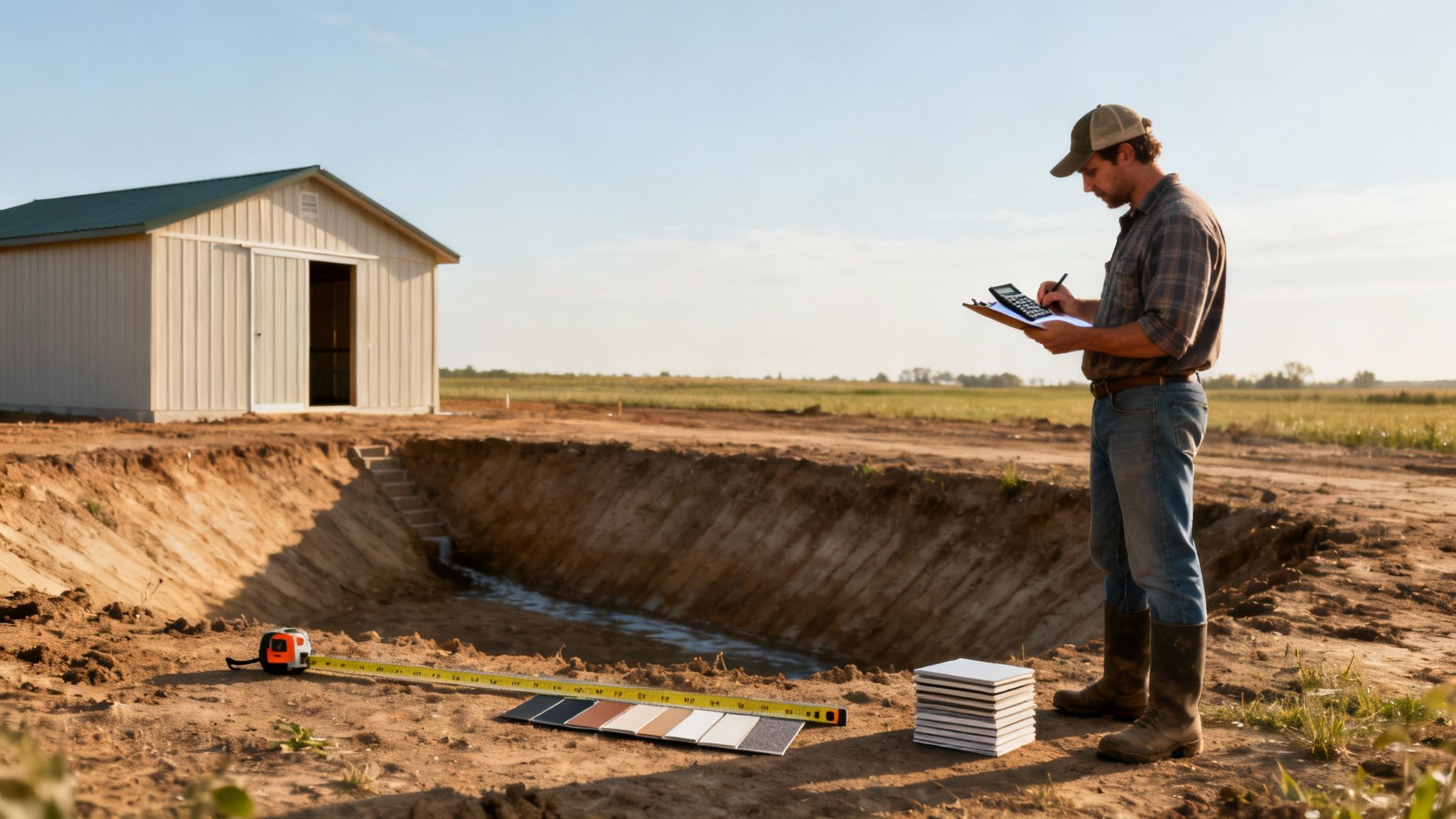
- Site Preparation: This is all about getting the ground ready. It could be a simple job of levelling the site, or it might involve serious excavation, especially if you're on a slope or dealing with rocky terrain.
- The Concrete Slab: This is the foundation of your shed’s strength. Its cost hinges on thickness, how much reinforcing steel is used, and the overall size. A slab built to handle heavy machinery will, of course, cost more than one for light storage.
- Materials: A huge chunk of your budget sits here. This covers the galvanised steel frame, the Colorbond cladding and roofing, all the fasteners, and any extras like insulation or internal dividing walls.
- Labour and Construction: You're paying for a skilled team to erect the shed properly. This also includes the project management needed to make sure everything from material deliveries to final inspections happens on time and on budget.
- Council Fees and Approvals: Don't forget the paperwork. There are administrative costs for lodging a Development Application (DA) and getting all the necessary certifications ticked off.
It's so important to see these individual line items. It’s the only way to compare quotes properly and see where the real value is. You’re not just buying a shed; you're investing in a professionally managed, fully compliant project from start to finish.
Real-World Cost Examples
Let's talk numbers. In 22, Australia had around 87,800 agricultural businesses, and a lot of them rely on good sheds to protect their assets from the tough NSW climate.
For a common open-sided hay shed, say 18m x 36m, you’d be looking at a ballpark figure of $175–$200 per square metre. That brings the total to somewhere between $113,400–$129,600, including GST and construction.
Naturally, any custom touches will adjust that baseline. If you want to add enclosed bays, roller doors, personal access doors, or insulation, the total investment will go up. For a more granular look, our guide on the cost to build a storage shed dives much deeper into all the variables that affect pricing.
Keep in mind that your property’s location can also play a part. A remote site might mean extra costs for freight and getting the team out there. The market itself, especially steel prices, can also impact the final quote. A good, transparent builder will walk you through all these factors upfront, ensuring your budget is rock-solid and ready for the realities of building in rural New South Wales.
Your Farm Shed Project Checklist
Alright, you've done the hard yards thinking through the big picture – the type of shed you need, the materials that'll stand up to the NSW climate, and where on the property it'll live. Now it's time to bring that vision to life.
A project like this has a lot of moving parts. To make sure nothing slips through the cracks, it helps to have a clear plan of attack. Think of this checklist as your roadmap, guiding you from a rough idea scribbled on a notepad to a finished, functional shed. It’ll help keep the project on track, on time, and most importantly, on budget.
From Concept to Construction
Here’s a straightforward, step-by-step guide to follow when you're ready to get started:
- Nail Down Your Shed's Job: First things first, what's this shed for? Is it purely for protecting the header and air seeder? Storing hay? A dedicated workshop? Or a bit of everything? This single decision shapes every other choice you'll make.
- Pick and Prep Your Site: Find a spot on your property with good drainage (no one wants a shed in a swamp), solid all-weather access for trucks, and that’s located conveniently for your day-to-day work.
- Build a Realistic Budget: Don't just budget for the shed itself. Factor in everything: the earthworks, the concrete slab, council fees, and labour. Having a clear financial picture from the start prevents nasty surprises later on.
- Finalise the Design and Layout: Lock in the key details. How big are the bays? How high do the roller doors need to be to fit your gear? Do you need a lock-up workshop section or insulation? Make sure the final design works for you.
- Find a Reputable Builder: This is crucial. You want someone who knows the lay of the land in rural NSW, understands the practicalities of farm life, and can handle the entire process for you – including navigating the council approvals maze.
The Final Hurdle: Getting to Remote Sites
One of the biggest headaches for any rural build is logistics. It’s one thing to design a shed, but it's another thing entirely to get tonnes of steel and a construction crew down a rough farm track, especially after a bit of rain.
We’ve seen this stop good projects in their tracks far too many times. That's why we’ve built our entire operation to solve this exact problem.
We run a specialised 10-tonne 4×4 truck specifically for this purpose. It allows us to bring in labour, materials, and equipment to the most remote properties across New South Wales, getting everything where and when it's needed the most.
This isn't just a delivery truck; it's our guarantee that your project won't get stuck because of a washed-out creek crossing or a muddy track. With over 35 years of experience building on rural properties, we provide a complete service that delivers a tough, practical shed designed to add real value and efficiency to your farm.
Frequently Asked Questions
When you're looking to build a new shed on your property in New South Wales, a few questions always come up. It's completely normal. To help you get a clearer picture, we've answered some of the most common queries we hear from farmers and landholders.
How Long Does It Take to Build a Rural Farm Shed in NSW?
You can generally expect the whole process to take somewhere between 8 and 16 weeks, from our first chat to the finished build. It's not just about the on-site work; there are a few key stages to factor in.
The design and engineering part usually takes about 1-3 weeks. The biggest variable is often the council approval process. Submitting the Development Application (DA) and getting the green light can take anywhere from 4 to 8 weeks. Once that’s sorted, manufacturing the materials takes another 2-4 weeks, and the actual on-site construction is surprisingly fast—often just 1-2 weeks.
Do I Need Council Approval for My Farm Shed?
Almost certainly, yes. For any decent-sized shed in NSW—whether it's for machinery, hay, or livestock—you're going to need council approval. While there might be exemptions for very small garden sheds, a proper farm shed needs to go through the official channels.
Any good builder will handle this for you. It's a critical step. Getting it right ensures your shed is compliant with the Building Code of Australia and relevant Australian Standards, which is non-negotiable for insurance, safety, and the future value of your property.
Is a Custom-Designed Shed Better Than a Kit Shed?
A kit shed can seem like a cheaper option upfront, but a custom-designed shed almost always provides better value in the long run for a working property. The real advantage of a custom build is getting a shed that’s made for your land and for your work.
With a custom rural farm shed, you can:
- Get the exact bay widths and heights you need for your biggest headers or tractors.
- Create a layout that makes sense for your daily workflow, saving you time and hassle.
- Position the shed to work with your property's drainage and protect it from the worst of the weather.
- Benefit from a complete service, from the initial earthworks right through to the final sign-off.
Can You Build on Remote Properties with Challenging Access?
Absolutely. Working on rural and remote properties across New South Wales is what we do. We know that getting to the site is often half the battle, and things like dirt tracks, steep terrain, or creek crossings are just part of the job.
To manage these tricky logistics, we run a heavy-duty 10-tonne 4×4 truck. This bit of specialised kit means we can bring in all the necessary labour, materials, and equipment to the most remote properties, ensuring supplies get where and when they're needed most. It ensures your project stays on schedule, even in the most challenging locations.
At Awesim Building Contractors, we’ve spent 35 years building practical, tough sheds that stand up to the demands of rural life. We’ve got the experience and the right gear to get it done.
If you’re ready to get started, give Glen and the team a call to talk through a solution that works for your farm. You can find out more by visiting us at https://awesim.au.