

When you're out on a rural property, finding the right tilers in Tamworth is about more than just a good eye for a straight line. It’s about understanding the unique realities of working out in the country. The success of your project often comes down to one thing: logistics. Can your tiler handle the challenges of a country site, from unsealed roads to being miles from the nearest supplier?
Your Tiling Project Checklist for Rural NSW Properties
Starting a tiling project on a rural NSW property needs a bit more forethought. Logistics are just as important as the look you’re going for, and getting them wrong can lead to serious delays and budget blowouts. Before you get lost in tile samples, running through a solid checklist will set you up for success. It ensures any tiler you talk to is genuinely equipped for the job.
First things first, check their credentials. Any tiler you consider must have a current, valid licence from NSW Fair Trading. This isn't just red tape; it's your peace of mind that they meet state standards. A pro will have their licence number ready for you to verify online. It’s a quick, simple step that protects you from dodgy operators.
Assessing Site Access and Conditions
Next up, take a good, hard look at your property's access. Be honest about it. We’re talking long dirt driveways, creek crossings that are a bit touch-and-go after rain, or gates that weren't built for a B-double. These things can stop a standard delivery truck in its tracks.
Think about the entire route from the main road to your doorstep. Are there any steep sections? Does that track turn to mud with a bit of wet weather?
Jotting down these potential hurdles is essential. It lets a tiler plan their approach and bring the right gear. Forgetting to mention the washed-out culvert or that tight cattle grid can grind the whole project to a halt before it even begins. An upfront chat about access leads to a realistic plan and a quote you can trust.
This flowchart breaks down the simple but crucial process for getting your rural tiling project started on the right foot.
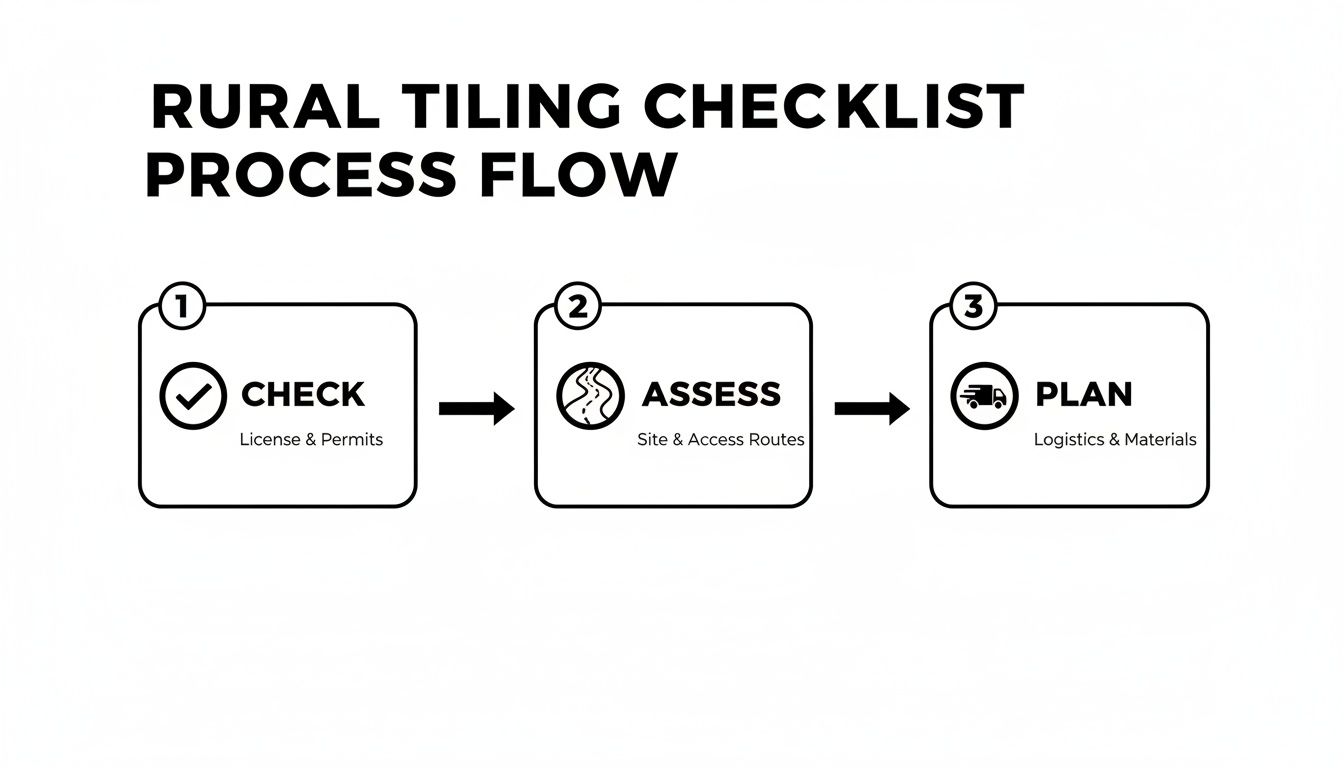
As you can see, a successful job starts with doing your homework long before the first tile is ever laid.
Planning for Remote Logistics
Once you’ve done your checks and assessed the site, it’s time to plan. This is where you match your property's specific challenges with a tiler's capabilities. A big part of this is figuring out how they’ll get materials, tools, and their crew out to you.
For the most remote properties around New South Wales, specialised equipment isn't a luxury—it's a necessity. The ability to bring in labour, materials, and equipment exactly where and when it's needed most is what separates a smooth project from a logistical nightmare.
This is precisely why we invested in our own purpose-built 10-tonne 4×4 truck. This beast is designed to handle the rough tracks that stop other contractors. It lets us load up everything we need—pallets of tiles, adhesive, waterproofing gear, cutters, and our team—in one go.
By having our own all-terrain transport, we don't have to rely on third-party couriers who might not service your area or have a suitable vehicle. This self-reliance is key to how we operate, making sure your project stays on track, no matter how far off the beaten path you are.
Solving Remote Tiling Logistics and Site Access
For anyone living on a rural property, that dream of a beautifully tiled bathroom or mudroom can hit a snag pretty quickly. It’s not about the design or the tiles themselves; it’s about the sheer logistics. Getting pallets of tiles, dozens of bags of adhesive, specialised equipment, and a skilled team out to a remote site is often the biggest headache.
Your average delivery truck or courier van just isn't cut out for the long, unsealed driveways, unpredictable creek crossings, or rugged farm tracks we see all around the Tamworth region.
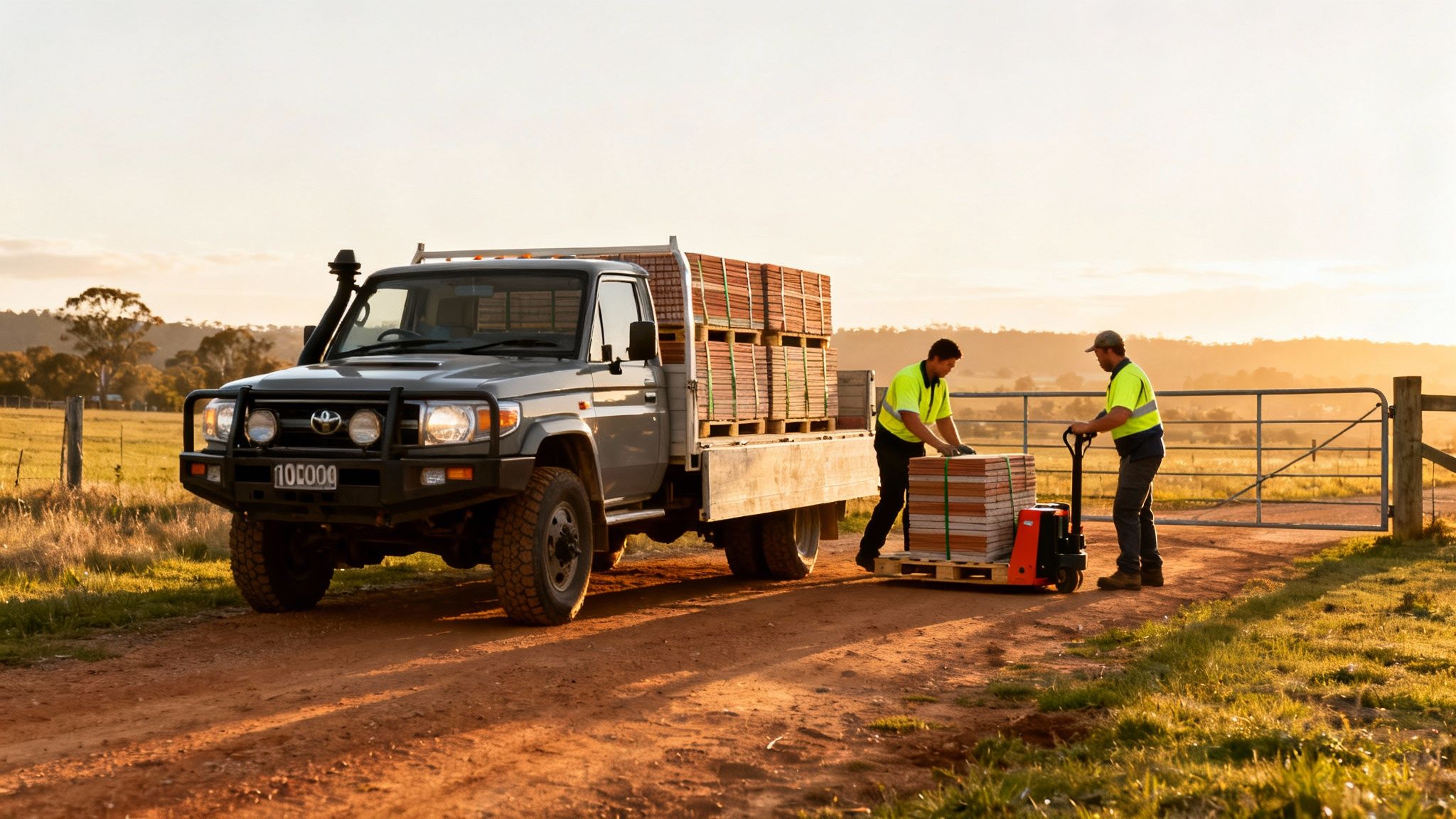
These access issues can throw a real spanner in the works, leading to significant and costly delays. A delivery that can't make it to site means a day of lost labour, which then pushes back every other part of the job. It's a domino effect that turns a straightforward project into a frustrating and expensive ordeal. That’s why a proper, honest assessment of your property’s access isn't just a good idea—it's a critical first step.
Evaluating Your Property's Access Points
Before you even start calling tilers in Tamworth, take a walk—or better yet, a drive—along the exact route a delivery vehicle would need to take. Being proactive here helps you spot potential bottlenecks that a professional contractor can then plan around.
It's worth jotting down a few notes on these key factors:
- Road Quality: Is your access road sealed, gravel, or dirt? Does it get deep ruts or become a slippery mess after a bit of rain?
- Gate Dimensions: Grab a tape measure and check the width and height of all your gates. Are they wide enough for a large truck, or will materials need to be unloaded and shuttled in with smaller equipment?
- Obstacles and Terrain: Make a note of any sharp turns, steep pinches, low-hanging branches, or water crossings that could stop a standard truck in its tracks.
Sharing these details upfront gives a tiler the information they need to create a realistic logistical plan. It’s all about transparency and avoiding those nasty last-minute surprises that no one wants.
The All-Terrain Solution for Rural Tiling
Having worked on rural properties for years, we saw this problem time and time again. We quickly realised that relying on third-party freight companies was a recipe for disaster. It meant delays and uncertainty for our clients, and that just wasn't good enough. The only way to guarantee reliability was to take control of the entire delivery process ourselves.
That’s why we have a 10 tonne 4×4 truck to bring in materials and supplies for the most remote properties around New South Wales. This purpose-built vehicle is the heart of our rural operations, allowing us to bring in labour, materials and equipment where & when it's needed the most.
By loading up everything—tiles, adhesive, waterproofing membranes, cutters, mixers, and the team—into a single, all-terrain delivery, we turn a major project risk into a smooth, efficient operation. It's this capability that keeps your project on schedule and on budget, no matter how far off the beaten track you are.
A Real-World Example From a Remote Farm
Let me give you a practical example of the difference this makes. We recently completed a homestead renovation on a cattle station west of Tamworth. The property was 15 kilometres down a winding dirt track that included a causeway known for flooding. Predictably, standard delivery companies had flatly refused to service the address.
The job involved tiling three bathrooms and a large mudroom, which meant several pallets of heavy porcelain tiles and all the gear to go with them. Instead of trying to coordinate multiple, smaller deliveries with utes—a slow and painful process—we simply loaded everything onto our 4×4 truck.
Here’s how our approach solved the puzzle:
- Single, Coordinated Delivery: All materials and tools arrived on-site in one trip, on day one. No waiting around.
- No Weather Delays: The truck's high clearance and 4×4 capability meant the damp causeway wasn't an issue.
- Team and Equipment Together: Our tilers travelled with the materials, so they were ready to start work the moment they arrived.
This streamlined process saved the client what we estimate to be three days of potential delays and the associated labour costs. It’s a perfect illustration of how having the right equipment is fundamental to delivering professional results in the unique environment of rural New South Wales. For you, the property owner, it means peace of mind and the confidence that the job will get done right, without any logistical dramas.
How to Vet and Hire Qualified Tamworth Tilers
Finding a genuinely skilled tiler in the Tamworth region is about more than just a quick Google search. It takes a bit of deliberate vetting to make sure you’re hiring a true professional, not just someone with a ute and a trowel. In a trade where the quality can vary wildly, taking the time to check credentials and ask the right questions is your best defence against a shoddy job. This is especially true for rural properties, where the work needs to stand the test of time and add real value to your home.
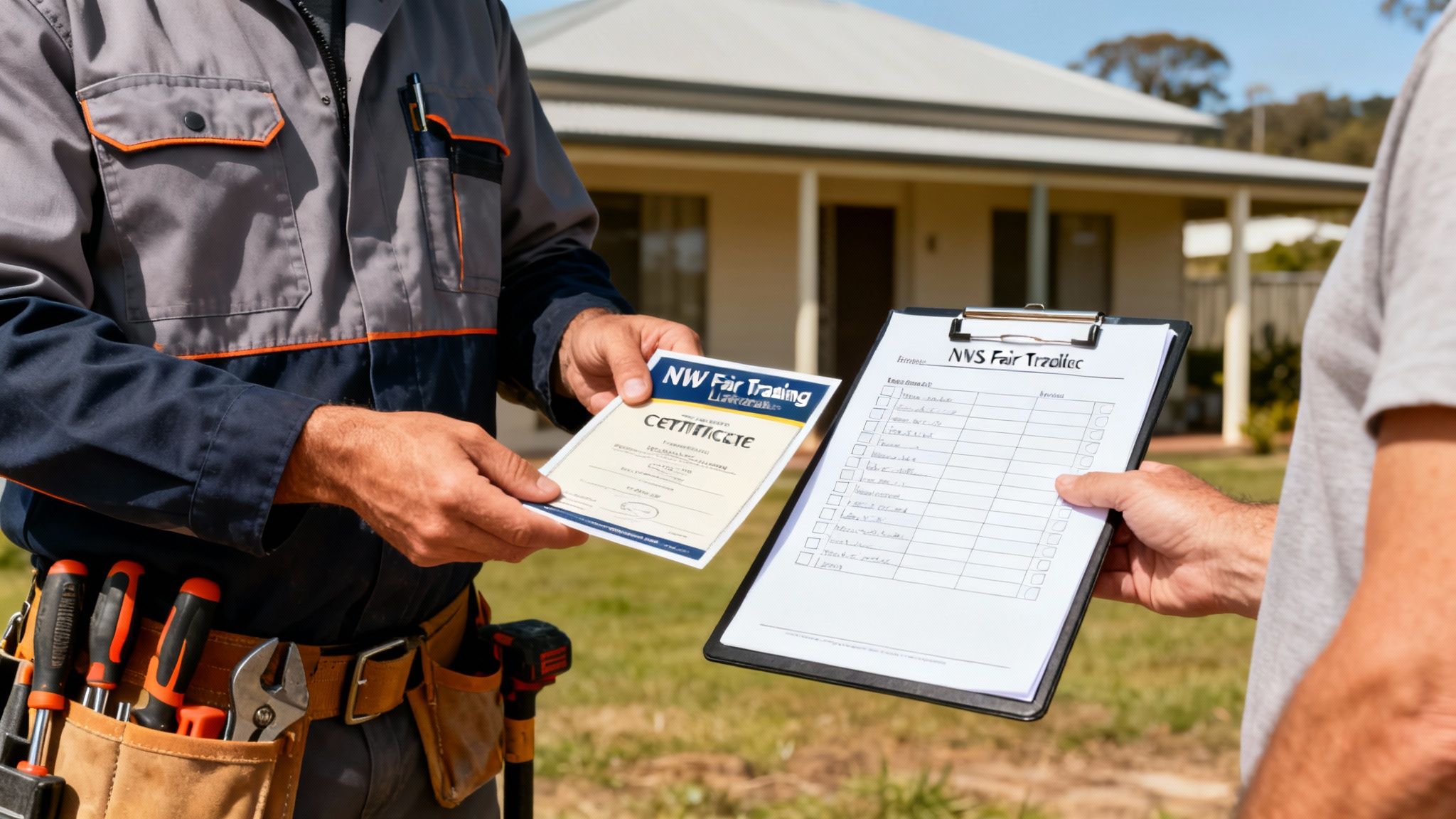
The first, non-negotiable step is to verify their licence. Here in New South Wales, any wall and floor tiler you hire must hold a valid licence. This isn't just a bit of paper; it’s your guarantee they’ve completed the proper training—a Certificate III in Wall and Floor Tiling—and are recognised by NSW Fair Trading.
Before you even think about getting a quote, ask for their licence number. A legitimate tiler will have it on hand and won't hesitate to give it to you. You can then jump online and do a quick, free check to confirm it's current and see if there are any black marks against their name. This simple check weeds out the cowboys from the get-go.
Essential Questions to Ask Potential Tilers
Once you've confirmed their licence, it’s time to dig a little deeper. You need to know they have the right experience for your specific job and, crucially, that they’re properly insured. Public liability insurance is an absolute must-have. It protects you and your property if something goes wrong. Always ask to see their Certificate of Currency to make sure it's up to date.
Here are a few practical questions I always recommend asking potential tilers in Tamworth:
- Rural Experience: "Have you done many tiling jobs on rural properties like ours? Can you show me some examples?" This will tell you if they're familiar with the unique logistical challenges we’ve already talked about.
- Waterproofing Certification: "Are your waterproofers certified, and will I get a waterproofing certificate when you’re done?" This is a legal requirement for wet areas and is critical for your warranty and home insurance.
- Waste Removal: "How do you handle the rubbish? What’s your plan for getting rid of old tiles, offcuts, and packaging?" A pro will have a clear process for leaving your property tidy.
- Team Structure: "Will it be you doing the work, or do you use subcontractors?" It’s good to know exactly who will be on your property to ensure accountability.
The way they answer these questions will tell you a lot. A confident, detailed response is usually a sign you're talking to a seasoned expert.
The Importance of a Stable, Skilled Workforce
The construction industry, especially out here in the regions, runs on the back of a stable and skilled workforce. The latest data shows just how vital tilers are. A recent Master Builders Australia report noted there were 23,259 wall and floor tilers in the national workforce as of late 2023. That demand is felt right here in Tamworth, particularly with ongoing recovery efforts increasing the need for specialist trades.
When you hire a company with its own dedicated, in-house team, you get more than just tilers; you get a crew that knows how to work together. That kind of teamwork is priceless on a remote rural site, where good communication and efficient problem-solving are key. At Awesim, our stable team is one of our biggest strengths, ensuring we deliver consistent quality from start to finish. Our background as a dedicated rural builder means we're built for the unique demands of these projects.
A well-managed project starts long before the first tile is laid. When engaging with tilers, a solid understanding of construction contract management can help ensure a smooth project and protect your interests. It clarifies expectations, defines the scope, and establishes a clear path forward for everyone involved.
Decoding Tiling Quotes and Project Timelines
When quotes for your tiling project start rolling in, it can feel like you're trying to compare apples and oranges. A one-page quote with a single lump-sum figure might seem refreshingly simple, but it's often a massive red flag hiding potential cost blowouts down the line.
Your best defence against budget surprises is a professional, highly detailed quote. This document is your most important tool for keeping the job on track, especially for rural projects where unexpected variables can quickly add up. A truly comprehensive quote from professional tilers in Tamworth will break down every single component, moving far beyond a simple square metre rate for laying tiles.
Think of it as a detailed roadmap for your project. Every turn, stop, and destination is clearly marked, leaving no room for expensive detours. This level of detail puts you in control, allowing you to compare quotes properly and ensure you’re choosing the best value, not just the cheapest price.
What a Professional Tiling Quote Must Include
A vague quote is a gamble; a detailed one is your security. When you’re looking over a quote, you need to see specific line items that cover every single stage of the job. A seasoned tiler will always provide this, showing they’re thorough and committed to clear communication from day one.
At a minimum, your quote should clearly itemise:
- Surface Preparation: This is one of the most critical—and often overlooked—steps. Does the quote include costs for screeding to level the floor, grinding back an uneven concrete slab, or the labour-intensive job of removing old tiles and adhesive?
- Waterproofing: For any wet area like a bathroom, laundry, or ensuite, this is non-negotiable. The quote has to detail the waterproofing system being used, the number of coats, and confirm it will be certified to Australian Standard AS 3740.
- Installation Costs: This needs to be broken down. It should specify the rate per square metre and flag any additional charges for things like complex patterns (herringbone, for example) or difficult-to-lay tiles like natural stone or tiny mosaics.
- Materials Breakdown: Look for a list of all materials—adhesive, grout, silicone, waterproofing membranes, and any tile trims or angle pieces. It should be specific.
- GST: It's a simple one, but make sure the quote clearly states whether GST is included in the total or will be added on top.
Insisting on this detail makes it easy to spot where one quote might be cutting corners that another has properly accounted for.
Comparing Vague vs. Comprehensive Quotes
Let’s put this into a real-world context. A vague quote might just say, "Bathroom tiling – $3,500." That tells you next to nothing about what you're actually getting. In contrast, a professional quote gives you clarity and confidence.
The table below shows just how different they can be and highlights exactly what you should be looking for.
Comparing Tiling Quotes: What to Look For
| Item | Vague Quote (Potential Red Flag) | Comprehensive Quote (Professional Standard) |
|---|---|---|
| Preparation | "Floor prep" | "Removal of existing floor tiles and adhesive; application of self-levelling screed to floor substrate." |
| Waterproofing | "Waterproofing included" | "Application of 3-coat waterproofing membrane system to AS 3740 standards; bond breaker installation. Includes signed Form 16 certificate." |
| Installation | "Lay floor and wall tiles" | "Installation of 600×600 porcelain floor tiles and 300×600 ceramic wall tiles, including all cutting and fitting." |
| Materials | "Adhesive and grout" | "Supply of premium flexible tile adhesive (specify brand); supply of epoxy grout (specify colour); supply of chrome tile trim for all external corners." |
| Waste Removal | Not mentioned | "Removal and disposal of all project-related waste, including old tiles, offcuts, and packaging, via skip bin." |
See the difference? The comprehensive quote leaves no doubt about what you're paying for. This transparency is the hallmark of a true professional and is absolutely essential for complex projects like the ones we tackle in our guide to Tamworth bathroom renovations.
Understanding Timelines and Warranties in a Rural Context
Finally, a professional quote should always come with a realistic project timeline. For rural and farm properties, this schedule needs to be honest about potential delays, like heavy rain turning your access track into mud. A good contractor builds contingency days into the plan rather than making promises they can't possibly keep.
Just as important is the warranty. All tiling work in NSW must be backed by a written warranty covering the workmanship for a minimum period required by law.
A key tip: You should always ask for two separate warranties. One for the tiling workmanship (covering installation defects) and a separate one for the waterproofing application. A certified waterproofing job must come with its own 10-year warranty certificate—a vital document for your home's compliance and insurance.
Getting all of this in writing before any work kicks off is the best way to protect your investment. It ensures the final result is not only beautiful but also built to last and fully compliant with Australian Standards.
Selecting Durable Tiles for Farm and Rural Homes
Choosing the right tiles for a rural or farm property near Tamworth isn’t just about colour and style. It's a hard-nosed practical decision. The floors in a country home have a tough job, dealing with muddy boots, constant foot traffic, and the general rough-and-tumble of life on the land. Getting the durability right from the start is non-negotiable.
Your choice of tile ultimately decides how well your floors hold up over time, from the high-traffic mudroom to a busy kitchen or an exposed outdoor patio. The real goal is to find a material that not only looks the part but can handle the unique demands of a rural environment for years to come.
Porcelain: The Workhorse of Rural Homes
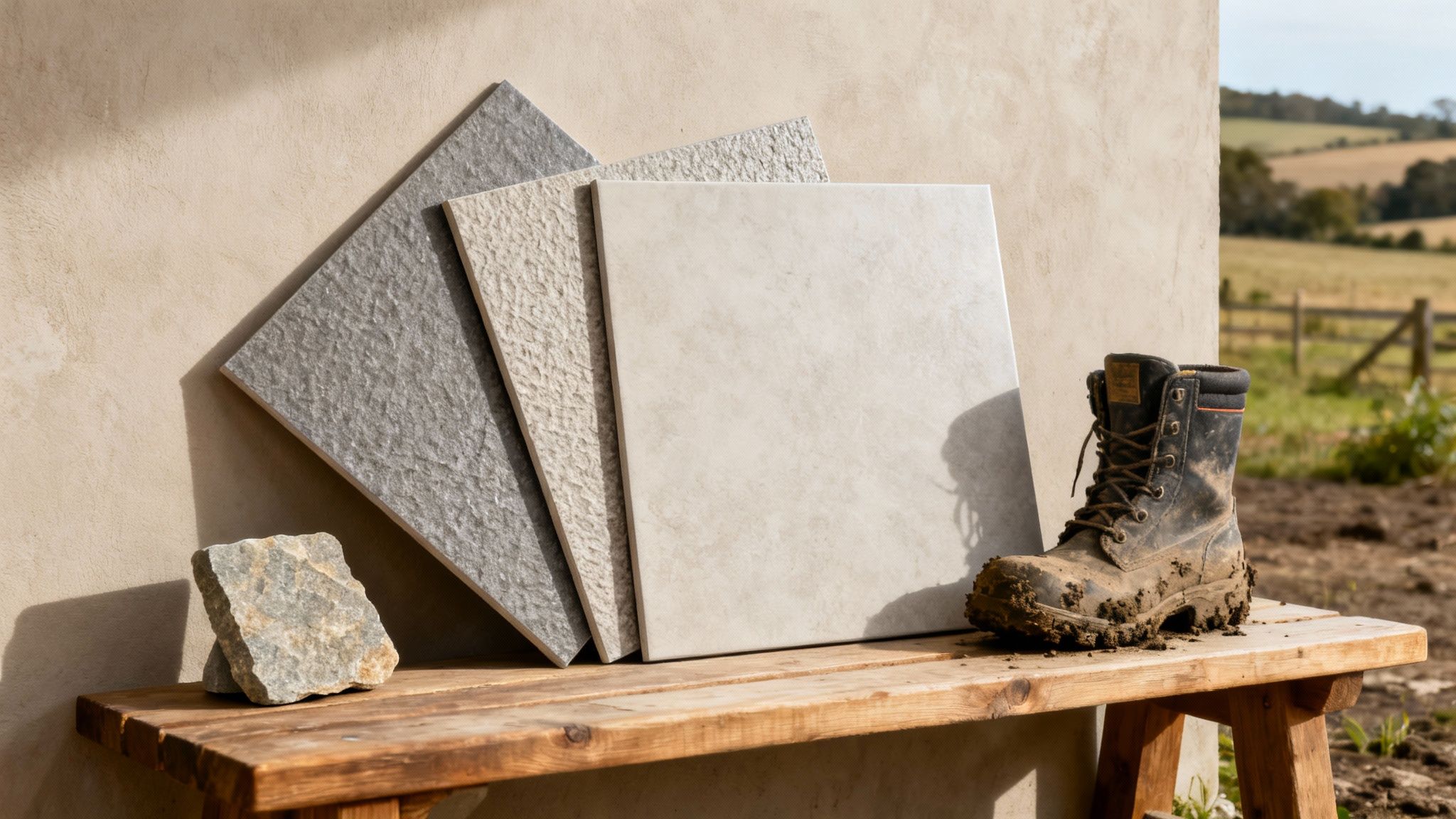
When it comes to pure, unadulterated durability, porcelain tile is the undisputed champion for country properties. Because it’s fired at much higher temperatures than its ceramic cousin, porcelain is far denser, less porous, and incredibly tough against stains, scratches, and moisture. This makes it a perfect match for the most punishing areas of your home.
Think about your main entry or mudroom. Porcelain’s incredibly low water absorption rate (typically less than 0.5%) means mud and water won't soak in and cause headaches down the track. It's also exceptionally strong, so it can take the weight of heavy gear or withstand a constant stream of visitors without showing signs of wear. This is exactly why so many experienced tilers in Tamworth recommend it for both inside and out.
Ceramic and Natural Stone: Where Do They Fit?
Ceramic tiles are a fantastic choice, offering a huge range of designs and often being a bit kinder on the wallet. They really shine in wall applications, like kitchen splashbacks or bathroom feature walls, where they aren't subjected to heavy foot traffic. If you're weighing up options, looking into how materials perform in specific roles, such as hard-wearing ceramic tile backsplashes, can give you some great ideas.
Natural stone—like slate, travertine, or granite—brings an earthy, one-of-a-kind beauty to a home. No two tiles are the same, which adds real character and warmth. The trade-off, however, is maintenance. Natural stone is porous and needs to be sealed regularly to protect it from stains and moisture, which is a key thing to consider for a busy farm household.
A quick tip from the pros: When choosing tiles for wet or high-traffic areas, always check two key ratings. The PEI score (Porcelain Enamel Institute rating) tells you how well a tile resists abrasion and wear, while the P-rating indicates its slip resistance. For a mudroom, you’d be looking for a PEI of 4 or 5 and a P-rating of at least P3.
Specialised Solutions for Farm Buildings
Of course, the needs of a farm don't stop at the front door. Workshops, sheds, and processing areas demand flooring with some very specific properties. For these purely functional spaces, you should be thinking about:
- Non-slip tiles: In areas prone to water, oil, or chemical spills, textured porcelain or dedicated non-slip tiles with a P4 or P5 rating are absolutely essential for a safe working environment.
- Chemical-resistant tiles: For places like dairies or workshops, certain industrial tiles installed with epoxy grout offer superior protection against corrosion and chemical damage.
- Heavy-duty flooring: In machinery sheds or high-impact zones, thick-bodied porcelain or even commercial-grade vinyl can be a smarter choice than standard residential tiles.
Chatting through the specific use of these outbuildings with your tiler is the best way to get a solution that’s truly built for purpose. Our team has broad experience in all aspects of tiling and can recommend and install the perfect surface for any job on your property.
Common Questions About Tiling in the Tamworth Region
When you're planning a tiling project, especially on a rural property, a lot of questions pop up. From timelines and costs to warranties and just how it all works out here, getting straight answers is the first step to feeling good about your investment. Let's run through some of the most common questions we get from property owners looking for professional tilers in Tamworth.
How Long Does a Rural Bathroom Tiling Project Usually Take?
A typical bathroom tiling job out here will take about 5–7 working days for the tiling itself. That covers all the critical steps: preparation, getting the waterproofing perfect, laying the tiles, and finishing up with the grout.
But here’s the thing about rural projects—it's often the logistics that add time. A bit of rain can turn a track into a bog, and staggered material deliveries can throw a spanner in the works. This is exactly why we invested in our 10-tonne 4×4 truck. It lets us haul everything we need in one go, minimising those kinds of delays. We always build a bit of a buffer into our timelines for the unexpected, so we can give you a completion date you can actually plan around.
What Is the Average Cost for Professional Tilers in Tamworth?
For the labour side of things, you can expect to see rates anywhere from $50 to $120 per square metre in the Tamworth region. What pushes a job towards the higher end of that scale? A few things, really.
- Tile Type: Some materials are simply trickier to work with.
- Pattern Complexity: A herringbone or mosaic design takes a lot more skill and time than a standard layout.
- Surface Prep: We might need to do a fair bit of work to get the walls and floors perfectly flat and ready.
Keep in mind, that figure is just for the labour. It doesn't cover the tiles, adhesive, grout, or other materials. For more remote properties, we sometimes need to add a small travel surcharge for the extra time and fuel. We’re big on transparency, so we lay everything out in a detailed, itemised quote from the start—no hidden surprises.
We believe in total clarity right from the beginning. A detailed quote isn't just paperwork; it's our promise that we've thought through every part of your project, so the final price is the one you were expecting.
Do I Need to Be On-Site During the Tiling Work?
You don't need to babysit us, that's for sure. We strongly recommend you’re there at the very start to give the final nod on the layout and then again at the end for the final walkthrough. But for the days in between? You can leave it to us. Our team is completely self-sufficient and we treat your property with the utmost respect.
We know you've got a farm to run or might not even live on the property full-time. That’s why we have a solid communication system in place. We'll send through daily photo updates and progress reports so you can see your project coming to life, even if you're miles away.
What Kind of Warranty Do You Provide on Tiling?
We’re proud of our work and we stand by it. Every job we do comes with a 7-year warranty on our workmanship, covering any issues that might come up from the installation itself. This is all in line with NSW statutory requirements.
Waterproofing is non-negotiable, and it gets its own guarantee. Our waterproofing is certified to Australian Standard AS 3740 and backed by a separate 10-year warranty. On top of that, all the materials we use are covered by their manufacturer's warranties. We’ll hand over all the certificates and paperwork when we're done so you have everything for your records.
For a tiling solution that truly gets the demands of rural NSW properties, you can trust the team at Awesim Building Contractors. We have the experience, the right gear, and the dedication to deliver a fantastic result, no matter how far down the track you are. Get in touch today to chat about your project by visiting https://awesim.au.