
Ever stood on a dusty outback track, watching a rusted shed sway in the wind, and thought, “If only someone could make that thing solid again?”
That feeling is what drives us at Awesim – we’re not just a rural building company, we’re neighbours who understand the grind of farm life, the timing of shearing season, and the way a cracked concrete slab can slow down a whole day’s work.
Imagine the relief of stepping onto a fresh, level slab in front of your cattle yard, or opening a kitchen where the countertops don’t wobble when you lean on them. It’s the little things that keep a property running, and they’re the things we specialise in.
But here’s the honest truth: not every builder can reach the back‑road past the river crossing, and even fewer can promise work that survives the next storm. That’s why our 4×4‑ready crew and decades of hands‑on experience matter – we can get to a remote station near Bourke, haul materials up a steep track, and still finish on time.
So, why does that matter to you? Because when the rain hits and a roof starts to leak, you don’t want to wait weeks for a city‑based contractor to show up. You need a team that knows how to work around your harvest, your livestock routines, and the quirks of a rural power supply.
We start every job with a walk‑around, a chat over a cuppa, and a realistic plan that balances cost, durability and the way you actually use the space. No fancy jargon, just plain talk and solid workmanship.
Ready to stop worrying about that sagging barn roof or cracked driveway? Let’s have a look at what a true rural building partner can do for your property, and get you back to the work you love.
TL;DR
If you’re a farmer or homeowner tired of city contractors, Awesim is the rural building company that reaches remote sites and repairs sagging roofs, cracked slabs, or outdated kitchens fast. With 4×4 access, know‑how, and straight‑talk, we let you stay on the farm while we make your property solid and season‑ready.
Understanding Rural Building Regulations in NSW
Ever stared at a council form and felt the dread of a long, confusing process? You’re not alone. Rural building regs can feel like a maze of paperwork, especially when you’re juggling a shearing season or a cattle calving window.
First off, the basics: NSW’s Building Code of Australia (BCA) still applies out here, but the way it’s enforced varies by local council. Some councils have a dedicated rural liaison officer – a real lifesaver – who can translate the jargon into plain English and tell you exactly which permits you need for a new shed, a concrete slab, or a kitchen upgrade.
What you really need to apply for
Generally you’ll need a Development Application (DA) for anything larger than a modest outbuilding, plus a Construction Certificate (CC) once the DA is approved. For minor works – like repairing a roof or resurfacing a slab – a simpler Complying Development Certificate (CDC) might be enough, saving you weeks of waiting.
Tip: Always ask the council if they recognise “rural‑grade” materials. Using a rural‑grade concrete mix can speed up approval because it meets the BCA’s durability standards while tolerating the harsh outback climate.
Key compliance checkpoints
1. Site‑specific flood and bushfire ratings. If your property sits near a river crossing, you’ll need to demonstrate that foundations sit above the 1‑in‑10‑year flood level. The council’s flood maps are publicly available online – just plug in your lot number.
2. Set‑backs and easements. Rural properties often have long‑standing easements for watercourses or power lines. Forgetting these can mean costly redesigns mid‑project.
3. Energy efficiency and insulation. Even outback homes must meet the Minimum Energy Efficiency Standards (MEES). It’s not just about heating bills – it’s a legal requirement for new residential builds.
4. Storm‑damage assessments. Before you start repairs after a heavy rain, a qualified assessor will check moisture levels. Knowing the acceptable moisture meter readings can prevent you from rebuilding over hidden water damage. Learn what moisture meter readings are acceptable after water damage so you can ask the right questions.
How Awesim makes it painless
We’ve been navigating these rules for decades, so we do the legwork for you. Our 4×4 crew can haul the paperwork to the council office while we’re on site, and we keep a running checklist to ensure nothing slips through the cracks.
When we’re laying a new concrete slab for a shed, we’ll cross‑check the council’s flood map, verify the set‑back distances, and even run a moisture test before the concrete cures. That way you avoid surprise costs later.
Thinking about adding a patio or a decorative outdoor floor? Choosing the right surface can affect both compliance and durability. For instance, porcelain pavers are a popular choice because they’re low‑maintenance and meet the fire‑resistance standards for rural zones. Read the complete guide to porcelain pavers for patios if you want to explore that option.
And if you’re curious about the full breadth of what we can do, our complete guide to farm renovations walks you through every step, from initial assessment to final inspection.
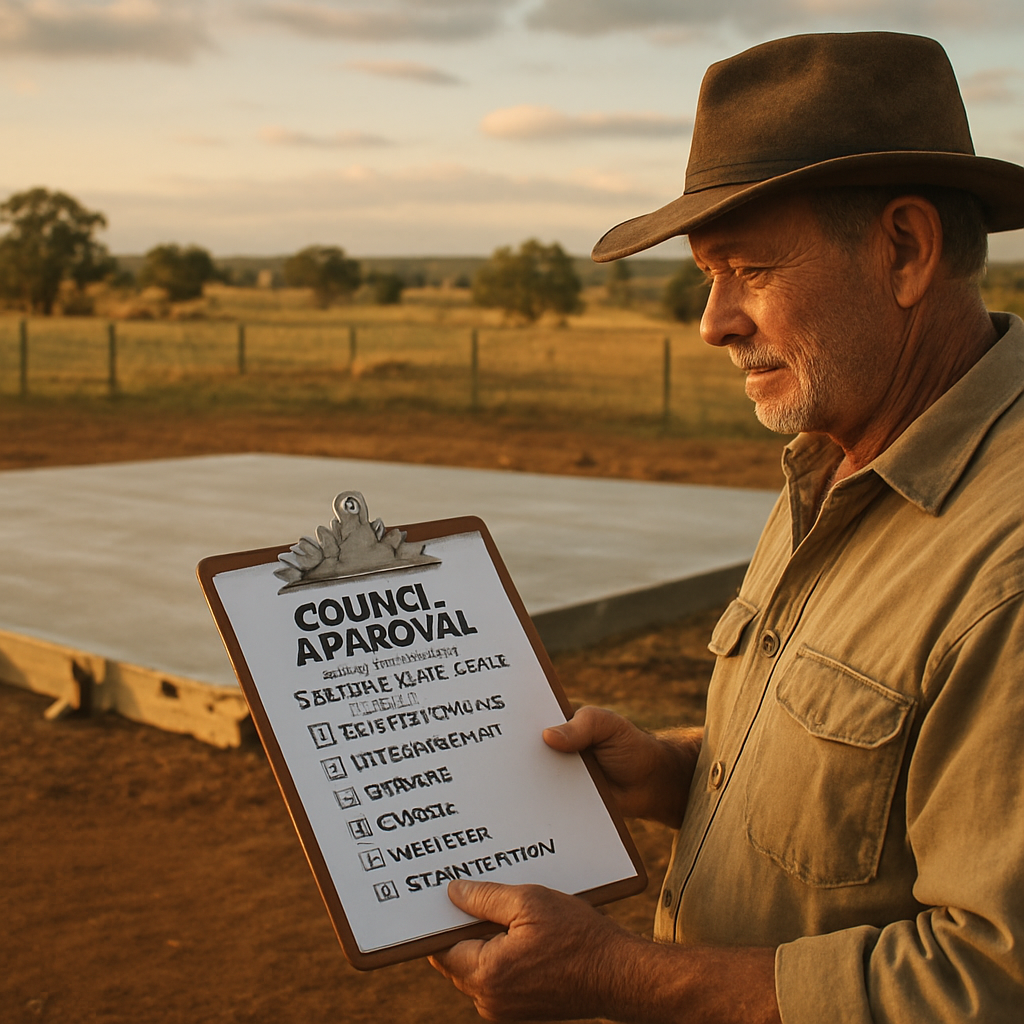
Below is a quick checklist you can print out before you start any project:
- Confirm whether you need a DA or CDC.
- Check flood and bushfire ratings for your site.
- Verify set‑backs and easements.
- Ensure materials meet rural‑grade standards.
- Schedule a moisture‑meter test if repairing after storms.
Keeping this checklist on hand means you won’t be caught out by a surprise council request mid‑build.
Watch the short video above for a visual walk‑through of how we handle permit applications on a typical farm property. It’s a quick glimpse of the paperwork side of things, which most farmers don’t get to see.
Now, picture this: you’ve just finished installing a new concrete slab, the rain’s gone, and the land looks solid as a rock. You’re ready to move on to the next phase – maybe a kitchen revamp or a new barn roof – with confidence that the council is happy.
Choosing the Right Rural Builder for Your Farm
Ever walked past a neighbour’s shed that looks like it survived three cyclones and thought, “Who do you call when you need something that actually lasts?” That moment of recognition is the starting line for picking a rural building company you can trust.
First thing’s first – you need a builder who gets the rhythm of farm life. Do they understand that you can’t shut down a paddock for weeks just because a roof needs a new truss? Do they have a 4×4 crew that can haul timber over a dusty track at dawn, before the cattle are out grazing?
Look for local, 4×4‑ready experience
Ask yourself: have they worked on properties as remote as yours? A builder who only does city projects will struggle with a steep river crossing or a gravel road that disappears after a heavy rain. When you hear stories like “we installed a concrete slab on a flood‑prone site in Bourke and still met the deadline,” you know they’ve been there.
It’s not just about the truck – it’s about the know‑how. They need to size up the soil, plan for acid‑sulphate risks, and know the NSW Rural Housing Code inside out. That’s why a quick on‑site chat is worth its weight in gold.
Check their compliance track record
Rural building regulations can feel like a maze, especially when you’re juggling harvest dates. A good rural builder will have a history of getting CDCs or exempt approvals without endless back‑and‑forth with council. If they can point to a recent case where they trimmed a shed design to stay within the 30 m² exempt limit and got instant approval, you’ve found a partner who saves you time and money.
In fact, the NSW Parliament’s recent rural housing committee highlighted the importance of builders who can navigate these rules efficiently, ensuring projects don’t stall in bureaucracy.Read more about the committee’s focus on rural housing reform.
Ask the right questions
Before you sign anything, fire off a few practical questions:
- How do you schedule around shearing or calving seasons?
- What’s your process for handling unexpected weather delays?
- Can you provide a written estimate that includes transport, materials and any council fees?
- Do you offer a maintenance programme after the build?
Those questions show you’re serious, and they force the builder to prove they’ve thought through the farm’s unique constraints.
Value transparency and communication
When you’re on a remote property, you won’t have daily face‑to‑face meetings. You need a builder who’ll send clear, jargon‑free updates – “we’ve poured the slab, waiting on the curing time, will be on site tomorrow for framing.” Anything vague feels risky.
And don’t forget the little things: do they bring a portable moisture meter to check the slab? Do they use colour‑bond cladding that matches the rest of your homestead? Those details separate a contractor who treats you like a project from one who treats you like a neighbour.
Here’s a quick visual reminder of what a solid, farm‑ready build looks like:
After you’ve watched that, picture your own shed or kitchen renovation fitting that same standard – sturdy, weather‑proof, and finished on schedule.
Why choosing the right rural builder matters
Because a mis‑step now can cost you months of downtime later. A poorly sealed roof might let rain in during the next storm, forcing you to halt livestock operations. A shoddy slab could crack under a heavy feed‑store, meaning you’ll be back on the digger sooner than you’d like.
When you pick a builder with proven remote experience, 4×4 capability, and a track record of getting council approvals right the first time, you protect your livelihood and keep the farm running smoothly.
So, take a moment, line up a few candidates, ask the tough questions, and trust your gut. The right rural building company will feel like an extension of your own team – ready to roll up their sleeves when the rain hits, and to finish the job before the next shearing season starts.
Planning Farm Renovations: Kitchen to Bathroom
Ever stood in your kitchen staring at a cracked countertop and thought, “I need a fresh look but I can’t shut down the farm for weeks?” That feeling’s the spark for a solid plan – you want the space to work for you, not the other way around.
First off, grab a cuppa and sketch a rough layout. Think about the everyday flow: fridge to prep bench, stove to sink, and where the kids or guests will move. On a remote property, the biggest surprise isn’t the colour of the tiles; it’s how the delivery truck gets to the site. That’s why a rural building company with 4×4 capability matters – they’ll size the doorways, plan a low‑grade road route, and avoid a last‑minute crane hire.
Kitchen to bathroom – the plumbing handshake
When you move from cooking to cleaning, the plumbing network does the heavy lifting. In many country homes the kitchen and bathroom share a wet wall, meaning one leak can ruin both rooms. Start by locating the existing waste stacks and water mains. If you’re dealing with acid‑sulphate soil (common in western NSW), a raised slab with a moisture barrier can save you months of re‑work – a tip we’ve seen work on dozens of stations.
Does this sound familiar? A farmer near Bourke once told us his bathroom kept flooding because the slab sat directly on damp ground. We swapped to a raised, sealed slab and the problem vanished.
Choosing durable finishes for outback life
Out in the bush, the sun is relentless and dust is a constant companion. Opt for UV‑stable cabinet fronts, stainless‑steel appliances, and grout that’s sealed against moisture. It may cost a bit more up‑front, but you’ll dodge the “re‑grout every two years” nightmare.
And don’t forget the little things that make a huge difference: a good extractor fan that can handle a dusty shed, slip‑resistant flooring for the bathroom, and easy‑clean surfaces for the kitchen island.
Checklist before you call the builder
- Map the existing waste and water lines.
- Measure doorways and any narrow access tracks – note if a 4×4 truck can turn.
- Decide on finish materials that can survive UV, wind, and occasional splashes.
- Confirm council approvals are needed – the NSW building guide explains when you need a full CDC versus an exempt development.NSW building guide
Once you have that list, sit down with your rural builder and run through it point by point. A good partner will ask, “Do we need a raised slab here?” or “Can we get the appliances through the gate on a Friday?” – those are the questions that keep your project on schedule.
Quick decision table
| Renovation Aspect | Key Consideration | Rural Builder Tip |
|---|---|---|
| Kitchen layout | Workflow between fridge, stove, sink | Plan for 4×4 access for appliance delivery |
| Bathroom plumbing | Locate existing waste lines, water pressure | Use raised slab if soil is acidic |
| Materials durability | Weather‑proof finishes | Choose UV‑stable cabinets & sealed grout |
Bottom line: a kitchen‑to‑bathroom overhaul on a farm isn’t just about new cabinets – it’s about syncing your renovation with the rhythms of farm life. When you map the flow, respect the soil, and pick a rural building company that can haul the goods to the back‑road, you’ll end up with a space that feels like a natural extension of your property, not a foreign project.
So, what’s your next move? Grab that checklist, give your trusted builder a call, and start sketching the space where you’ll actually cook, clean, and unwind after a long day in the paddock.
Managing Farm Shed and Outback Construction
When the rain finally clears and you look at that old shed wobbling in the wind, you know it’s time to get serious about a rebuild. But a shed isn’t just a roof and four walls – it’s the place you store feed, tools, maybe even the kids’ weekend bike. That’s why a seasoned rural building company matters; we treat the structure as part of your daily routine, not an after‑thought.
First thing’s first – we walk the site together. We scope the ground, check the soil type, and spot any hidden watercourses that could turn a solid slab into a soggy mess. If the soil is acidic or has a lot of clay, we’ll recommend a raised slab with a moisture barrier, something we’ve done on dozens of stations from Bourke to Armidale.
Next up is access. A 4×4‑ready crew can pull a steel frame through a narrow, unsealed track that a city‑based crew would write off as ‘no go’. We map the turning radius, clear the gate, and even time the delivery for a cooler part of the day so the concrete doesn’t set too fast under the sun.
With the foundation set, it’s time to think about the roof. A gable roof with colour‑bond cladding is the go‑to for most NSW farms because it sheds rain and stands up to wind gusts that can reach 120 km/h in the outback. But if you’ve got a low‑profile shed to hide behind a line of trees, a low‑slope steel roof can blend in and still meet the Rural Housing Code.
Ventilation is another hidden hero. A few well‑placed ridge vents and eave gaps keep the timber dry, stop rust on the metal brackets, and stop the smell of damp hay building up inside. We’ll even fit a simple solar‑powered vent fan if you want a hands‑off solution that runs all year.
What about the little details that save you time later? We install lockable hardware that can survive a stray bull, pre‑drilled conduit for future lighting, and a level‑ledged door that seals against dust storms. A quick chat about your daily workflow lets us place the door on the side that aligns with the tractor path, not the opposite way where you end up walking around the whole shed.
And here’s a tip most builders skip: schedule the build around your farm calendar, not theirs. If you’re in the middle of lambing season, we’ll front‑load the heavy earthworks and leave the finish carpentry for a quieter month. That way the shed is ready when you need it, and you’re not juggling a newborn lamb with a concrete mixer.
So, what should you do next? Grab a notebook, walk the property with your 4×4 crew, and flag the spots that need a stronger slab, a better door, or a higher roof. From there, a rural building company can turn that checklist into a solid, weather‑proof shed that works for you day in and day out.
Maintaining Rural Properties: Ongoing Services
Ever finish a shed build only to wonder how long it’ll actually hold up when the next storm rolls through? That uneasy feeling is why a rural building company that sticks around for the long haul is worth its weight in steel.
We’ve all been there – a cracked concrete slab after a heavy rain, a rust‑eating hinge on the barn door, or a roof leak that shows up just as you’re loading feed. Those little things pile up, turn into bigger headaches, and end up costing more time than a whole shearing season.
Scheduled inspections – the simple secret
Think of an inspection like a health check for your property. Once a year, ideally after the wettest month, we drive the 4×4 up to the site, walk the perimeter, and note anything that looks out of place. A tiny hairline crack in a slab? A loose timber brace on a loft? Spotting it early means a quick patch, not a full rebuild.
Real‑world example: a cattle station near Inverell had a feed‑store roof that started to sag after three months of heavy rain. Our pre‑emptive inspection caught a corroded ridge flash‑ing, we replaced it, and the roof held through the rest of the season – saving the owner a $6,000 emergency repair.
Action step: mark your calendar for an end‑of‑winter walk‑around and give your builder a heads‑up a month before.
Preventive repairs before the season hits
Winter isn’t the only time to get ahead. In spring, before you start planting or moving livestock, we tighten bolts, reseal doors, and apply a fresh coat of weather‑proof paint to any metal cladding. Those few hours of work stop water seeping in and keep dust out of feed bins.
Take the example of a dairy farm near Gunnedah. We installed a lockable, bull‑proof door latch and added a pre‑drilled conduit for future lighting during a routine service. When a stray bull tried to push through, the latch held – the farmer avoided a costly repair and a potential injury.
Tip: ask your builder to include a “pre‑season service” in the maintenance contract; it’s usually a small extra fee that pays off big time.
Tailored service plans for different property types
Not every property needs the same checklist. A homestead with a kitchen renovation will have more interior finishes to watch, while a remote outback shed will need extra focus on foundations and ventilation.
One of our clients in Bourke runs a 120‑acre mixed‑use property. We set up a quarterly plan that covers: slab moisture testing, roof truss inspections, and drainage checks around the driveway. After a year, the driveway stayed crack‑free despite three heavy storms.
Actionable idea: sit down with your builder and map out the critical assets – roof, slab, doors, drainage – then assign a frequency to each based on usage.
Quick‑response fixes when the unexpected strikes
Even the best plans can’t predict a fallen tree or a sudden power surge that fries a solar‑powered vent. That’s why many farmers keep a “rapid‑response” contact on speed‑dial. When we get the call, our 4×4 crew can be on site within a few hours, assess, and either fix on the spot or order the right part.
Remember the time a lightning strike knocked out the lighting in a night‑time shearing shed near Armidale? We replaced the damaged conduit, added surge protectors, and the shed was back in operation before the next shearing run.
Quick tip: keep a small toolbox with spare bolts, waterproof tape, and a basic moisture meter – it buys you minutes while we’re on the way.
Keeping paperwork and compliance in check
Rural building isn’t just about timber and concrete; it’s also about ticking the right boxes with council. Ongoing services give us a chance to update any compliance documents – like a revised Development Application for a roof extension or a new fire‑rating certificate for cladding.
A property near Moree added a loft to their barn after the initial build was approved. Because we were already on a maintenance schedule, we coordinated the amendment, filed the paperwork, and got the CDC in under two weeks – no downtime for the farm.
Action step: ask your builder to keep a compliance log and to send you a short email after each service, summarising what was checked and any approvals needed.
So, what’s the next move? Grab a notebook, walk the perimeter of every outbuilding, and jot down anything that feels off – a squeak, a drip, a rust spot. Then give your rural building company a call and set up a maintenance calendar that fits around your shearing, calving, or cropping seasons. A little proactive care now means you won’t be scrambling when the next storm hits, and your property stays solid, safe, and ready for whatever the land throws at you.
Budgeting and Financing Rural Building Projects
When you first think about a new shed, a kitchen upgrade or a whole‑farm extension, the excitement quickly runs into the question: “How much will this actually cost?” That moment of doubt is where a good rural building company steps in, not just with a quote but with a roadmap that fits your cash flow and the rhythm of the farm.
Start with a realistic scope
Grab a notebook and list every piece of work you can see – from the concrete slab thickness to the colour of the cladding. It’s easy to forget the small stuff, like extra gate hinges or a waterproofing membrane, and then get a surprise invoice later.
We always ask ourselves: “If this project were delayed by a month, what would that cost me in lost productivity?” That simple mental check helps you prioritise the must‑haves versus the nice‑to‑haves before any money changes hands.
Break the budget into bite‑size blocks
Instead of a single lump‑sum number, split the estimate into phases: site prep, foundations, framing, finishes and compliance. Each phase gets its own line item and its own payment milestone.
Why does this matter? Because you can line up payments with the seasons – for example, pay the slab portion after the winter rains when the ground is dry and you won’t be waiting on a wet pour.
Build a contingency cushion
Rural projects love a curveball – unexpected rock outcrops, sudden flood warnings or a price jump on steel. A 10‑15 % contingency tucked into the total budget is a safety net that prevents the whole project from grinding to a halt.
And remember, the contingency isn’t “extra profit” for the builder; it’s a buffer you control. If the project runs smooth, you simply roll that money back into a higher‑grade finish or a future upgrade.
Financing options that actually work for farms
Traditional bank loans can feel like a maze, especially when your income spikes only during harvest. Look into agricultural lines of credit, which let you draw funds as work progresses and only pay interest on the amount you’ve used.
Another route is a builder‑financed payment plan. Many rural building companies, including ours, will front‑load the material costs and let you settle the labour portion over a few months, matching the cash you get from selling livestock or crops.
Don’t forget about government assistance. NSW offers Rural Grant programs for infrastructure upgrades that improve safety or water efficiency. A quick call to your local council can uncover a $5‑10 k grant that chips away at the total spend.
Get transparent quotes, not mystery numbers
Ask the builder for a detailed breakdown that includes labour rates, material specs, transport (especially the 4×4 haulage fee) and council fees. If any line looks vague, push for clarification – “What does ‘site works’ cover?”
We always give a written estimate that spells out exactly what’s included in each phase, so you can compare apples‑to‑apples if you talk to another contractor.
Schedule payments around your farm calendar
Think about when you have the most cash on hand – after the shearing season, after a good grain sale, or after a livestock round‑up. Align the larger payment milestones with those peaks. That way you never have to dip into emergency funds just to keep the roof on schedule.
And set up a “pre‑season service” with the same rural building company. A quick check‑up before the rains hit can catch a cracked slab early, saving you a costly repair bill later.
Action checklist
- Write down every element of the project, big and small.
- Divide the work into phases with separate budgets.
- Add a 10‑15 % contingency for the unknowns.
- Explore agricultural credit lines or builder‑financed plans.
- Check for NSW rural grant opportunities.
- Request a line‑item quote that includes 4×4 transport.
- Align payment dates with your peak cash flow periods.
Bottom line: budgeting for a rural building project isn’t just about numbers on a spreadsheet; it’s about fitting the build into the ebb and flow of farm life. By mapping out the scope, planning phased payments, and tapping the right financing tools, you’ll keep the project moving forward without sacrificing the next season’s work.
FAQ
What services does a rural building company like Awesim actually provide?
We handle everything from new shed frames and farm‑house extensions to full kitchen and bathroom overhauls. Our 4×4‑ready crews can deliver concrete slabs, roof trusses, and even custom timber decks to tracks that a regular van can’t reach. We also offer ongoing maintenance checks, storm‑damage repairs, and help you navigate council approvals so you don’t get stuck waiting on paperwork.
How can I tell if my project is exempt development or needs a CDC?
First, look up your property’s zoning on the NSW ePlanning map – if it’s in a Rural Housing or Inland zone, there are clear size, height and siting limits. A shed under 30 m² with a roof pitch under 15° usually qualifies as exempt. Anything bigger, or on a flood‑prone site, triggers a Complying Development Certificate (CDC). A quick chat with us early on can save you weeks of redesign.
What should I expect for 4×4 access and material delivery on a remote property?
We do a pre‑site walk‑around to map turn‑radius, gate width and any soft ground. Our trucks can carry pre‑cut timber, steel frames and even a full slab mix over gravel tracks that would stop a city crew. We often schedule deliveries for cooler mornings to avoid concrete set‑up issues, and we’ll bring a portable crane if a narrow gate forces a lift‑over.
How can I schedule payments so they line up with my farm’s cash flow?
Break the quote into phases – site prep, foundations, framing, finishes, and compliance. Pay the slab portion after the wet season when the ground is dry and you’ve got cash from the previous grain sale. The next milestone can line up with the shearing season payout, and the final balance comes after the harvest. This way you never dip into emergency funds.
What kind of maintenance plan does a rural building company offer after the build?
We set up an annual inspection after the wettest month, checking roof flashings, slab moisture levels and door seals. If you need a pre‑season tune‑up, we’ll tighten bolts, reseal cladding and run a quick moisture test on the slab. All findings are emailed to you with a simple checklist, so you know exactly what’s been done and what, if anything, needs follow‑up.
How do I pick the right rural builder for my region in NSW?
Look for a crew that has actually worked in your specific area – they’ll know the local soil quirks, fire‑rating rules and the best routes for a 4×4 truck. Ask for recent CDC or exempt approvals they’ve secured, and request a few before‑and‑after photos of similar projects. A builder who can give a clear, line‑item quote and who talks in plain English is usually the one you’ll trust.
Are there government grants or financing options that can help with a rural building project?
Yes – NSW often runs Rural Grant programs for infrastructure that improves safety or water efficiency. Many banks also offer agricultural lines of credit that let you draw down funds as each phase finishes, so you only pay interest on money you’ve actually used. We can help you identify eligible grants and even draft the brief for you, turning a big outlay into a manageable cash‑flow plan.
Conclusion
We’ve walked through everything from picking a 4×4‑ready crew to budgeting for a grant, and the common thread is simple – you need a rural building company that gets the rhythm of farm life.
So, what does that mean for you right now? It means taking the checklist you’ve just built, giving it to a builder who can actually drive a truck up that dusty track, and setting a realistic timeline that fits around shearing or lambing.
Remember the story about the feed‑store roof that sagged after a wet season? That’s a reminder that early inspections and a clear line‑item quote can save you thousands and keep the operation running.
Here’s a quick three‑step wrap‑up:
- Pick a local, 4×4‑capable rural building company with proven CDC approvals.
- Map your project phases, slot payments to match peak cash flow, and lock in any eligible NSW grants.
- Schedule a pre‑season service so the next storm finds a solid, sealed slab and a tight‑fit door.
If you’ve a notebook handy, jot down the next call you need to make – whether it’s to confirm a quote or to ask about a maintenance plan.
A small action today keeps the bigger build on track tomorrow.
At the end of the day, the right partner turns a daunting renovation into a smooth, stress‑free upgrade that lets you get back to the paddock faster.


1 Comment