Finding the right rural building company—one that genuinely gets the challenges of building in country New South Wales—is the single most important decision you'll make. This isn't just about finding a good builder; it's about finding a partner who understands the logistics of working on remote properties.
Laying the Groundwork for Your Rural Build
Before anyone even thinks about picking up a hammer, the success of your project comes down to good, honest planning. This is where you take your ideas and turn them into a clear, practical brief that a builder can actually work with and price accurately. Skimping on this part is a sure-fire way to end up with budget blowouts and headaches later on.
When you've got a well-thought-out plan, you can talk to a building company from a position of strength. Whether you're planning a full homestead renovation, a new machinery shed, or just some essential farm repairs, clarity is everything. It means the quotes you get back will actually reflect what you want, right from the get-go.
Defining Your Project Scope
First things first, get everything down on paper. Create a detailed list of what you want to achieve, and I mean really detailed. Don't just write "new kitchen." Specify the layout you're after, the appliances you need, and the kind of finishes you envision. If it's a new shed, what's it for? Storing a header is a completely different beast to a workshop or a set of stables, and that dictates the design, size, and even the slab.
As you're putting your scope together, think about:
- Must-Haves vs. Nice-to-Haves: Be honest about what's essential and what's a 'wish list' item. This makes a world of difference when you’re trying to stick to a budget.
- The Long Game: How will this new build serve you in five or ten years? Thinking ahead can save you a fortune in future alterations.
- Functionality: If it’s a workshop, do you need three-phase power or a reinforced concrete floor for heavy gear? For a stable, have you considered ventilation and drainage?
Creating a Realistic Budget
Budgeting for a rural build is more than just adding up the cost of timber and labour. The real costs are often hidden in the unique challenges of building out in the bush, and if you don't account for them, they'll bite you.
A crucial, and often overlooked, part of this early stage is planning for and managing health and safety risks in construction, which are magnified on remote, isolated sites.
A solid budget is your project's roadmap. It needs to account for the curveballs that rural properties love to throw, like tricky site access, the need for off-grid services, or major earthworks on a sloping block.
Be sure to factor in these key costs:
- Site Preparation: The cost of clearing land, grading a building pad, and cutting in access tracks can add up fast. For any job that needs serious earthmoving or specific footings, you need a good grasp of what’s involved in rural concrete. https://awesim.au/rural-concrete/
- Material Delivery: Getting materials out to a remote site isn't cheap. You have to account for freight costs, especially for bulky items like steel trusses or concrete.
- Contingency Fund: This one isn’t optional. Always, always set aside 10-15% of your total budget as a buffer for the unexpected. In rural building, you can bet something will pop up.
Putting in the time and effort here sets a solid foundation. You'll be able to approach a builder with confidence, knowing exactly what you need and what it should realistically cost. It's the best way to kick off a smooth, successful project.
Solving Remote Access and On-Site Logistics
Building in rural New South Wales is a different beast altogether. The biggest hurdle often isn't the build itself, but simply getting everything—and everyone—to the site. That beautiful, secluded block you love can quickly become a logistical nightmare if your builder isn't prepared for the realities of the bush.
Frankly, this is where you see the difference between a seasoned rural builder and one who’s out of their depth. Unsealed tracks, surprise creek crossings, and boggy paddocks after a bit of rain can bring a standard delivery truck to a grinding halt. A delayed load of steel isn't just a minor inconvenience; it creates a domino effect, throwing subcontractors and the entire project timeline into chaos.
The Right Gear for the Job
This is precisely why having specialised equipment isn't a 'nice-to-have'—it's essential. We run a 10-tonne 4×4 truck to bring in materials and supplies for the most remote properties around New South Wales. It’s a workhorse designed to handle the tough terrain we see all over regional NSW, ensuring your project keeps moving forward, no matter how far off the beaten track you are.
Having this kind of capability in-house means we're not at the mercy of third-party transport companies who might not have the right gear. It allows us to bring in labour, materials, and equipment where and when it's needed the most.
- Materials: We can haul everything from heavy steel frames and roofing to pallets of timber and concrete mix.
- Machinery: Generators, earthmovers, and other critical equipment can be brought in without fuss.
- Crew: Our team can get to and from the site reliably, which means no lost days due to a bogged vehicle.
Thinking about logistics from day one is fundamental to keeping a rural build on track and on budget. Before any of that can happen, however, you need to have your foundations sorted.
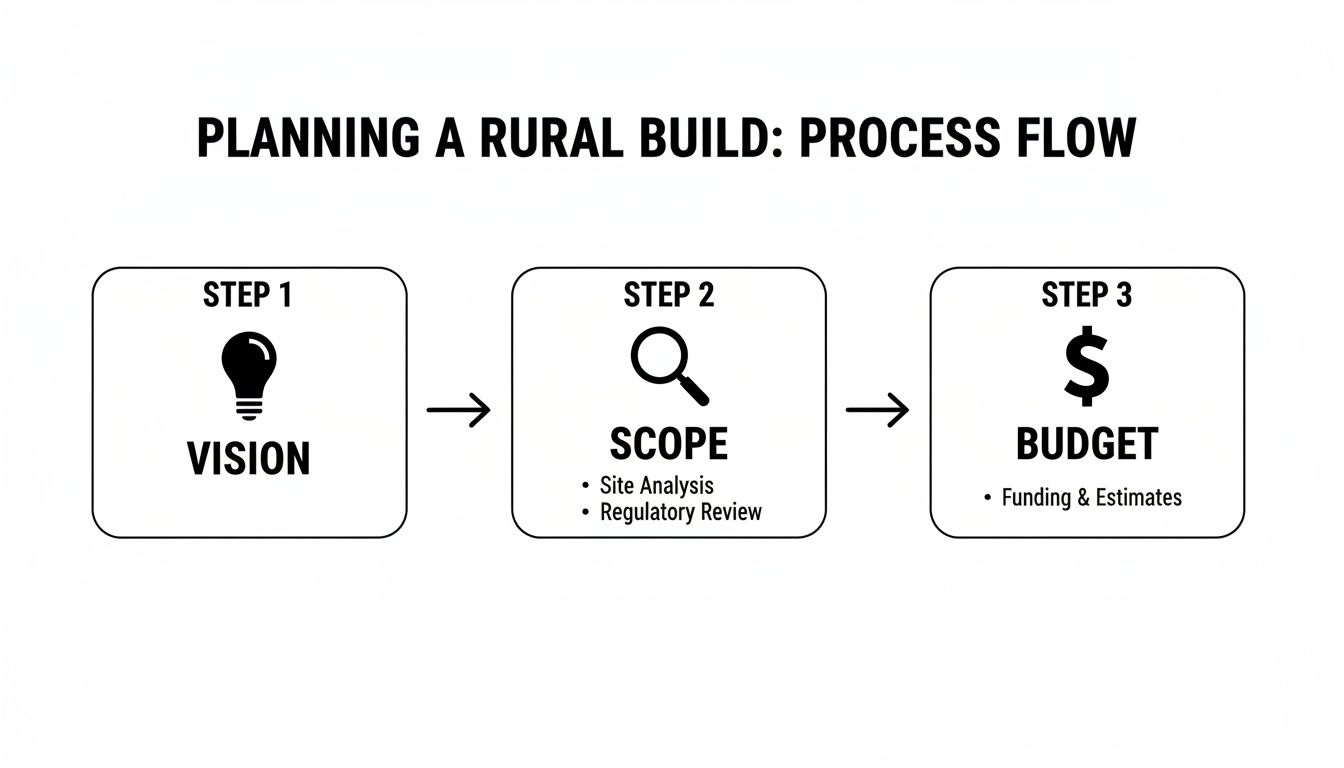
This initial planning stage—clarifying your vision, scope, and budget—is the bedrock of a successful project, long before the first truck even leaves the depot.
Mapping Out Your Property’s Access
A proper site assessment is more than just looking at where the shed or house will go. An experienced rural builder will walk the entire access route with you, from the front gate to the build site, looking for problems before they happen.
We’re trained to spot the subtle bottlenecks others might miss—a narrow cattle grid, a low-hanging branch that could snag a tall load, or a causeway that’s fine for your ute but won't handle a heavy truck. Finding these issues early means we can build a solution into the plan, not deal with a costly emergency halfway through the job.
The construction industry is a massive employer in regional areas. In fact, as of February 2025, it employed a staggering 449,057 people in New South Wales—a record high. This just goes to show how vital building projects, particularly in hubs like Tamworth and Armidale, are to supporting our local communities.
Why a Specialised Fleet Makes All the Difference
Successfully managing rural logistics is about more than just owning one big truck. It's about having an adaptable fleet. Alongside our heavy hauler, our 4×4 utes are indispensable for moving smaller teams, conducting site inspections, and getting specialised tools to tricky locations.
This table breaks down some common challenges and how a well-equipped builder tackles them.
| Logistics Challenge vs Builder Solution |
|---|
| Access Challenge |
| Steep or unsealed access tracks |
| Unpredictable creek or river crossings |
| Boggy or waterlogged ground after rain |
| Narrow gates, cattle grids, or tight turns |
| Potential Project Impact |
| Delayed or cancelled material deliveries; subcontractors unable to access site. |
| Project halted completely until water levels recede; critical path disruption. |
| Vehicles getting stuck; damage to property; costly recovery efforts needed. |
| Inability to get large machinery or prefabricated frames to the site; potential for costly on-site modifications. |
| Required Builder Capability |
| High-clearance 4×4 trucks and utes capable of navigating rough terrain without issue. |
| A fleet that can handle water crossings safely, or the experience to schedule work around weather patterns. |
| All-terrain vehicles and experienced drivers who know how to manage difficult ground conditions. |
| Meticulous pre-project site inspection to identify bottlenecks and plan transport logistics accordingly; ability to use smaller, agile vehicles for certain tasks. |
This adaptability allows us to be efficient. We use the right vehicle for the task, which saves time and your money. It's this comprehensive approach that allows us to work as dedicated outback builders and deliver projects anywhere from Bourke to Broken Hill. Having the right equipment on hand ensures a seamless workflow, keeping your project firmly on schedule and within budget.
Selecting Materials Tough Enough for the Bush
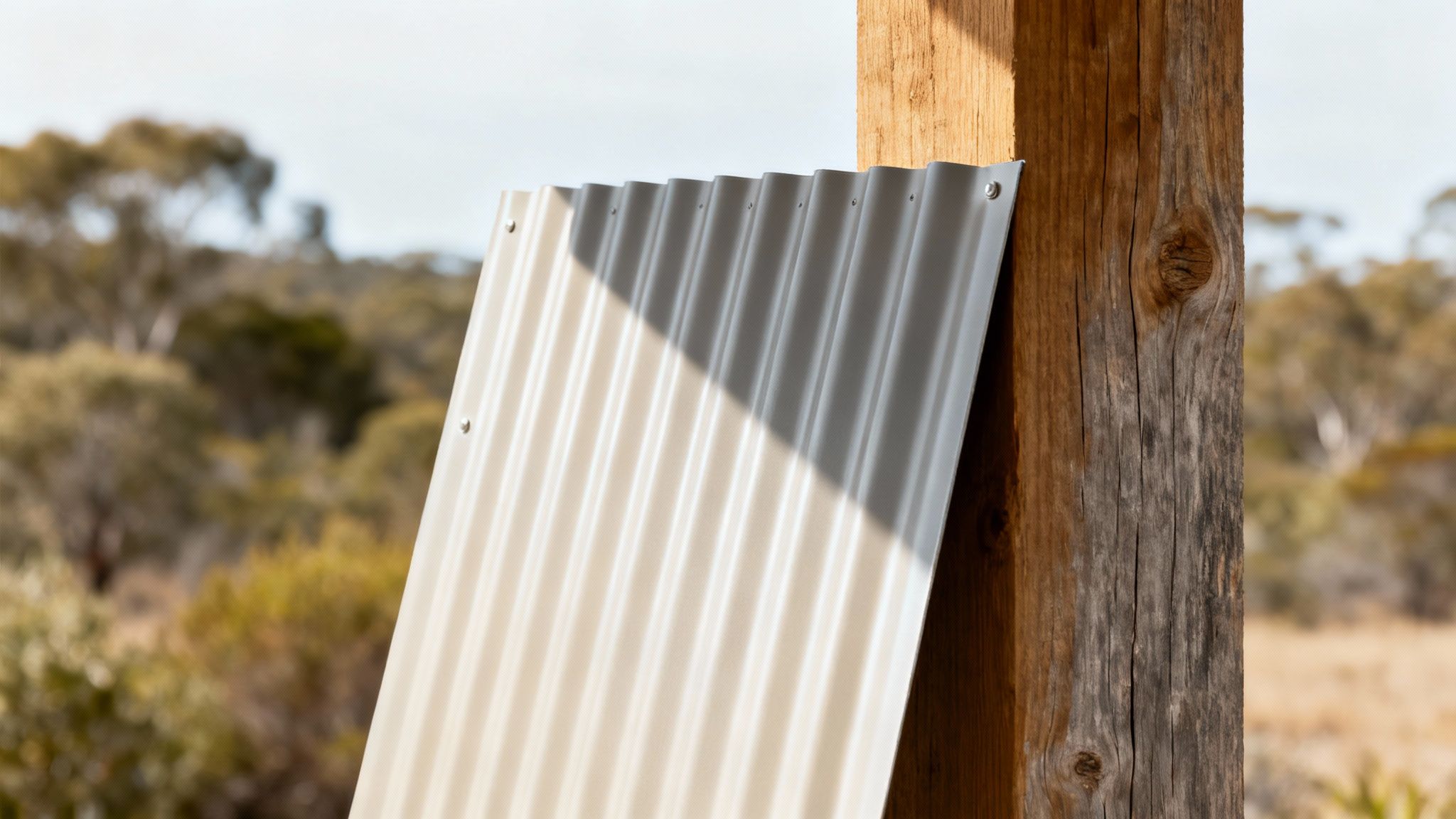
The Australian landscape doesn't pull its punches. Between the intense sun, driving rain, high winds, and the ever-present risk of bushfires, your building materials need to be more than just good-looking—they have to be incredibly tough.
Choosing the right products from day one is one of the smartest investments you can make in your property. It’s not about over-spending; it's about getting genuine, long-term value. Opting for materials proven to stand up to our harsh conditions means fewer maintenance headaches and lower repair costs down the track.
A good rural building company has seen it all. They’ll guide you through the options, recommending products that strike the perfect balance between durability, performance, and budget for your specific patch of dirt.
Colorbond Steel: The Go-To for a Reason
When it comes to roofing and cladding out in the bush, Australian-made Colorbond steel is pretty much the gold standard. It’s engineered specifically for our climate, giving it a durability that many imported alternatives just can't match.
The baked-on finish is designed to resist chipping, peeling, and cracking under the brutal NSW sun. Plus, it’s lightweight yet incredibly strong, making it perfect for everything from large-span machinery sheds to homestead roofs without needing a massively over-engineered frame.
The last few years have been a rollercoaster for building costs. In NSW, they shot up by 11.5% between July 2021 and June 2022 due to supply chain chaos and labour shortages. While that surge cooled to around 6% by mid-2023, it really drove home the value of sticking with reliable, locally sourced products like Colorbond.
Making the Right Timber Choices
Timber brings a natural warmth to decks, pergolas, and verandas, but you have to be smart about it. In a rural setting, using untreated timber is basically putting out a welcome mat for termites and rot, which can destroy the integrity of a structure in just a few short years.
This is where treated pine and durable hardwoods become non-negotiable.
- Treated Pine: It’s pressure-treated with preservatives to fight off fungal decay and insects. This makes it a cost-effective and versatile choice for the structural bones of a build, like posts and joists.
- Durable Hardwoods: Native species like Merbau or Spotted Gum have exceptional natural resilience against termites and weathering. They're a premium choice for high-visibility areas like decking boards and feature posts.
An experienced rural builder doesn't just pick the right timber; they know how to install it to last. That means ensuring proper ventilation and ground clearance to stop moisture from getting trapped and causing problems.
The real art is in how you combine materials. An expert knows how to pair a Colorbond roof with a treated timber frame for a machinery shed or use fire-resistant cladding alongside hardwood decking for a homestead, creating something that’s both functional and built for the long haul.
For projects with really specific needs, looking into custom design and fabrication services can be a game-changer. This is a great way to get specialised components like non-standard brackets, gates, or structural elements that are tailor-made for your unique build.
At the end of the day, spending a bit more on quality materials is really an investment in your own peace of mind. It ensures your new shed, deck, or extension can handle whatever the Australian climate throws at it, year after year.
How to Navigate Council Approvals and Compliance
Getting tangled in council red tape can feel like one of the biggest and most frustrating hurdles when you’re trying to get a project off the ground. The good news? It doesn’t have to be a nightmare.
Understanding the nuts and bolts of the regulatory process here in New South Wales is the first step. More importantly, it shows you just how valuable a partnership with an experienced rural building company really is.
A true expert in this field does a lot more than just swing a hammer. They’re your guide through the entire maze, managing the process from start to finish. From getting the paperwork right to liaising with certifiers, their job is to make sure your new shed or homestead renovation is fully compliant, safe, and built to all relevant Australian Standards. That’s what safeguards your investment and lets you sleep at night.
Understanding the Approval Pathways
In NSW, you’ll be glad to know that not every project needs a full-blown Development Application (DA). Many common rural builds can take a much faster track, saving you a whole lot of time and money. The trick is knowing which path your project falls into.
- Exempt Development: Think minor, low-impact jobs. This covers things like small garden sheds, some fences, or minor repair work that fits a strict set of criteria. If your build is this straightforward, you won't need any council approval at all.
- Complying Development: This is a streamlined process for projects like new single-storey homes, extensions, or farm buildings that meet specific development standards. It’s a huge time-saver, as a registered certifier can approve the plans directly, letting you bypass a lengthy council assessment.
- Development Application (DA): This is the more traditional, comprehensive process. It’s required for larger or more complex projects that don't fit the other pathways and involves a detailed assessment by your local council.
An experienced rural builder can look at your plans and almost instantly tell you the most efficient way forward. That insight alone could save you months of waiting.
Why Expert Management Matters
The current building climate in regional NSW really drives home the need for efficiency. With a tight housing pipeline, a builder who knows how to cut through the bureaucracy is worth their weight in gold. Rural building in New South Wales is feeling this pressure, with only 3,024 new dwellings under construction as of June 2024 across key regional areas.
As a recent Master Builders NSW quarterly report highlighted, detached houses are the backbone of our farmsteads and homesteads. It's here that a quality builder's expertise in renovations and new outbuildings is absolutely essential.
A professional rural building company takes this entire compliance burden off your shoulders. Their role includes:
- Preparing and lodging all the necessary paperwork for your DA or Complying Development Certificate (CDC).
- Coordinating with surveyors, engineers, and building certifiers to ensure every plan ticks every box.
- Making sure all work on-site strictly adheres to the Building Code of Australia (BCA) and relevant Australian Standards.
Navigating council regulations is a specialised skill. A builder who knows the local council's quirks and has solid relationships with certifiers can prevent the small administrative slip-ups that often snowball into major delays.
Their expertise ensures your project is handled correctly from day one. This kind of proactive management is non-negotiable when you are building on rural land in NSW, as the rules are often worlds apart from those in the city.
Ultimately, this protects you from potential fines, legal headaches, or the worst-case scenario of having to tear down work that isn't compliant. It's about making sure your new asset is built safely, legally, and to a standard that will stand the test of time.
Keeping Your Farm Running During Construction

A building project on a working farm shouldn't bring your entire operation to a grinding halt. The secret to a successful build—one that doesn’t get in the way of your livelihood—is smart, proactive management from a builder who genuinely understands the rhythms of rural life.
Bringing a construction site into an active agricultural business takes more than just building skills. It demands meticulous coordination and open communication. A seasoned rural builder knows your farm's productivity is paramount and will work to ensure their activities complement, rather than clash with, your daily operations.
This whole process kicks off long before the first truck rolls in, starting with a detailed chat about how to minimise the impact on your property, your time, and your business.
Establishing Clear Boundaries and Access
One of the very first things to sort out is physically separating the construction zone from your day-to-day farm activities. This is non-negotiable for both safety and efficiency. A good builder will walk the property with you to map out dedicated access routes just for construction traffic.
This simple bit of planning stops heavy vehicles from compacting valuable pasture or chewing up your main farm tracks. More importantly, it keeps your livestock, family, and staff safe by creating predictable, dedicated pathways for all construction vehicles.
A professional rural building company operates with the understanding that they are guests on your property. This means respecting your land, closing gates, and ensuring the construction footprint is as small and contained as possible.
This is where a builder’s real-world experience in the bush really shows. They’ve seen what can go wrong and know how to put practical solutions in place to keep everyone safe and productive.
Our Commitment to Remote Project Success
Building in the far-flung corners of New South Wales throws up logistical challenges that can easily derail an unprepared team. That's why we’ve invested in specialised equipment specifically to tackle these hurdles and keep your project on track, no matter how far off the beaten track you are.
The workhorse of our fleet is our 10-tonne 4×4 truck. This isn't just another delivery vehicle; it's our promise that we can get crucial supplies and materials to your site, right when you need them.
- All-Weather Material Delivery: Our truck allows us to bring in labour, materials, and equipment where and when it’s needed the most, tackling the boggy tracks and creek crossings that would stop a standard vehicle.
- Team and Equipment Transport: This heavy-duty vehicle is key to getting our skilled team and their essential equipment out to the most isolated properties around NSW.
- Less Disruption for You: By managing our own transport, we have full control over the schedule. This means deliveries are timed efficiently, keeping traffic and disruption to your workflow at an absolute minimum.
This self-sufficiency is what allows us to operate effectively where we're needed most, maintaining project momentum without getting under your feet.
Aligning Schedules with Farm Rhythms
Clear, constant communication is the absolute backbone of a smooth project. Any decent rural builder will sit down with you and align their work schedule with the non-negotiable events on your farming calendar.
For instance, noisy work like excavation or framing can be planned to avoid stressing livestock during sensitive periods like lambing or calving. In the same way, high-traffic delivery days can be coordinated to steer clear of mustering or harvesting operations.
It’s this kind of collaborative approach that ensures the build flows seamlessly alongside your farm's essential activities—a true partnership built on respect.
Got Questions About Building in the Bush? We’ve Got Answers.
Taking on a rural building project is a massive step, so it’s only natural to have a long list of questions. From budgets and timelines to warranties and the sheer logistics of building out in the sticks, having clear answers is crucial. Here are some of the most common questions we get from property owners across NSW, with straight, practical advice to help you get started.
What’s My Rural Building Project Going to Cost?
It’s the million-dollar question, and honestly, the answer is "it depends." The final cost comes down to the scale of your project, the materials you land on, and just how far off the beaten track you are. A simple machinery shed is a world away from a full homestead renovation with all the bells and whistles.
For rural builds, the big-ticket items that can really drive up the price are:
- Freight & Transport: Getting materials out to a remote property is a significant cost.
- Site Works: The amount of clearing, earthmoving, and levelling needed can quickly add up.
- Quality of Finishes: Your choice of fixtures and fittings plays a huge part in the final figure.
The only way to get a real number is to have a reputable rural builder come out for an on-site inspection and a detailed quote. They’ll be able to see the challenges firsthand—like a long unsealed driveway or a tricky creek crossing—and give you a price that reflects what the job actually involves.
How Long Will I Be Waiting for Council Approval?
Council approval times can be anything from a few weeks for a straightforward shed under a complying development certificate, to several months for a more complex Development Application (DA). It really hinges on your local council's workload and how well your application is put together.
This is where a local, experienced builder is worth their weight in gold. Someone who works in your region day in and day out knows the specific council requirements inside and out. They can lodge a comprehensive application that ticks all the boxes from the get-go, which helps avoid those frustrating back-and-forth delays.
What’s the Difference Between a Builder's Warranty and a Material Warranty?
It's really important to get your head around the two types of warranties that cover your new build.
A builder's warranty (often called a statutory warranty) is required by law. It covers the quality of the actual construction work and protects you from structural defects for a set period.
On the other hand, material warranties come directly from the manufacturers of the products used, like Colorbond or your timber supplier. These cover defects in the materials themselves, such as a steel sheet rusting prematurely or paint fading faster than it should. Your builder should hand over all the official paperwork for both warranties once the job is finished.
A professional rural builder won't leave you in the dark. They'll stand by their workmanship and make sure every manufacturer's warranty for the products they’ve installed is properly registered and passed directly on to you.
How Do You Actually Manage a Build on a Really Remote Property?
Getting a project over the line on a remote property comes down to three things: rock-solid logistics, great communication, and years of experience. This is where you separate the pros from the amateurs.
A seasoned rural builder will have their own fleet of capable vehicles to get crews, gear, and materials to your site, no matter the terrain. We run a 10-tonne 4×4 truck for exactly this reason. This beast is our guarantee that we can bring in materials and supplies for the most remote properties around New South Wales. It means we can haul labour, materials, and equipment where and when it's needed the most, overcoming the logistical nightmares that would stop others in their tracks.
That kind of self-sufficiency, paired with a commitment to regular updates with photos and phone calls, means the project keeps moving forward without you having to constantly be on-site. Real-world experience helps us anticipate and solve the unique problems that pop up on remote builds—from temporary power and water supply to coordinating specialist trades—keeping your project on track and on budget.
For a partner who genuinely understands the demands of building in the bush, from the first sketch to the final handover, trust Awesim Building Contractors. Contact us today to discuss your project.