Taking on a building or renovation project on a rural NSW property is a different beast altogether. It's far more than a standard construction job; it’s a full-blown logistical exercise that most city-based builders simply aren't set up for. To get it right, you need to work with specialised rural construction companies—teams that live and breathe the unique challenges of working miles from anywhere.
This means finding a partner who can handle everything from navigating tricky terrain to deciphering complex local council rules.
Why Rural Construction Demands a Specialist Partner
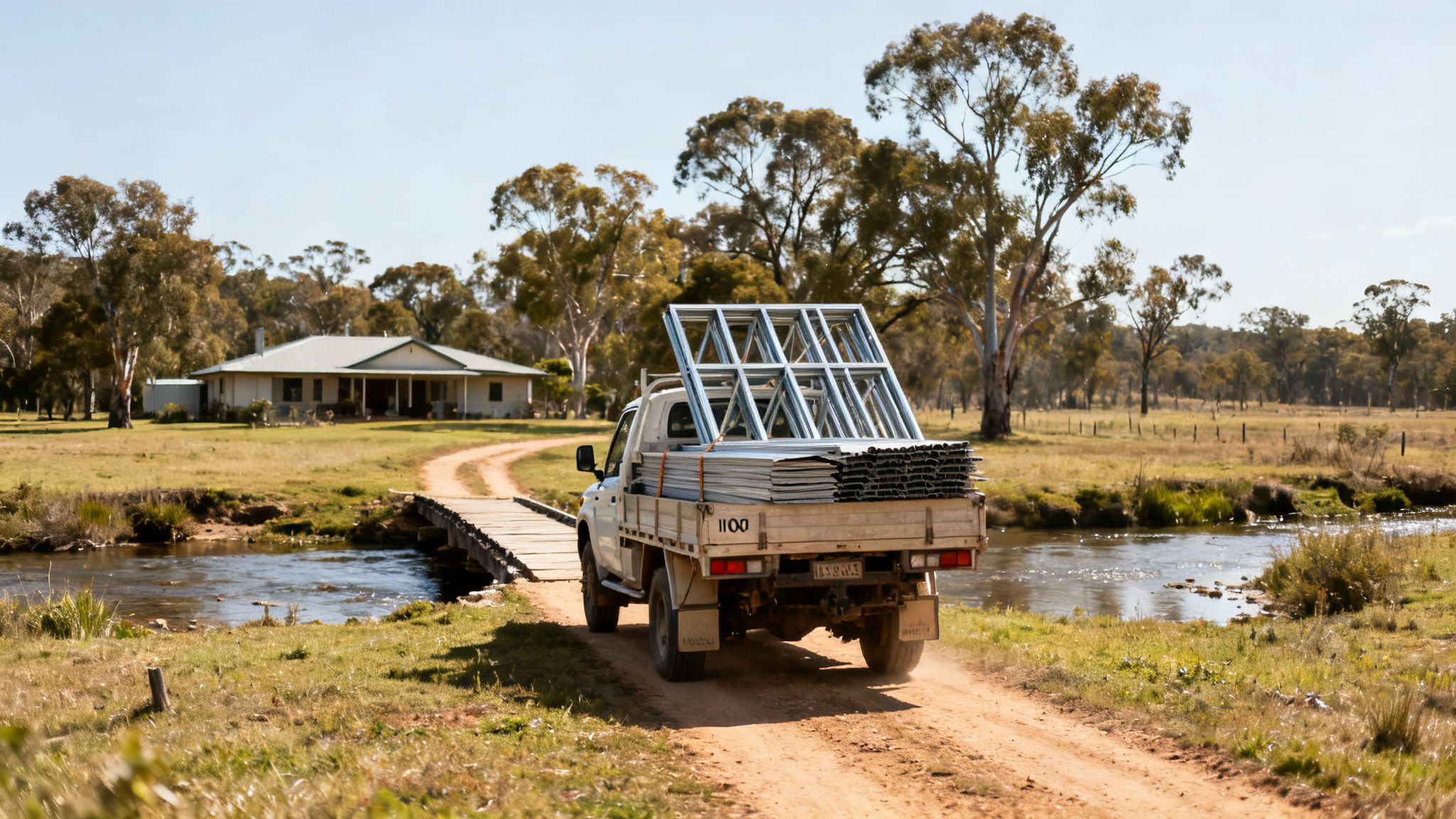
Urban projects have it easy with sealed roads and suppliers just around the corner. Out in the bush, it's a completely different world. We’re talking about unpredictable weather, truly remote locations, and access tracks that would stop a standard delivery truck dead. A general builder might see a muddy farm track as a show-stopper; a rural specialist just sees the road to work.
That fundamental difference in mindset and capability is what truly sets a rural expert apart. They're not just builders; they're seasoned problem-solvers who can see a hurdle coming a mile off and plan for it.
Urban Construction Versus Rural Construction
To really appreciate the difference, it helps to see a side-by-side comparison. Building in the city and building on a rural block are two entirely different disciplines.
| Factor | Standard Urban Project | Rural NSW Project |
|---|---|---|
| Site Access | Paved roads, easy delivery access. | Unsealed roads, creek crossings, steep terrain. Requires 4x4s. |
| Material Supply | Multiple suppliers nearby. | Long delivery distances, limited local options. Requires careful planning. |
| Labour | Large local pool of tradespeople. | Limited local trades, often requiring travel and accommodation. |
| Regulations | Standard residential/commercial zoning. | Complex rural zoning, environmental overlays, and BAL ratings. |
| Environment | Predictable urban conditions. | Extreme weather, high winds, dust, and risk of bushfires. |
As you can see, a rural project brings its own unique set of challenges that demand a specialised skill set and the right gear.
Overcoming the Tyranny of Distance
The biggest headache for any rural build is, without a doubt, logistics. Just getting people, materials, and machinery to a remote site on schedule—and in one piece—is a massive undertaking. A typical city contractor often underestimates how tough it can be to navigate unsealed roads, creek crossings, and the sheer distances between towns. This oversight quickly leads to expensive delays, damaged supplies, and a whole lot of frustration.
This is where a specialist rural construction company proves its worth. They have the right equipment and the planning know-how to keep the project moving, no matter how far off the beaten track you are.
At Awesim Building Contractors, we know that a project’s success hinges on solid logistics. That’s why we run a 10-tonne 4×4 truck specifically to bring in materials and supplies for the most remote properties around New South Wales. This allows us to bring in labour, materials, and equipment where and when it's needed the most.
This beast of a vehicle lets our team bring in everything we need, right where and when we need it. Whether that means tackling muddy tracks after a week of rain or fording a shallow river, our transport capability means your project doesn't grind to a halt.
More Than Just Building
A true rural specialist also gets the rhythm of country life. They understand that construction has to be scheduled around critical farm operations like lambing, calving, or harvest. Having that awareness and being flexible enough to work with you is key to keeping your operation running smoothly.
In the end, choosing a specialist is an investment in peace of mind. It means you’re partnering with a team that has:
- The right vehicles and equipment to get to any property.
- First-hand experience with local council regulations for rural zones.
- A deep understanding of how to build structures that can stand up to harsh Australian conditions.
The right partner doesn’t just bring their tools; they bring a genuine appreciation for the land and the people who work it.
What Rural Construction Companies Actually Do
When you're running a farm or a large regional property, you need a builder who gets it. Specialist rural construction companies offer a specific set of skills geared for life on the land. Their work covers everything from patching up a leaky shed roof to building a brand-new shearing shed from the ground up.
Essentially, the work boils down to three key areas. You have the essential upkeep that keeps everything standing and safe. Then there are the upgrades that make the homestead a better place to live. And finally, you have the big new builds that are all about boosting the property’s operational muscle.
Essential Maintenance and Repairs
Out here, proactive maintenance isn't a "nice-to-have"—it's a necessity. The Australian climate is tough, and it takes a toll on every structure you own. A specialist rural construction company is your go-to for the kind of repairs a local handyman might not be equipped for, especially when your property is miles from the nearest town.
Here’s a look at the most common call-outs:
- Roof and Gutter Repairs: A leaky roof is more than an annoyance; it’s a threat to your building's frame and foundations. We're talking about fixing leaks, swapping out rusted-out iron sheets, and ensuring gutters are clear and functional. This is where durable materials like Australian-made Colorbond steel really prove their worth.
- Cladding and Siding Fixes: Between wild storms and the occasional nudge from a tractor, wall cladding takes a beating. Getting it fixed promptly is key to keeping a building weatherproof and structurally sound.
- Window and Door Replacements: Draughty windows and warped doors do more than just let the flies in; they kill your energy efficiency. Upgrading to properly sealed units makes a huge difference to comfort and power bills in the homestead.
Think of these jobs as your first line of defence. A good rural builder understands the urgency and has the know-how to get the right people and materials on-site, fast.
Homestead Renovations and Upgrades
The homestead is the heart of the property, and making it a comfortable, functional home is always a top priority. Breathing new life into older farmhouses is a massive part of what we do. It’s about adapting these classic homes for the way families live today.
This is a particularly busy space right now in regional New South Wales. With the government aiming for 1.2 million new homes by 2029 and costs spiralling, many people are choosing to upgrade what they already have. For builders who specialise in rural work, this shift presents a real opportunity to help farmers improve their homes. You can get a deeper look at the trends in Australia's construction industry over at BCICentral.com.
A well-planned renovation does more than just add value to your property on paper. It fundamentally improves your quality of life, turning an old house into a home that feels modern, practical, and truly yours.
Some of the most popular homestead projects include:
- Kitchen and Bathroom Modernisation: These are the big two. It often means a full strip-out to bring in modern cabinetry, hard-wearing benchtops, and water-efficient fixtures that can handle country living.
- Outdoor Living Spaces: Adding a wraparound veranda, a sturdy deck, or a pergola is a game-changer. It creates that essential shaded space for a cuppa or a family barbecue, built with treated timbers that stand up to termites and the weather.
- Internal Reconfigurations: Old farmhouses can feel a bit dark and compartmentalised. Taking out a non-load-bearing wall to create an open-plan kitchen, living, and dining area is one of the best ways to modernise the whole feel of the home.
New Outbuildings and Structures
Moving beyond the homestead, a specialist rural builder is who you call for the heavy lifting—the new structures that make your operation run smoothly. This isn’t just about putting up walls; it's about understanding agricultural workflows and building something that’s tough as nails.
A proper build involves everything from preparing the site and pouring the slab to making sure the finished structure is fully compliant with Australian Standards. A seasoned rural builder knows how to design and construct sheds with wide, high-clearance bays for modern machinery, or stables with the right airflow and footing. It’s all about creating practical, durable outbuildings that are built to work hard for decades.
Tackling the Logistics of Remote Construction
Let’s be honest, the single biggest headache for any rural project is logistics. It’s one thing to have a great design, but getting the right people, materials, and machinery to a remote property is a challenge that trips up most builders who are used to city work. This is where a true rural construction specialist shines, turning the tyranny of distance into just another part of a well-oiled plan.
It’s a complex dance. You’re coordinating skilled labour, sourcing materials that might be hundreds of kilometres away, and then hauling heavy equipment over terrain that’s often less than forgiving. A builder without a rock-solid plan and the right gear will quickly find themselves stuck, leaving you with costly delays, a half-finished job, and a whole lot of frustration. We've built our entire operation around mastering this very challenge.
The Right Fleet for the Toughest Terrain
A standard delivery van or a city-slicker flatbed truck just isn't going to cut it when your property is at the end of a winding dirt track or on the far side of a creek crossing. Access is everything. A builder's fleet is a direct measure of their ability to handle genuine rural work, and without the right vehicles, even the best plans fall apart before they even get started.
That’s precisely why we’ve invested so heavily in a fleet built for the unique demands of New South Wales properties.
The real workhorse of our operation is a 10 tonne 4×4 truck. This beast is an absolute game-changer, allowing us to haul essential materials and supplies into the most isolated corners of NSW. It guarantees we can get our team, your materials, and our equipment where they need to be, when they need to be there.
Backed up by our fleet of 4×4 utes, this powerful truck means we never have to rely on third-party couriers who might turn back at the first sign of a muddy track. From the rugged New England hills to the vast western plains, our ability to get to your site keeps your project moving forward, no matter what the conditions throw at us.
The chart below shows the typical flow of our rural projects, from ongoing maintenance to brand-new builds. You can see how our robust logistical network underpins every single stage.
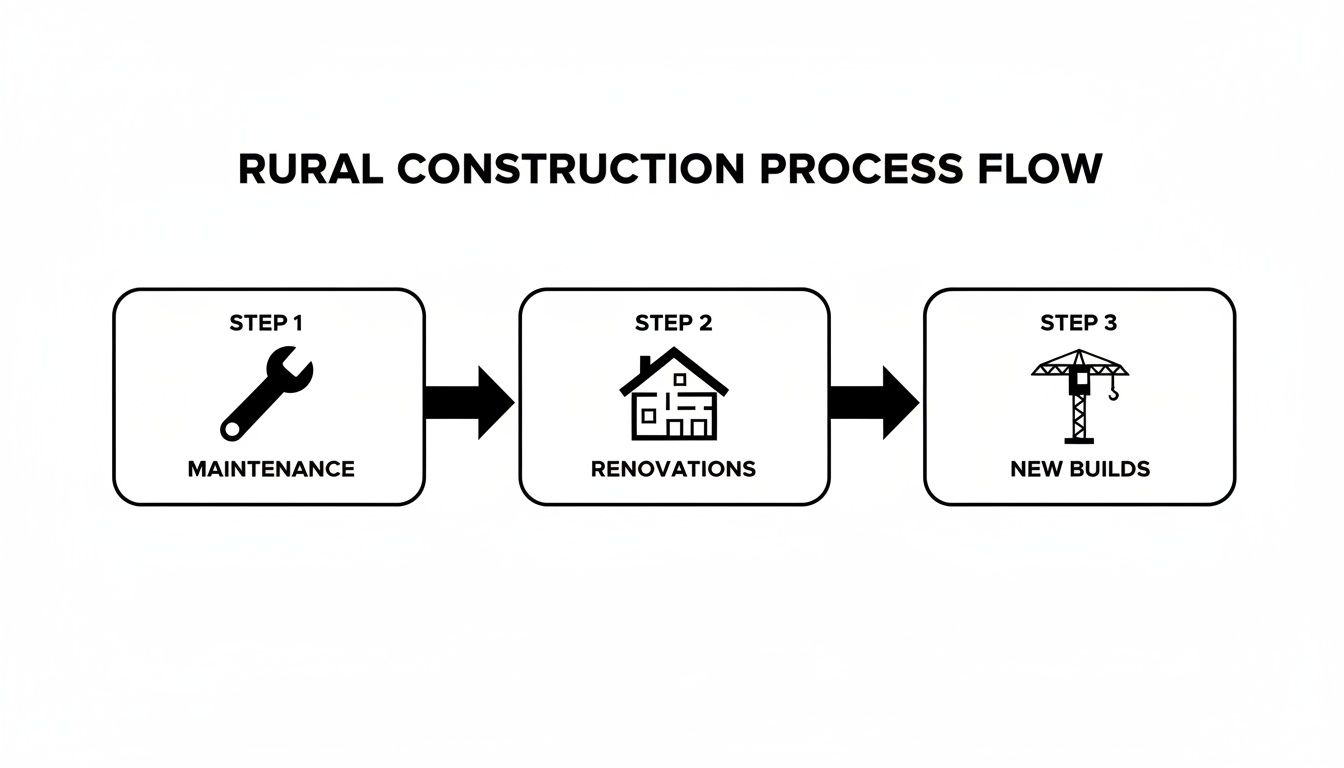
This process makes it clear: logistics isn't just one step, it's the foundation that ensures even the most complex jobs run smoothly from start to finish.
Smart Planning and On-the-Ground Problem-Solving
Getting materials to your property is only half the battle. A genuinely professional rural builder also brings meticulous planning and a problem-solving mindset to every job site. This is absolutely critical on a working farm, where a construction project can't be allowed to grind daily operations to a halt.
Effective project management really comes down to a few key things:
- Meticulous Scheduling: We’ll sit down with you to schedule deliveries and noisy work around crucial times like harvesting or lambing. The goal is simple: minimise disruption to your business and your life.
- Detailed Site Planning: Before we even think about hammering a nail, we map out clear access routes for our vehicles, establish secure laydown areas for materials, and make sure the worksite is safely fenced off from livestock and family.
- On-Site Self-Sufficiency: Out in the bush, you can’t just duck down to the local hardware shop for a specific bolt or bracket. Our crews are seasoned innovators, capable of finding practical solutions on the spot without needing to call for backup. This ability to think on their feet is what really separates the pros from the pack.
It’s this combination of specialised gear and strategic planning that makes all the difference. If you're planning a build in a particularly challenging spot, it's worth learning more about the unique skills required from experienced outback builders and how they solve these kinds of logistical puzzles. In the end, it’s this blend of muscle and mindset that ensures your project is finished efficiently, safely, and to the highest standard.
Choosing Materials That Endure the Australian Climate
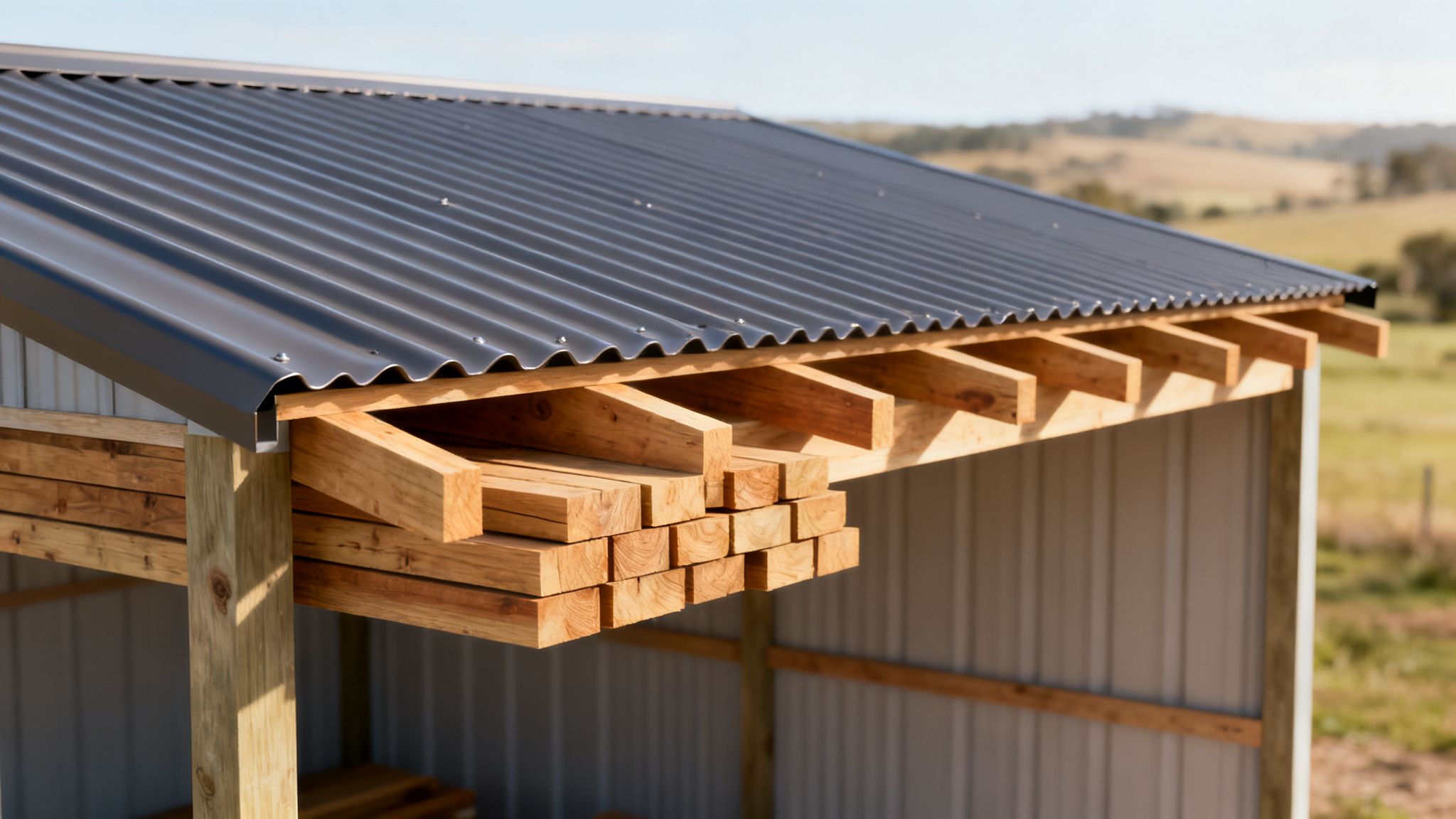
In rural construction, a building is only as strong as the materials it’s made from. Out in the bush, where structures face everything from blistering sun and torrential rain to the ever-present threat of bushfires and termites, your choice of materials isn’t just a detail—it’s the backbone of a long-lasting investment.
The right materials directly influence a building’s durability, how much maintenance it will need, and its overall safety for years to come. Any experienced rural construction company knows that investing in quality, climate-appropriate products from day one is the surest way to prevent costly repairs down the track. It’s all about building it once and building it right.
The Non-Negotiables for Rural Builds
When it comes to materials that can handle rural New South Wales, a few champions consistently prove their worth. These aren’t just popular choices; they're strategic selections made to combat the specific challenges of the Australian climate.
Australian-Made Steel: For sheds, homesteads, and outbuildings, Colorbond steel is pretty much the gold standard for roofing and cladding. It's designed specifically for our conditions, offering fantastic resistance to intense UV radiation, corrosion, and fire. Better yet, its baked-on finish means you won't be spending your weekends repainting, and it provides real peace of mind during a hailstorm or a summer heatwave.
Properly Treated Timbers: Timber is a staple, whether it's for a structural frame or a beautiful new deck. But using untreated pine is like sending an open invitation to termites and wood rot. That’s why properly treated timbers (like H3 or H4-rated pine) are essential for any outdoor or structural work, ensuring your investment won’t be eaten away from the inside out.
The Foundation Matters Most
Beneath every sturdy shed or workshop lies a professionally engineered concrete slab. This is absolutely not the place to cut corners. A correctly specified and poured slab creates a stable, level base that stops structural movement and protects your machinery and supplies from ground moisture. A good builder will assess your soil type and what you plan to use the building for, ensuring the slab has the right thickness, reinforcement, and finish.
The national construction market, valued at USD 318.03 billion in 2024, is forecast to hit USD 435.78 billion by 2034, with a growing focus on disaster-resistant infrastructure. This trend, especially clear in regional NSW hubs, shows just how much demand there is for durable, heavy-duty builds using quality local materials. You can dig into more data on Australia’s construction growth in this full industry analysis on GlobeNewswire.
The smartest decision you can make is to prioritise the quality of unseen elements like your concrete slab and structural frame. These are the bones of your building; getting them right ensures everything else performs as it should for decades to come.
Of course, getting these high-quality, often heavy materials to your site is a logistical challenge in itself. At Awesim, we run a 10-tonne 4×4 truck to bring in everything from steel framing and roofing iron to bags of concrete and treated timber, making sure your project gets the best materials, no matter how remote your property is. You can learn more about our approach in our guide to designing and pouring the perfect rural concrete slab.
How to Vet and Select Your Rural Building Partner
Choosing the right contractor is probably the single most important decision you'll make for your rural construction project. This isn’t just about finding someone who can swing a hammer; it’s about finding a genuine partner who understands the unique challenges of working on the land in New South Wales.
Forget the generic advice. A solid vetting process is your best defence against delays, budget blowouts, and shoddy workmanship. The right partner brings not only the technical skills but also the logistical muscle and clear communication needed to get the job done properly.
The Non-Negotiable Checklist
Before you even start talking about designs or materials, there are a few fundamental checks any professional rural builder must pass. These are the absolute essentials that protect you, your property, and your investment.
Verify Their NSW Building Licence: First things first, always check that the builder holds a current and valid licence with NSW Fair Trading. This is your baseline assurance that they meet the state’s standards and are legally allowed to do the work.
Confirm Comprehensive Insurance: A legitimate builder will have no problem showing you their Certificates of Currency for both Public Liability Insurance and Workers Compensation. This is critical. Without it, you could be left on the hook for accidents or injuries that happen on your property.
Ask for a Detailed Written Quote: A professional quote is more than just a final number at the bottom of a page. It should be a properly itemised document that breaks down the costs for labour, materials, permits, and everything in between. This kind of transparency is a great indicator of a trustworthy builder.
Going Deeper Than the Basics
Once a builder has passed those initial checks, it's time to dig a bit deeper into their specific experience with rural projects. You'd be surprised how often urban construction skills don't translate to the unique demands of building on a farm or homestead.
You need to know they can handle the realities of your project. Asking the right questions at this stage will give you a clear picture of their real capabilities and whether they're the right fit for your vision. You can learn more about the specific skills required by exploring what makes a great rural builder.
Finding a builder with a portfolio of completed rural projects is crucial. It's direct proof they understand the nuances of building on unsealed roads, working around farm operations, and selecting materials that stand up to the harsh Australian climate.
When you’re vetting potential partners, always ask to see examples of their previous work on properties similar to yours.
Assessing Their Logistical Power
Logistics are the lifeblood of any remote build. A brilliant design is completely useless if your builder can't get materials and labour to your site efficiently. In rural New South Wales, this is a massive factor that separates the experienced rural construction companies from the rest.
Farming communities are the backbone of regional building demand. In fact, one report noted that 41% of infrastructure projects are outsourced, a model common in rural areas due to specialised needs. This is especially true for firms serving remote locations where access is a constant challenge. For a detailed look at industry trends, you can review the 2025 Infrastructure Market Capacity Report.
At Awesim, our 10-tonne 4×4 truck is central to our promise. It’s what allows us to bring in everything from our crew and equipment to bulk materials, reaching even the most remote properties across NSW. We can navigate dirt roads and water crossings to make sure your project stays on schedule, no matter where you are.
Your Rural Construction Questions, Answered
If you’re thinking about a project on your rural property, you've probably got a few questions. Building on the land comes with its own set of rules and challenges, so it's only natural to want some clarity on timelines, budgets, and how it all works day-to-day.
Let's walk through some of the most common questions we get from landowners and farmers. Getting these things clear from the start makes for a much smoother project, from the first sketch to the final handover.
How Long Does Council Approval Really Take Out Here?
This is the classic "how long is a piece of string?" question. The timeline for council approvals can swing wildly depending on which council you’re in and what you're planning to build. A simple machinery shed might sail through in a few weeks, but a new homestead or a significant renovation could easily take several months.
This is where a seasoned rural construction company proves its worth. We've been through this process countless times and know how to manage it. We handle all the paperwork, from septic plans to Bushfire Attack Level (BAL) reports, making sure it’s lodged correctly the first time. Getting it right from the outset is the single best way to avoid frustrating and expensive hold-ups.
What Are The Most Common Hidden Costs In A Rural Build?
When unexpected costs pop up in a rural build, they almost always come from two places: site access and services. It’s easy to look at a paddock and underestimate what it takes to get it ready for construction.
Here are the usual suspects:
- Serious Earthworks: Carving out a dead-level building pad on sloping or uneven ground can involve a lot more excavation and fill than you'd think.
- Trenching for Services: The cost of running power, water, and data lines over hundreds of metres can be a real eye-opener, often adding thousands to the bill.
- "Out of Town" Delivery Fees: Many suppliers will tack on a hefty surcharge for delivering materials to properties far from their home base.
A builder who truly knows rural work will spot these potential budget blowouts during the initial site inspection. We make it our business to flag these items upfront in a detailed quote, so you have a realistic understanding of the total investment before any soil is turned.
Managing our own logistics is a massive advantage for our clients. Our 10-tonne 4×4 truck lets us haul our own team, gear, and materials directly to even the most remote properties across New South Wales. It means we aren't at the mercy of third-party couriers, giving us far greater control over both the timeline and your budget.
How Do You Manage A Project On A Working Farm?
Clear and constant communication. That’s the short answer. When we're working on an active farm, we know your agricultural operations don't just stop. A professional rural builder’s job is to fit into your world, not the other way around.
We start by mapping out clear access routes for our vehicles and deliveries, keeping them well away from your livestock and machinery paths. We’ll also schedule disruptive work—like a big concrete pour or running heavy equipment—to avoid clashing with critical times like lambing, calving, or harvest.
At the end of the day, it's about running a secure, tidy, and well-managed site that keeps your family, staff, and animals safe. We see ourselves as partners who respect the rhythm of farm life, so you can get on with your work without needless interruption.
Ready to start your next rural project with a team that gets the unique challenges of building on the land? Contact Awesim Building Contractors today to discuss your vision and get a quote from a true rural specialist. Visit us at https://awesim.au to learn more.