

If you’re looking at renovating a bathroom in a major city like Sydney, you’re probably expecting to budget somewhere between $30,000 to $60,000 for a standard project. Out here in rural New South Wales, however, those figures are just the starting block. It’s not uncommon for the final cost to be double what a city-dweller would pay, and it all comes down to logistics that urban homeowners simply don’t have to think about.
Why Do Rural Bathroom Renovations Cost More?
Doing up a bathroom on a rural or remote property is a completely different ball game than tackling one in the suburbs. The sheer distance from suppliers, the state of the access roads, and the scarce availability of specialised tradespeople all stack up, adding a necessary and significant premium to the overall budget.
Think of it this way: in the city, every tool, tile, and tradie is just a short drive away. In the country, every single delivery and site visit becomes a complex logistical exercise that burns up time and fuel.
This is where meticulous planning and the right gear become absolutely essential. The unique challenges of working remotely demand a smarter approach to keep your project running smoothly and on schedule.
How We Overcome Rural Logistics
To cut through these challenges, we run a purpose-built 10-tonne 4×4 truck. This beast is much more than just transport; it’s a mobile command centre engineered to handle the tough terrain of regional NSW. It means we can get the team, materials, and equipment directly to your doorstep, no matter where you are.
This capability brings some huge advantages to your project:
- One Big Delivery: We can load up everything—tiles, fixtures, waterproofing gear, and all the tools—for the entire job in a single trip. This immediately cuts out the multiple, expensive delivery fees you’d otherwise face.
- The Whole Crew, On Time: Our skilled team travels together in the truck, ensuring everyone arrives on-site at the same time, ready to get stuck in. It’s a simple change that keeps the project timeline tight.
- Access to Any Property: With its 4×4 setup, this truck can confidently navigate unsealed roads, creek crossings, and tricky terrain to reach even the most isolated properties.
By managing the logistics ourselves, we sidestep the costly delays and frustrating disruptions that plague so many remote renovation projects. While some sources might suggest an average bathroom reno in NSW costs between $20,000 and $50,000, that’s a city-centric view. You can get a feel for typical Australian renovation expenses from guides like this one from Homes to Love, but remember to factor in the rural reality.
Setting a Realistic Budget for a Country Reno
Getting your head around these logistical hurdles is the first step to setting a budget that won’t give you any nasty surprises. That “rural premium” isn’t an arbitrary markup; it’s a direct reflection of the extra time, diesel, and resources needed to deliver a top-quality finish miles from any major hub.
To help you get a clearer picture, here’s a quick guide to what you can realistically expect to invest.
Estimated Rural NSW Bathroom Renovation Costs (Inclusive of Remote Premiums)
This table provides a quick reference for expected costs, factoring in the higher logistical and labour expenses common in remote and rural New South Wales. These figures serve as a solid starting point for your planning.
| Renovation Tier | Bathroom Size | Estimated Cost Range |
|---|---|---|
| Budget | Small (e.g., 3-5 sqm) | $30,000 – $60,000 |
| Standard | Medium (e.g., 5-9 sqm) | $80,000 – $140,000 |
| Premium | Large (e.g., 10+ sqm) | $140,000+ |
As you can see, the numbers are substantially different from metro estimates, but they reflect the true cost of completing a high-quality, durable renovation in a regional setting.
Decoding Your Rural Renovation Quote
Getting a quote for your rural bathroom renovation can feel like you’ve been handed a document in a foreign language. It’s a long list of items, labour charges, and material costs that can be a bit of a shock, especially if the total is higher than the city-based pricing guides you’ve seen online.
There’s a good reason for this. Every single line item on a rural quote tells a story of distance, logistics, and specialised effort. Understanding your quote isn’t just about tracking the dollars; it’s about appreciating the expertise required to deliver a top-quality finish miles from the convenience of a metro hub. Let’s pull it apart so you can read your next quote with complete confidence.
Breaking Down the Core Costs
A typical bathroom reno quote is split into several key stages. When you’re out in the bush, nearly every one of those stages gets influenced by the “tyranny of distance,” adding a premium that covers travel, transport, and time. It’s an unavoidable reality of regional work.
Here’s a look at what you’ll usually see itemised on paper:
- Demolition and Site Prep: This is the messy part—ripping out old tiles, fixtures, vanities, and sometimes even walls. The cost covers the labour for the tear-out and, crucially, the responsible disposal of all that waste, which often means a long haul to the nearest tip.
- Waterproofing: This is the one step you absolutely cannot skip. It involves applying multiple coats of a waterproof membrane to the floor and shower walls to stop leaks dead in their tracks and prevent serious structural damage down the line. It’s a certified skill, and getting a qualified waterproofer to a remote property is a key expense.
- Plumbing and Electrical: This is all the critical work that happens behind the walls. Costs here include moving pipes for the shower, toilet, and vanity, or running new wiring for lights, GPOs, and exhaust fans. Tradie travel time is a huge factor in this part of the budget.
The following chart gives you a bird’s-eye view of what to expect for budget, standard, and premium renovations in rural NSW. It helps put all these individual costs into the context of a total project budget.
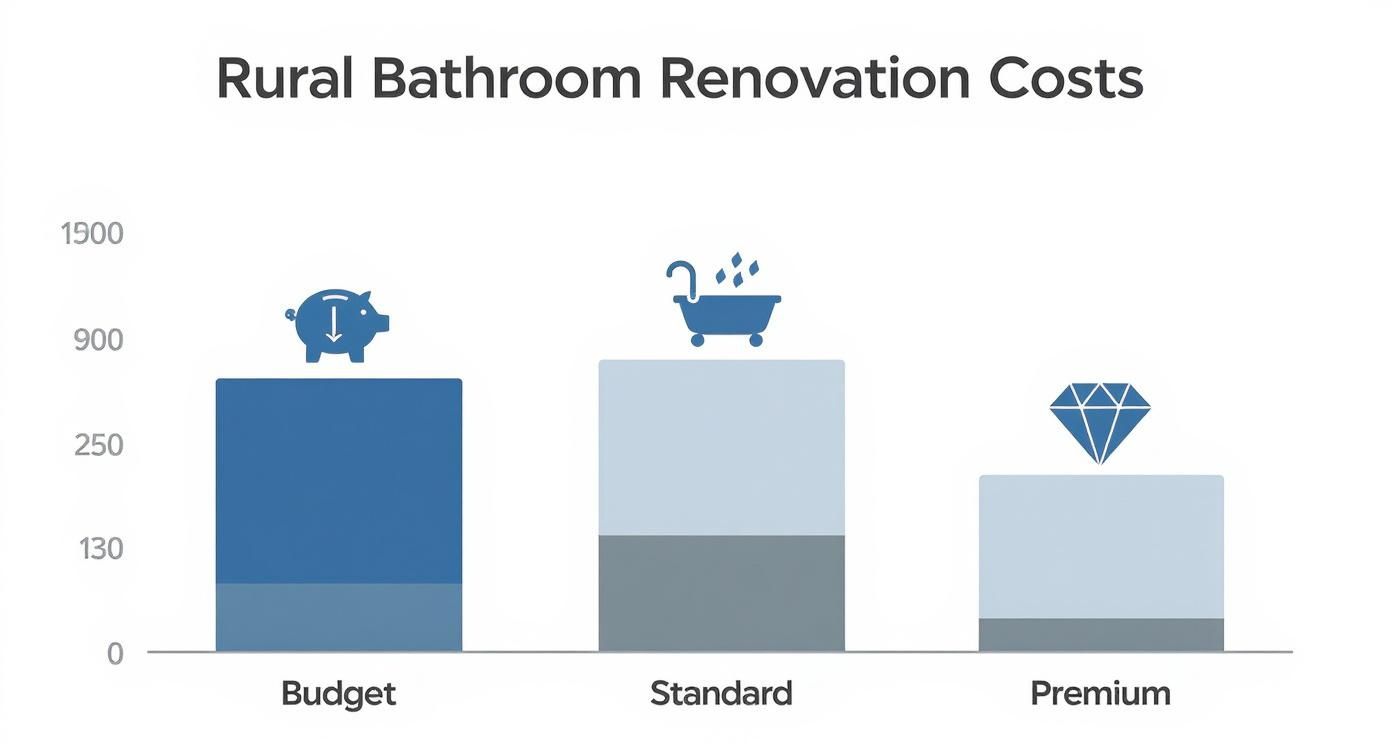
As you can see, the investment for each tier is substantial. This is a direct result of combining specialised labour costs with the unique logistical challenges that come with any rural project.
Fixtures, Fittings, and the Final Finish
Now for the fun part. This section of your quote covers all the tangible items that bring your new bathroom to life—the things you can see and touch. The choices you make here have a massive impact on the final bathroom renovations cost, and it’s not just the sticker price of the item itself.
For example, a basic, functional toilet might set you back $800–$2,000, while a high-tech smart toilet can easily be $6,000–$8,000. Vanities can range from $2,000 for a simple flat-pack to over $16,000 for a custom-built piece. And bathtubs? They can go from a $3,200 acrylic model to a $20,000 freestanding stone masterpiece.
The real cost of a fixture isn’t just its price tag; it’s the price tag plus the journey. A heavy stone bathtub that needs four people and special equipment to deliver and install on a remote farm can easily double in effective cost compared to the same tub installed in a Sydney suburb.
This is exactly why having a vehicle like our 10-tonne 4×4 truck is a game-changer for our projects. We can load up delicate tiles, a bulky vanity, and that heavy tub into a single, secure trip. It means we can bring in the crew, the materials, and all the gear exactly when and where it’s needed, keeping a tight rein on transport costs and making sure everything arrives on-site in one piece.
To see how these choices really stack up, have a look at our comprehensive bathroom renovation cost breakdown.
The following table provides a clear comparison of how these costs can differ between city and country projects, highlighting what we call the ‘rural premium’.
Itemised Cost Comparison Urban vs Rural NSW
| Renovation Component | Typical Urban Cost | Estimated Rural Cost | Reason for Difference |
|---|---|---|---|
| Plumbing Labour (per day) | $800 – $1,200 | $1,600 – $2,400 | Travel time, fuel, accommodation, and higher demand for skilled trades. |
| Material Delivery (per pallet) | $100 – $200 | $600 – $1,400+ | Freight carrier surcharges for remote postcodes; potential need for specialised vehicles. |
| Waste Removal (skip bin) | $300 – $500 | $1,200 – $2,000 | Longer travel distances to the nearest waste management facility. |
| Waterproofing (per sqm) | $40 – $60 | $120 – $180 | Certified trades charge a premium for travel and time away from metro jobs. |
This side-by-side view really drives home the point: building in the country simply requires a different budget and logistical plan.
The Labour Component Explained
Labour is almost always one of the biggest chunks of your renovation budget. In a rural setting, that figure covers more than just the hours a tradie spends on the tools at your place. It also includes:
- Travel Time: Paying skilled tradespeople for the hours they spend driving to and from your property is standard. A two-hour round trip each day adds up very quickly over a two or three-week project.
- Specialised Skills: A great tiler, plumber, or waterproofer is worth their weight in gold, and they know it. To get them to commit to a remote project often means paying a premium that makes it worth their while to turn down more convenient city jobs.
- Project Management: This isn’t just an admin fee. It covers the crucial, and often complex, job of coordinating every single trade, material order, and delivery. It’s the glue that holds the project together, and it’s ten times harder when you’re juggling rural logistics.
Understanding these factors helps explain why a quote might look a bit intimidating at first glance. It’s simply a transparent calculation of the real time, skill, and resources needed to get the job done right, no matter how far down the dirt road you are.
The Hidden Costs Lurking in a Rural Renovation
When you get a quote for a new bathroom, it’s easy to focus on the obvious things like tiles and taps. But in any renovation, especially out in the bush, some of the biggest costs are the ones you don’t see coming. These variables can hide in plain sight and have the power to add thousands to your final bill if you’re not ready for them.
Getting a handle on these potential budget-blowers is the key to planning a renovation that doesn’t end in a nasty financial surprise.
Getting to You: The Real Cost of Property Access
For properties scattered across rural New South Wales, the single biggest wildcard is often property accessibility. This isn’t just about your postcode; it’s about the physical journey from the main road to your front door. A long, unsealed driveway, a washed-out creek crossing after a storm, or a steep, boggy track can turn a standard delivery into a major logistical headache.
When a regular delivery truck can’t get to your site, the costs start climbing fast. Every hour tradespeople spend wrestling with a difficult access route is another hour on your labour bill. This is where you start needing specialised equipment, which isn’t just a nice-to-have, but a flat-out necessity.
To tackle this exact problem, we invested in a purpose-built 10-tonne 4×4 truck. It’s a beast, designed to haul all the labour, materials, and gear needed for your job, no matter how remote. It’s our answer to the tricky driveways and challenging properties all over regional NSW.
- Keeping Things Moving: A muddy track can halt a project for days, costing you a fortune in lost time and rescheduled trades. Our 4×4 capability means we push through when others are stuck, keeping your renovation on schedule.
- Protecting Your Gear: Delicate materials like tiles and vanities are far less likely to be damaged when they’re secured in a single vehicle built for rough terrain, instead of being manhandled by multiple couriers.
- Smarter Deliveries: By bringing everything in one go, we cut down on the multiple, small, and often expensive deliveries from suppliers who charge a hefty premium for difficult access.
This proactive approach turns a potential budget-breaker into just another managed part of the project.
What Lies Beneath: Structural Surprises and Unforeseen Problems
The moment demolition starts, your bathroom can reveal secrets that nobody could have possibly predicted. These are the classic “unknowns” of renovating, and they tend to be more common in older farmhouses and rural homesteads.
Here are a few common discoveries that can send costs soaring:
- Hidden Water Damage: A slow, silent leak from an old shower can rot out floor joists and wall frames. Fixing this kind of structural damage can easily cost $4,000 to $10,000 or more.
- Outdated Plumbing or Wiring: Old galvanised pipes or ancient, non-compliant wiring are major red flags. They have to be replaced to meet current Australian Standards—a non-negotiable safety fix that adds serious plumbing and electrical costs.
- Asbestos: If your home was built before 1990, there’s a good chance it contains asbestos. Finding it in wall sheeting or old flooring means calling in licensed professionals for safe removal, which can add $4,000 to $8,000 to the demolition phase alone.
It’s smart to set aside a contingency fund of at least 15-20% of your total project budget. This isn’t for upgrading your tapware on a whim; it’s a crucial safety net for dealing with these expensive, unavoidable issues without derailing the whole renovation.
Red Tape and Your Taste in Tiles
Finally, the less exciting but equally important factors are council compliance and your choice of finishes. Navigating local council regulations in regional areas can sometimes be tricky, especially if you’re moving walls or changing the building’s footprint.
And, of course, the materials you choose have a direct and immediate impact on the price tag. Opting for high-end natural stone over standard ceramic tiles, or commissioning a custom-made hardwood vanity instead of buying one off the shelf, will add significantly to the budget. While these selections create a stunning result, it’s vital to balance your dream aesthetic with a realistic financial plan from day one.
By understanding these hidden factors, you can walk into your rural renovation with your eyes wide open, ready for the unique challenges—and costs—that come with the territory.
Solving Rural Logistics with Our 4×4 Truck
When you’re renovating a bathroom on a rural property, the single biggest thing that drives up the cost isn’t the tiles or the tub—it’s logistics. It’s the invisible challenge that touches every part of the job, from labour costs to delivery fees. Getting the right people, the correct materials, and all the necessary gear out to a remote site safely and on time is the make-or-break part of any regional project.
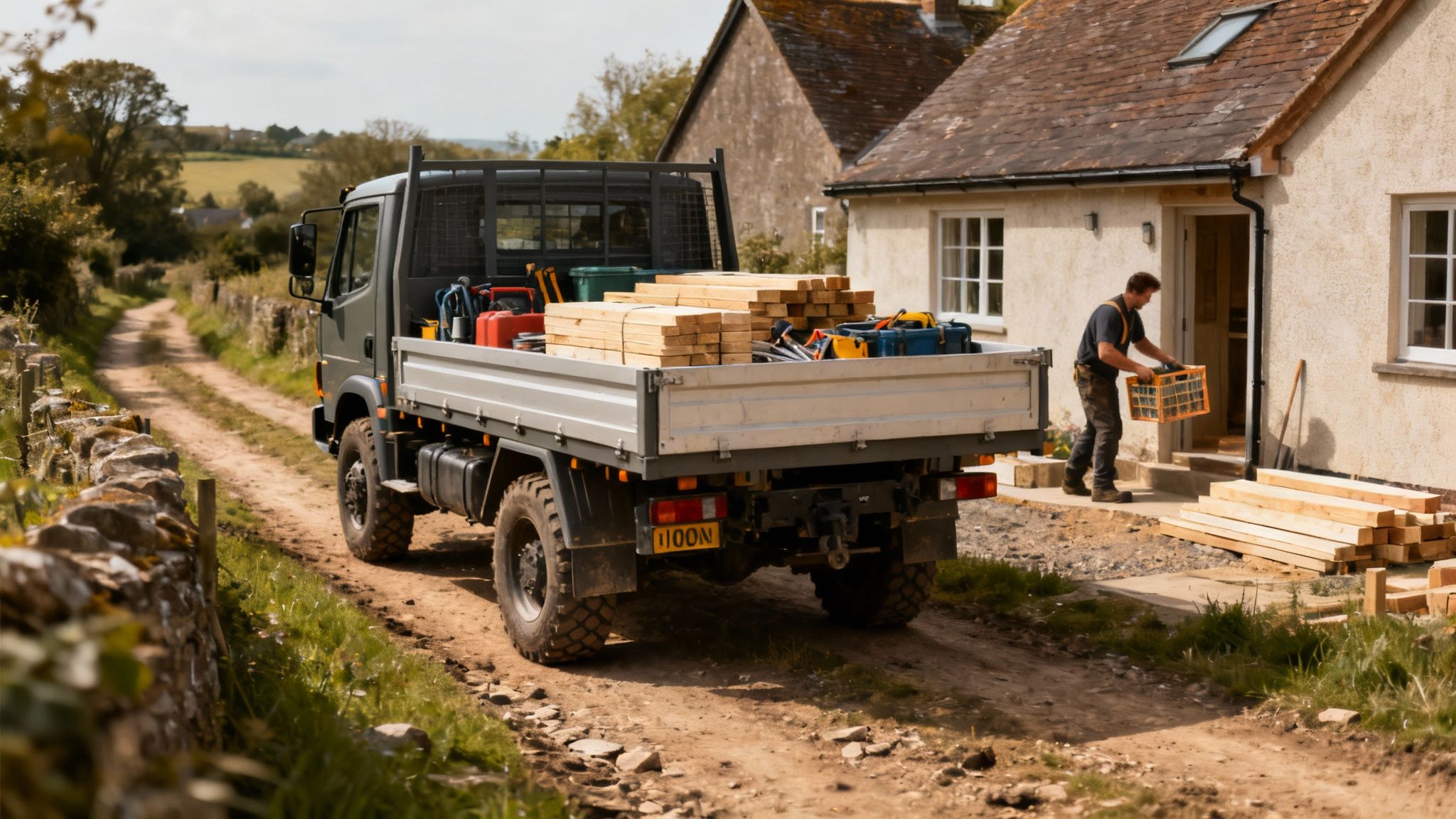
We’ve seen too many rural jobs grind to a halt because they’re relying on a messy patchwork of different couriers, local suppliers who don’t have what’s needed in stock, and individual tradies making long, separate trips. It’s just not efficient, and it gets expensive fast. A delayed pallet of tiles can put the entire project on hold for days, but you’re still paying for trades who are on-site with nothing to do.
This is exactly why we invested in our own purpose-built solution: a 10-tonne 4×4 truck. It’s much more than just a way to get from A to B; it’s our mobile logistics hub, designed specifically to smooth out all the usual bumps in the road for a remote build.
A Mobile Command Centre for Your Renovation
The best way to think of our truck is as a rolling warehouse and crew transport combined. It’s the key to how we can deliver city-quality renovations in some of the most challenging rural spots across New South Wales. With this one piece of equipment, we can bring our team, your materials, and all our tools exactly where and when they need to be.
This completely changes the game for managing a remote project. It means we can:
- Consolidate All Deliveries: We load up everything for your job in one go—from the bathtub and vanity right down to the last box of tiles and bag of grout. This instantly cuts out the cost and headache of trying to coordinate multiple deliveries from different suppliers.
- Transport the Entire Crew: Our skilled team travels together. Everyone arrives on-site at the same time, ready to get started, which means no wasted hours waiting around for individual tradies to finish their long drives.
- Ensure Material Safety: Fragile items like large-format tiles, custom vanities, and glass shower screens are packed and secured properly for the journey over rough country roads. This drastically cuts down the risk of costly breakages.
Overcoming Access and Supply Chain Hurdles
Trying to rely on suppliers in smaller regional towns can be a real roll of the dice. They often carry limited stock, and special-order items can have frustratingly long lead times that push your project out by weeks. We solve this problem by sourcing everything directly from major suppliers and bringing it all with us.
Our 4×4 truck is our guarantee against logistical failure. It ensures that unsealed roads, creek crossings, or a lack of local stock won’t derail your renovation schedule or inflate your budget with unforeseen delays and freight charges.
This approach gives us complete control over the supply chain. We’re not left waiting on third-party freight companies or hoping a local store has what we need. Even if you’re tackling a more compact space, getting the logistics sorted is vital. For some tips on managing smaller projects effectively, feel free to explore our guide to small bathroom renovations ideas.
At the end of the day, our truck is our commitment to running an efficient job. It’s how we handle the biggest risks in rural construction, making sure your project stays on track and on budget. By solving the logistics puzzle right from the start, we can focus on what really matters: building you a high-quality, beautiful bathroom that will last, no matter how far off the beaten path you are.
How to Plan Your Renovation Budget and Timeline
Good planning is what separates a smooth, successful rural renovation from a project that spirals into a stressful, budget-blowing nightmare. When you’re dealing with the unique challenges of a remote New South Wales property, mapping out your bathroom renovations cost and timeline is absolutely critical. This isn’t just about picking out nice tiles; it’s about being strategic with your money, time, and logistics from the get-go.
Think of a solid plan as the compass for your project. It guides every decision, helps you see potential roadblocks before you hit them, and makes sure everyone—you and your building team—is on the same page about what’s getting done, when, and for how much.

Building Your Rural Renovation Budget
The first step is getting brutally honest about the numbers. Rural bathroom renovations simply demand a bigger budget than their city cousins, mostly because of the logistical realities we’ve already covered. Your budget has to account for every single piece of the puzzle, from the first sledgehammer swing to the final coat of paint.
To give you a clearer picture, here’s a sample budget for a standard mid-range renovation out in the country. You’ll notice the costs are often double what you’d expect to see in a metro area.
Sample Budget: Mid-Range Rural Bathroom ($100,000)
| Item | Percentage of Budget | Estimated Cost |
|---|---|---|
| Labour | 45% | $45,000 |
| Fixtures & Fittings | 20% | $20,000 |
| Tiling (Materials & Labour) | 15% | $15,000 |
| Waterproofing | 5% | $5,000 |
| Logistics & Waste Removal | 5% | $5,000 |
| Contingency Fund | 10% | $10,000 |
This breakdown really shines a light on how much labour and logistics contribute to the total cost of a rural project. To keep things from getting out of hand, it’s a good idea to track job progress and costs closely as you go.
The Unskippable Contingency Fund
No matter how meticulously you plan, renovations have a way of digging up surprises—especially in older country homes. This is why a contingency fund of 15-20% of your total budget isn’t just a good idea; it’s non-negotiable. This isn’t “extra” cash for fancy upgrades; it’s your safety net for the unexpected.
Think of your contingency fund as project insurance. It’s the money set aside for dealing with nasty surprises like hidden water damage, an unexpected asbestos discovery, or the access road getting washed out after a big storm. These are all very real possibilities on rural properties.
Without this buffer, one unforeseen issue could derail your entire project, forcing you to cut corners on finishes or, even worse, put everything on hold. Factoring it in from day one is the smartest financial decision you’ll make.
Mapping Out a Realistic Project Timeline
In renovations, time really is money, and that’s especially true when you’re working remotely. Delays don’t just push back your finish date; they add real costs through extended labour charges and potential accommodation fees for your tradies.
A typical timeline for a rural bathroom renovation usually follows a path like this:
- Week 1: Site setup, demolition, and the initial rough-in for plumbing and electricals.
- Week 2: Any structural repairs that pop up, followed by sheeting and crucial waterproofing.
- Week 3: Tiling the floors and walls.
- Week 4: Grouting, fitting the new cabinetry, and installing the main fixtures (toilet, vanity, bath).
- Week 5: The final fit-off for plumbing and electrical, painting, and putting in accessories.
- Week 6: The final clean, silicone sealing, and the official project handover.
Of course, this schedule is always at the mercy of the weather and material availability. Our ability to bring everything—labour, materials, and equipment—on our 10-tonne 4×4 truck is a massive advantage here, as it helps us sidestep many common delays and keep the job moving along.
At the end of the day, a successful project comes down to having the right partner. Before you sign on the dotted line, it’s vital to ask the right questions. For a complete list of what to ask potential contractors and other expert advice, check out our comprehensive guide to bathroom renovations. A solid plan paired with a capable, well-equipped team is your formula for a great result.
Is a Rural Bathroom Renovation a Good Investment?
After looking at the costs involved in a rural bathroom renovation, it’s fair to ask: is it actually worth it? The answer is a resounding yes, for two key reasons. In a regional property market, a high-quality, modern bathroom isn’t just a nice-to-have; it’s a powerful asset that can seriously lift your property’s appeal and, ultimately, its sale price.
But beyond the balance sheet, there’s the immediate ‘lifestyle ROI’. This is the day-to-day value you get from a bathroom that finally works properly, feels comfortable, and is built to withstand the rigours of country life. It’s the difference between putting up with a tired, frustrating space and actually enjoying the start and end of your day.
Financial Return in a Rural Market
In rural New South Wales, a tastefully renovated bathroom really stands out. When a potential buyer or a property valuer walks through, they see it as a clear sign of a well-maintained homestead, which immediately adds to its perceived value.
Unlike city markets, which can be flooded with renovated homes, a quality update in the country can be the single feature that sets your property apart from the rest. It’s a smart financial move, and it’s a trend that’s growing as more homeowners choosing to renovate instead of relocating see the long-term benefits. This mindset shifts the expense from being just a cost to being a direct investment back into your property’s equity.
Investing in Your Quality of Life
The financial upside is compelling, but the improvement in your daily life is something you can’t put a price on. A rural renovation is an investment in your own comfort and routine, solving those long-standing annoyances and creating a space that genuinely serves you and your family.
Think about the immediate pay-offs:
- Better Functionality: No more wrestling with a leaky shower, squinting under poor lighting, or navigating a layout that just doesn’t make sense.
- Improved Safety and Durability: A professional job sorts out the hidden dangers like old wiring or failing waterproofing, giving you peace of mind for years.
- Daily Enjoyment: It’s about having a clean, modern, and relaxing space that adds a bit of comfort to the demands of rural living.
Investing in your homestead isn’t just about getting it ready for a future sale; it’s about making your life better right now. The investment you make in a rural renovation pays you back every single day through improved comfort, safety, and function.
When it comes down to it, a bathroom renovation is a dual investment. It strengthens your property’s financial position while immediately making your day-to-day life that much better—a genuinely worthwhile project for any rural homeowner.
Your Rural Renovation Questions Answered
Embarking on a renovation project in a more remote part of New South Wales is a different ball game compared to a city build. It’s completely normal to have questions about how it all works and what to expect with costs. Let’s tackle some of the most common queries we get from property owners out this way.
Why Does It Cost More to Renovate in Rural NSW?
It really boils down to two things: logistics and labour. Getting materials, specialised tools, and heavy equipment out to a property over long distances—sometimes on less-than-perfect roads—adds a significant cost right from the start. On top of that, skilled tradies need to be compensated for what can be hours of travel time to and from your site each day.
There’s also the simple fact that you have fewer suppliers and trades competing for work in regional areas, which naturally influences pricing. We have a 10 tonne 4×4 truck to bring in materials and supplies for the most remote properties around New South Wales. This allows us to bring in labour, materials and equipment where and when it’s needed the most, helping us control those logistical overheads and keep the project moving efficiently.
How Long Will My Remote Bathroom Renovation Actually Take?
You can generally expect a standard rural bathroom renovation to take between four to six weeks. This is often a bit longer than a similar job in the city.
We build this extra time into the schedule to account for the realities of rural work—things like potential delays in material deliveries, the daily travel for our team, and even unpredictable weather that can affect access to the property. We map out a detailed project schedule from day one to keep downtime to an absolute minimum and manage the timeline as tightly as possible.
Our 10-tonne 4×4 truck is a key part of our strategy to minimise delays. By bringing everything required for the job in one go, we reduce our dependency on local supply chains and third-party couriers, which helps keep your project on schedule.
Can I Save Money by Supplying My Own Materials?
It’s a tempting thought, but from our experience, supplying your own materials often creates more problems than it solves and can end up costing you more in delays and stress. We always recommend letting us handle the sourcing and supply for everything. We have long-standing relationships with our suppliers, which means we can get durable, quality products that we know are right for rural properties and, crucially, we can manage the complex delivery logistics.
When clients source their own items, a few common headaches tend to pop up:
- The Wrong Fit: Ordering a tap that’s the wrong size or plumbing fittings that aren’t compatible can bring the entire project to a grinding halt for days while you sort it out.
- Delivery Nightmares: Juggling freight and couriers to a remote address is often a difficult and unpredictable process.
- Warranty Woes: If a product you’ve supplied turns out to be faulty, the responsibility—and the cost of replacing it—lands squarely on your shoulders, not the builder’s.
At the end of the day, our coordinated approach using our trusted network of suppliers is almost always the more cost-effective and seamless way to keep your renovation on track.
Ready to tackle your homestead renovation with a team that truly understands the challenges of working rural? Awesim Building Contractors has the experience and equipment to get the job done right. Contact us today for a consultation.