Choosing the right builder is easily the most critical part of your bathroom renovation. This is especially true when you’re in rural New South Wales, where the logistics alone can make or break a project. The person you hire will ultimately dictate the quality, timing, and budget, so finding a pro who gets the unique challenges of regional properties is non-negotiable.
Let’s walk through how to get this right.
Starting Your Rural Bathroom Renovation Journey
Kicking off a bathroom renovation in a regional or remote part of NSW is exciting, but it’s a different beast to a city job. Getting materials on-site, juggling tradies, and even just managing access can become major headaches if you haven’t planned for them. A great project doesn’t start with demolition; it starts with a rock-solid plan and a builder who knows the realities of rural construction.
Before you do anything else, get clear on why you’re renovating. Are you looking to:
- Add value to your home? A beautiful, modern bathroom is a huge drawcard for buyers.
- Improve the layout? Maybe the current setup just doesn’t work, or you need to add accessibility features for the future.
- Just want a fresh look? Tossing out dated fixtures and finishes can make a world of difference to your daily life.
Overcoming the Tyranny of Distance
The biggest hurdle for any rural renovation is logistics. Simple as that. Finding a builder who can reliably service your property is the first, and most important, box to tick. A lot of contractors just aren’t set up to deal with the unsealed roads, creek crossings, and sheer distances that are part and parcel of life in regional NSW.
This is where having the right gear becomes absolutely essential.
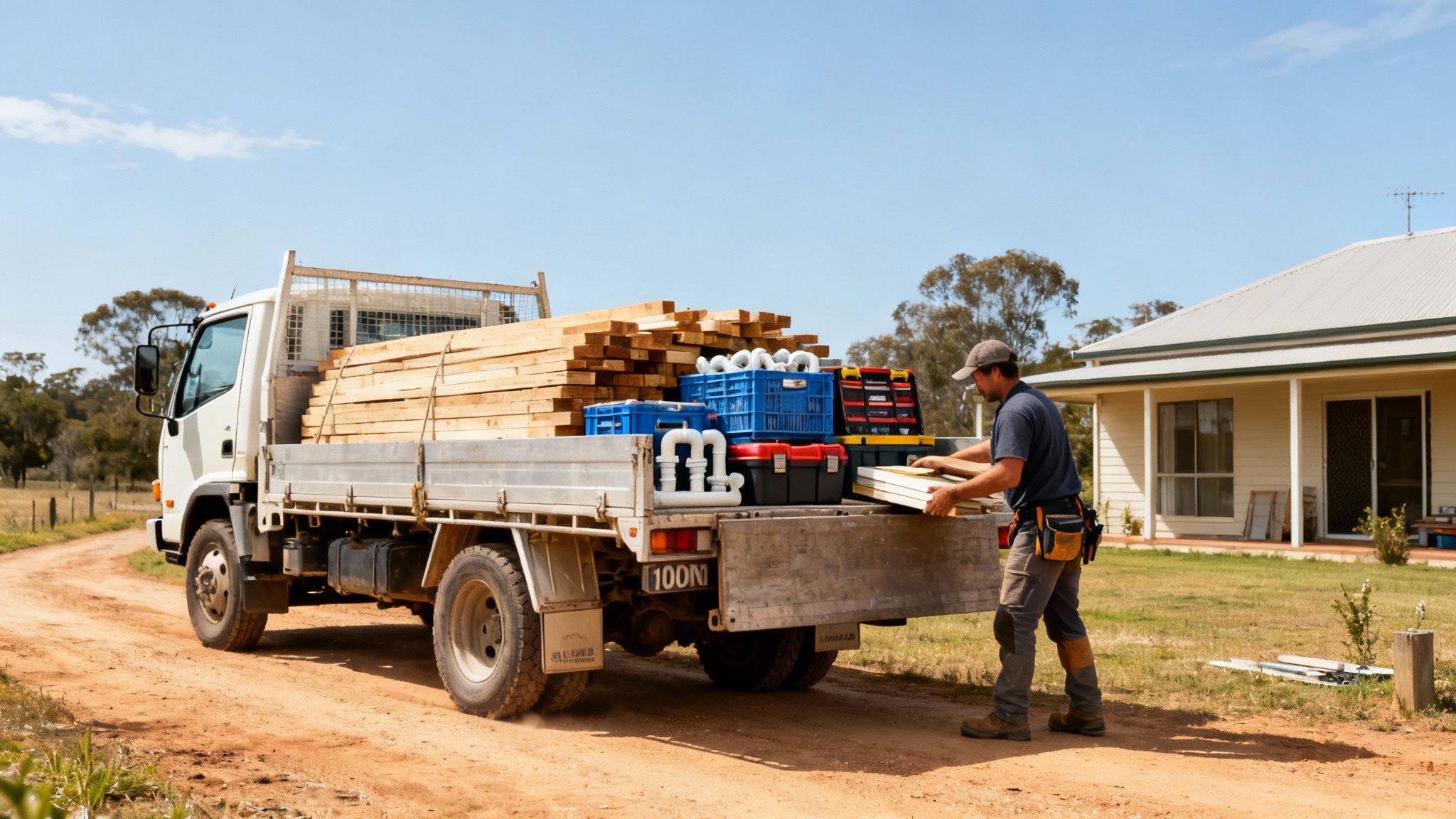
We saw this problem time and again, which is why we invested in a 10-tonne 4×4 truck. It’s our solution to the distance challenge. This beast of a vehicle lets us haul all the labour, materials, and equipment we need to even the most isolated properties across New South Wales. It means we get everything—and everyone—on-site, on time, without the usual delays.
Having that kind of capability turns a logistical nightmare into a smooth operation. Instead of stressing about how your tiles and vanity will even get to your front door, you can focus on the fun stuff.
To help nail down your vision before you even start talking to builders, it’s worth playing around with different design ideas. You can find some amazing inspiration using AI-powered bathroom design tools to see how different layouts and styles might look in your space.
At the end of the day, a successful rural bathroom reno comes down to partnering with someone who not only knows their trade but has also mastered the unique challenges of the region. That’s how you ensure your project is a rewarding experience from the first sketch to the final polish.
Setting a Realistic Bathroom Renovation Budget
Let’s talk money. Nailing down a clear, realistic budget is the single most important step you’ll take before any work begins on your bathroom. This isn’t about guesswork; it’s about understanding what drives costs and making sure your vision aligns with your wallet. A solid financial plan empowers you and your builder to make smart decisions and get the best possible result for your investment.
First things first, no two renovations are the same. A simple cosmetic refresh—think new paint, tapware, and a vanity—is a world away from a full-gut renovation where walls and plumbing are being moved. Each path has a very different price tag.
Understanding Bathroom Renovation Tiers
So, what should you expect to spend? Industry figures for 2025 give us a pretty clear picture of the typical spending brackets in Australia. A basic facelift usually falls between A$5,000 and A$15,000. For a more comprehensive, mid-range renovation, the average sits around A$26,747. If you’re after a high-end, luxury result with premium finishes and major layout changes, costs will start at A$35,000 and can easily climb past A$90,000.
To get a feel for what’s possible at different price points, we’ve put together a table that breaks it down.
Bathroom Renovation Budget Tiers in Australia
This table outlines the typical scope and cost you can expect for basic, mid-range, and luxury bathroom projects across the country.
| Tier | Typical Cost Range (AU$) | Common Inclusions | Best For |
|---|---|---|---|
| Basic (Cosmetic) | $25,000 – $35,000 | Like-for-like fixture replacement, new paint, updated tapware, pre-fab vanity, new toilet. No layout changes. | Investment properties, a quick refresh for selling, or updating a tired but functional space on a tight budget. |
| Mid-Range (Standard) | $35,000 – $55,000 | Full strip-out, new waterproofing, quality tiles (floor-to-ceiling), semi-frameless shower screen, mid-range fixtures, new lighting. | The most common choice for homeowners looking for a significant upgrade in both function and style that will last for years. |
| Luxury (High-End) | $55,000+ | Structural changes (moving walls), relocating plumbing, custom joinery, natural stone, underfloor heating, high-end fixtures. | Creating a “forever home” sanctuary, executing a specific architectural design, or when premium quality is the top priority. |
This gives you a solid starting point for matching your ambitions with a practical budget. If you’d like to dig deeper into the numbers, we’ve got a comprehensive bathroom renovation cost breakdown that unpacks it all.
What Really Drives the Final Cost?
Beyond those broad tiers, a few key elements will have the biggest impact on your total spend. Getting your head around these helps you decide where to save and where to splurge.
The drivers behind most renovations usually come down to a mix of adding value, improving function, or achieving a certain look—all of which have a direct line to the final cost.
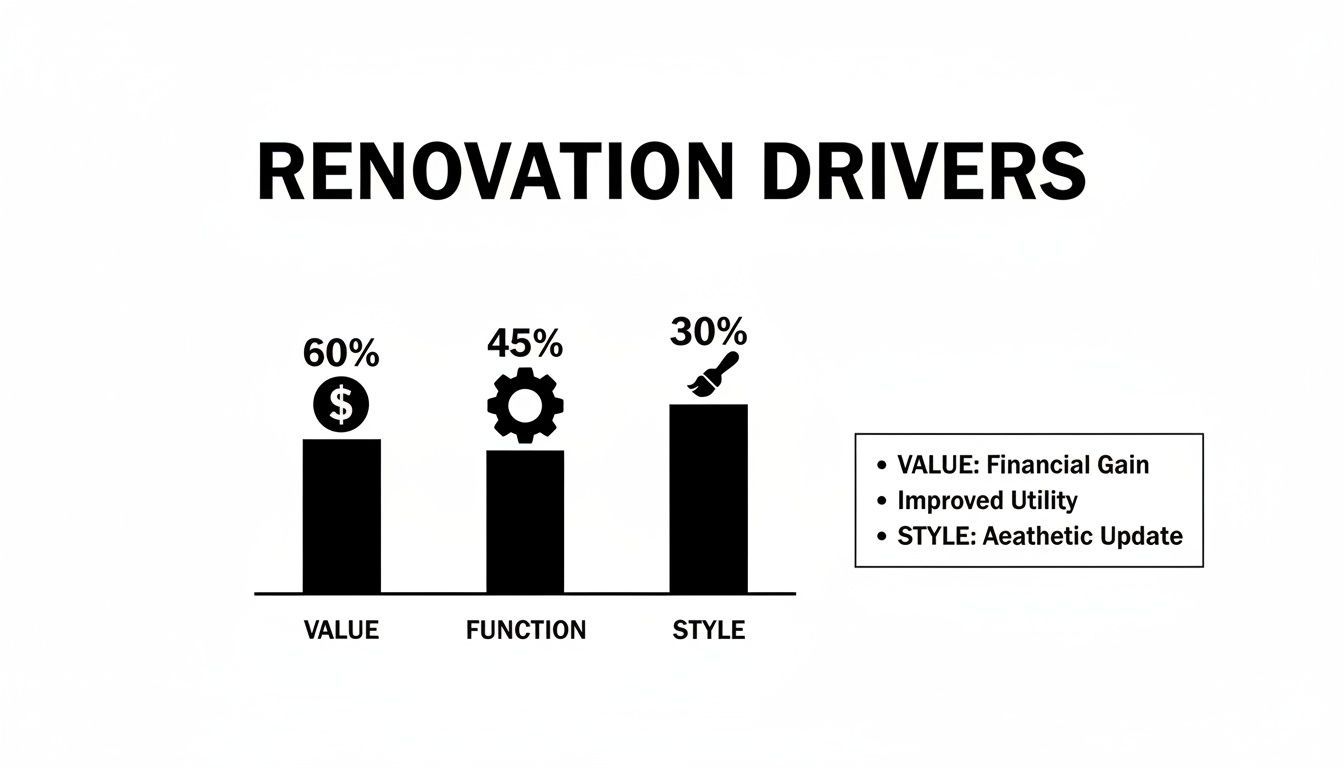
As you can see, most people are juggling these three priorities. The decisions you make here will shape your budget.
Here are the biggest variables you’ll come across:
- Labour: This is often the largest chunk of the budget, covering the expertise of your builder, tilers, plumbers, and electricians. Good people are worth every cent for a quality, compliant finish.
- Waterproofing: This is a non-negotiable. It has to be done perfectly to Australian Standards. Cutting corners here is a recipe for disaster and will cost you a fortune to fix down the track.
- Structural Changes: Thinking of moving a wall, window, or doorway? This involves engineering, permits, and a lot of labour, quickly adding thousands to your project.
- Plumbing Relocation: It’s far, far more complex to move a toilet or shower to the other side of the room than it is to simply replace the old one in the same spot.
- Fixtures and Finishes: The price gap between a basic off-the-shelf vanity and a custom-built one, or between standard ceramic tiles and imported Italian marble, is massive.
The Non-Negotiable Contingency Fund
I can’t stress this enough: for any reno, but especially in older rural homes, you absolutely must have a contingency fund. We always advise clients to set aside an extra 10-20% of the total budget to cover whatever surprises might be hiding behind the walls.
You never know what you’ll find when you open up the walls in an old farmhouse. We’ve seen everything from termite damage and ancient, faulty wiring to hidden water rot from a slow leak that’s been going for years. A contingency fund means these issues don’t derail the project or force you to compromise on the finishes you really wanted.
For a project budgeted at $30,000, that means having an extra $3,000 to $6,000 tucked away. If you get lucky and don’t need it, fantastic—you’ve got a bonus for some new towels and decor. But if a problem pops up, you’ll be incredibly glad you planned for it.
How to Find and Vet the Right Builder
Choosing the right builder for your bathroom renovation is easily the most critical decision you’ll make. This isn’t just about technical skill; it’s about finding someone who communicates clearly, manages the project smoothly, and genuinely understands the unique challenges that come with working on rural NSW properties. Your choice will directly impact the quality of the finish, the final cost, and your stress levels throughout the process.
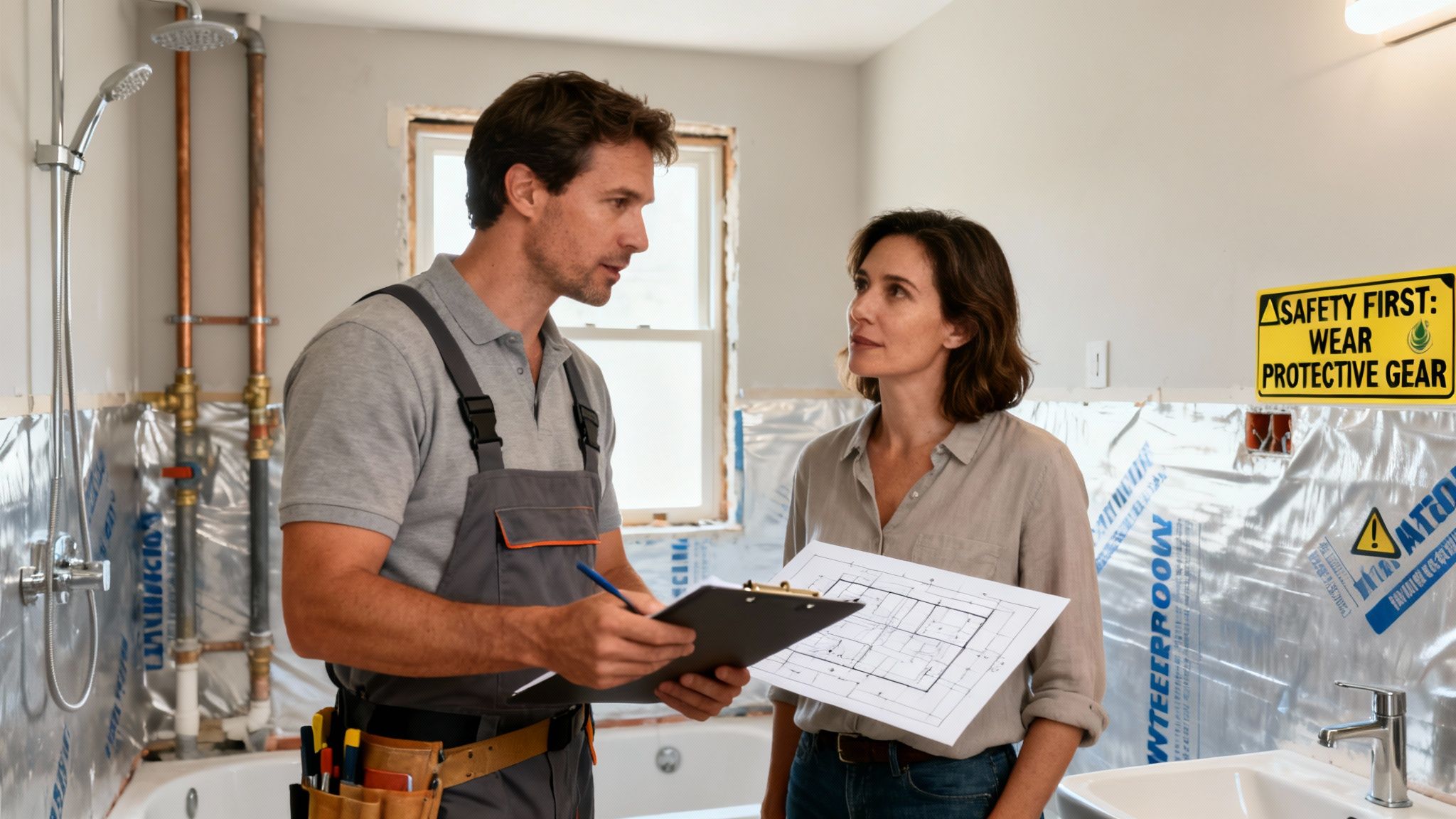
It’s a busy market out there. Bathroom projects are consistently one of the most popular home improvements in Australia, part of a massive renovation economy valued at over A$48–54 billion each year. This means good, specialist trades are always in high demand, which can influence project timelines and labour costs. Securing a reliable and professional team early on is more important than ever.
Starting Your Search for a Specialist
Your search needs to be focused. A bathroom reno is not a job for a generalist handyman. It’s a complex dance of waterproofing, intricate plumbing, and precision tiling—all areas where a small mistake can lead to huge, costly problems down the track.
The best place to start is often close to home. Word-of-mouth recommendations from friends or neighbours in your local area are pure gold. They give you a real-world picture of a builder’s workmanship, communication style, and reliability. After that, look for builders who have a professional online presence. A well-kept website showcasing a portfolio of finished bathroom projects is a good sign you’re dealing with a serious, established business.
Essential Due Diligence Checks
Once you’ve got a shortlist, it’s time to do your homework. Vetting a potential builder for a bathroom renovation comes down to a few non-negotiable checks that protect you and your investment.
- Licensing: First, and most importantly, jump onto the Fair Trading NSW website and verify their licence. A builder absolutely must hold a current and appropriate licence for the work they’re proposing. This is your number one safeguard against dodgy operators.
- Insurance: Make sure they hold all the right insurances, including Public Liability and Home Building Compensation Fund (HBCF) insurance for any project over $20,000. Don’t just take their word for it—ask to see the certificates of currency. A true professional will have them ready to go.
- Experience: Get specific. Ask them directly about their bathroom renovation experience. How many have they done? Can they put you in touch with a few past clients? A builder who specialises in bathrooms will know the critical importance of getting the waterproofing perfect and sequencing the trades correctly.
A builder’s business structure can also give you a clue about their stability and professionalism. It’s worth understanding the corporate structure for construction businesses to ensure you’re partnering with a financially sound and well-managed company.
Getting and Comparing Quotes
You should always aim to get at least three detailed quotes. A vague, one-page summary is a major red flag. A proper quote will be itemised, breaking down the costs for labour, materials, fixtures, and any provisional sums. This is the only way you can do a genuine ‘apples-with-apples’ comparison.
It can be tempting to just grab the cheapest quote, but this is often a mistake. An unusually low price can be a sign of corners being cut, sub-par materials being used, or simply an inexperienced builder who has miscalculated the job. Look at the detail and clarity of the quote and go with the builder who inspires the most confidence. For a more detailed walkthrough, our guide on https://awesim.au/how-to-choose-a-builder/ is a great resource.
The Rural Logistics Litmus Test
For anyone living in regional or remote NSW, there’s one last, vital question to ask: “How do you handle the logistics of getting materials and your team out to my property?”
Unsealed roads, tricky access, and just the sheer distance can quickly throw a project off the rails if a builder isn’t prepared. This is where you can separate the truly committed rural builders from the rest.
It’s the very reason we invested in a 10-tonne 4×4 truck. This beast allows us to bring a full crew, all the materials, and the necessary equipment to even the most isolated properties across New South Wales. It means your project stays on track, no matter how far off the beaten path you are. A builder with that sort of purpose-built capability is showing you they’re serious about servicing rural clients properly.
Solving Remote and Rural Renovation Logistics
Renovating a bathroom when you’re miles from the nearest town presents a whole different set of problems. It’s not like living in the city where you can get a delivery of tiles or have a plumber pop over in an hour. Out here in rural New South Wales, the sheer distance can make or break your project.
Just getting materials to your front door can be a logistical nightmare. Standard delivery trucks often can’t handle unsealed roads, creek crossings, or the steep, winding driveways we’re all familiar with. This leads to frustrating delays, with your essential supplies sitting in a depot far away, or worse, arriving damaged. Suddenly, your budget is blown before a single tile has been laid.
This is exactly why picking a builder for a bathroom renovation who truly understands rural work is non-negotiable. It’s about more than just their skills with a hammer; it’s about whether they have the operational muscle to handle the unique challenges of your location.
The Right Gear for Tough-to-Reach Places
You can tell a lot about a builder’s commitment to rural clients just by looking at their vehicles. A standard ute is fine for small jobs, but it’s not going to cut it when you need to haul everything for a full bathroom gut and rebuild. That logistical gap is where things often fall apart.
We ran into this problem so many times that we decided to solve it for good. We invested in a purpose-built 10-tonne 4×4 truck, and it has been a complete game-changer for our clients on remote properties across NSW. It’s not just a truck; it’s our guarantee that your project stays on track, no matter how far off the beaten path you are.
With this beast, we can bring everything we need to you in one go:
- A full crew of our best tradies, ready to get started.
- All your materials – from the timber frames and plasterboard right down to the tiles, vanity, and taps.
- The heavy-duty equipment needed for a professional finish, like demolition tools and concrete mixers.
What this means for you is that we aren’t waiting around for third-party couriers or juggling multiple small deliveries. We control the entire supply chain from our warehouse to your site.
Making Common Rural Headaches Disappear
Having the right equipment directly solves the biggest pain points of a rural renovation. It puts a specialist builder head and shoulders above one who is only geared up for town work.
Take a look at how a specialist approach tackles these common issues:
Comparing Urban vs Rural Renovation Logistics
| Logistical Challenge | Typical Issue in Rural Areas | Specialist Builder Solution (e.g., 4×4 Truck) |
| Material Delivery | Standard couriers can’t access property due to unsealed roads or creek crossings, causing delays. | 10-tonne 4×4 truck transports all materials, from timber to tiles, in a single, secure trip. |
| Labour Coordination | Tradies travel long distances, leading to high travel costs and scheduling conflicts. | An entire crew travels together, ensuring everyone is on-site and ready to work from day one. |
| Tool & Equipment Access | Bringing in heavy machinery (e.g., mixers, generators) is difficult and expensive. | All necessary equipment is loaded onto the truck, eliminating rental and third-party transport issues. |
| Waste Removal | Multiple trips are needed to take demolition waste to the tip, adding time and cost. | Demolition debris can be loaded onto the truck for efficient removal at the end of the project. |
Simply put, a builder who is properly equipped for rural work can anticipate and solve problems before they even happen.
Having our heavy 4×4 truck allows us to bring in labour, materials and equipment where and when it’s needed the most. It eliminates the logistical delays that can plague remote projects, providing genuine peace of mind and ensuring the job is done efficiently.
The difference this makes is profound. Instead of your timeline being at the mercy of unpredictable delivery companies, it’s managed by a team that’s built for the realities of rural living. Our expertise isn’t just in building; it’s in the specialised logistics that make high-quality remote projects possible. You can see how this approach works on bigger jobs by looking at our work as dedicated outback builders.
Ultimately, a successful remote reno comes down to one thing: your builder’s ability to get the right people, materials, and tools to your property on time. When you’re talking to potential builders, ask them how they plan to manage the logistics for your specific property. Their answer will tell you everything you need to know.
Choosing Materials That Balance Style and Durability
The materials and fixtures you choose now will define your bathroom for years to come. A truly successful renovation is all about striking that perfect balance between a style you absolutely love and the hard-wearing durability a wet, high-traffic area demands. It’s about picking products that not only look fantastic on day one but also perform flawlessly for the next decade.
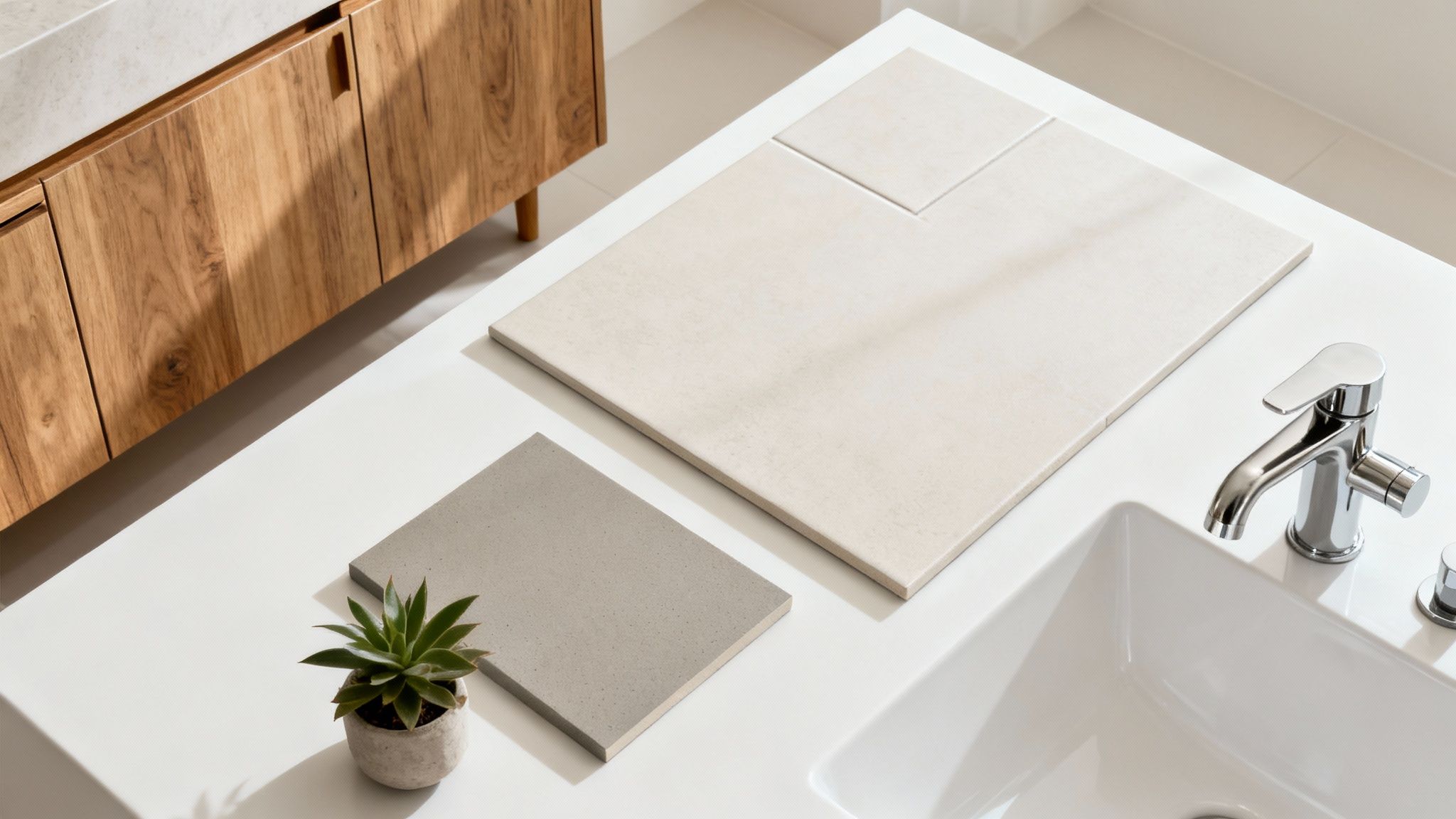
Honestly, this part is about more than just picking a nice tile. It’s about understanding the real-world pros and cons of each option—from flooring that can handle muddy boots dragged in from the paddock to a vanity that won’t swell in a humid bathroom. Making these smart, future-proof decisions now will save you from some very costly regrets down the track.
High-Impact Surfaces: Flooring, Benchtops and Vanities
Your bathroom’s main surfaces bear the brunt of daily life. They need to be tough, water-resistant, and easy to clean, all while pulling the whole aesthetic of the room together.
- Flooring: Porcelain tiles are really the gold standard here. They’re incredibly dense, highly water-resistant, and come in a staggering number of styles. While ceramic tiles are a bit friendlier on the wallet, they are more prone to chipping. If you want a warmer, more natural feel underfoot, luxury vinyl plank (LVP) is a fantastic option with excellent water resistance.
- Vanities: Think of the vanity as the centrepiece. A solid timber or high-quality plywood vanity will stand up to moisture far better than the cheaper medium-density fibreboard (MDF) options, which can swell and peel over time if they aren’t perfectly sealed.
- Benchtops: For benchtops, you can’t go past engineered stone (like Caesarstone) for a non-porous, stain-resistant, and highly durable surface. Natural stone like marble looks incredibly luxurious but needs regular sealing to stop it from staining. Laminate is the most budget-friendly choice, but you have to be careful to protect the edges from any water getting in.
One of the most common renovation regrets we see comes down to grout. Light-coloured grout on a shower floor can be a nightmare to keep clean and often ends up looking grubby. Opting for a slightly darker grey or an epoxy-based grout will make maintenance so much easier and keep your new bathroom looking fresh for longer.
Making Water Work for You: Efficient Fixtures
Beyond the big surfaces, your choice of tapware, toilets, and showerheads has a massive impact on both your daily experience and your water bills. This is where sustainability and practicality really meet.
Water efficiency has become a major focus for Australian homeowners, and for good reason. It’s not just about being eco-conscious; it’s a smart financial decision. In fact, somewhere between 40% and 72% of renovators now actively choose water-saving features. Fixtures like low-flow showerheads and dual-flush toilets can slash a household’s bathroom water consumption by an estimated 20–40%. If you want to dive deeper into what’s new, check out these 2025 bathroom renovation insights.
Decoding the WELS Star Rating
When you’re looking at fixtures, the Water Efficiency Labelling and Standards (WELS) scheme is your best mate. This government rating system makes it dead simple to compare the water efficiency of different products.
The rating couldn’t be easier to understand: more stars mean more water savings.
- A 3-star showerhead uses up to 9 litres per minute.
- A 4-star showerhead, on the other hand, uses just 6 litres per minute.
Switching to a 4-star rated showerhead can save a family of four thousands of litres of water—and the energy used to heat it—every single year. The same goes for choosing a 4-star dual-flush toilet over an old single-flush model. These small choices add up to real, long-term value, turning your new bathroom into an asset that actually pays you back over time.
Your Contractor-Ready Renovation Checklist
Walking into a conversation with a builder armed with a clear plan is the single most important thing you can do to set your project up for success. It’s not just about getting a more accurate quote; it shows you’re an organised, serious client. That kind of clarity sets a professional tone from the get-go and builds the foundation for a great working relationship.
To get you there, we’ve put together a practical checklist. Run through these points to get your thoughts in order and pull all the essential information together before you make that first call.
Define Your Project Scope
First things first, you need a crystal-clear picture of what you want to achieve. A vague idea of a “nicer bathroom” won’t cut it when it comes to getting a detailed quote. Get specific about the scale of the work you’re envisioning.
- What’s staying? Make a list of any existing elements you plan to keep, like a particular window, the toilet, or maybe the vanity.
- What’s going? Be just as clear about what needs to be removed. Is it just the old tiles, or are you gutting the entire room and changing the layout?
- What are your non-negotiables? Pinpoint your absolute must-haves. This could be anything from a walk-in shower to underfloor heating for those chilly country mornings.
Set Your Budget and Gather Inspiration
Once you have a handle on the scope, you can start matching it to your budget and your dream aesthetic. Having these details sorted makes those initial builder consultations so much more productive.
- Establish your budget range. Know your comfortable spending limit and make sure you’ve got that 10-20% contingency fund tucked away for any surprises.
- Create a visual mood board. Start collecting images that capture the look and feel you’re after. Pinterest is fantastic for this, but so are pages torn from magazines. A visual guide speaks volumes and helps avoid any miscommunication about style.
- List preferred materials and fixtures. If you’ve already fallen in love with specific tiles, tapware, or a vanity, write down the product names and where to find them.
A common mistake we see is homeowners forgetting to think about the logistics of the site itself, especially out in rural areas. Before a builder even comes to visit, consider the practicalities of property access. Being upfront about potential challenges is absolutely crucial.
This is where having a builder who is properly equipped for rural work really pays off. As we’ve mentioned, our 10-tonne 4×4 truck is purpose-built to handle the unique terrain and access issues of remote properties across New South Wales. It means we can get labour, materials, and equipment on-site exactly when they’re needed, ensuring your project isn’t held up by logistical hurdles that would stump a less-prepared team.
When you present a builder with this kind of comprehensive brief, you’re not just asking for a price—you’re showing you’re ready to be a great partner in the process.
Got a Few Questions?
When you’re thinking about renovating, a few practical questions always pop up. Here are some straight-shooting answers to the queries we hear most often from homeowners across rural New South Wales.
How Long Will My Bathroom Be Out of Action?
Look, a standard bathroom renovation, from the moment we start swinging hammers to the final polish, usually takes about three to five weeks.
But a few things can stretch that out. Sometimes we pull up old tiles and find some nasty water damage that needs sorting out first. Other times, big changes to plumbing or electrical wiring add a few days. The complexity of your design matters too – a simple, clean layout with standard fittings is quicker than, say, a feature wall of intricate herringbone tiles and a custom-vanity.
We’ll always give you a detailed schedule upfront, so you’ll know exactly what’s happening and when.
Can We Stay in the House While You Work?
Absolutely. Most people do. We’re very mindful that we’re working in your home, not just a job site.
Our team goes to great lengths to contain the mess. We use dust barriers to seal off the renovation zone from the rest of your house and make sure we leave things tidy at the end of every single day. We’ll coordinate with you to make sure everything is as painless as possible. Just be prepared for a bit of noise and to be one bathroom down for a few weeks!
What Should I Be Looking for in a Building Contract?
Your contract is your single most important piece of paper in this whole process. Don’t just skim it – read it. It should be written in plain English, with no grey areas.
Before you even think about signing, double-check that it has these non-negotiables:
- A crystal-clear scope of work, listing every single task from demolition to tap installation.
- The total price, locked in. If it’s not a fixed price, it must clearly explain how costs are calculated.
- A payment schedule tied to project milestones (e.g., a payment after waterproofing is complete), not just random dates.
- Firm start and completion dates.
- Proof of the builder’s licence and insurance, especially their Home Building Compensation Fund (HBCF) certificate if the job is over $20,000.
Ready to start a conversation about your rural bathroom renovation? The team at Awesim Building Contractors has the experience and specialised equipment to bring your vision to life, no matter where you are in NSW. Get in touch with us today.