
So, you've heard the term 'builder restricted to kitchen, bathroom and laundry' and you're wondering what it actually means for your renovation. Put simply, this is a licensed specialist in NSW who focuses exclusively on the most technically demanding rooms in your home.
Think of them as the renovation equivalent of a specialist doctor. While a GP is great for general health, you see a specialist for specific, complex issues. Similarly, this builder has proven expertise in the unique challenges these 'wet areas' present—from intricate waterproofing to managing a whole team of trades—without needing the broader, more structural focus of a full builder's licence.
Getting to Grips with the Restricted Builder Licence in NSW
When you’re planning a renovation, figuring out who to hire can feel like the biggest hurdle. The role of a 'builder restricted to kitchen, bathroom, and laundry'—often just called a KBL builder—is one of the most important to understand.
This licence category was created by NSW Fair Trading for a very practical reason. Renovating kitchens, bathrooms, and laundries is about much more than picking out nice tiles and taps. It requires a deep technical knowledge of waterproofing, ventilation, drainage, and integrating complex plumbing and electrical systems correctly and safely.
A KBL-restricted builder is your project manager for these specific jobs, fully qualified to oversee the entire renovation from demolition to the final polish.
Why Does This Specialisation Matter?
Hiring a specialist isn't just a nice-to-have; it's about protecting your home and your investment. When you choose a dedicated KBL builder, you’re getting someone who lives and breathes wet area renovations.
Here’s what that means for you:
- Deep Expertise: They know exactly which materials and techniques stand up to the constant moisture and heavy use in these rooms.
- Seamless Project Management: They're licensed to coordinate all the other trades needed—plumbers, electricians, tilers, waterproofers—so you don't have to juggle multiple contractors.
- Guaranteed Compliance: They are across all the specific building codes and Australian Standards that govern these spaces, which helps you avoid defects, future headaches, and costly rework.
This is why a KBL builder is the perfect choice when you want to gut and remodel these specific rooms without knocking down structural walls or changing the footprint of your home.
Let's take a quick look at how their scope compares to a full builder.
Restricted Builder vs Full Builder At a Glance
This table breaks down the key differences in what each type of licence holder can legally take on in NSW.
| Project Type | Builder Restricted to Kitchen, Bathroom, Laundry | Full General Builder |
|---|---|---|
| Complete Kitchen Renovation | Yes – Can manage the entire project. | Yes – Also qualified. |
| Bathroom & Ensuite Remodel | Yes – Their core specialisation. | Yes – Also qualified. |
| Internal Laundry Fit-out | Yes – Can design and construct. | Yes – Also qualified. |
| Removing an Internal Wall | No – This is structural work. | Yes – Requires a full builder. |
| Building a Home Extension | No – Major structural building. | Yes – Their primary scope. |
| Constructing a New Home | No – Way outside their licence scope. | Yes – The only choice for this. |
As you can see, the KBL licence is tailored perfectly for internal wet area work, while anything structural requires stepping up to a full general builder.
Bringing City-Quality Renovations to Regional NSW
Living on a farm or a regional property shouldn't mean compromising on quality. We know first-hand that renovating in rural New South Wales comes with its own set of logistical hurdles, from getting materials delivered to finding available trades.
That’s why we’ve invested in our own 10 tonne 4×4 truck. This isn't just a delivery vehicle; it's our mobile command centre, allowing us to bring in labour, materials, and equipment where and when it's needed the most for the most remote properties around New South Wales. It means we can ensure that no location is too remote or too difficult for us to service.
So, What Can a KBL Restricted Builder Actually Do?
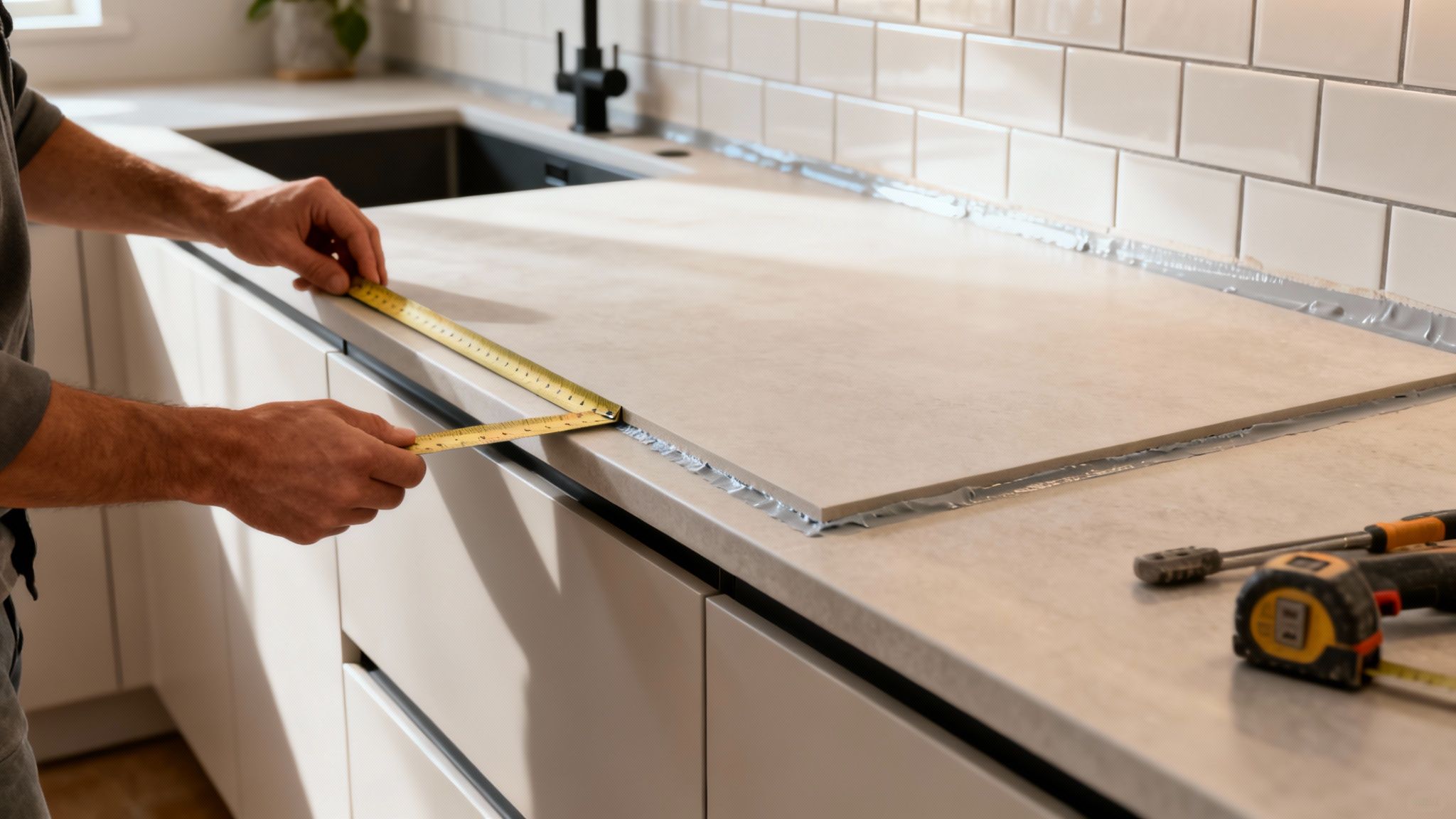
Alright, let's get down to the brass tacks. You've heard the term, but what jobs can a builder with a kitchen, bathroom, and laundry (KBL) restriction legally take on? Getting your head around their scope of work is the key to hiring the right professional and making sure your project runs smoothly from day one.
Think of a builder restricted to kitchen bathroom and laundry as the specialist project manager for these vital "wet areas." Their licence gives them the legal authority to contract for the job, coordinate the whole renovation, and supervise all the work inside these specific rooms, making sure every detail meets Australian Standards.
This authority is a big deal. It means you get a single point of contact who is responsible for bringing in and managing all the other licensed trades—your plumbers, electricians, and tilers. They're the conductor of the orchestra, ensuring every trade plays its part perfectly and in the right sequence.
Core Capabilities and Permitted Work
The skillset of a KBL builder is both broad and deep, covering everything involved in a wet area renovation from start to finish. They aren’t just a coordinator; they’re often hands-on experts in many of the crucial installation tasks that bring these spaces to life.
Here’s a practical look at the jobs they can legally handle:
- Complete Demolition: Safely stripping out the old cabinetry, tiles, fixtures, and even non-structural walls within the designated room.
- Cabinetry and Benchtop Installation: Expertly fitting and installing all your joinery, from custom-made cabinets to stone or laminate benchtops.
- Certified Waterproofing: Applying the compliant waterproofing membranes—a critical, licensed task—to shield your home's structure from water damage.
- Wall and Floor Tiling: Laying tiles for floors, walls, and splashbacks to create a finish that’s both durable and beautiful.
- Fixture and Fitting Installation: Installing all the final pieces like sinks, tapware, vanities, toilets, shower screens, and appliances.
The recent boom in home building and renovation has really put a spotlight on how important these specialists are. In the post-pandemic rush, the number of dwellings under construction peaked at a staggering 104,315 in early 2023. That’s a massive 48.4% jump from pre-pandemic records. At the same time, the average number of bathrooms in new homes also went up, showing just how much demand there is for expert wet area construction. You can dig into more of this data on home-building trends over at the Australian Bureau of Statistics.
Defining the Boundaries: What They Cannot Do
Knowing what a KBL builder can do is only half the picture; understanding their limitations is just as important. The "restricted" part of their licence is a firm boundary designed to protect both you and the structural integrity of your home.
A KBL builder is like a 'specialist surgeon' for your home's wet areas, expertly managing the project internally. A general builder, on the other hand, is the 'general practitioner' who oversees the entire property's structural health. The distinction is absolutely vital for compliance and safety.
A builder restricted to kitchen bathroom and laundry is prohibited from carrying out any work that's considered structural. This includes things like:
- Removing or altering load-bearing walls.
- Changing the size or location of windows and external doors.
- Building an extension or addition onto your home.
- Altering the roofline or external cladding.
If your renovation plans touch on any of these structural elements, you are legally required to hire a builder with a full, unrestricted licence. Figuring this out at the very beginning will save you from costly delays and headaches, ensuring you have the right expert for the job you need done.
Navigating Critical Building Codes and Compliance
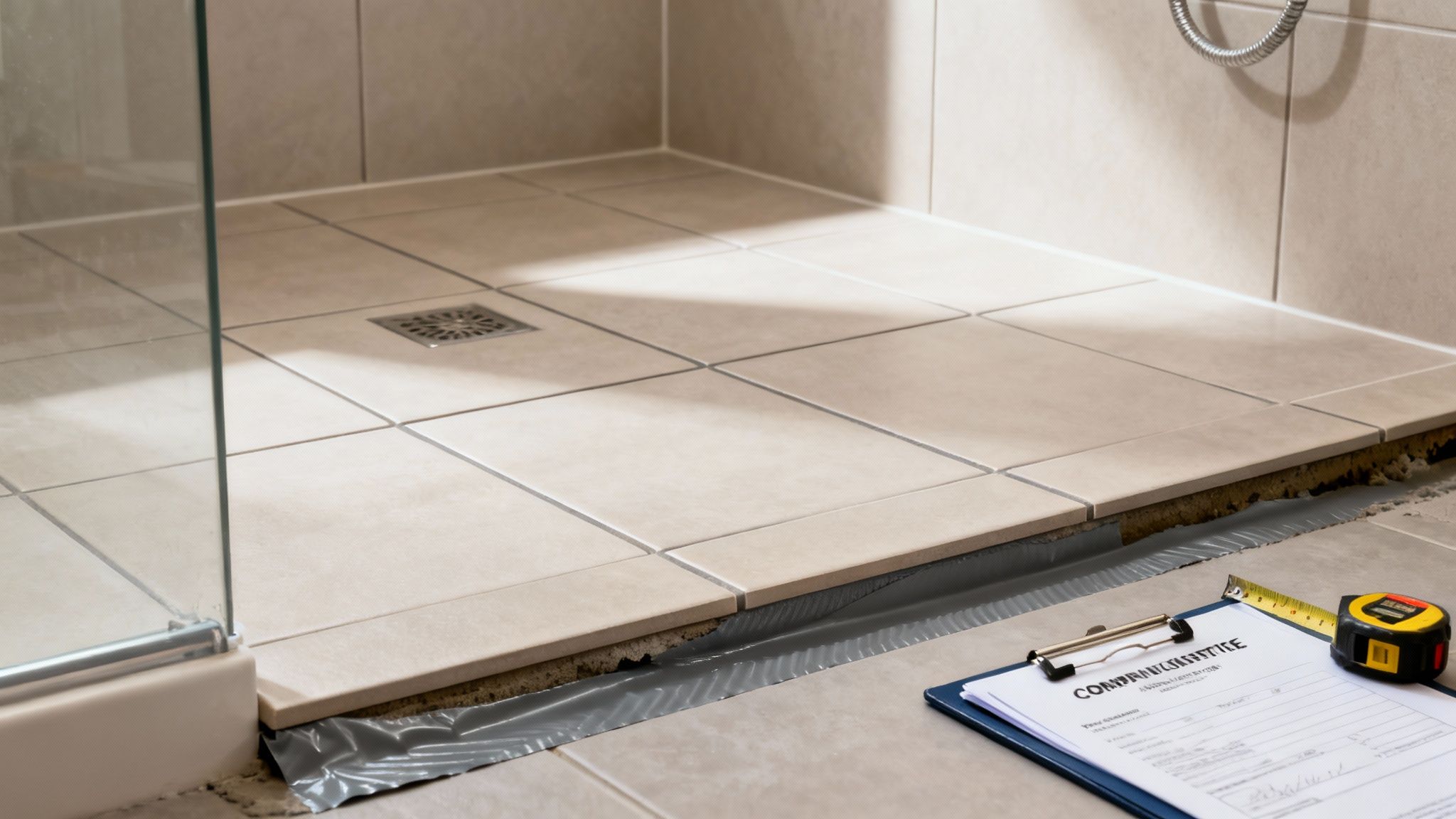
A beautiful new bathroom or kitchen is fantastic, but it's only a genuine success if it’s safe, built to last, and meets all legal requirements. When you engage a builder restricted to kitchen, bathroom and laundry work, you're placing your trust in their ability to navigate the maze of regulations governing these high-stakes wet areas.
Their job is about so much more than making things look good. It's about protecting the very structure of your home from the long-term damage that water can cause. These rules are laid out in the National Construction Code (NCC), which sets the minimum standard for building work right across Australia. For you, the NCC is your guarantee of quality and safety.
The Non-Negotiables of Wet Area Construction
In any kitchen, bathroom, or laundry renovation, some things are simply not up for debate. These are the technical details that prevent those nightmare scenarios we all dread—leaks, toxic mould, and structural rot that can silently destroy your home from the inside out.
Any builder worth their salt will have these standards down pat:
- Waterproofing (AS 3740): This is the big one. This standard details exactly how wet areas must be sealed to create a bulletproof barrier, shielding your home's timber frame and subfloor from moisture.
- Proper Ventilation: Mould and mildew thrive in damp, stagnant air. The NCC specifies exactly what’s needed—be it exhaust fans or windows—to keep air circulating and get that moisture out.
- Correct Floor Grading: Water should always know where to go: down the drain. A professional makes sure the floor has the right ‘fall’ or slope, guiding every drop away from walls and preventing it from pooling where it can cause damage.
Keeping Up With Evolving Building Standards
The National Construction Code isn’t a dusty old rulebook; it’s a living document that gets updated to keep pace with new building methods and community expectations. The most recent version, NCC 2022, brought in some significant changes that could directly affect your renovation plans.
For instance, the code now has clear requirements for accessible housing design, which might mean your reno needs to include features like a step-free shower. It also makes it mandatory for bathrooms and laundries to have a floor waste to manage water overflow. On top of that, it lays out minimum facility requirements, like having a dedicated washtub and space for a washing machine. You can dig into the specifics yourself over at the Australian Building Codes Board.
Getting your head around these rules is a crucial part of planning any successful https://awesim.au/bathroom-renovations-nsw/. It’s what protects your home’s value and makes sure it stays safe and functional for decades.
"A builder's commitment to compliance is a direct reflection of their commitment to quality. Cutting corners on building codes is not just risky—it's a sign of poor workmanship that will inevitably lead to costly defects."
Of course, a professional approach goes beyond just following the rulebook. A safe worksite is just as critical, which means having all the right gear. This is where a complete guide to safety supplies can be a great resource, as it outlines the essentials for any construction job. This dedication to both safety and compliance is what truly sets a professional apart.
Your Essential Vetting Checklist Before You Hire
Choosing the right builder is easily the biggest decision you'll make for your entire renovation. While a contractor with a specific kitchen, bathroom, and laundry licence has the right specialisation on paper, you still need to do your homework. Taking the time to properly vet them protects your investment, keeps your project on the right side of the law, and gives you real peace of mind.
Before you even think about signing a contract, you have to verify their credentials. This isn't about a gut feeling or a firm handshake; it’s a straightforward process of checking the facts. A true professional expects these checks and will be happy to prove their credibility.
Verifying Licences and Insurance
Your very first move should be to confirm their builder's licence is current and valid. Thankfully, in New South Wales, this is easy for anyone to do online.
- Check the Licence Online: Jump onto the NSW Fair Trading website and use their public register. You can search by the builder's name or licence number. Make sure the licence is active, lists the correct "Kitchen, Bathroom & Laundry Renovation" category, and doesn't have any nasty surprises like conditions or disciplinary actions against it.
- Confirm Public Liability Insurance: Ask to see a Certificate of Currency for their public liability insurance. This is what protects you if there’s accidental damage to your property or, worse, an injury to someone during the renovation.
- Verify HBCF Insurance: This one is crucial. For any residential building work valued over $20,000, your builder is legally required to provide proof of Home Building Compensation Fund (HBCF) insurance. It’s your safety net if the builder goes bust, disappears, or dies and can't finish the job or fix defects.
Never just accept a photocopy or a vague promise. Verify these details yourself, directly. A legitimate builder will gladly give you their licence number and insurance details to check. This simple step can save you from a world of financial and legal pain.
Critical Questions for Your Potential Builder
Once you've ticked off the official credentials, it's time to dig into their experience, work processes, and how they communicate. The answers you get here reveal a lot about how they run their business and if they're the right fit for you. Asking sharp questions is a vital part of choosing a great bathroom renovation builder who will actually deliver on their promises.
Before you go any further, it’s a good idea to run through a quick checklist to make sure you’re covering all your bases. The table below outlines the key steps for vetting any potential contractor.
Contractor Vetting Checklist
| Verification Step | What to Check | Why It Matters |
|---|---|---|
| Licence Verification | Check the NSW Fair Trading public register for an active licence in the "Kitchen, Bathroom & Laundry" category. | Confirms they are legally permitted to perform the specific work you need. |
| Insurance Check | Ask for a Certificate of Currency for Public Liability and proof of HBCF insurance (for jobs >$20k). | Protects you from financial loss due to property damage, accidents, or builder insolvency. |
| Portfolio Review | Look at photos of past projects and, if possible, visit a completed job. | Gives you a feel for their quality of work and style, beyond just a sales pitch. |
| Reference Calls | Speak to at least two recent clients about their experience. | Provides unbiased feedback on their communication, reliability, and problem-solving skills. |
| Contract Scrutiny | Review the contract for clear scope, payment schedule, timeline, and dispute resolution clauses. | A detailed contract prevents misunderstandings and protects both parties. |
A systematic check like this takes the guesswork out of hiring and helps you make a decision based on facts, not just feelings.
Here’s a list of essential questions to arm yourself with when you meet them:
- Experience and Portfolio: "Can you show me examples of kitchen or bathroom projects you've finished recently that are similar to mine? Would it be possible to speak with one or two of your recent clients?"
- Subcontractor Management: "Do you use your own team of tradies, or do you subcontract the plumbing and electrical? Are all your subcontractors fully licensed and insured?"
- Project Timelines: "What’s your process for putting together a project schedule? How will you keep me in the loop about progress or any potential delays?"
- Handling Unforeseen Issues: "How do you handle surprises, like finding hidden water damage or asbestos? What does your process for variations look like?"
- Logistics for Remote Properties: "What’s your experience working on regional or rural properties? How do you manage the logistics of getting materials and your team out to the site?"
That last question is a big one for anyone living outside the major city centres. At Awesim, we tackle this challenge head-on. We have a 10 tonne 4×4 truck to bring in materials and supplies for the most remote properties around New South Wales. This allows us to bring in labour, materials, and equipment where and when it's needed the most, meaning your project’s timeline isn't at the mercy of your postcode.
Servicing Remote and Regional NSW Properties
Tackling a kitchen or bathroom renovation on a regional property in New South Wales comes with a unique set of headaches. It's not just about picking out tiles and taps; it's about the sheer logistics of it all. Trying to source quality materials, line up skilled trades, and deal with long hauls down unsealed roads can quickly turn your dream project into a logistical nightmare.
The reality is, many city-based builders aren't set up for this. They might inflate their costs to cover the hassle, face endless delays, or simply say no to jobs outside the major towns. This is where a builder who truly understands the demands of rural work makes all the difference. We believe your postcode shouldn't dictate the quality of your renovation.
We saw this gap and built our entire service model around being self-sufficient and accessible, no matter how far off the beaten track you might be.
Overcoming the Tyranny of Distance
So, how do we pull it off? The secret is our specialised equipment. We’ve invested in a purpose-built 10 tonne 4×4 truck that acts as a mobile command centre, erasing all the typical logistical dramas of a remote build. It's much more than a delivery van; it’s our complete on-site solution for reaching the most isolated properties across NSW, allowing us to bring in labour, materials, and equipment where and when it's needed the most.
This heavy-duty, all-terrain truck is our promise to regional homeowners. It lets us bring our entire team, all your building materials, and the specialised tools needed directly to your farm, station, or rural home—right when you need them.
This one piece of kit completely transforms the renovation experience. Instead of you juggling multiple deliveries from different suppliers or coordinating trades who are travelling for hours, we arrive fully locked and loaded. This approach keeps your project on track and on budget, turning a massive challenge into a smooth, straightforward process. As a dedicated rural builder, we essentially bring the workshop to your doorstep.
What Our Mobile Capability Means for You
Having a fully-equipped mobile base brings some very real, practical advantages to your project, giving you city-level efficiency no matter where you live.
- Reliable Material Supply: We can securely transport everything—from cabinetry and benchtops to tiles and waterproofing gear—in a single trip.
- Access to Skilled Labour: Our experienced team travels with the gear, so you're guaranteed to have the right expertise on-site from day one.
- No Compromise on Quality: We bring the exact same high-spec tools and machinery we'd use on a metro project right to your property.
- Fewer Project Delays: By taking charge of the logistics ourselves, we cut out the dead time spent waiting for deliveries or trades to show up, keeping your reno moving along nicely.
Whether you're on a sprawling station near Bourke or a quiet acreage outside Tamworth, our builder restricted to kitchen bathroom and laundry services are designed to come to you. We're committed to making top-quality renovations a reality for everyone in New South Wales, because living remote shouldn't mean you have to compromise on your home.
Knowing When You Need a Full Builder Licence
It's easy to get carried away with big renovation ideas, but understanding the legal boundaries of a builder's licence is critical to avoiding costly mistakes and project blowouts. While specialists with a 'kitchen, bathroom, and laundry' licence are experts in their domain, the moment your project touches the building's core structure, you've stepped into the territory of a full general builder.
Knowing this distinction from the start is your best defence against legal headaches, frustrating delays, and dodgy work that could compromise your home’s safety and value. Spotting these red flags early means you can hire the right professional for the job, ensuring a smooth and successful renovation.
Scenarios Demanding a Full Builder Licence
If your renovation dream goes beyond a cosmetic update or an internal fit-out, you absolutely need to engage a builder with a full, unrestricted licence. The line is crossed as soon as you plan to alter the fundamental structure of your home.
Here are some clear-cut examples of work that fall well outside a restricted licence:
- Removing or altering a load-bearing wall to create that beautiful open-plan kitchen and living space.
- Extending your home’s footprint by adding a new ensuite or a butler’s pantry.
- Changing the size or location of external windows or doors to let in more light or improve flow.
- Making any changes to the roofline or external structure of the property.
These are not simple tasks. They require a deep understanding of engineering, building codes, and structural integrity—skills covered by a different class of licence.
A builder restricted to kitchens, bathrooms and laundries operates in some of the busiest sectors of the housing market. In fact, kitchen installations alone peaked at an estimated 207,800 in 2020–21, showing just how much demand there is for these specialised skills within their licensed scope. You can find more insights on renovation trends from the Housing Industry Association.
Overcoming Challenges on Remote NSW Properties
Renovating on a rural or regional property in New South Wales comes with its own unique set of logistical hurdles. We've seen it all, from tricky site access to the nightmare of coordinating trades and materials miles from anywhere. That's why we've specifically equipped our team to handle these challenges head-on.
We run a heavy-duty 10 tonne 4×4 truck, which lets us bring everything—labour, materials, and equipment—directly to your doorstep, no matter how remote. This allows us to bring in supplies for the most remote properties around New South Wales.
This flowchart maps out our straightforward process for taking on projects in regional areas.
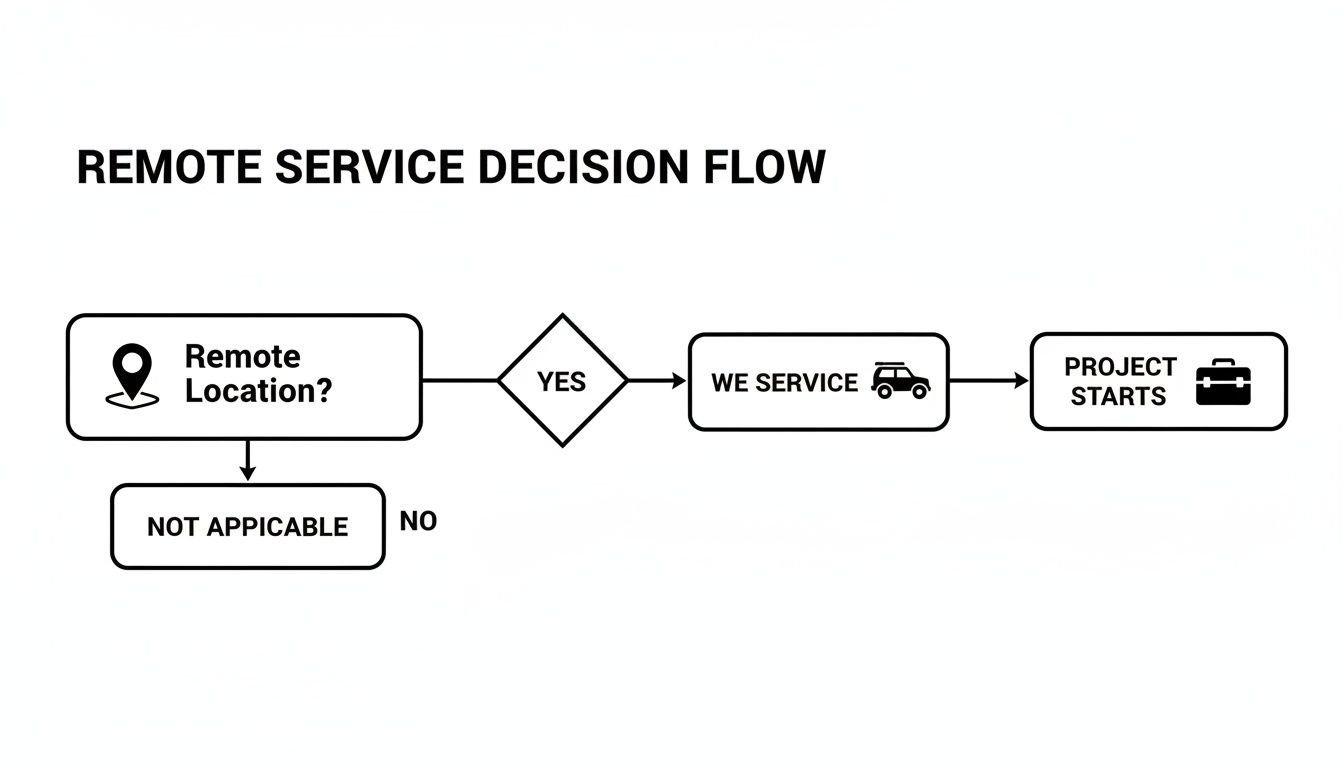
Our investment in this all-terrain vehicle means your location is never a barrier to getting the high-quality renovation you deserve.
Your Questions, Answered
Can a Restricted Builder Really Manage My Entire Renovation?
Yes, but with one important catch: their authority is strictly limited to the kitchen, bathroom, and laundry. Within those four walls, a builder restricted to kitchen bathroom and laundry can absolutely run the whole show. Think of them as the project manager for those specific rooms. They'll handle everything from the initial demolition to the final coat of paint, and they’ll coordinate all the other tradespeople, like plumbers and electricians, so you only have one point of contact.
What Happens If You Uncover Structural Problems Mid-Project?
This is where the limits of the licence become crystal clear. Let's say your builder pulls up the old bathroom tiles and discovers the floor joists underneath are rotten, or they find a load-bearing beam has been compromised. A KBL-restricted builder is legally required to stop work on that part of the job immediately.
They can't fix it themselves. You would then need to bring in a builder with a full, unrestricted licence to handle the structural repairs. Only once that work is properly certified can your original KBL builder get back to finishing your renovation.
Will I Need to Get Council Approval for My Renovation?
For the most part, simple internal renovations that don't alter the structure or footprint of your home won't need council approval in NSW. If you're just swapping out old cabinets and fixtures for new ones in the same spot, you're usually in the clear.
However, the moment you start moving plumbing or knocking down walls, you might be entering council approval territory. Every council has slightly different rules, so the safest bet is always to give them a quick call before any work begins.
No matter the project scope, the single most important thing you can do is verify your builder's licence and insurance. A quick search on the NSW Fair Trading website before you sign any contract is your best defence against dodgy operators.
How Do You Manage Renovations on Rural or Remote Farms?
Getting quality trades out to regional properties is a common headache, but it’s a problem we’ve built our business to solve. We've invested in a heavy-duty 10 tonne 4×4 truck that essentially acts as a mobile workshop and supply hub.
This setup allows us to bring the entire team, all the materials, and every piece of equipment needed directly to your property, no matter how far off the beaten track you are. It means we aren't held up by local supply issues or your postcode, allowing us to bring in labour, materials, and equipment for the most remote properties around New South Wales when it's needed the most.
Ready to bring your regional renovation vision to life with a team that’s properly equipped for the challenge? Get in touch with Awesim Building Contractors to talk about your project.