
Cladding replacement and repair isn't just another item on the maintenance checklist; it's fundamental to protecting your building's structure and aesthetic. This process involves either spot-fixing damaged areas or a complete overhaul of your property's external skin to shield it from the weather, boost insulation, and preserve its value. For rural properties, this comes with its own unique set of logistical hurdles.
The Essential Role of Cladding on Your Rural Property
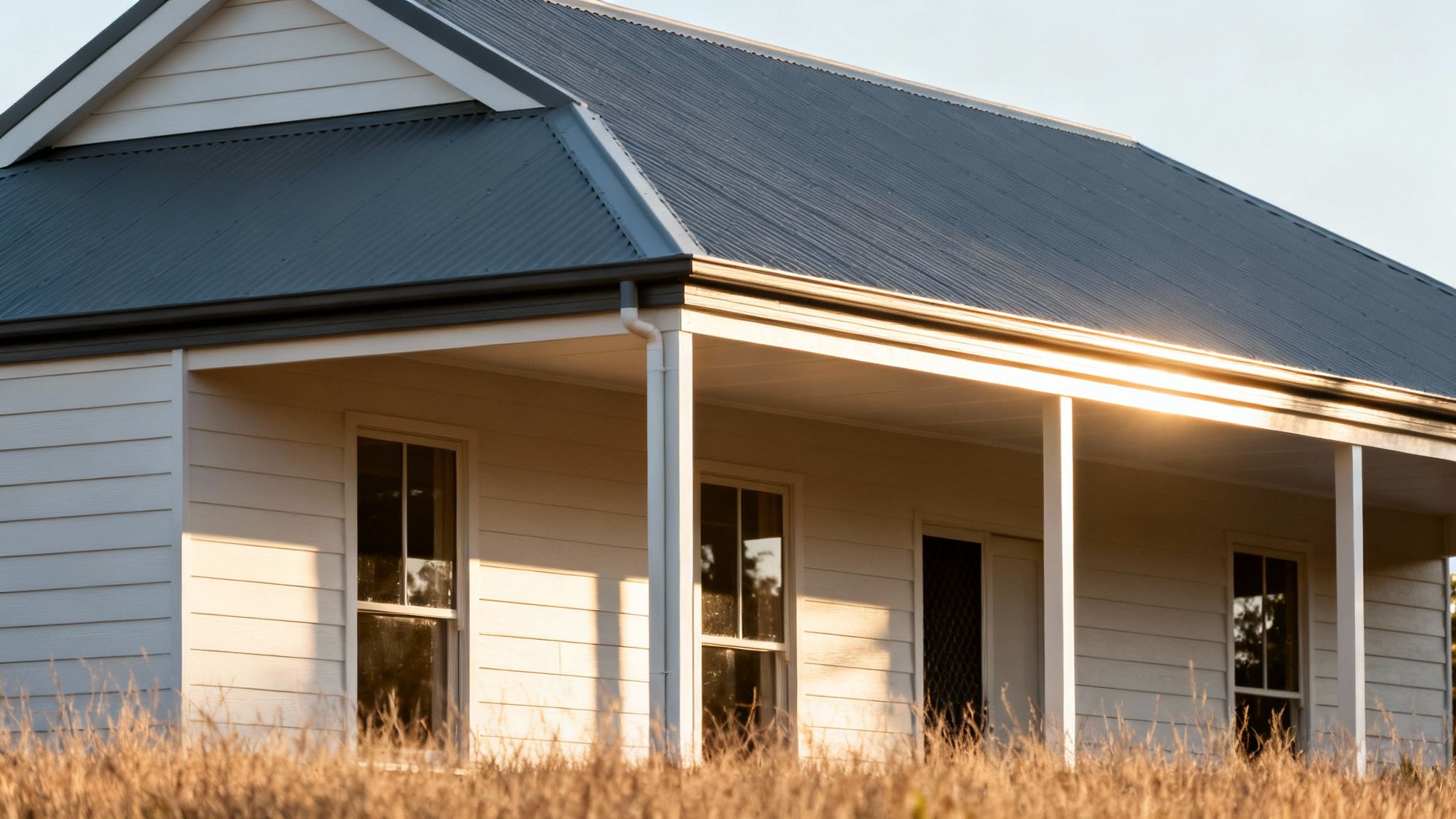
Think of your cladding as the armour for your property. Across the vast landscapes of New South Wales, the cladding on homesteads, sheds, and farm buildings is the primary defence against a harsh, unpredictable climate. It's so much more than a cosmetic finish—it’s a critical investment in the long-term health and resilience of your property.
This protective layer shields your structure from the elements, day in and day out. From the blistering summer sun that can warp and fade materials to driving rain that will find any crack or gap, quality cladding stands as a formidable barrier. It’s specifically designed to prevent moisture from getting in, which is the primary cause of timber rot, mould, and the kind of costly structural decay that can sneak up on you if left unchecked.
More Than Just a Weather Shield
Beyond its protective duties, cladding is a workhorse for your building's energy efficiency. A properly installed system adds a crucial layer of insulation, helping keep your home cooler in summer and warmer in winter. This has a direct impact on your power bills and makes for a far more comfortable living or working space. A comprehensive approach to property and building maintenance always starts with the performance of the building's exterior shell.
Simply recognising its importance is the first step. This proactive awareness helps you know when it’s time for cladding replacement and repair, ensuring your rural asset remains secure, functional, and valuable for years to come.
Cladding is the first and most important line of defence for any rural building. Its condition directly impacts everything from structural integrity and insulation to the overall value of your property.
Servicing the Most Remote Locations
Logistics can be the biggest headache in regional NSW. Getting the right people, materials, and equipment out to remote properties is often a massive obstacle. That's why we operate a 10-tonne 4×4 truck, specifically to bring in materials and supplies for the most remote properties around New South Wales.
This heavy-duty vehicle allows us to bring in labour, materials and equipment where & when it's needed the most. We can handle dirt roads and challenging terrain, ensuring your location is never a barrier to getting quality work done.
How to Spot Cladding Damage on Your Farm
Think of spotting cladding damage early as finding a leak in the roof before the big storm hits. Out on a rural property, your buildings are at the mercy of everything the NSW climate can throw at them—blistering sun, driving rain, and gale-force winds. Keeping a close eye on your cladding isn't just about looks; it's about protecting your biggest assets from expensive structural damage down the line.
The seals and joins in your cladding are a bit like the stitching on a good oilskin coat. When they’re intact, you’re protected. But once a seam starts to give way, water finds its way in, and that’s where the real trouble begins. It’s the same with your homestead or sheds—a tiny crack is an open invitation for moisture.
Learning to read the signs of wear and tear helps you know when to act. It's the difference between spotting a simple cosmetic scuff and a serious red flag that points to a much deeper problem.
The Exterior Walk-Around Inspection
The best place to start is with a good old-fashioned walk-around. Grab a notepad, pick a clear day, and take a slow lap around each building—your house, the machinery shed, the stables, everything. Make sure to look at the walls from different angles, as the changing light can reveal subtle warping or cracks you might otherwise miss.
Always pay extra attention to the walls that cop the worst of the weather. They’re usually the first to show their age. You’re on the hunt for any clues, big or small, that suggest the protective shield of your cladding is starting to fail.
Some issues will jump out at you, while others are a bit more subtle. Here’s what you should be looking for:
- Cracks and Splits: Even a hairline crack is a potential waterway for moisture. Bigger splits, especially those around window frames and doorways, are a much more serious worry.
- Warping and Bulging: If the boards are no longer sitting flat and have started to look wavy or bowed, it's a dead giveaway that moisture has snuck in behind them and caused the material to swell.
- Bubbling or Flaking Paint: Paint isn’t just for colour; it's a crucial protective layer. When you see it bubbling or peeling away, it’s a classic sign that water is trapped underneath, literally pushing the paint off the surface.
Looking for Signs of Water Ingress
While the outside tells part of the story, the real proof of cladding failure often shows up inside. Once water gets past the cladding, it can travel down the wall frame and appear in places you wouldn't expect.
Head indoors and check for these tell-tale signs:
- Damp Patches or Stains: Keep an eye out for any discolouration on your interior walls or ceilings, particularly after a period of heavy rain. A stubborn stain is a sure sign of a persistent leak.
- Mould or Mildew: That musty smell or the sight of black or green spots is a direct result of moisture being trapped where it shouldn't be. It almost always points back to a breach somewhere on the outside.
- Soft or Spongy Walls: Gently push on the plasterboard in any areas you think might be affected. If it feels soft or gives way under your fingers, you’ve likely got significant water damage within the wall cavity.
Spotting these signs is the crucial first step. Early detection of issues like warping or interior dampness can mean the difference between a targeted cladding repair and a full, far more expensive replacement.
To help you figure out what you’re looking at during your inspection, this quick checklist breaks down the common signs and what they mean.
Cladding Damage Diagnostic Checklist
| Visual Symptom | What It Likely Means | Urgency Level (Low/Medium/High) |
|---|---|---|
| Faded Colour or Chalky Residue | Normal UV exposure and material ageing. | Low |
| Fine Hairline Cracks | The beginning of material fatigue; needs monitoring. | Low |
| Bubbling or Peeling Paint | Moisture is trapped behind the paint layer. | Medium |
| Warped or Bowed Panels | Water has penetrated and is swelling the material. | High |
| Interior Water Stains or Mould | A significant breach in the cladding system. | High |
By getting into the habit of inspecting your property with this checklist in mind, you can get on the front foot and deal with issues before they spiral out of control. It’s a proactive approach that will keep your buildings sound, preserving their value and structural integrity for years to come.
Should You Repair or Replace Your Cladding
So you've spotted some damage to your cladding. Now comes the big question: do you patch it up or rip it all off and start fresh? Deciding between a targeted repair and a full-scale replacement is a major call, and honestly, it should be. The best path forward really hinges on the age of your cladding, how bad the damage is, and what you want for your property in the long run.
A quick patch-up is often cheaper and faster right now, which is always tempting. But thinking long-term, a complete overhaul can deliver a much better return. It can seriously lift your property's value, improve energy efficiency, and save you a heap of money on future maintenance.
When a Targeted Repair Makes Sense
Think of a small repair as first aid for your building. It’s the perfect fix when the issue is contained and the rest of your cladding is still in good nick. In these cases, a localised repair is almost always the most practical and wallet-friendly way to go.
Here are a few common scenarios where a repair is probably your best bet:
- Minor Impact Damage: A stray rock flung from the slasher or a bump from the ute can easily crack or dent a single panel. If the damage is just in one spot, a simple patch or swapping out one board is all you need.
- Localised Moisture Issues: Maybe you've just fixed a leaky gutter and found a small patch of damp cladding underneath. As long as the wall frame is sound and dry, just replacing that affected section makes perfect sense.
- Early-Stage Wear and Tear: If you spot a few loose boards or some cracked sealant, getting onto it early is key. Re-securing or resealing them stops a small job from turning into a massive headache down the track.
This flowchart gives you a simple visual to walk through the first steps of figuring out what you're dealing with.
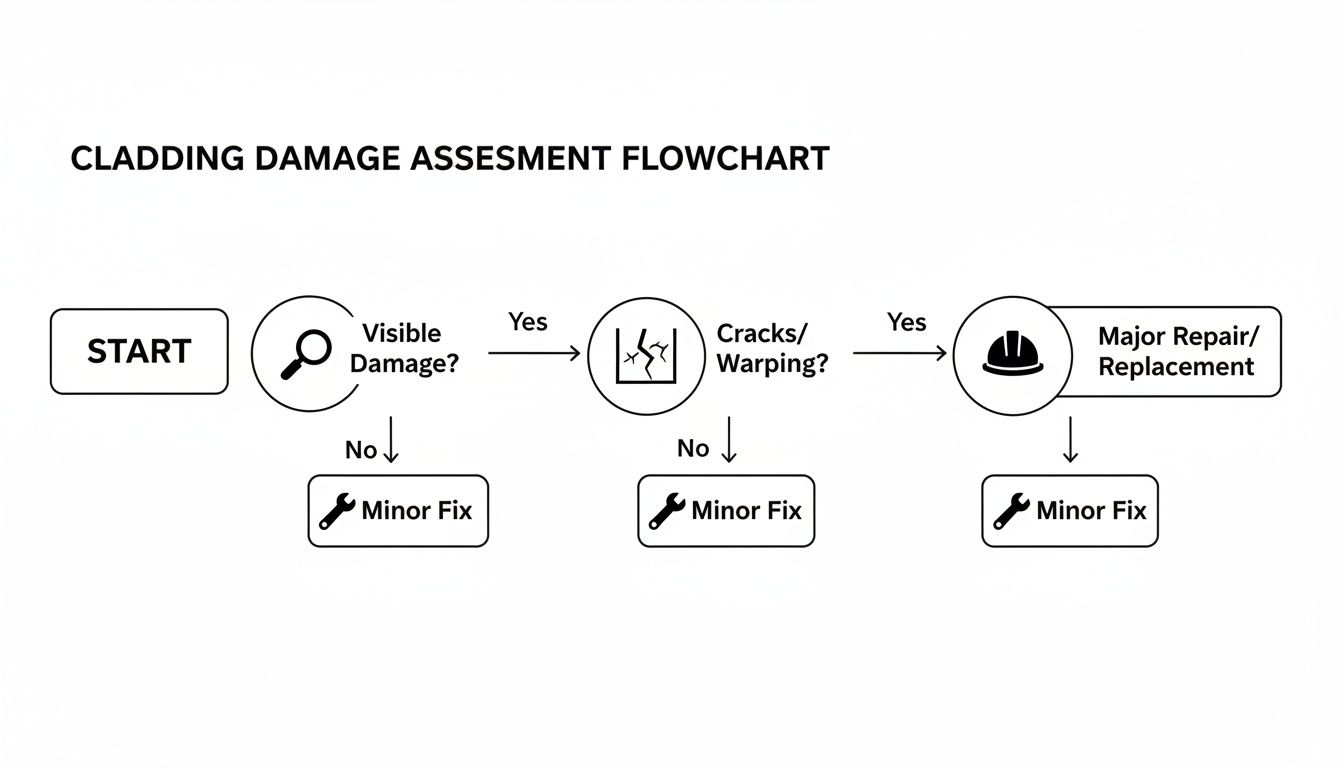
The main takeaway here? Catching damage early, before it has a chance to spread, almost always means a simpler, cheaper fix.
When a Full Replacement Is the Smarter Investment
Sometimes, patching a problem is like putting a Band-Aid on a broken leg—it’s just not going to cut it. When the damage is widespread or the whole system is failing, a full https://awesim.au/cladding-repairs/ is not just necessary, it's the smartest long-term investment you can make.
You'll likely need to replace everything in these situations:
- Widespread Dry Rot or Corrosion: If you're seeing extensive rot through your timber boards or rust popping up on metal sheets across different walls, the integrity of the whole system is shot.
- Systemic Failure: When the cladding material itself is giving up due to age, or if it was poorly installed in the first place, you're just going to be chasing your tail with endless leaks and patch jobs.
- Significant Structural Damage: This is the big one. If moisture has gotten deep into the wall frames and started causing damage, the cladding has to come off so the structural issues can be properly fixed.
The decision-making process is a lot like figuring out whether to repair or replace your roof. In both scenarios, a full replacement costs more upfront but buys you peace of mind and better value for years to come.
The Awesim Advantage for Remote Properties
The demand for quality building work is growing right across the country. In fact, the Metal Cladding, Waterproofing and Scaffolding Services industry in Australia is expected to hit a market size of AUD 14.7 billion by 2025. For us at Awesim, this confirms what we see every day: a rising need for reliable, expert cladding work on everything from homestead renovations to custom-built farm sheds, from Bourke to Broken Hill.
Choosing to replace your cladding isn't just about fixing a problem. It's an opportunity to upgrade your property's performance, lift its appearance, and invest in its long-term resilience.
We know that getting trades and materials to remote properties is a huge hurdle. That's why we've invested in our own 10-tonne 4×4 truck. This beast allows us to bring all the labour, materials, and gear for a full cladding replacement directly to your front gate, no matter how far out you are. We make sure your location is never a barrier to getting the job done right.
Choosing the Best Cladding Material for Regional NSW
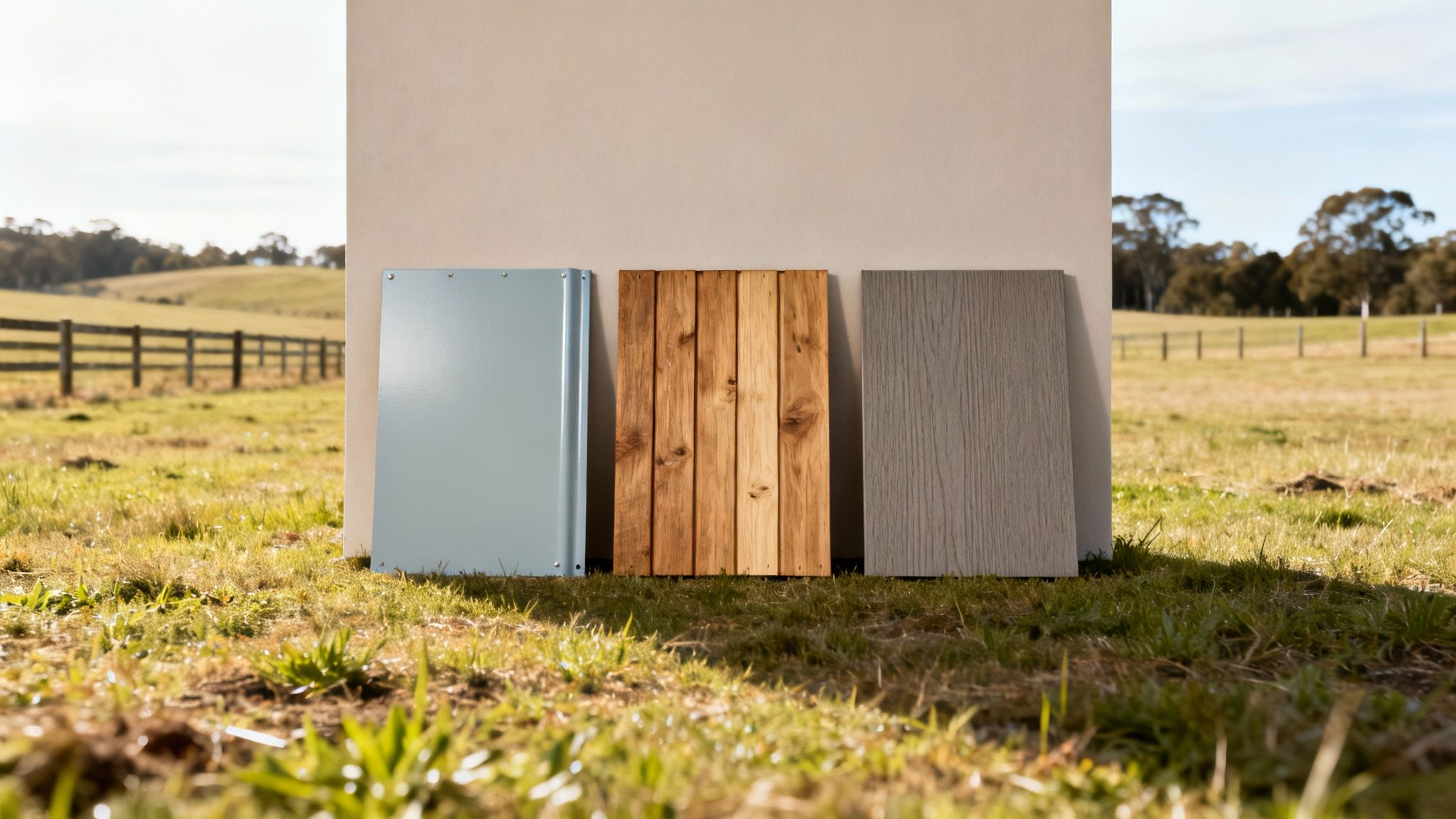
Picking the right material is probably the single most important decision you'll make in any cladding project. For a property out in regional New South Wales, that choice is even more critical. Your building’s new skin has to stand up to scorching summers, frosty winters, and everything the Aussie climate can throw at it.
The decision goes way beyond just looks. You need something that hits the sweet spot between durability, maintenance, fire resistance, and cost for your specific spot. It’s about finding the perfect armour for your property—one that’s tough enough for the bush but still fits your budget and style.
In the vast landscapes of rural NSW, where the weather really tests homesteads and farm buildings, the demand for quality cladding has never been higher. The numbers back this up: the Australian cladding market is set to hit AUD 7.94 billion in 2025 and is projected to climb to AUD 10.90 billion by 2035. You can dig deeper into the Australian cladding market trends to see how this reflects the real-world need for building solutions that last.
Colorbond Steel: The Rural Favourite
Drive through regional NSW, and you'll see Colorbond steel everywhere. There’s a very good reason for that. It’s tough, it’s low-maintenance, and it was born and bred for Australian conditions. Think of it as the ironclad guardian for your property.
Made from high-tensile steel with a baked-on paint finish, it’s incredibly resistant to chipping, flaking, and blistering. That means you won't be spending your weekends up a ladder with a paintbrush.
- Pros: Highly durable, excellent fire resistance (it’s non-combustible), very low maintenance, and comes in a huge range of colours.
- Cons: Can be dented by a serious impact, and the initial cost can be higher than some other options.
Its non-combustible nature makes it a go-to choice in bushfire-prone areas, offering peace of mind that’s hard to put a price on. For a complete cladding replacement and repair job, Colorbond offers reliability you can count on for decades.
Treated Timber: A Classic Look with Modern Protection
There's an undeniable warmth and classic appeal to timber cladding. It just feels right, connecting a building to its natural surroundings with a timeless look that so many of us love. But let's be honest, untreated timber in the NSW climate is asking for trouble.
Thankfully, modern treated timber, like pine or certain hardwoods, is a different beast altogether. It's chemically treated to resist rot, termites, and fungal decay, making it a genuinely viable and beautiful option for rural properties. It’s all about getting that traditional charm with the resilience you actually need.
Choosing a material isn't just a technical decision; it's about defining your property's character for the next generation. The right cladding protects your asset and reflects its place in the landscape.
The key to timber's longevity is maintenance. You'll need to commit to regular staining or painting every few years to shield it from UV damage and moisture. It’s a bit of work, but it ensures the timber continues to look its best and do its job.
Composite Weatherboards: The Best of Both Worlds
If you like the look of timber but not the upkeep, composite weatherboards might be your answer. Often made from a mix of cement, sand, and cellulose fibres, they offer a seriously smart alternative. They’re engineered to mimic the look of traditional weatherboards without the headaches.
These products are designed to be extremely durable and resistant to the very things that plague other materials. They won't rot, warp, or get eaten by termites, and they hold paint exceptionally well.
- Fire Resistance: Many composite products have high fire-resistance ratings, making them a solid choice for bushfire-prone zones.
- Low Maintenance: Once they're painted, all they really need is the occasional wash-down.
- Aesthetic Versatility: You can paint them any colour you like, giving you the freedom to match existing buildings or go for a completely new look.
This material is a fantastic modern solution for anyone who wants that classic weatherboard appearance without the constant maintenance that comes with natural timber.
A Quick Comparison to Help You Decide
With so many good options, it can be tough to narrow it down. This table lays out the key differences to help you weigh what matters most for your property and lifestyle.
| Cladding Material Comparison for Rural NSW | ||||
|---|---|---|---|---|
| Material | Durability | Maintenance | Fire Rating | Approx. Cost |
| Colorbond Steel | Excellent | Very Low | Non-combustible | Moderate-High |
| Treated Timber | Good-Very Good | Moderate-High | Varies (can be treated) | Moderate |
| Composite Weatherboard | Excellent | Low | Good-Excellent | Moderate |
Ultimately, the best choice balances long-term performance with your budget and how much work you want to put in over the years.
Making the Right Choice for Your Property
Every property is unique, and what works for your neighbour might not be the best fit for you. The final decision really comes down to a few key things: your budget, how much maintenance you’re prepared to do, your property's exposure to the elements, and, crucially, local fire safety requirements.
No matter which material you lean towards, our team has the gear to get it there. Our 10-tonne 4×4 truck is purpose-built to haul full packs of timber, long-length Colorbond sheets, and all the necessary equipment to even the most remote properties across New South Wales. This means we can bring all labour and supplies to where they are needed most, making any high-quality cladding replacement and repair project possible, regardless of your address.
Our 4×4 Fleet: Bridging the Distance for Remote Cladding Projects
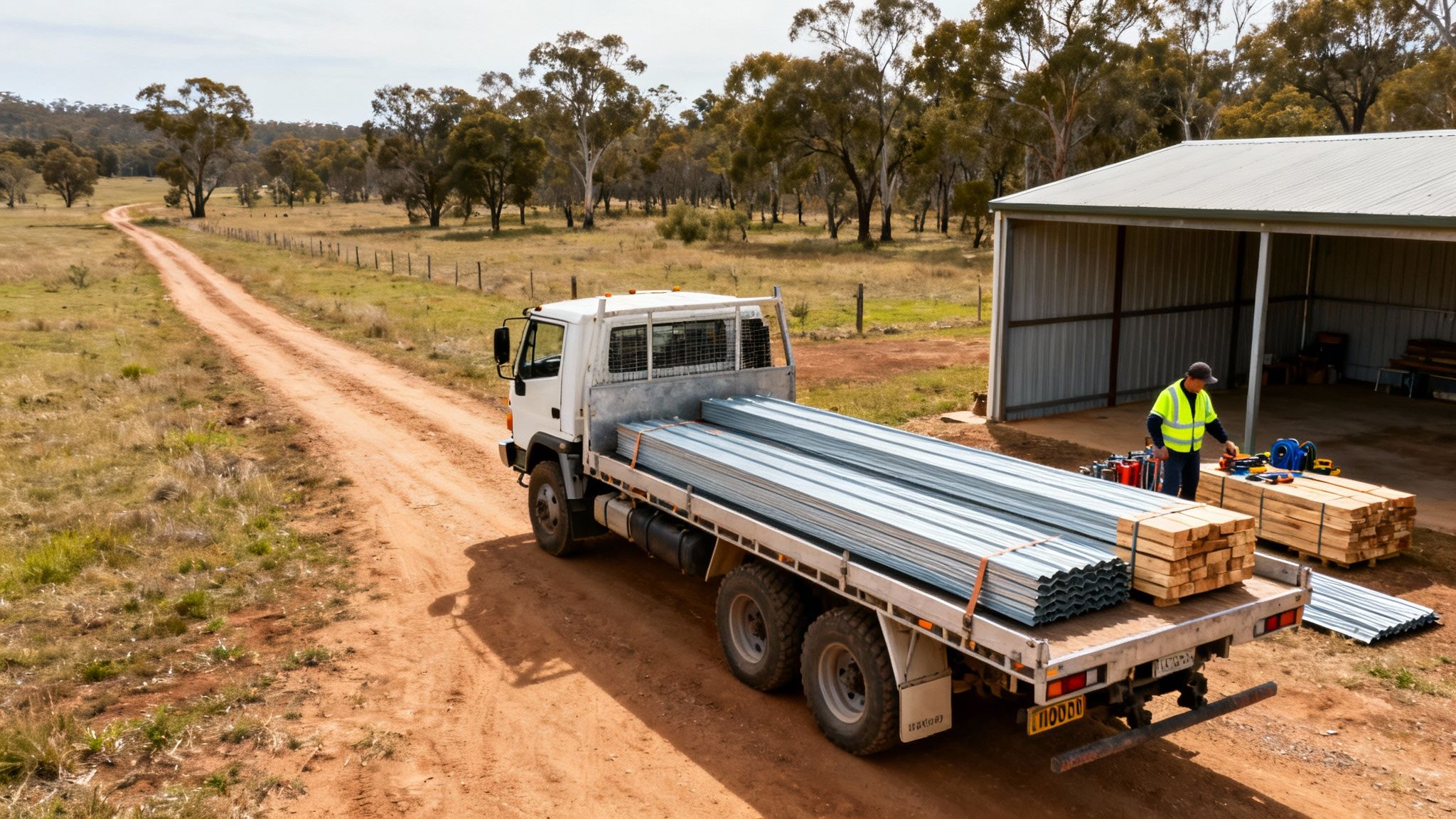
For a lot of property owners across rural New South Wales, the first hurdle isn't the quality of the cladding job—it's whether a contractor can even get to the site to begin with. The tyranny of distance is a very real problem out here. A standard delivery truck or a tradie’s ute just isn't designed for corrugated dirt roads, washed-out creek crossings, or winding station tracks.
This logistical challenge often leaves you with a tough choice, forcing you to settle for whatever materials can be delivered or accept frustrating delays. But a successful cladding replacement and repair project depends entirely on getting the right people and the right supplies to your property, safely and on schedule.
When your homestead is kilometres down an unsealed track, the simple task of delivering full-length Colorbond sheets or packs of timber suddenly becomes a major headache. This is where having genuine, specialised logistical capability is no longer a "nice-to-have"—it's essential.
The Right Gear for Tough Country
To solve this exact problem, we’ve invested in a true workhorse: a 10-tonne 4×4 truck. This is more than just a delivery vehicle; it’s our purpose-built solution for the unique terrain of regional NSW. Think of it as a mobile supply depot on wheels, built to reach properties that others simply can't.
This heavy-duty truck means we can load up everything needed for the entire job and bring it all out in a single, well-organised trip. Its serious off-road capability allows us to confidently tackle rugged ground and creek crossings that would leave a conventional vehicle stranded.
Our ability to deliver all labour, materials, and equipment directly to even the most isolated site ensures that your location is never a barrier to a high-quality, efficient cladding project. It offers complete peace of mind, right from day one.
Our 4×4 fleet completely changes the game for remote construction. It takes one of the biggest sources of stress and delay off the table, letting everyone focus on what really matters: the quality of the finished job.
What This Means For Your Project
The real-world benefits of this logistical muscle are huge. Instead of you having to juggle multiple suppliers or worry about your materials getting damaged on rough roads, you get a seamless process managed entirely by our team.
Here’s how our fleet makes a direct difference:
- All-In-One Delivery: We transport the full work crew, full-length cladding, timber packs, scaffolding, tools, and all other equipment in one go.
- Fewer Delays: By arriving with everything from the start, we cut out the downtime spent waiting for staggered deliveries, keeping your project on track.
- No Compromises on Materials: You get access to the best materials for the job, not just the ones that are easiest to get to you.
- Complete Self-Sufficiency: Our team shows up fully equipped and ready to work, reducing our impact on your daily operations.
This unique capability is our commitment to making high-calibre cladding replacement and repair services available to everyone in regional NSW, from the outskirts of Tamworth to the most remote station past Broken Hill. Your address shouldn't determine the quality of your build.
Why an Experienced Rural Builder Is Non-Negotiable
When it comes to a cladding replacement or repair project out in the bush, it’s about more than just having the right tools for the job. You need a builder who genuinely gets the unique challenges of rural NSW construction. This isn't just a nice-to-have; it’s essential for a result that will actually last.
The right team brings a wealth of on-the-ground experience that goes far beyond simply nailing up panels. They know how to navigate the maze of local council regulations, which can be surprisingly different from one shire to the next, ensuring your project is compliant from the get-go. They also understand how to plan the logistics around the realities of farm life, keeping disruptions to your daily operations to an absolute minimum.
Expertise Beyond the Tools
A specialist rural builder has that practical, hard-won knowledge that makes all the difference. They know from experience which materials can stand up to the harsh local climate, advising you on the best options to weather everything from blistering heat to driving rain. This kind of insight is what prevents costly do-overs down the track.
This level of expertise is more important than ever. With a national spotlight on cladding safety, the push for quality materials and installation is growing, even in regional areas. The Metal Cladding, Waterproofing and Scaffolding Services industry hit a national market size of AUD 14.7 billion in 2025, with 25,698 businesses operating as of 2024. That's a huge industry, and it pays to choose a specialist.
Choosing a builder is about more than just the finished product. It’s about finding a team that respects country life, makes the whole process run smoothly, and delivers a build that’s fully compliant with all Australian Standards.
Finding the Right Partner
Locking in the right team isn't just about checking their credentials. You also need to find a partner you can trust and work with. Learning how to negotiate effectively with contractors is a brilliant skill to have, as it helps you set clear expectations and fair pricing right from the start.
At the end of the day, your choice of an experienced rural builder is the single most important decision for your cladding project. A team that combines local know-how with logistical muscle is the best way to protect your investment and ensure your property is shielded for decades to come.
Common Questions About Cladding Replacement and Repair
Tackling a big project like replacing or repairing your cladding naturally brings up a lot of questions. For property owners in rural New South Wales, those questions usually circle back to timelines, costs, and the unique challenges that come with working on a remote site. Let's walk through some of the most common queries we get, so you can plan your project with a bit more confidence.
We've framed these answers around the real-world concerns of people living and working on the land, giving you the practical information you actually need.
How Long Does a Typical Cladding Replacement Take?
The honest answer? It varies. The timeline for a full reclad really depends on the size and complexity of your home or shed, the cladding material you’ve chosen, and—of course—the weather.
As a rough guide, a standard homestead replacement might take anywhere from one to three weeks from the day we start on-site. The biggest hold-up on most rural jobs, though, is waiting around for separate deliveries of materials and equipment.
That’s a headache we’ve learned to avoid. We load up our 10-tonne 4×4 truck with everything—our crew, the materials, and all the gear—and bring it to your property from day one. This way, we cut out the downtime and keep the project moving, no matter how far out you are.
Is It More Cost-Effective to Repair or Replace Cladding?
This is the classic dilemma, and the right answer really hinges on your long-term goals. A small, localised patch-up will almost always be cheaper upfront. No question. But if you’re looking at widespread damage, dry rot creeping in, or signs that the whole system is failing, a full replacement is often the smarter investment.
Think of it this way: new cladding isn't just about fixing a problem. It’s an upgrade. It improves your property's insulation (which you’ll notice on your energy bills), and it gives the place a massive lift in both market value and kerb appeal. We can provide clear, detailed quotes for both options, laying out the costs and benefits so you can make a sound financial decision.
Do I Need Council Approval for Cladding Work in NSW?
Navigating council rules can feel like a maze, but it’s a non-negotiable step. For a straightforward, like-for-like replacement using the same material, you might not need a full development application (DA). However, it's absolutely critical to check with your local council. Rules vary, especially if you’re in a designated bushfire-prone area where specific, compliant materials are mandatory.
If you’re changing the cladding material or the job involves any structural alterations, you'll almost certainly need approval. We can manage this whole process for you, making sure your project ticks every box and is fully compliant with all rural building codes and Australian Standards.
How Do You Deliver Materials to Properties with Difficult Access?
This is where we really shine. We know that many properties in regional NSW are at the end of a long dirt road, a station track, or even across a creek bed. Your average delivery truck simply won't make it.
Our fleet, especially our heavy-duty 10-tonne 4×4 truck, is built for exactly these conditions. It lets us haul the crew, materials, and equipment right to your doorstep, no matter the obstacle. This capability means that no matter how isolated your property is, we can deliver a high-quality cladding replacement and repair project without compromise.
For a seamless and professional cladding solution built for the unique demands of your rural NSW property, trust the team with the right experience and gear. Contact Awesim Building Contractors today to talk about your project and get a proper quote. Visit us at https://awesim.au.




1 Comment