The kitchen is more than just a place for cooking; it's the operational heart of any NSW rural property. It’s where early mornings start, family strategies are planned, and the day's hard work is rewarded with a hearty meal. Achieving the perfect balance of rustic charm and modern functionality is key to creating a space that stands up to the demands of country life. This guide explores 10 distinct country kitchen design ideas, offering practical, actionable advice tailored for New South Wales homes, from the rugged tablelands of Armidale to the sprawling properties out past Dubbo.
We'll delve into specific materials, layouts, and stylistic elements that define everything from classic farmhouse to modern rustic aesthetics, helping you design a kitchen that is both beautiful and built to last. Our focus is on tangible solutions that enhance workflow, accommodate the needs of a working farm, and add lasting value to your property. We cover essential elements like durable butcher block countertops and timeless Shaker-style cabinetry, but for those wanting to explore further options for incorporating natural elements into your overall kitchen scheme, you can find more diverse natural stone kitchen design ideas.
We understand the unique challenges of building in regional and remote NSW, which is why we’ll also touch on the practicalities of getting the job done right, no matter how far off the beaten track you are. Logistical hurdles shouldn't prevent you from achieving your ideal kitchen. With our specialised 10-tonne 4×4 truck, we bring all necessary materials, labour, and equipment directly to even the most remote properties, ensuring your project is completed to the highest standard, wherever you call home. Let's explore how to create a kitchen that is as resilient and welcoming as the land itself.
1. Classic Farmhouse Charm with Shaker-Style Cabinetry
The cornerstone of any authentic country kitchen design is often its cabinetry, and nothing embodies classic farmhouse charm more effectively than Shaker-style cabinets. Celebrated for their simple, clean lines and unpretentious elegance, this timeless style is defined by a distinctive five-piece door with a recessed centre panel. Its beauty lies in its simplicity and focus on quality craftsmanship, making it a versatile choice that complements both traditional and more contemporary rural aesthetics.
For rural NSW properties, where durability is paramount, selecting the right material is crucial. Shaker cabinets crafted from robust Australian hardwoods like Tasmanian Oak or Blackbutt offer resilience against fluctuating temperatures and humidity. Alternatively, a high-quality painted finish on moisture-resistant MDF provides a clean, customisable look that is easy to maintain. This foundational choice sets the stage for a kitchen that is as practical as it is beautiful.
Implementation and Key Considerations
To successfully integrate this look, focus on creating balance and warmth. A popular approach involves painting the main perimeter cabinets in a soft neutral, like an off-white or light grey, and featuring a contrasting island in a natural timber finish or a deeper, moodier colour. This creates an inviting focal point that grounds the space.
Consider these actionable tips:
- Hardware Selection: Enhance the vintage feel with hardware in finishes like aged brass, matte black, or oil-rubbed bronze. These materials add a touch of historical character.
- Modern Functionality: Integrate modern conveniences seamlessly within the classic framework. Opt for soft-close drawers, clever corner storage solutions, and pull-out pantry units to maximise utility without compromising the aesthetic.
- Visual Variety: Break up long, solid runs of cabinetry with select glass-fronted doors or a section of open shelving. This is an ideal way to display treasured crockery, glassware, or cookbooks, adding a personal touch to your kitchen design.
This style is particularly effective for those seeking a kitchen that feels both established and sophisticated. Its enduring appeal ensures your investment remains relevant for years to come, forming a perfect backdrop for your farm's daily activities. Learn more about harmonising classic and modern elements in your interior design ideas for your farm renovation project.
2. Butcher Block and Wood Countertops
For an authentic country kitchen design, few elements introduce as much warmth and character as butcher block and wood countertops. Comprised of straight-cut wood rails glued together, these surfaces offer a tactile, natural appeal that connects the heart of the home to the surrounding rural landscape. Their inherent texture and organic grain patterns provide a beautiful, functional worksurface that evolves with use, developing a unique patina over time.
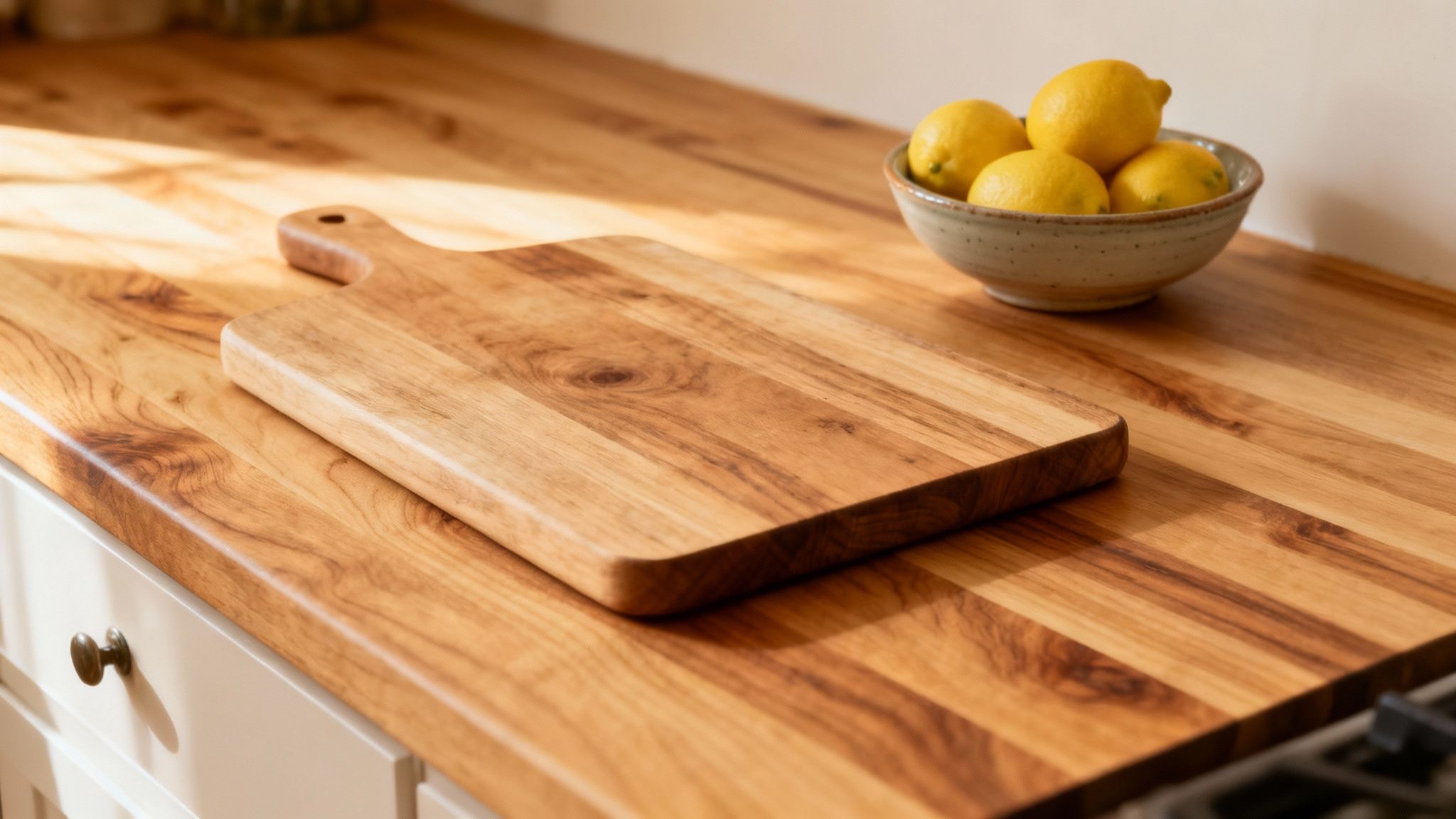
This style is a hallmark of traditional European and farmhouse kitchens, prized for both its aesthetic and practicality. For NSW properties, Australian hardwoods like Spotted Gum or Ironbark are excellent, durable choices that can withstand the rigours of farm life. Even for the most remote homesteads, sourcing these heavy, high-quality materials is straightforward, as our 10-tonne 4×4 truck enables us to deliver all necessary supplies and equipment directly to your property.
Implementation and Key Considerations
To successfully integrate wood countertops, balance their visual weight with lighter elements. They pair exceptionally well with white or cream-coloured cabinetry, creating a timeless contrast. Alternatively, using butcher block on a central island creates a stunning feature piece, while more resilient materials like quartz or granite can be used on perimeter benchtops, especially around sink areas.
Consider these actionable tips:
- Regular Maintenance: To maintain the surface and ensure it remains food-safe, apply a food-grade mineral oil or a specialised beeswax finish monthly. This prevents the wood from drying out and cracking.
- Protect the Surface: While durable, wood is softer than stone. Always use cutting boards for chopping to avoid deep scratches and wipe up spills immediately, particularly dark liquids like red wine or coffee, to prevent staining.
- Installation Specifics: Ensure a waterproof barrier is installed around undermount sinks to protect the wood from moisture damage. Harder woods like maple or walnut offer greater dent resistance for high-use areas.
- Finishing Touches: For an ultra-smooth feel, lightly sand the surface with very fine-grit sandpaper between coats of oil. This creates a beautifully silky and non-porous finish.
This choice is perfect for kitchens aiming for a warm, lived-in atmosphere that feels both functional and inviting. The natural charm of wood provides an ideal surface for baking, meal prep, and casual family gatherings, truly embodying the farm-to-table spirit. Explore the possibilities of integrating natural materials in our guide to kitchen renovations.
3. Vintage Tile Backsplash
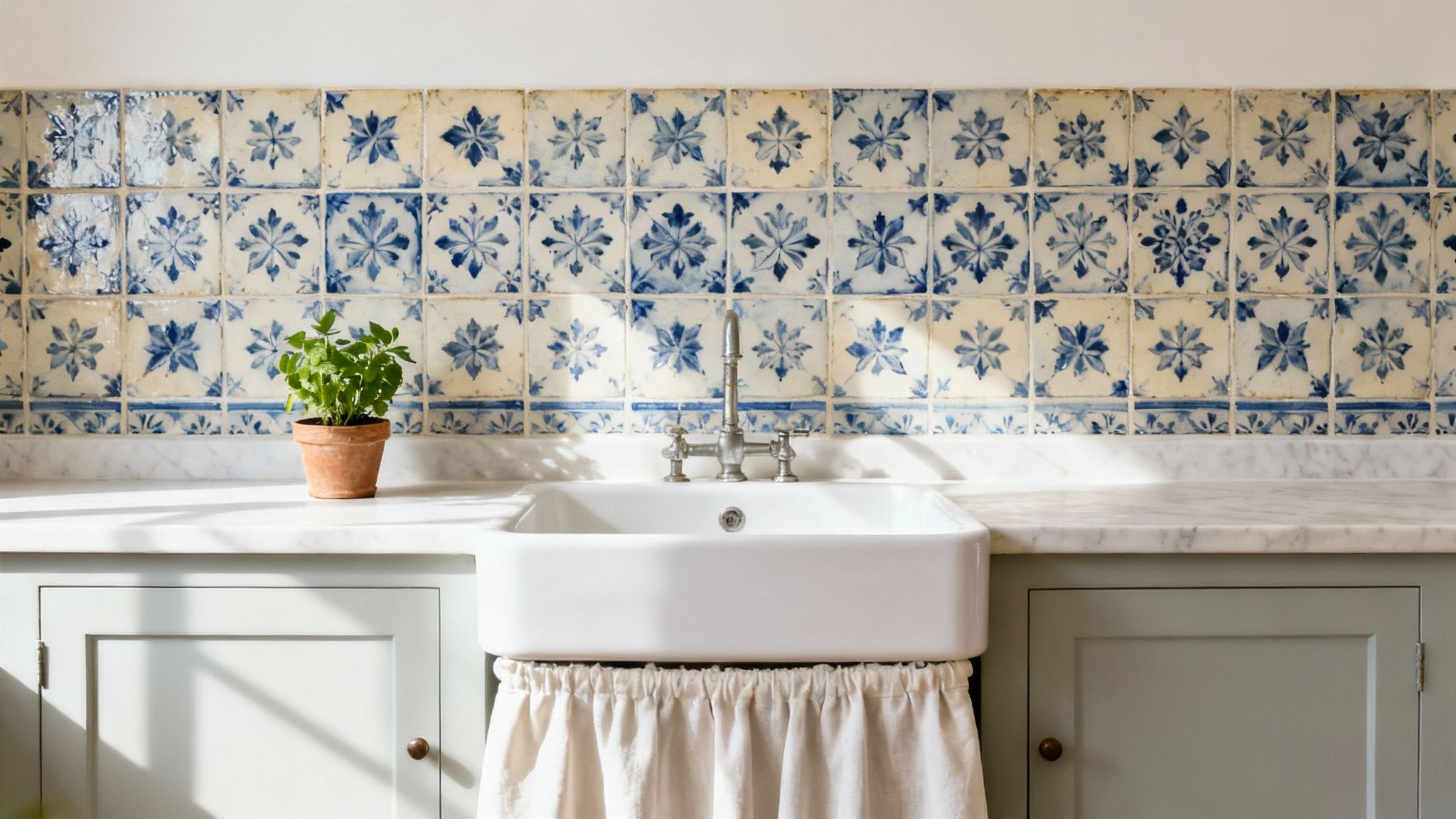
A vintage tile backsplash is a powerful way to infuse your country kitchen with personality, history, and artisanal character. Moving beyond simple functionality, this design element transforms a key wall space into a stunning focal point. Whether you choose hand-painted patterns, intricate geometric designs, or beautifully aged subway tiles, a vintage-inspired backsplash introduces colour, texture, and a story that complements the rural NSW landscape. It’s a celebration of craftsmanship that can define the entire aesthetic of your kitchen.
For properties in regional NSW, a tile backsplash is also a highly practical choice, offering a durable, wipe-clean surface that protects walls from cooking splatters and moisture. The key is selecting quality materials that can withstand the demands of a working farm kitchen. Authentic ceramic or porcelain tiles are resilient and long-lasting, providing a timeless appeal that bridges the gap between heritage charm and everyday utility.
Implementation and Key Considerations
The success of a vintage tile backsplash lies in its thoughtful application. It can be used to create a dramatic feature wall behind the stovetop or a more subtle, charming border above the sink. The pattern and colour palette you choose should harmonise with your cabinetry and benchtops, tying the entire design together. For instance, delicate blue-and-white Delft-style tiles pair beautifully with white Shaker cabinets for a classic English cottage feel.
Consider these actionable tips:
- Create a Focal Point: Use a concentrated area of patterned tile, such as Portuguese-inspired azulejos, behind your cooktop and frame it with simpler, neutral tiles for the rest of the backsplash. This creates maximum impact without overwhelming the space.
- Balance and Scale: For a more understated look, mix vintage-style feature tiles with standard subway tiles. This approach adds character while keeping the design clean and balanced, which is ideal for smaller kitchens.
- Grout and Sealing: Pay close attention to grout colour as it dramatically affects the final look. A darker grout will make the pattern pop, while a lighter grout creates a softer finish. Regular sealing is crucial to prevent staining, especially in a high-use farm kitchen.
- Professional Installation: Complex patterns require a skilled installer to ensure proper alignment and a flawless finish. This is especially important for remote properties, where precision is key. Awesim’s ability to bring in specialised labour and all necessary materials, even to the most secluded locations via our 10-tonne 4×4 truck, guarantees a professional result.
This approach is perfect for homeowners who want their kitchen to feel unique and curated. A vintage tile backsplash adds a layer of bespoke artistry, making the space feel deeply personal and reflective of a rich, homesteading tradition.
4. Apron Front Sink with Vintage Fixtures
No single element captures the spirit of a country kitchen quite like an apron front sink. Also known as a farmhouse sink, this iconic fixture features a large, deep basin with an exposed front panel that juts slightly forward from the cabinetry. It acts as both a hardworking utility station and a stunning visual centrepiece, perfectly blending practicality with timeless country kitchen design ideas.
This style is deeply rooted in tradition, originally designed for comfort and to hold large volumes of water before the advent of modern plumbing. Today, its generous size is ideal for washing large pots and pans from a family harvest or a big weekend cook-up. For rural NSW properties, materials like durable fireclay or classic cast iron offer longevity and resilience, ensuring the sink can withstand the rigours of farm life while anchoring the kitchen’s aesthetic.
Implementation and Key Considerations
Integrating an apron front sink requires careful planning, as it necessitates specialised cabinetry to support its weight and accommodate its unique shape. Pairing it with vintage-inspired tapware completes the look, transforming a functional area into a deliberate design statement.
Consider these actionable tips:
- Fixture Finishes: Complement the sink with tapware in period-appropriate finishes like aged brass, matte black, or oil-rubbed bronze. A gooseneck or bridge-style faucet enhances the heritage feel.
- Material Choice: Choose fireclay for a classic, bright white look that is resistant to stains and scratches. Cast iron enamel offers a similar aesthetic with exceptional durability, though it can be heavier.
- Installation Precision: Whether you opt for an undermount or drop-in style, precise cabinet measurements are non-negotiable. This is a task best left to experienced professionals to ensure a seamless fit and proper support.
An apron front sink is a hallmark of authentic country design, offering unmatched functionality for busy households. It is a defining feature that instantly establishes a rustic, yet sophisticated, atmosphere. For even the most remote properties across NSW, our 10-tonne 4×4 truck ensures we can deliver all necessary materials, from the sink itself to the custom cabinetry required for its installation.
5. Open Shelving with Vintage Accessories
Open shelving moves beyond simple storage to become a curated display of personality and history, a hallmark of many memorable country kitchen design ideas. This approach replaces traditional upper cabinets with accessible shelves, showcasing everyday items like crockery and glassware alongside cherished vintage accessories. It creates a lived-in, layered aesthetic that tells a story, making the kitchen feel less like a utility room and more like the heart of the homestead.
In a rural NSW context, this design choice offers both form and function. It allows for quick access to frequently used items, a practical advantage in a busy farm kitchen. Materials like reclaimed timber from an old shed or sturdy, locally sourced hardwoods add authentic character and resilience. By displaying collections of antique pottery, rustic enamelware, or inherited cookware, the shelves become a dynamic feature that reflects the homeowner’s lifestyle and connection to the land.
Implementation and Key Considerations
The key to successful open shelving is curated, intentional styling that prevents the space from looking cluttered. It’s about creating a balanced composition where functional items are elevated by decorative pieces, resulting in a display that is both beautiful and practical. This style allows for easy updates and seasonal changes.
Consider these actionable tips:
- Group and Balance: Arrange items by colour, material, or function to create visual harmony. Mix functional pieces like everyday plates with decorative objects like small paintings or plants.
- Vary Height and Texture: Create visual interest by stacking bowls or using small risers. Contrast smooth ceramics with the rough texture of a vintage wooden crate or a woven basket, which can also be used for stylish hidden storage.
- Embrace Negative Space: Avoid overcrowding the shelves. Leaving empty space around objects allows each piece to stand out and contributes to a calmer, more organised look.
- Practical Placement: Install shelves at a comfortable height for easy access. Consider the reach and frequency of use when deciding what to place on lower versus higher shelves.
This approach is ideal for homeowners who want to inject personal character and a sense of openness into their kitchen. It transforms everyday utility into a beautiful, evolving display that makes the space uniquely yours. Learn more about integrating personal style in your interior design ideas for your farm renovation project.
6. Vintage Lighting (Pendant Lights and Chandeliers)
The right lighting does more than just illuminate a kitchen; it sets the mood and acts as a key decorative element. Vintage-style fixtures, such as pendant lights and small chandeliers, are fundamental to achieving an authentic country kitchen aesthetic. These pieces add immense character and ambiance, often featuring materials like aged iron, weathered brass, or hand-blown glass to create warm, welcoming pools of light that enhance the rustic charm of the space.
For rural NSW homes, where ceilings can be high and spaces expansive, statement lighting provides a crucial opportunity to anchor the design and introduce a sense of scale and history. Whether it's a series of industrial-style pendants over an island or a delicate, rustic chandelier above a dining nook, these fixtures serve as functional art. They beautifully complement the natural materials and robust textures common in country kitchen design ideas, tying the entire look together.
Implementation and Key Considerations
To effectively integrate vintage lighting, focus on both its functional and decorative roles. The goal is to create layers of light that are practical for cooking and inviting for gatherings. A common and effective strategy is to hang two or three matching pendants over a kitchen island or a long farmhouse table to provide focused task lighting.
Consider these actionable tips:
- Placement and Height: Hang pendants approximately 75-90 cm (30-36 inches) above countertops or your island for optimal illumination without obstructing views. Ensure multiple pendants are spaced evenly for a balanced, professional look.
- Bulb Selection: Use Edison-style or vintage-inspired LED bulbs to complete the aesthetic. These emit a warm, golden glow that enhances the cosy atmosphere. Installing dimmer switches is essential for controlling the ambiance from bright task lighting to a soft evening glow.
- Layer Your Lighting: Vintage pendants are for atmosphere and focused tasks, but they aren't enough on their own. Combine them with practical under-cabinet lighting for food preparation areas and recessed downlights for overall ambient light.
- Cohesive Finishes: Choose lighting finishes that complement your cabinet hardware, tapware, and other metallic accents. Consistency in finishes like matte black, antique brass, or oil-rubbed bronze creates a polished and cohesive design.
Vintage lighting is a powerful tool for infusing a new kitchen with a sense of soul and history. It immediately adds character and a bespoke feel, making the space feel curated and lived-in from day one.
7. Classic Farmhouse Charm with Shaker-Style Cabinetry
The cornerstone of any authentic country kitchen design is often its cabinetry, and nothing embodies classic farmhouse charm more effectively than Shaker-style cabinets. Celebrated for their simple, clean lines and unpretentious elegance, this timeless style is defined by a distinctive five-piece door with a recessed centre panel. Its beauty lies in its simplicity and focus on quality craftsmanship, making it a versatile choice that complements both traditional and more contemporary rural aesthetics.
For rural NSW properties, where durability is paramount, selecting the right material is crucial. Shaker cabinets crafted from robust Australian hardwoods like Tasmanian Oak or Blackbutt offer resilience against fluctuating temperatures and humidity. Alternatively, a high-quality painted finish on moisture-resistant MDF provides a clean, customisable look that is easy to maintain. This foundational choice sets the stage for a kitchen that is as practical as it is beautiful.
Implementation and Key Considerations
To successfully integrate this look, focus on creating balance and warmth. A popular approach involves painting the main perimeter cabinets in a soft neutral, like an off-white, sage green, or light grey, and featuring a contrasting island in a natural timber finish or a deeper, moodier colour. This creates an inviting focal point that grounds the space and is a hallmark of modern country kitchen design ideas.
Consider these actionable tips:
- Hardware Selection: Enhance the vintage feel with hardware in finishes like aged brass, matte black, or oil-rubbed bronze. Cup pulls and simple knobs work particularly well.
- Modern Functionality: Integrate modern conveniences seamlessly within the classic framework. Opt for soft-close drawers, clever corner storage solutions, and pull-out pantry units to maximise utility without compromising the aesthetic.
- Visual Variety: Break up long, solid runs of cabinetry with select glass-fronted doors or a section of open shelving. This is an ideal way to display treasured crockery, glassware, or cookbooks, adding a personal touch.
This style is particularly effective for those seeking a kitchen that feels both established and sophisticated. Its enduring appeal ensures your investment remains relevant for years to come, forming a perfect backdrop for your farm's daily activities. No matter how remote your property, Awesim’s 10-tonne 4×4 truck can deliver all necessary materials and labour right to your doorstep.
8. Exposed Ceiling Beams and Wooden Ceilings
Exposed ceiling beams and full timber ceilings are powerful architectural elements that instantly infuse a kitchen with rustic warmth and character. These features draw the eye upward, creating a sense of volume and connecting the space to the natural, raw materials fundamental to country kitchen design ideas. Whether you are restoring original beams in a heritage homestead or installing reclaimed or new timber, this addition adds dramatic visual impact and authentic charm.
For rural NSW properties, this design choice beautifully reflects the surrounding landscape and the robust construction of farm buildings. Using locally sourced Australian hardwoods like Ironbark or Spotted Gum not only ensures durability but also grounds the design in its specific regional context. These substantial features transform a simple ceiling into a stunning focal point, evoking the timeless appeal of European farmhouses and traditional timber-framed structures.
Implementation and Key Considerations
To successfully incorporate exposed beams, the key is to enhance them without overwhelming the space. They work best in rooms with adequate ceiling height (ideally 2.7 metres or more) to avoid making the kitchen feel cramped. Balancing the dark, heavy feel of the wood with lighter surrounding elements is crucial for a bright, welcoming atmosphere.
Consider these actionable tips:
- Create Contrast: Paint walls and ceilings between the beams in a light, neutral colour like crisp white or a soft cream. This contrast makes the timber stand out and reflects light, keeping the kitchen feeling open and airy.
- Integrated Lighting: Install discreet lighting, such as recessed downlights or track lighting, between the beams. This ensures the kitchen is well-lit for practical tasks without detracting from the architectural feature itself.
- Material Selection: If structural beams are not an option, lightweight, non-structural faux beams offer a convincing and cost-effective alternative. For renovations on remote properties, our 10-tonne 4×4 truck allows us to transport all necessary materials, from reclaimed timber to specialised equipment, directly to your site.
- Finishing Touches: Maintain the natural beauty of the wood with a clear sealant or a light stain that complements your cabinetry and flooring. Occasional oiling can also prevent the timber from drying out in the harsh Australian climate.
This design element is perfect for creating an immediate sense of history and substance. It establishes a strong, rustic foundation that feels both grand and grounded, making the kitchen the undeniable heart of the home.
9. Vintage Stove and Range Hood
A truly captivating country kitchen often features a commanding focal point, and nothing achieves this with more character than a vintage or reproduction stove and range hood. These statement appliances move beyond mere function to become heritage-inspired centrepieces, evoking the warmth and nostalgia of early 20th-century farm life. Brands like AGA, Lacanche, and Big Chill offer models with enamel surfaces, ornate knobs, and a substantial presence that ground the entire kitchen design.
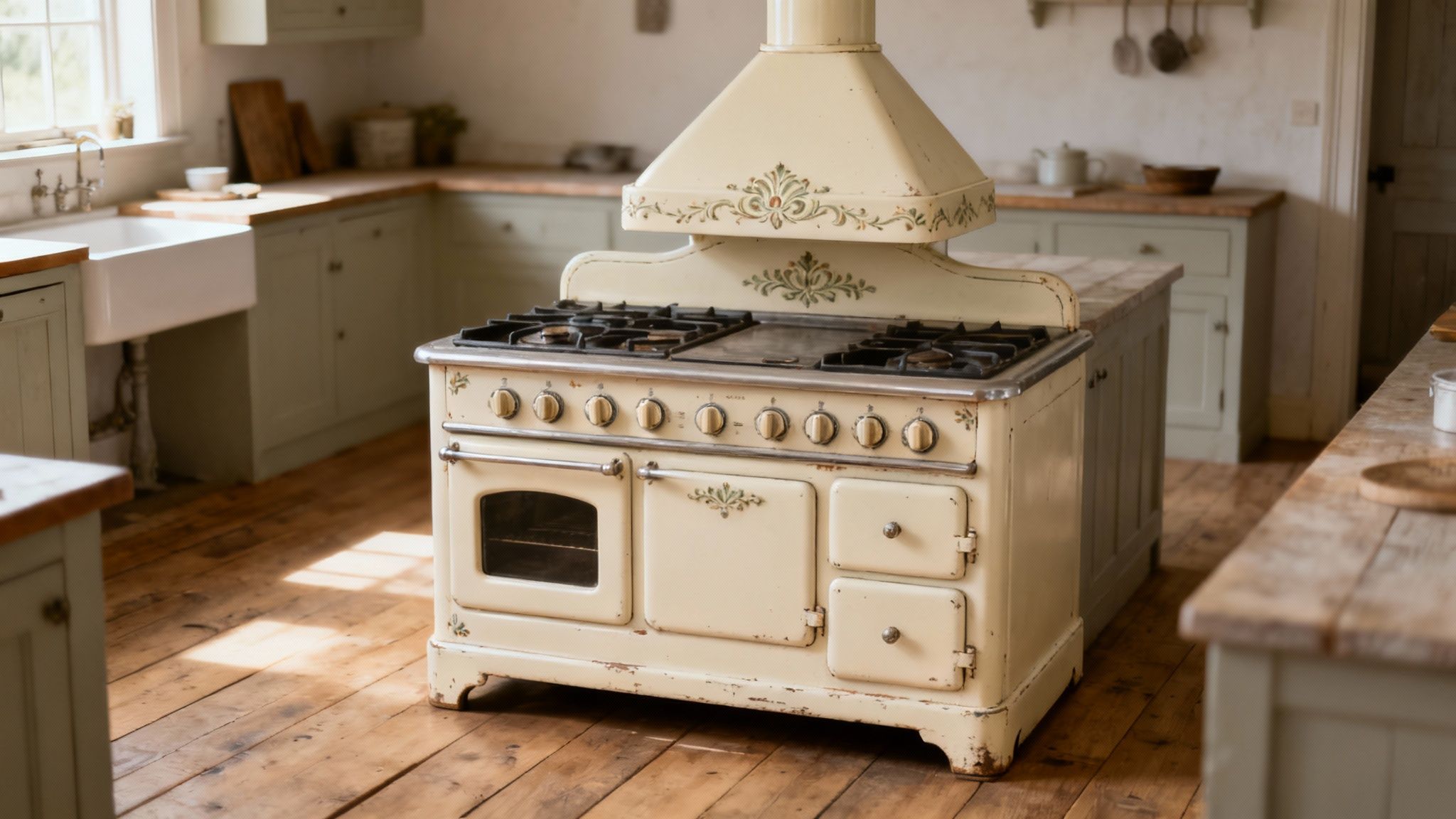
For rural NSW properties, where the kitchen is the heart of the home, a powerful and reliable cooker is essential. Investing in a professional-grade vintage-style stove ensures it can handle everything from family meals to preserving harvest produce. Its robust construction provides longevity, while its timeless aesthetic enriches the authentic country kitchen atmosphere. This choice transforms a practical appliance into a celebrated design element.
Implementation and Key Considerations
Integrating a large, distinctive stove requires careful planning to ensure it enhances, rather than overwhelms, the space. The design should feel intentional, with surrounding cabinetry and finishes chosen to complement the appliance's style and colour. This approach creates a cohesive and visually stunning kitchen narrative.
Consider these actionable tips:
- Measure Meticulously: Vintage-style stoves are often larger than standard models. Accurately measure your available space, including doorways and access paths, to ensure a smooth installation process.
- Coordinate the Range Hood: The range hood is just as important as the stove itself. Choose a style, whether ornate pressed metal or a simple timber-clad design, that complements the stove and provides adequate ventilation.
- Budget for Professional Installation: These specialised appliances often require professional installation for gas, electrical, and ventilation connections to meet Australian standards.
- Balance Colour and Finish: Select a stove colour that harmonises with your cabinetry. A cream or black stove works beautifully with neutral cabinets, while a bold colour can serve as a stunning contrast in a more contemporary country kitchen design.
This appliance choice is ideal for homeowners wanting to make a bold statement and invest in a durable, high-performance cooking centre. It anchors the kitchen with a sense of history and permanence, turning everyday cooking into a more memorable experience. Getting such large, specialised items to remote properties is a challenge we overcome; our 10-tonne 4×4 truck allows us to deliver materials, equipment, and labour directly to your farm, no matter how remote.
10. Herb Gardens and Fresh Produce Display
A true country kitchen is intrinsically linked to the land it serves, and one of the most effective ways to express this connection is by incorporating fresh herbs and produce directly into the design. Bringing edible greenery indoors bridges the gap between garden and table, infusing the space with life, vibrant colour, and practical functionality. This approach moves beyond simple decoration, turning your kitchen into a living pantry that celebrates the freshness of farm life.
For rural NSW homes, where self-sufficiency is often a core value, integrating a small-scale herb garden or a dedicated area for produce display reinforces a farm-to-table ethos. Window planters filled with aromatic herbs, hanging baskets with trailing rosemary, or even a countertop section for showcasing colourful vegetables in rustic wooden crates adds an authentic, sensory layer to your kitchen. This is one of the most accessible country kitchen design ideas, offering both aesthetic appeal and culinary convenience.
Implementation and Key Considerations
Successfully integrating living elements requires thoughtful placement and selection. The goal is to create a display that is both beautiful and easy to maintain, ensuring it enhances your daily routine rather than complicating it. Even the most remote properties can support this, as our 10-tonne 4×4 truck allows us to deliver all necessary materials, from custom shelving to specialised planters, directly to your site anywhere in NSW.
Consider these actionable tips:
- Light-Appropriate Selection: Position sun-loving herbs like basil and thyme in a bright, sunny window, while shade-tolerant varieties like mint and parsley can thrive in less direct light. For those keen on incorporating fresh flavours directly into their cooking, you can also explore the easiest herbs to cultivate indoors.
- Vertical Gardening: Utilise wall space by installing floating shelves or a wall-mounted rail system for hanging pots. This keeps countertops clear while creating a stunning vertical garden feature.
- Stylish Containment: Choose containers that complement your kitchen’s decor. Terracotta pots enhance a rustic feel, while enamelled tins or ceramic planters can add a touch of polished charm. Labelling them clearly adds a quaint, organised look.
- Rotate and Refresh: Keep your display looking its best by rotating produce as it’s used and seasonally swapping out plants. A bowl of vibrant lemons in winter can be replaced with a crate of fresh tomatoes in summer.
This approach is ideal for homeowners who want their kitchen to feel like the true heart of the homestead. It adds an interactive, ever-changing element that is both beautiful and functional, constantly reminding you of the bounty of your land.
10-Point Country Kitchen Design Comparison
| Item | Implementation Complexity 🔄 | Resource Needs ⚡ | Expected Outcomes 📊 ⭐ | Ideal Use Cases 💡 | Key Advantages ⭐ |
|---|---|---|---|---|---|
| Farmhouse Style Cabinetry | Medium — carpentry + shelving modifications | Moderate — mid-range materials & hardware | Warm, inviting aesthetic; moderate storage; ⭐⭐⭐⭐ | Family kitchens, cottage or rural renovations | Affordable customization; displays dishware |
| Butcher Block & Wood Countertops | Medium — installation + sealing/finishing | Moderate — hardwood cost + ongoing oiling | Tactile, warm work surface; ages with maintenance; ⭐⭐⭐ | Food prep areas; country kitchens favoring warmth | Refinishable; eco-friendly; gentler on knives |
| Vintage Tile Backsplash | High — sourcing artisan tiles + skilled install | Moderate–High — tile cost & professional labor | Strong visual focal point; durable wall protection; ⭐⭐⭐⭐ | Accent above stove/sink; historic or statement kitchens | Unique, collectible look; easy to clean |
| Apron Front Sink with Vintage Fixtures | High — cabinet mods & plumbing adjustments | High — sink materials + fixtures + installation | Deep, highly functional basin; strong focal element; ⭐⭐⭐⭐ | Large kitchens; heavy cooks; farmhouse restorations | Durable (fireclay/cast iron); fits large cookware |
| Open Shelving with Vintage Accessories | Low — shelf install and styling | Low — shelving hardware + decor items | Personalized display; risk of clutter; ⭐⭐⭐ | Casual kitchens, renters, styled displays | Flexible, affordable, showcases collections |
| Vintage Lighting (Pendants & Chandeliers) | Medium — electrical work & placement | Low–Moderate — fixture cost varies | Warm ambiance and decorative focal points; ⭐⭐⭐⭐ | Islands, dining areas, mood lighting in country kitchens | Elevates atmosphere; widely available styles |
| Shaker-Style Cabinetry | Medium — standard cabinet installation | Moderate — depends on materials/finish | Timeless, clean backdrop; versatile resale appeal; ⭐⭐⭐⭐ | Transitional or clean country kitchens; resale-focused remodels | Low-maintenance, versatile, enduring design |
| Exposed Ceiling Beams & Wooden Ceilings | High — structural work, possible permits | High — materials + professional installation | Dramatic architectural impact; can affect brightness; ⭐⭐⭐⭐ | High-ceiling spaces, historic or rustic homes | Authentic character; strong visual architecture |
| Vintage Stove & Range Hood | High — specialized hookups & ventilation | Very High — appliance cost + installation | Bold statement piece; performance varies by model; ⭐⭐⭐ | Showpiece kitchens, period restorations, serious cooks | Nostalgic focal point; durable, brand prestige |
| Herb Gardens & Fresh Produce Display | Low — planters and placement | Low — plants, containers, light (may need grow lights) | Fresh herbs on hand; added color and aroma; ⭐⭐⭐ | Farm-to-table cooks, sunny windowsills, sustainable kitchens | Fresh ingredients, low-cost, sensory benefits |
Bringing Your Vision to Life, No Matter the Distance
Designing the heart of your rural home is an exciting and deeply personal journey. Throughout this guide, we've explored a wealth of country kitchen design ideas, from the timeless appeal of Shaker-style cabinetry and butcher block benchtops to the practical elegance of a deep apron-front sink. We’ve covered how elements like exposed beams, vintage-inspired lighting, and open shelving can work together to create a space that is not only beautiful but also deeply connected to the rhythm of country life.
The key takeaway is that a truly successful country kitchen balances aesthetics with unwavering functionality. It’s a space built for more than just cooking; it’s a hub for preserving produce, washing muddy boots, and gathering with family after a long day's work. Achieving this requires thoughtful planning around material durability, smart layouts, and clever storage solutions tailored to the unique demands of a rural NSW property.
Turning Inspiration into a Tangible Reality
Transforming these concepts from a mood board into a finished, hard-wearing kitchen presents its own set of challenges, especially when your property is far from urban centres. The logistics of sourcing quality materials, coordinating skilled trades, and managing a project from a distance can quickly become overwhelming. This is where specialised expertise becomes invaluable. A successful renovation hinges on a deep understanding of how to build for the Australian climate, ensuring every element, from the benchtops to the joinery, can withstand extreme heat, dust, and daily wear.
The Awesim Advantage: Our 35 years of experience exclusively in regional NSW means we don’t just build kitchens; we build resilient, practical spaces designed for the realities of farm and homestead life. We anticipate the challenges so you don’t have to.
Bridging the Gap: Our Commitment to Remote Projects
One of the most significant barriers for remote renovations is access. Getting materials, equipment, and a skilled team to your doorstep can be a logistical nightmare, often leading to delays and compromised quality. We recognised this problem and invested in a unique solution to ensure no property is too hard to reach.
Our specialised 10-tonne 4×4 truck is more than just a vehicle; it’s our commitment to serving every corner of rural New South Wales. This all-terrain workhorse allows us to transport everything needed for your project directly to your site, navigating dirt tracks, rugged terrain, and remote access roads with ease. This capability means:
- No Compromise on Quality: We bring the same high-grade materials and advanced equipment available in the city, right to your property.
- Guaranteed Reliability: Your project stays on schedule, unhindered by the logistical hurdles that typically plague remote builds.
- Complete Project Delivery: We bring in labour, materials, and equipment where and when it's needed the most, managing the entire supply chain for a seamless and efficient process.
Embarking on a kitchen renovation is a significant investment in your home and lifestyle. By choosing a partner who understands the nuances of rural construction, you are ensuring your new kitchen will be a source of joy and functionality for decades to come. Your dream country kitchen is not just a possibility; with the right team and equipment, it's a certainty, no matter how far off the beaten track you are.
Ready to start your renovation journey? With Awesim Building Contractors, your remote location is an asset, not an obstacle. Contact us today to discuss your country kitchen design ideas and learn how our specialised equipment and regional expertise can bring your vision to life, anywhere in NSW.