Renovating a bathroom on a rural or remote New South Wales property presents a unique set of challenges that go far beyond simple aesthetics. Success hinges on selecting materials and designs that can withstand the rigours of farm life, from persistent dust to variable water pressure and the general wear and tear of a working property. This guide offers more than just a gallery of design inspiration; it provides a comprehensive roundup of practical ideas for bathroom renovations tailored specifically for the demands of the Australian bush.
We have curated ten actionable concepts focusing on durability, water efficiency, and long-term, low-maintenance functionality. Whether you're updating an old homestead bathroom or planning a new amenities block, these insights are designed to enhance comfort, add significant value, and ensure your investment lasts for decades. Before embarking on your rural bathroom transformation, it's helpful to clarify the scope of your project by understanding the fundamental differences between renovation and remodeling. This distinction will help you set a realistic budget and timeline from the outset.
From robust tiling solutions and septic-safe systems to accessible designs for aging in place, each idea is presented with practical implementation details. We recognise that logistics can be a major hurdle for remote projects. That's why we operate a specialised 10-tonne 4×4 truck, allowing us to bring all necessary labour, materials, and equipment directly to even the most isolated properties across New South Wales. This ensures your project proceeds smoothly, no matter where your homestead is located. Let’s explore the solutions that will transform your bathroom into a resilient and functional sanctuary.
1. Water-Efficient Fixtures for Rural Properties
For rural and regional properties across New South Wales, water isn't just a utility; it's a finite and precious resource. One of the most impactful ideas for bathroom renovations is upgrading to water-efficient fixtures. This approach involves replacing old, high-consumption fittings with modern, low-flow toilets, showerheads, and taps. The goal is to significantly reduce water usage without compromising on performance or comfort, which is crucial for properties reliant on rainwater tanks, bores, or those in drought-prone areas.

Why It's Essential for Rural Homes
The difference in water consumption is substantial. An older single-flush toilet can use 9-12 litres per flush, whereas a modern dual-flush model from a brand like Caroma uses as little as 3-4.5 litres. Similarly, a standard showerhead can consume over 20 litres per minute, while a WELS-rated low-flow alternative from a manufacturer like Dorf can reduce that to just 6-8 litres per minute. For a family on a remote farm or a cattle station with multiple staff amenities, these savings add up quickly, extending the life of your tank water and reducing strain on bore pumps.
Key Insight: Upgrading to WELS 3-star (or higher) rated fixtures can cut your bathroom water usage by more than half, providing long-term sustainability and cost savings.
Practical Implementation Tips
Successfully integrating water-saving fixtures requires careful planning, especially in remote locations.
- Check WELS Ratings: Always choose fixtures with a high Water Efficiency Labelling and Standards (WELS) star rating. A 3-star rating is a good starting point, but higher ratings offer greater savings.
- Install Tap Aerators: This is a simple, cost-effective upgrade for existing taps that immediately reduces water flow without affecting pressure.
- Assess Plumbing Compatibility: Ensure your existing plumbing can support new low-flow systems. Our team can assess this as part of our renovation service.
- Logistical Planning: Getting materials to a remote property can be a challenge. We operate a 10-tonne 4×4 truck, allowing us to bring all necessary fixtures, labour, and equipment directly to even the most isolated properties in NSW. This capability was essential for projects like a recent bathroom renovation on a cattle station, where resource management was paramount.
2. Robust Tiling Solutions for Rural Bathrooms
Bathrooms on rural properties endure more than just steam and water; they contend with mud, dust, and significant temperature fluctuations. Choosing robust tiling solutions is one of the most practical ideas for bathroom renovations in this environment. This means selecting durable, low-maintenance tiles that are specifically designed to withstand the harsh conditions of farm life, ensuring longevity and easy cleaning in high-traffic homesteads.

Why It's Essential for Rural Homes
Standard tiles can quickly show wear and tear in a rural setting. Dirt and grime become trapped in numerous grout lines, and less durable materials can chip or crack under heavy use. Opting for large-format porcelain or ceramic tiles (600x600mm or larger) dramatically reduces the number of grout lines, making cleaning simpler and faster. Brands like Hardian Tiles offer products with high PEI ratings, indicating superior resistance to abrasion and wear, which is ideal for bathrooms in Tamworth and Armidale farmhouses that see constant foot traffic.
Key Insight: Large-format tiles combined with a matte, earth-toned finish not only minimise cleaning but also effectively camouflage the dust and dirt common in rural living.
Practical Implementation Tips
Selecting and installing the right tiles for a remote property requires logistical planning and technical knowledge.
- Check PEI Ratings: For bathroom floors, choose a tile with a Porcelain Enamel Institute (PEI) rating of 3 or higher to ensure it withstands moderate to heavy foot traffic.
- Minimise Grout Lines: Use the largest format tiles your space allows. Fewer grout lines mean less scrubbing and a cleaner look over time.
- Prioritise Safety and Finish: Opt for matte or textured finishes with non-slip glazing to prevent accidents, especially in wet areas. These finishes are also better at hiding minor scuffs and dust.
- Ensure Proper Waterproofing: All tiling work must comply with Australian Standard AS 3740 for waterproofing in domestic wet areas. Our expert tilers in Tamworth ensure this crucial step is done correctly.
- Logistical Expertise: Transporting fragile materials like tiles to remote locations can be difficult. Our 10-tonne 4×4 truck enables us to deliver all necessary materials, equipment, and skilled labour directly to any property in NSW, guaranteeing a professional installation regardless of your location.
3. Accessible Bathroom Design for Aging Farmers
For many rural families, the farm isn't just a business; it's a home for life. Accessible bathroom design is one of the most vital ideas for bathroom renovations, ensuring safety, independence, and comfort for aging farmers and their families. This approach integrates universal design principles like curbless walk-in showers, strategically placed grab bars, and non-slip flooring to create a functional space that adapts to changing mobility needs. The objective is to future-proof the homestead, allowing residents to age in place with dignity and security.
Why It's Essential for Rural Homes
On remote properties, a fall or injury can have severe consequences due to the distance from medical services. An accessible bathroom minimises these risks. For instance, converting a traditional stepped shower to a zero-threshold or 'curbless' design eliminates a major trip hazard. Likewise, installing reinforced grab bars provides crucial support, while wider doorways and accessible vanities accommodate walkers or wheelchairs. These modifications are not just for the elderly; they benefit anyone with a temporary injury, making the home safer for all generations.
Key Insight: Designing to Australian Standard AS 1428.1 (Design for Access and Mobility) ensures your renovation meets proven safety and accessibility benchmarks, providing long-term value and peace of mind.
Practical Implementation Tips
Creating a truly accessible bathroom requires precise planning and adherence to established standards.
- Install Compliant Grab Bars: Ensure grab bars are 32-35mm in diameter and securely fixed into wall studs or noggins. Position them at a height of 800-900mm for optimal leverage and safety.
- Prioritise Non-Slip Flooring: Select tiles with a high slip-resistance rating (R10 or higher) and ensure the floor in wet areas has a minimum gradient of 1:50 to prevent water pooling.
- Plan for Manoeuvrability: If renovating from scratch, aim for a wider layout that allows for easier movement. Even small changes, like installing an outward-opening door, can make a significant difference.
- Ensure Proper Lighting: Good, even lighting is critical for safety. Plan for multiple light sources to eliminate shadows and improve visibility, especially around the shower and vanity. Our team handles all logistics, using our 10-tonne 4×4 truck to deliver all necessary materials and specialised fixtures to even the most remote NSW properties, ensuring compliance and quality regardless of location.
4. Septic-Safe Bathroom Systems for Remote Properties
For properties beyond the reach of mains sewerage, like those in Bourke, Walgett, and Broken Hill, a septic system is the lifeblood of waste management. A crucial idea for bathroom renovations in these areas is designing the space to be septic-safe. This means selecting fixtures, products, and layouts that work in harmony with your onsite system, preventing costly blockages, damage, and environmental contamination. The goal is to create a functional, modern bathroom that doesn't compromise the delicate biological balance of the septic tank.
Why It's Essential for Rural Homes
A standard bathroom renovation can inadvertently destroy a septic system. Harsh chemical cleaners, non-biodegradable wipes, and excessive water from high-flow fixtures can kill the essential bacteria needed to break down waste. This can lead to system failure, requiring expensive pump-outs or even a full system replacement. For large cattle stations or farms with multi-user amenities, the strain is even greater. Ensuring the bathroom design respects the septic system's capacity and operational needs is fundamental to long-term property viability and compliance with local council and health guidelines.
Key Insight: A septic-safe bathroom renovation isn't just about what you install; it's about creating a system that protects your most critical piece of infrastructure from daily use.
Practical Implementation Tips
A successful septic-safe bathroom requires a thoughtful approach to both design and user education.
- Assess System Capacity: Before finalising fixture selections, understand your septic tank's size and daily load capacity. This will inform choices around toilets and showerheads.
- Choose Septic-Safe Products: Only use biodegradable, septic-safe cleaning agents and toilet paper. Educate all property residents and staff on what can and cannot be flushed.
- Plan Drainage and Ventilation: Proper drainage and ventilation are vital to prevent odours and ensure the system functions correctly. We can assess and install the appropriate infrastructure.
- Logistical Expertise: Renovating for septic compatibility often requires specific materials and components. Our 10-tonne 4×4 truck ensures we can deliver everything needed, from septic-friendly fixtures to specialised plumbing parts, directly to any remote NSW property, ensuring the project is done right the first time.
5. Durable Vanity and Storage Solutions
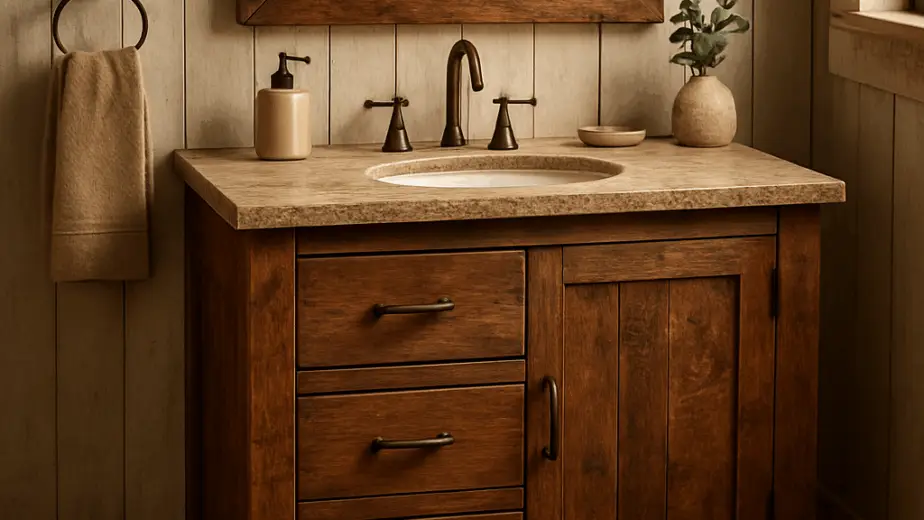
A rural bathroom must endure far more than its urban counterpart, from fluctuating humidity to heavy daily use by a working family. Standard flat-pack vanities often fail quickly under these conditions. Investing in durable, custom-built vanity and storage solutions is one of the most practical ideas for bathroom renovations on a farm or regional property. This involves using robust materials like solid timber or marine-grade plywood, finished with resilient coatings to withstand moisture and wear.
Why It's Essential for Rural Homes
Off-the-shelf storage solutions are typically made from particleboard, which swells and delaminates when exposed to the high moisture levels common in poorly ventilated rural bathrooms. A custom vanity built by a specialist contractor using quality marine-grade plywood or solid timber, like those we've installed for farmsteads in the Tamworth region, is designed to last. These units are built to handle the demands of a farm lifestyle, providing dedicated storage for work gear, bulk supplies, and accommodating multiple users during peak times.
Key Insight: Custom joinery allows you to create a storage system tailored to your specific needs, maximising space and ensuring long-term durability against the harsh rural environment.
Practical Implementation Tips
Creating a vanity that is both functional and resilient requires a focus on materials and construction.
- Choose Robust Materials: Opt for marine-grade plywood or solid, treated timbers. These materials offer superior resistance to moisture and warping compared to standard MDF or particleboard.
- Select Quality Hardware: Use heavy-duty, commercial-grade hinges, drawer runners, and handles that can withstand constant, forceful use.
- Seal Every Edge: Ensure every cut edge and joint is thoroughly sealed with a waterproof sealant before installation to prevent any water ingress.
- Plan for Farm Life: Design storage with deeper drawers or taller cabinets to accommodate work boots, first aid kits, and bulk-bought toiletries.
- Logistical Planning: Sourcing quality timber and skilled joiners can be difficult in remote areas. Our team simplifies this by using our 10-tonne 4×4 truck to deliver all custom-built units, materials, and specialist labour directly to your property, no matter how remote your NSW location is.
6. Efficient Ventilation and Moisture Control
In rural NSW, where seasonal humidity can fluctuate dramatically, controlling moisture in your bathroom is not just about comfort; it's about protecting your property's structural integrity. Efficient ventilation is one of the most critical ideas for bathroom renovations, focusing on installing systems that actively remove damp air. This prevents the buildup of condensation, which leads to mould, peeling paint, and long-term damage to timber, plasterboard, and fixtures.
Why It's Essential for Rural Homes
Older farmsteads and rural homes often lack adequate mechanical ventilation, relying on a simple window. During cold Tamworth winters or humid summers near Armidale, this is insufficient. A high-quality exhaust fan system is essential to draw out steam and moisture before it settles on surfaces. For staff amenities on a large station, this prevents a constant cycle of dampness and mould growth, improving hygiene and reducing maintenance costs associated with repainting and repairs.
Key Insight: Proper ventilation is a preventative measure. It protects your renovation investment by stopping moisture damage before it starts, crucial for preserving both modern and heritage rural properties.
Practical Implementation Tips
Installing an effective ventilation system requires more than just picking a fan; it demands a strategic approach to air movement.
- Correct Sizing: Size the exhaust fan to the room. Aim for a minimum of 250 CFM (Cubic Feet per Minute) for every 10 square metres of floor area to ensure adequate air exchange.
- External Ducting: Always duct the exhaust fan directly outside through the roof or an external wall. Never vent into the attic or a wall cavity, as this simply moves the moisture problem elsewhere.
- Automated Controls: Install a humidity sensor that automatically activates the fan when moisture levels rise. A timer is also highly beneficial to ensure the fan runs for 15-20 minutes after a shower.
- Regular Maintenance: Effective ventilation is paramount to managing moisture and preventing issues like mould in your bathroom. Understand the importance of cleaning your washroom exhaust fan and inspect the system annually to ensure it remains clear and functional.
7. Heating Solutions for Cold Rural Bathrooms
For rural properties, especially in the cooler climates of southern NSW or elevated regions like Armidale and Tamworth, a bathroom renovation is the perfect opportunity to address the piercing cold of winter mornings. Installing effective heating transforms the space from a functional necessity into a comfortable sanctuary. This idea involves integrating solutions like underfloor heating, heated towel rails, or high-efficiency heat lamps to provide consistent warmth where it's needed most, combating the drafts and chill common in older farmhouses and homesteads.
Why It's Essential for Rural Homes
In isolated rural settings, a cold bathroom isn't just uncomfortable; it can be a significant deterrent to daily routines. Unlike urban homes with consistent central heating, many rural properties experience drastic temperature drops. Radiant floor heating provides a luxurious, even warmth underfoot, while a quality heated towel rail from a brand like Reece not only warms towels but also gently heats the ambient air. For quick, targeted warmth, modern heat lamp units offer instant comfort, a crucial feature in staff amenity blocks on cattle stations or in guest bathrooms. These solutions significantly enhance the liveability of a home through the colder months.
Key Insight: Combining targeted heating solutions with proper insulation is one of the most effective ideas for bathroom renovations, creating a space that remains warm and energy-efficient year-round.
Practical Implementation Tips
Integrating heating requires careful planning to ensure safety, efficiency, and longevity, particularly when dealing with the unique electrical setups of rural properties.
- Choose the Right System: Underfloor heating is ideal for new builds or major renovations, while heated towel rails and heat lamps can be more easily retrofitted.
- Prioritise Insulation: Ensure walls and ceilings are well-insulated to prevent heat from escaping. This maximises the efficiency of any heating system you install.
- Use Timers and Thermostats: Install programmable timers and thermostats to control heating. This prevents energy wastage by ensuring systems only operate during peak usage times.
- Verify Electrical Capacity: Heating elements draw significant power. Our qualified team will assess your property's switchboard and wiring to ensure it can safely handle the additional load, performing upgrades where necessary. We manage all logistics, using our 10-tonne 4×4 truck to deliver all specialised materials and qualified tradespeople to your remote NSW location.
8. Durable Flooring Options Suitable for Farm Use
A farm bathroom floor endures more than just water and steam; it faces muddy boots, heavy foot traffic, and the daily grit of rural life. Selecting the right flooring is one of the most critical ideas for bathroom renovations on a working property. This means choosing materials like polished concrete, large-format porcelain tiles, or correctly sealed timber that offer exceptional durability, ease of cleaning, and resistance to moisture and temperature fluctuations.

Why It's Essential for Rural Homes
Standard residential flooring often fails quickly under the demanding conditions of a rural or farm environment. A material's resilience is paramount. For instance, large-format porcelain tiles, popular in farmstead bathrooms across the Tamworth region, minimise grout lines where dirt and grime accumulate. Polished concrete, seen in high-traffic amenities on working cattle stations, is almost indestructible and simple to hose down. These materials provide a practical, long-lasting surface that maintains its integrity and appearance despite constant use.
Key Insight: Choosing flooring with a slip-resistance rating of at least R11 and a matte or textured finish provides crucial safety in wet conditions and helps conceal dust and footprints.
Practical Implementation Tips
A durable floor's success lies in its professional installation, especially concerning waterproofing and material transport to remote areas.
- Prioritise Slip Resistance: Always select tiles with a minimum R11 slip rating (as per AS 4586) for wet areas to ensure safety.
- Minimise Grout: Use large-format tiles (e.g., 600x600mm or larger) to reduce the number of grout lines, making cleaning significantly easier.
- Ensure Correct Drainage: Proper floor slope (a minimum of 1:50) is non-negotiable for effective water drainage to the waste outlet, as outlined in Australian Standard AS 3740.
- Consider Underfloor Heating: Tiles and concrete can be cold underfoot, especially in cooler climates. Installing underfloor heating enhances comfort.
- Logistical Expertise: Transporting heavy materials like concrete or large tiles to remote properties requires specialised equipment. Our 10-tonne 4×4 truck is equipped to deliver all necessary flooring materials, tools, and skilled labour directly to any site in NSW, ensuring your project proceeds without logistical delays.
9. Smart Storage and Organisation Systems
For busy farm families and working professionals in rural NSW, a bathroom is more than just a place to wash; it's a high-traffic zone that needs to manage everything from daily toiletries to muddy work gear. One of the most practical ideas for bathroom renovations is incorporating smart storage and organisation systems. This involves moving beyond standard vanities to design custom solutions that cater specifically to the demands of a rural lifestyle, reducing clutter and improving day-to-day functionality.
Why It's Essential for Rural Homes
A standard bathroom layout often fails to account for the unique needs of a working property. Farmsteads may have multiple family members or staff sharing amenities, leading to a build-up of personal items and cleaning supplies. Well-planned storage, such as custom cabinetry seen in renovated homesteads across NSW, ensures there's a designated place for everything. This organised approach makes the space easier to clean, more efficient for multiple users, and keeps personal items separate from work-related gear.
Key Insight: Thoughtful bathroom storage transforms a chaotic, multi-user space into a streamlined and highly functional room, directly supporting the practicalities of farm life.
Practical Implementation Tips
Creating an organised bathroom requires a clear strategy that starts long before construction.
- Assess Real Needs: Before designing, count the users and list the items that need storing, from toiletries and towels to first-aid kits and cleaning products.
- Utilise Vertical Space: Install tall linen cabinets or wall-mounted shelving to maximise storage without sacrificing floor space. This is a key principle in many ideas for small bathroom renovations.
- Incorporate Dividers: Use drawer dividers and internal organisers to keep smaller items neat and easily accessible.
- Plan for Logistics: Designing and sourcing custom cabinetry for a remote property can be complex. Our 10-tonne 4×4 truck allows us to deliver all materials, custom-built units, and specialised equipment directly to your site, ensuring a seamless installation no matter your location in NSW.
10. Quality Lighting Design for Safety and Functionality
In rural and remote settings, effective lighting is more than an aesthetic choice; it’s a critical component of safety and daily function. Quality lighting design involves layering different types of light (ambient, task, and accent) to create a space that is well-illuminated, safe, and welcoming. This is especially important on properties where natural light may be limited or where power supply can be inconsistent, making well-planned, efficient lighting a cornerstone of practical ideas for bathroom renovations.
Why It's Essential for Rural Homes
On a farm or station, a bathroom is often used at all hours, from pre-dawn starts to late-night checks. Poor lighting can create trip hazards, make tasks like shaving or applying first aid difficult, and cause eye strain. Using modern LED technology provides bright, reliable illumination with minimal energy consumption, a significant benefit for off-grid homes or those on generators. Properly lit bathrooms in staff facilities on a cattle station, for example, directly contribute to a safer working and living environment.
Key Insight: A layered lighting plan using efficient LED fixtures enhances safety and functionality while reducing energy costs, a crucial combination for remote properties.
Practical Implementation Tips
A well-lit bathroom balances different light sources for optimal performance.
- Layer Your Lighting: Combine a central, dimmable ambient light with focused task lighting. Install vertical fixtures on either side of the mirror or a single fixture above to eliminate shadows.
- Choose the Right Temperature: Use LED bulbs around 3000K (warm white) to create a comfortable, natural-looking light that isn't harsh.
- Prioritise Wet Area Safety: Ensure all fixtures in or near showers and baths have an appropriate moisture rating (IP65 or higher) to prevent electrical hazards.
- Plan for Power Outages: For properties prone to blackouts, integrating battery-backup or emergency lighting is a wise safety measure.
- Logistical Considerations: Sourcing specialised, IP-rated fixtures for remote delivery can be difficult. Our 10-tonne 4×4 truck enables us to transport all necessary electrical components, fixtures, and qualified tradespeople directly to your site anywhere in NSW, ensuring a compliant and professional installation.
10-Point Comparison: Rural Bathroom Renovation Ideas
| Feature / Item | 🔄 Implementation complexity | ⚡ Resource requirements | 📊 Expected outcomes | 💡 Ideal use cases | ⭐ Key advantages |
|---|---|---|---|---|---|
| Water-Efficient Fixtures for Rural Properties | Medium — simple retrofit or minor plumbing adjustments | Low–Medium — higher upfront fixture cost, minimal ongoing maintenance | Reduces water use ~30–50%; lowers bills; preserves tank/bore supply | Rural properties on tanks/bores, cattle stations with limited water | Reliable water savings, WELS compliance, easy retrofit |
| Robust Tiling Solutions for Rural Bathrooms | High — skilled installation and substrate prep required | Medium–High — quality porcelain/ceramic, labor, grout/sealers | Extremely durable, easy to clean, long lifespan (20+ yrs) | High-traffic farm bathrooms, muddy/dirty environments | Durability, fewer grout lines, low maintenance |
| Accessible Bathroom Design for Aging Farmers | Medium–High — space planning, possible structural mods | Medium — compliant fixtures, wider doors, grab bars, specialist install | Improves safety, enables aging-in-place, increases resale value | Aging farmers, long-term residents, multi-generation homesteads | Reduces fall risk, compliance with AS 1428.1, preserves independence |
| Septic-Safe Bathroom Systems for Remote Properties | Medium — requires septic-capacity-aware design and vetting | Low–Medium — compatible fixtures, proper drainage/venting, user education | Extends septic life, reduces failures and pumping frequency | Remote properties without mains sewage, multi-user farm facilities | Protects septic systems, lowers long-term maintenance costs |
| Durable Vanity and Storage Solutions | Medium — custom carpentry and accurate measurement | Medium–High — solid timber/marine plywood, quality hardware, finishes | Long-lasting, fits site-specific needs, easier local repair | Heritage homesteads, multi-user farm bathrooms, heavy daily use | Custom fit, repairable, tailored storage for work gear |
| Efficient Ventilation and Moisture Control | Medium — correct duct routing and sensor integration essential | Medium — quality exhaust fans, insulated ducting, humidity sensors | Prevents mold/mildew, protects structure, improves air quality | Humid climates, older bathrooms, renovated wet areas | Moisture control, health benefits, extended fixture life |
| Heating Solutions for Cold Rural Bathrooms | Medium — electrical capacity and integration planning | Medium–High — heated rails, radiant floors, heat lamps, thermostats | Increased comfort, faster towel drying, reduced condensation | Cold regions (Armidale/Tamworth), elevated rural properties | Comfort, reduces moisture issues, adds property value |
| Durable Flooring Options Suitable for Farm Use | Medium–High — skilled install, correct slope and sealing | Medium–High — large-format tiles, sealed concrete, slip treatments | Handles heavy use, easy cleaning, long lifespan, good traction | High-traffic farm bathrooms, areas with muddy boots | High durability, slip resistance, low maintenance |
| Smart Storage and Organization Systems | Medium — careful planning and custom cabinetry | Medium — custom units, organizers, ventilation for linens | Maximizes space, reduces clutter, improves daily routines | Multi-user bathrooms, families, properties storing work gear | Optimizes workflow, tailored storage, improves functionality |
| Quality Lighting Design for Safety and Functionality | Medium — layered lighting design, possible emergency backup | Medium — LED fixtures, dimmers, moisture-rated fittings, wiring | Better safety and task performance; energy-efficient long life | Remote properties with unstable power, grooming and task areas | Improved safety, energy efficiency, long-lasting LEDs |
Bringing Your Rural Bathroom Vision to Life, No Matter How Remote
Transforming a dated, impractical bathroom into a resilient, functional, and beautiful space is one of the most rewarding investments you can make in your rural home. As we've explored, the best ideas for bathroom renovations on regional properties are not just about aesthetics; they are about long-term durability, practicality, and self-sufficiency. This journey from concept to completion requires a unique blend of smart design choices and a deep understanding of the challenges posed by remote living.
Successfully navigating this process means moving beyond a simple checklist. It involves a strategic integration of ideas to create a cohesive, hardworking space. Your new bathroom isn't just a room; it's a vital part of your daily routine, built to withstand the rigours of farm life while providing a sanctuary for relaxation and comfort.
Key Takeaways for Your Rural Renovation
To ensure your project delivers lasting value, let’s revisit the core principles that underpin a successful rural bathroom transformation:
- Prioritise Durability Above All: From robust floor tiling that can handle muddy boots to treated timber vanities and cladding that resist moisture, every material choice must be made with longevity in mind. Your bathroom needs to be as tough as the environment it serves.
- Embrace Water and Waste Management: Integrating water-efficient fixtures and septic-safe systems is non-negotiable. These choices not only protect your property’s essential infrastructure but also promote sustainability and reduce long-term running costs.
- Design for Function and Safety: A well-planned layout, effective ventilation, strategic lighting, and accessible design elements are the foundations of a truly functional space. These practical considerations enhance daily usability and ensure the bathroom remains safe and comfortable for everyone, now and in the future.
Ultimately, the success of your renovation hinges on meticulous planning and flawless execution. The most brilliant design concepts can falter if the logistical challenges of a remote build are underestimated. Sourcing quality materials, coordinating skilled trades, and managing a project far from urban centres requires specialised expertise.
A Note on Execution: The true test of a rural renovation is not just in the design, but in the delivery. Choosing a building partner who can reliably bring materials, equipment, and skilled labour to your property, regardless of its location, is the critical final step in turning your vision into a tangible reality.
This is where planning meets action. For homeowners across New South Wales, the obstacle of distance can feel immense. That's why having a partner equipped for the unique demands of regional construction is paramount. We understand that a standard delivery van won't reach every homestead. That is why we invested in a purpose-built 10-tonne 4×4 truck, designed to navigate everything from corrugated dirt roads to challenging terrain. This vehicle is our mobile workshop and supply hub, enabling us to bring all the necessary labour, high-quality materials, and specialised equipment directly to your property, whether you're near Tamworth or deep in the Far West. We remove the logistical guesswork, ensuring your project is completed to the highest standard without the typical remote-location compromises.
Your home deserves a bathroom that is both a practical asset and a source of pride. By combining the smart renovation ideas discussed here with a construction approach built for the bush, you can create a space that truly enhances your rural lifestyle for decades to come.
Ready to turn these ideas into a stunning and practical reality? The team at Awesim Building Contractors specialises in delivering high-quality, durable renovations to the most remote properties across NSW. Contact us today to discuss how we can bring our expertise, and our 10-tonne 4×4 truck, to your doorstep for a seamless and successful bathroom renovation.