
You’re probably looking at a part of the property that’s been “good enough” for too long. The old bathroom still works, but the floor feels soft near the shower. The kitchen layout fights you every morning. The shed roof has started letting weather in, and the machinery bay you meant to build two seasons ago is now holding up the way you use the whole place.
That’s how most nsw rural building renovations start. Not with glossy plans. With something on the farm no longer doing its job.
Regional owners aren’t sitting still either. Regional NSW saw an 8% increase in residential building value compared to 2019, which tells you plenty of landholders are putting money back into their properties for function, longevity and flexibility, not just appearance (regional NSW building investment growth). On a farm, that usually means better wet areas, tougher external finishes, improved worker or family accommodation, and outbuildings that match the way the property runs.
Starting Your Rural Renovation Journey in NSW
The first job is getting clear on what problem you’re solving.
If the homestead kitchen is cramped, that’s not just an inconvenience. It affects how the house works every day. If the laundry can’t cope with mud, work gear and wet weather, that’s a design problem. If an older shed or stable is hard to access, hard to maintain and no longer safe in rough weather, it’s costing you in time and frustration.

Start with use, not finishes
A solid rural renovation brief usually answers three questions:
- What’s failing now. Leaks, poor layout, rot, access trouble, unsafe stairs, failing cladding, undersized storage.
- What must work better. Easier cleaning, stronger weather protection, more usable bench space, better stock or machinery access, less maintenance.
- What needs to last. In the bush, durability matters more than fashion. Every material and detail should earn its place.
That’s why the early conversations matter. A good plan doesn’t begin with tile colours. It begins with workflow, weather, access, water, storage and how the property runs across the year.
Rural renovations work best when the building starts serving the farm again, instead of the farm working around the building.
Get the whole property in view
A bathroom upgrade can affect plumbing runs, hot water location, drainage and access for trades. A new machinery bay can change vehicle movement, runoff and how close you can sensibly build to existing structures. A granny flat or secondary dwelling can alter how family, staff or visitors use the site.
If you’re still sorting out the bigger picture, it helps to map the property properly before you commit to works. This practical farm planning resource can help pull those ideas into one place: https://awesim.au/create-a-farm/.
Planning and Navigating Rural Regulations
Plenty of rural projects go wrong before anyone unloads a tool. The issue usually isn’t the build itself. It’s poor groundwork on approvals, site constraints and service planning.
Check the rules before you sketch too much
Rural blocks come with their own planning conditions. What’s allowed on one property may be a problem on the next, even in the same district. Before spending real money on drawings, confirm:
- Zoning and permitted use. What can be built, where it can sit, and whether the structure matches the land use.
- Building setbacks. Rural sites often have more room, but that doesn’t mean you can place a shed, deck or extension anywhere.
- Bushfire requirements. If the property is bushfire prone, your design, glazing, screens, cladding and roof details may all change.
- On-site services. Septic, stormwater, tanks, pumps and power supply need to be planned with the renovation, not tacked on later.
The expensive mistake is assuming a “simple reno” won’t trigger wider compliance issues. On country jobs, little changes can have a long tail.
Budget for distance properly
Remote work costs more when access is poor, trades are thin on the ground, and materials don’t arrive in one easy drop. The pressure is real. In NSW building delays guidance, 36% of builders cited rising costs as a significant challenge, national housing construction materials were up 15.4% since mid-2020, and logistics can add 20-50% premiums for remote projects (NSW building delays and remote project costs).
That doesn’t mean a rural renovation is bad value. It means you need an honest scope and a builder who prices access, freight, staging and labour movement properly from day one.
Practical rule: If a quote treats a farm like a suburban block, expect trouble later.
Don’t separate the shed, house and service questions
A common trap is pricing the structure only. Then the owner discovers the full cost involves drainage, power trenching, earthworks, BAL requirements, water storage or fixing access.
For smaller wet area projects, it can help to compare broader renovation thinking from other parts of the industry. These local renovation guides are metro-focused, but they’re useful for understanding how fixtures, waterproofing decisions and layout choices can affect the final scope. On a rural site, you then layer on access, freight and service realities.
Know when council approval is likely to matter
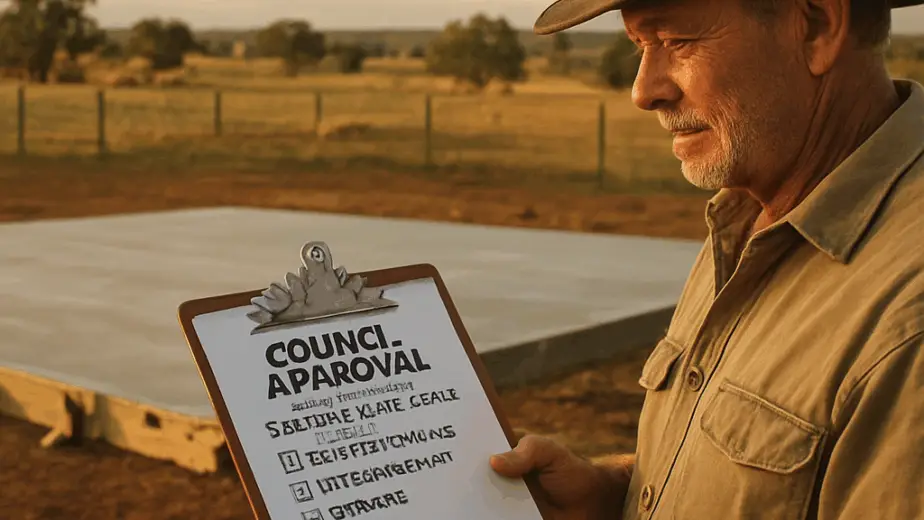
Sheds, additions and rural structures often raise approval questions early, especially when they sit near boundaries, involve plumbing, or support broader agricultural use. If that’s part of your project, this guide on https://awesim.au/do-you-need-council-approval-for-a-shed/ is a useful starting point.
The simple version is this. Sort the paperwork before you sort the paint colours. That’s what keeps a rural project moving.
Choosing Materials Built for the Bush
Cheap materials don’t stay cheap on a remote property. You pay for them again in call-backs, maintenance trips, water damage, replacement labour and the nuisance of fixing work that should’ve been right the first time.
Wet areas deserve better than standard spec
Bathrooms, laundries, mudrooms and kitchens take a hammering in rural homes. Dust, work clothes, temperature swings, wet boots and long periods of hard use expose weak detailing fast. The same applies to roofs and external junctions.
That’s why waterproofing isn’t a box-ticking exercise. In NSW, waterproofing defects affect 42% of buildings with serious defects, and that matters even more on rural properties where intense UV, heavy rain and large temperature swings wear membranes harder in bathrooms, kitchens and roofs (NSW serious defects and waterproofing data).
If the substrate moves, the falls are wrong, or the membrane application is rushed, the finish on top doesn’t matter. Water will find the mistake.

What works on rural jobs
Some material choices consistently hold up better in country conditions:
- Colorbond steel roofing and cladding. It suits sheds, additions and many homestead upgrades because it handles exposure well and is practical to maintain.
- Treated structural timbers. Useful where timber is the right fit, especially when the detailing keeps moisture out of vulnerable junctions.
- Heavy-duty membranes and careful flashing. These aren’t glamorous, but they’re often the difference between a dry building and a repair bill.
- Performance glazing and proper insulation. Comfort matters, but so does protecting interiors from heat load and weather exposure.
The right selection depends on the site. Open plains, cold tablelands, black soil country and exposed ridges all ask different things of a building.
Don’t forget the water side of the property
On many farms, water quality affects tapware life, hot water systems, filtration choices and how often fixtures need maintenance. If your renovation includes a kitchen, laundry, ensuite or worker accommodation, this guide to the best water filtration system for your home is a useful companion read when you’re planning what goes behind the walls as well as in front of them.
Good rural material selection isn’t about making the place look tougher. It’s about building assemblies that stay dry, stable and serviceable.
Where owners often go wrong
They spend freely on visible finishes and trim back the hidden details. Better stone top, cheaper substrate. Nicer tapware, weaker waterproofing. Bigger deck, poor drainage.
That order rarely works out well in the bush. Spend first on the parts that stop failure. Then choose the finish.
Common Rural Renovations and Typical Costs
Most country projects fall into a few familiar categories. Wet area upgrades. Kitchen reworks. Verandahs and decks. Re-roofing. Shed repairs. Machinery bays. Stable and outbuilding works. Occasionally a full reconfiguration of an older homestead that no longer suits the family or the property.
The hard part here is pricing. Costs move with access, site condition, scope clarity, existing structure quality and how far the job sits from suppliers and trades. Because the brief doesn’t provide verified project cost figures, it’s better to use the table below as a planning framework rather than a rate card.
NSW has over 79,300 homes under construction, and the median time to complete a house from approval is 9.4 months, which gives rural owners a realistic reminder that construction pipelines are active and planning lead times matter (NSW homes under construction and build timelines).
Estimated Costs for Common NSW Rural Renovations 2026
| Project Type | Typical Cost Range (AUD) | Key Considerations |
|---|---|---|
| Bathroom renovation | Varies by scope | Waterproofing, substrate condition, plumbing access, ventilation, freight |
| Kitchen renovation | Varies by scope | Cabinet delivery, appliance lead times, wall changes, power upgrades |
| Laundry and mudroom upgrade | Varies by scope | Drainage, storage, hard-wearing finishes, external access |
| Re-roofing rural home or shed | Varies by scope | Roof access, insulation, flashing details, storm damage rectification |
| Deck or verandah build | Varies by scope | Footings, bush exposure, drainage, material durability |
| Machinery bay or custom shed addition | Varies by scope | Slab design, access for steel delivery, use requirements, approvals |
| Stable or outbuilding upgrade | Varies by scope | Wash-down areas, drainage, ventilation, kick resistance, maintenance |
| Whole-homestead renovation | Varies by scope | Staging, temporary living arrangements, services, structural surprises |
How to use that table properly
The useful way to read it is by asking what drives cost on your block.
A bathroom in town might be mostly a fit-out exercise. A bathroom on a remote property might also involve subfloor repair, water pressure issues, septic considerations, freight staging and accommodation planning for trades. A machinery bay may look straightforward until someone checks truck access after rain.
For wet areas, this breakdown of https://awesim.au/cost-of-bathroom-renovations/ is a practical starting point because bathrooms often reveal the underlying condition of an older rural home.
Your Step-by-Step Project Workflow
Rural work runs better when everyone follows a sequence and sticks to it. Not because paperwork is exciting, but because paddocks, access roads, weather and farm operations don’t forgive disorganisation.
1. Site inspection and real brief
The first visit should identify more than the visible defect. It should look at access, levels, drainage, existing services, likely compliance issues and how the property operates week to week.
A useful brief answers practical questions. Can trucks turn around? Where can materials sit without disrupting stock movement? Is the family staying in the house during works? What can’t be blocked off?
2. Design and scope tightening
Once the problems are clear, drawings and scope should remove ambiguity. That includes dimensions, fixture selection, structural intent, wet area detailing and material choices.
Loose briefs create variation-heavy projects. Tight briefs create cleaner quoting and fewer arguments.
3. Approvals and compliance
This stage can feel slow, but it protects the job. Rural projects often touch more than one issue at once, such as fire requirements, drainage, outbuilding classification or on-site wastewater.
Skipping ahead here is how owners end up paying for redesign, rework or idle labour.
4. Scheduling around the farm
This part gets missed in generic renovation advice. It shouldn’t. A significant issue in country work is that “shearing or calving schedules” are “the primary obstacle on a farm”, and they need to be built into the timeline to avoid disruption (farm cycle planning for rural renovations).
If a builder asks when you want to start but never asks what’s happening on the property that month, they don’t understand farm work yet.
Good scheduling usually means aligning noisy, messy or access-heavy stages with quieter operational windows. It also means planning around weather-sensitive periods and heavy vehicle movement on the property.
5. Procurement and staging
On rural jobs, ordering is only half the task. The other half is deciding when materials should arrive, where they’ll be stored and how they’ll be protected.
Experienced builders earn their keep here. They don’t just buy materials. They stage them in the right order, so the job can keep moving without cluttering the site or damaging stock routes.
6. Construction and supervision
Build order matters. Demolition before replacement sounds obvious, but sequencing trades properly is what keeps the project clean and safe. Wet areas need substrate checks before waterproofing. External work needs weather watch and access planning. Sheds and bays need steel, slab and fixings coordinated, not guessed.
7. Handover and defect closeout
The last stretch shouldn’t be rushed. Practical completion on a rural property means testing doors, plumbing, drainage, roof water behaviour, access clearances and all the small details that get harder to fix once everyone has packed up.
Overcoming Remote Access and Site Logistics
Many otherwise good renovation plans often come unstuck here. The design is fine. The budget is mostly fine. The access is not.
A standard delivery setup works on sealed roads and easy suburban driveways. It doesn’t always work down long dirt runs, through soft entries, across water crossings or into paddock-side build areas where turning space is tight and weather changes the ground overnight.
What usually goes wrong
Remote projects get delayed when materials have to be rehandled. One truck drops at the wrong point. Another vehicle shifts the load. Weather hits. Packaging gets damaged. Trades arrive before the gear they need. Then the owner pays for the inefficiency in time, labour and disruption.
Even small items become a problem when the site is awkward. Plasterboard, joinery, steel lengths, doors, insulation and wet area linings all need careful handling if they’re travelling far off the bitumen.
What works better on real rural sites
The practical answer is to use transport that matches the property. For remote sites around New South Wales, that often means 4×4 capability, enough carrying capacity to reduce repeat trips, and a crew that understands how to move gear without damaging tracks, crossings or the load itself.
That’s why a 10 tonne 4×4 truck matters. It allows materials, equipment and labour to get onto remote properties where standard access falls short. It also helps stage work when the road in is rough, the crossing is marginal, or the build area sits well beyond the front gate.
Awesim Building Contractors uses 4×4 utes and a 10 tonne 4×4 truck to move building materials, equipment and labour onto remote NSW properties, including sites reached by dirt roads and water crossings. That’s not a marketing extra. On some jobs it’s the difference between a workable plan and a stranded one.
Remote access isn’t a side issue on a farm renovation. It’s part of the build method.
A Checklist for Choosing Your Rural Builder
A rural renovation can look straightforward on paper and still go badly if the builder doesn’t understand farm conditions. The right contractor doesn’t just know how to build. They know how to build without getting in the way of the property.
Ask these questions before you sign
Are they licensed for the work they’re taking on
Check their NSW licence details and make sure the licence covers the project type.Do they carry the right insurance
Ask what cover they hold and how that applies to your project. Don’t settle for vague answers.Have they worked on farms and remote sites before
Country work is different. Site access, weather exposure, tank water, septic systems, stock movement and distance from suppliers all change the job.Can they talk clearly about approvals
They don’t need to be a planner, but they should understand the approval path, likely hold-ups and when consultant input is needed.What’s their plan for access and deliveries
Ask how they’ll bring in steel, sheeting, joinery, plasterboard and wet area materials if your road is rough or narrow.How will they protect farm operations
Good builders ask where trucks can go, what gates must stay clear, when yards are busy and which periods are off limits.Who supervises the work
You want to know who is watching the job, checking details and making decisions when something hidden is uncovered.
Listen for practical answers
A capable rural builder usually speaks in specifics.
They’ll ask about creek crossings, not just your postcode. They’ll ask where the stock are moving. They’ll ask if the family needs the laundry kept live during the week. They’ll tell you what parts of the project may expose rotten framing, old plumbing or drainage trouble.
Watch for these warning signs
| Sign | Why it matters |
|---|---|
| Quote is vague on exclusions | You may be paying later for things that were always likely |
| No discussion of access | The builder may be pricing like a town job |
| No mention of waterproofing details | Hidden failures are often the costly ones |
| No site-specific staging plan | Materials and trades may arrive in the wrong order |
| No questions about farm schedule | The build may clash with core property operations |
Choose fit over promises
The safest hire is usually the builder who is calm, detailed and realistic. Not the one who says every problem is easy.
Country owners don’t need theatre. They need someone who can read a block, plan a sequence, organise trades, get materials in, and leave the property more useful than they found it.
If you’re weighing up nsw rural building renovations and want a builder who understands homesteads, sheds, wet areas, remote access and the way farms operate, Awesim Building Contractors works across regional and remote New South Wales on repairs, upgrades and new rural building projects.