
Building in the NSW bush is a different beast altogether. While the rewards are immense, the challenges are a world away from what you’d find on a suburban block. Think vast distances, unpredictable terrain, and the sheer logistics of it all. This isn't a job for just any builder; you need a specialist. A genuine rural builder is more than just a contractor—they're a problem-solver who lives and breathes the unique demands of the land.
Why Your Rural NSW Project Needs a Specialist
Kicking off a build in regional New South Wales is an exciting time. It could be a homestead renovation near Tamworth, a new machinery shed out Dubbo way, or essential repairs on a remote station past Bourke. But the dream of country life can quickly run up against the practical hurdles of getting things done.
In the city, suppliers and trades are practically next door. Out here, projects are defined by distance, access, and the environment itself. This is precisely why a specialist rural builder is your most crucial partner.
Their expertise goes far beyond the tools and materials. It’s about foresight—spotting potential roadblocks before they grind your project to a halt. A builder used to city convenience might be completely thrown by unsealed roads, sudden creek crossings, or the simple fact that the nearest hardware store is a two-hour round trip. Without the right experience, these issues can lead to major delays and budget blowouts.
Taming the Tyranny of Distance
Logistics is, without a doubt, the single biggest headache for any rural build. Coordinating materials, heavy equipment, and a skilled crew to a remote site is a massive undertaking.
Many standard delivery companies simply won't venture down long dirt tracks or to properties miles from the nearest main road. This can leave your project dead in the water, waiting weeks for crucial supplies.
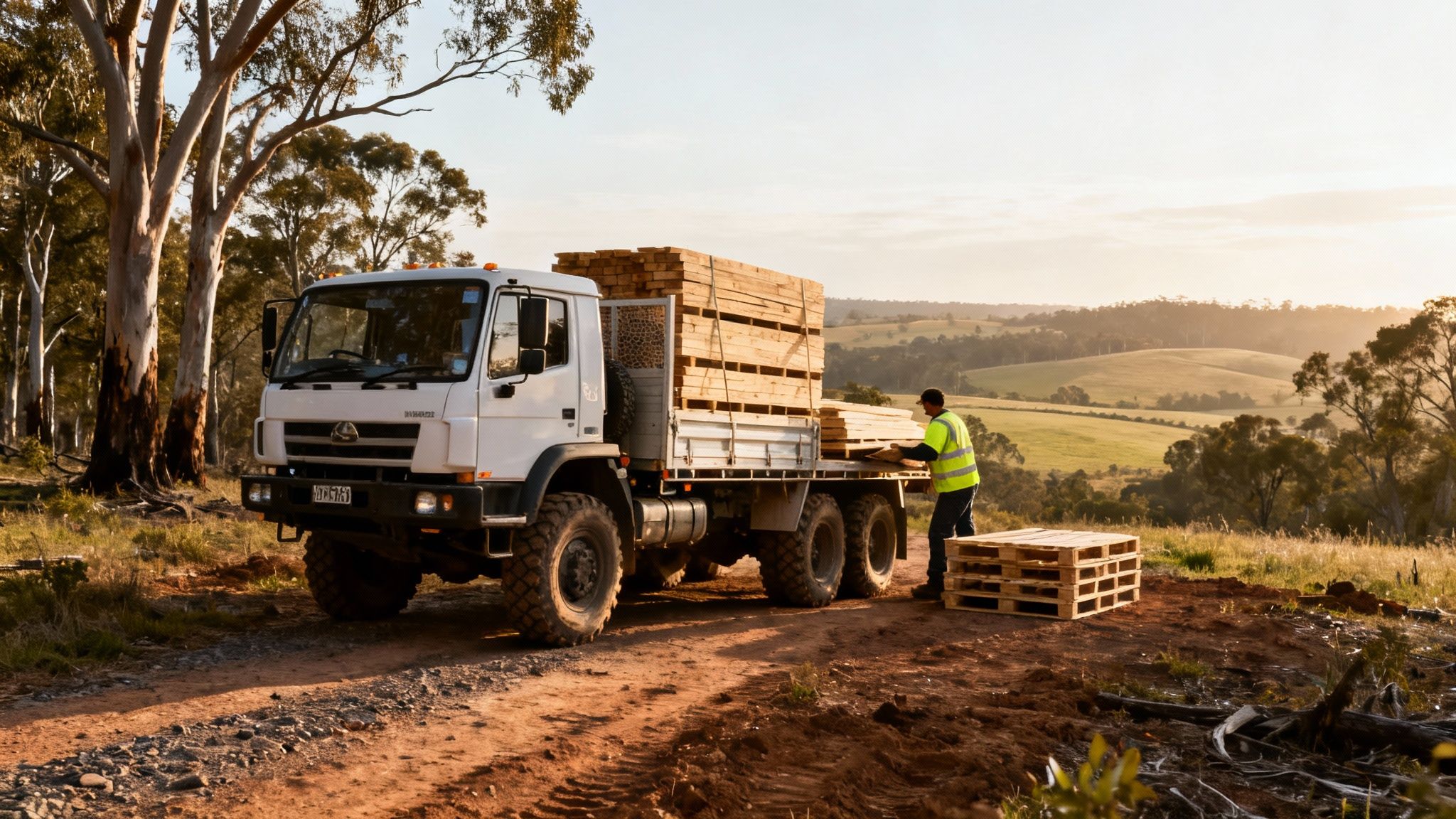
We saw this problem time and time again, so we decided to solve it for our clients across rural NSW. The solution? We invested in our own purpose-built 10-tonne 4×4 all-terrain truck. This machine is the backbone of our operation, making us completely self-sufficient. It allows us to bring in labour, materials and equipment for the most remote properties around New South Wales, wherever and whenever it's needed most. We service a wide area, including properties around Tamworth, Dubbo, Bourke, and other Rural NSW regions.
It's not just a truck; it's our mobile worksite. It means we can haul everything—from structural steel and timber frames to roofing iron and the skilled team to install it—directly to your property, right when we need it.
Having this capability completely changes the dynamic for our clients.
- Punctual Delivery: We aren't relying on third-party couriers who might turn back at the first sign of a rough track. Your materials get there on schedule, no matter how far out you are.
- Smarter Costs: Managing our own transport cuts out expensive freight surcharges and eliminates the costly downtime that comes from waiting around for a delivery to show up.
- Unstoppable Momentum: We move our teams, tools, and materials efficiently, ensuring your project keeps pushing forward without frustrating interruptions.
When you choose a builder with their own in-house logistics, you're partnering with a team that's truly equipped for the country, not one that’s just passing through.
What Makes a Rural Builder Different?
So, what really separates a specialist rural builder from a standard contractor you’d find in the city? It's more than just having a Ute and a toolbox. It’s a completely different way of thinking, a specific set of skills, and an experience shaped by the unique demands of the Aussie bush.
A builder who spends their days on suburban subdivisions works in a world of predictability. They've got mains power, water, and council services right on the kerb. A true rural builder, on the other hand, starts where those conveniences end. They thrive on the challenges that come with distance and isolation.
Their expertise isn't just learned; it's earned. It comes from years of working on properties from the rolling hills around Tamworth to the wide-open plains out past Bourke. It's about a deep, practical understanding of the land and how to build something that will not just stand on it, but stand up to it.
More Than Just a Blueprint
An urban builder’s job often starts with a straightforward checklist: connect to power, connect to water, connect to sewer. Easy. For a rural builder, the real work begins long before the first nail is hammered. They are experts in creating self-sufficient properties and understand the essential infrastructure that makes country living possible.
You're hiring them for their hands-on knowledge of:
- Off-Grid Systems: They know how to correctly install and integrate septic systems, rainwater tanks, and solar power setups that are both compliant and built to last.
- Navigating Local Councils: Every regional council, whether it's Dubbo Regional or one further west, has its own unique rules for land use, environmental reports, and bushfire safety. A good rural builder knows these regulations inside out.
- The Right Foundations: They can look at the soil and slope of your block and know exactly what kind of slab or footings are needed to prevent major structural problems down the track.
This is where the difference becomes crystal clear. A mistake with a septic system or a missed environmental requirement can put your entire project on hold for months, costing you time and money. A seasoned rural builder sees these hurdles coming and plans for them from day one. You can find out more about their unique skillset by exploring https://awesim.au/what-a-rural-builder-can-do-for-your-nsw-farm-renovation/.
To really see the contrast, here’s a quick comparison.
Urban Builder vs Rural Builder: A Comparison
This table breaks down the key differences in skills and focus between builders who work in the city and those who specialise in regional projects.
| Area of Focus | Urban Builder | Rural Builder |
|---|---|---|
| Logistics | Relies on nearby suppliers and easy site access. | Masters remote supply chains and all-weather access roads. |
| Services | Connects to existing mains power, water, and sewer. | Designs and installs off-grid systems (septic, tanks, solar). |
| Regulations | Navigates standardised metropolitan council codes. | Manages diverse rural planning, BAL ratings, and environmental rules. |
| Site Prep | Works on level, prepared suburban blocks. | Handles excavation, clearing, and foundations on varied rural terrain. |
| Problem Solving | Calls in specialised trades for immediate help. | Must be a multi-skilled problem-solver due to remote location. |
Ultimately, while both are skilled professionals, their experience is tailored to vastly different environments. For a rural project, you need someone who speaks the language of the land.
A Master of Materials and Logistics
Choosing the right materials for a rural build isn’t about following trends; it’s about survival. You need materials that can handle blistering summers, flash floods, and the ever-present risk of bushfire.
A rural specialist will always steer you towards resilience. Think fire-resistant cladding, treated timber that can withstand termites, and durable Colorbond steel for roofing and walls. Many also have experience with structures like specialized steel farm building solutions designed specifically for the demands of agricultural properties.
But picking the right stuff is only half the battle. The other half is actually getting it to your site. Delays are a budget killer out here. A builder who knows the regional freight companies, has relationships with local suppliers, and understands the best time of year to get a truck down your access road is worth their weight in gold.
A great rural builder doesn't just order materials; they choreograph their arrival. They know that a single delayed delivery can cascade, holding up every trade that follows and blowing out both the timeline and the budget.
This logistical skill is absolutely non-negotiable. With more people moving to regional NSW, builders are busier than ever, and supply chains are under pressure. Having a contractor who can expertly manage this from the get-go is the key to keeping your project on track and avoiding costly blowouts.
Finding and Vetting Your Ideal Building Partner
Finding the right builder for your rural NSW project isn’t something you can wrap up with a quick Google search. Out here, a builder's reputation is everything, and the best ones are often found through the local grapevine, not a flashy website.
Start by talking to the people who know who’s who. Chat with the folks at the local hardware stores in places like Dubbo or the steel suppliers near Tamworth. They see which builders are organised, who pays their bills on time, and who consistently orders quality materials. They’ll give you the straight-up, honest truth about who’s reliable and who you might want to steer clear of.
Your local regional council is another great resource. While they won't play favourites and recommend a specific builder, they can certainly confirm who is properly licensed and has a good track record of lodging compliant development applications. Think of it as your first filter for weeding out the cowboys.
Asking the Right Questions
Once you’ve got a shortlist, it’s time to dig a little deeper. This is your chance to really understand if they have the specific skills to handle the unique challenges of building on a rural block. A good builder will be an open book and welcome your questions.
Here’s what you absolutely need to cover:
- Remote Logistics: "How do you get materials to a remote site?" Ask if they have their own transport, like our 10-tonne 4×4 truck, or if they’re at the mercy of third-party couriers who might not even service your area.
- Local Subcontractors: A builder with strong connections to local tradies in areas like Bourke or Armidale is worth their weight in gold. They’ll have a reliable crew of plumbers, electricians, and earthmovers who know the local conditions inside and out.
- Bushfire Attack Level (BAL) Ratings: You need to know their experience with building in bushfire-prone zones. Any rural builder worth their salt will have a firm grasp of BAL ratings and the specific materials and design features required.
- Insurance and Licensing: Don't just take their word for it. Ask to see current copies of their builder's licence, public liability insurance, and workers' compensation. Verifying these documents is non-negotiable.
Doing your homework now saves a world of headaches later. For a more detailed breakdown, have a look at our guide on what to expect from a rural building company in NSW.
See Their Work in Person
Testimonials are great, but nothing beats seeing a builder's work with your own eyes. Ask if you can visit a recently completed project—or even better, one that's currently underway. This is where you get a real feel for their standards.
Look closely at the details. Are the lines straight? Are the finishes up to scratch? How tidy is the site? A well-managed site is almost always a sign of a well-managed project. If you get the chance, have a chat with the property owner. Ask them about the builder's communication, how they handled the budget, and what they did when unexpected issues cropped up.
The Most Important Question to Ask
Before you even think about signing a contract, there's one last question you have to ask: “Can you provide me with references from your last three projects, including one that faced significant challenges?”
This question is powerful. Firstly, it shows you’re a serious client who expects transparency. More importantly, asking about a difficult project reveals their problem-solving skills. Let’s be realistic—every build hits a snag at some point, especially in a rural setting. It could be a freak weather event, a supply delay, or a tricky site issue. What truly matters is how your builder handles it.
A great builder won't pretend every job is perfect. They will be able to talk you through a past problem, explain how they communicated with the client, and detail the steps they took to get the project back on track. Their answer will tell you everything you need to know about their professionalism and integrity.
Across regional Australia, skilled rural builders are stepping up to meet housing demands where city-based companies often struggle. In fact, 28,228 new private sector homes commenced in New South Wales in the June 2024 quarter alone, an increase of 11.4%. Taking the time to properly vet your builder ensures you partner with a true professional who can deliver a quality result and make your investment count.
Getting to Grips with Rural Building Costs and Contracts
When you’re building out in the country, getting the numbers right from day one is everything. A successful build absolutely hinges on financial transparency. Unlike projects in the city where costs are pretty standard, building on rural land throws a unique set of variables into the mix that can really shape your budget. The key to a smooth, stress-free project is understanding these factors right from the get-go.
Building away from the major centres brings costs that most city folks wouldn't even think about. These aren't sneaky hidden fees; they're just the practical realities of working on the land. A good rural builder will be upfront about these things in your very first chat, making sure there are no nasty surprises down the track.
Honestly, the financial side of your build deserves just as much attention as the design and the materials you choose. A solid budget and a clear, fair contract are the best tools you have to protect your investment and make sure it all comes together perfectly.

What Really Influences the Cost
So, what actually shapes the budget for a rural project? Understanding these key drivers helps you see why a quote might look different from a standard suburban build and where your money is really going.
A few things have a major impact on the final figure:
- Site Access and Getting Materials There: This is often the biggest variable and the one that catches people out. If your property is out past Bourke or tucked away deep in the Pilliga, shifting tonnes of steel, timber, and concrete to the site is a serious logistical challenge. This is precisely why we run our own 10-tonne 4×4 truck. It allows us to bring in materials, supplies, equipment, and our crew directly to even the most remote properties across New South Wales. Having this capability in-house means we control the costs and timelines, rather than being at the mercy of expensive or unreliable freight companies.
- Labour and Accommodation: For jobs a long way from regional hubs like Tamworth or Dubbo, your builder might need to factor in travel time or even on-site accommodation for the team. It’s a practical step to ensure skilled trades are on deck when needed, without losing whole days just driving back and forth.
- Setting Up the Site and Services: Your patch of land won't come with power, water, or sewerage ready to go like a city block. The budget has to cover establishing these essential services. This can involve anything from hiring a temporary generator to installing brand new septic systems and water tanks from scratch.
Setting Realistic Timelines
Out here, the timeline is often at the mercy of things no one can control. An experienced rural builder gets this. They know how to plan for the unpredictable nature of regional projects and will give you a realistic schedule from the start.
It’s common for regional builds to face delays from:
- Weather: Just one week of heavy rain can turn an access road into an impassable mud pit, stopping all work and deliveries in their tracks. On the flip side, extreme heat can make it unsafe for the crew to work and can mess with things like pouring concrete.
- Supply Chain Issues: Even though we handle our own core transport, some specialised materials still have to come through regional supply chains. A hold-up at a depot in a larger town can create a ripple effect and push back project milestones. If you want to dig deeper into the numbers, you can learn more about the average home builder cost and apply those principles to your own rural setting.
Demystifying the Building Contract
The contract is, without a doubt, the most important document you'll sign. It needs to be crystal clear, packed with detail, and fair to everyone involved. In rural construction, there are generally two types of contracts you’ll come across.
Your contract isn't just a legal formality; it's the roadmap for your entire project. It should clearly define the scope, schedule, and payment terms, leaving no room for ambiguity.
A builder who takes the time to walk you through every single clause is one you can trust. They know that a well-informed client is the key to a great working partnership.
- Fixed-Price Contracts: This type gives you certainty over the budget because the total cost is locked in upfront. It's a fantastic option for projects where the scope is set in stone and isn't going to change. The only catch is that if you do want to make changes along the way, it will require a formal variation and, of course, an additional cost.
- Cost-Plus Contracts: This model is a bit different. You pay the actual cost of the labour and materials, plus an agreed-upon margin for the builder's work. It offers a lot more flexibility, which can be perfect for renovations or complex projects where you might uncover unforeseen issues. The absolute key here is transparency—the builder should provide you with every single invoice and receipt.
For many rural projects, a cost-plus contract often makes more sense, as it’s better suited to the unpredictable nature of working on remote or challenging sites. But no matter which type you go with, make sure your contract clearly details the scope of work, has a payment schedule tied to specific construction milestones, and outlines a fair process for handling any changes.
Managing Your Project from a Distance
One of the biggest hurdles for anyone building in rural New South Wales is simple geography. How do you stay on top of your build and make sure everything is running smoothly when you might be hundreds of kilometres away? It's a very real concern, and the answer comes down to rock-solid systems for both logistics and communication.
A successful remote build isn't about crossing your fingers and hoping for the best. It’s about planning for the reality of distance. This means you need a rural builder who has concrete solutions for two key challenges: getting materials to your property reliably and keeping you in the loop every step of the way. If either of these is shaky, even the most meticulous plans can go off the rails, leading to stress, delays, and budget blowouts.
Bridging the Gap with Purpose-Built Logistics
In a rural build, standard delivery networks are often the weakest link. Many freight companies just won't venture down long unsealed roads or navigate tricky property access. This can leave your project dead in the water for weeks, with essential materials sitting in a depot in the nearest regional town.
To get around this critical point of failure, we run our own 10-tonne 4×4 all-terrain truck. This isn't just a vehicle; it's the heart of our logistics operation, giving us complete self-sufficiency. We can bring everything from framing timber and roofing sheets to windows, doors, and our skilled crew exactly where and when they’re needed.
This truck is our guarantee to you. It means we bypass unreliable couriers and bring materials, supplies and labour directly to the most remote properties across New South Wales, from the tablelands near Tamworth and Dubbo to the far west plains of Bourke. It's how we keep your project moving forward, no matter the terrain.
Having this capability completely changes the game for remote projects. It turns logistics from a constant source of frustration into a genuine strength.
A Communication Plan You Can Count On
Just as important as getting materials to the site is the flow of information. Feeling disconnected from your own build is a horrible feeling. That’s why any professional rural builder must have a structured communication plan, designed specifically for clients who can’t just pop by the site every day.
Our entire approach is built on transparency and regular, predictable updates. Here’s what you can expect:
- Weekly Photo and Video Reports: At the end of each week, you’ll get a detailed update with high-resolution photos and video clips, so you can see exactly what’s been accomplished with your own eyes.
- Live Virtual Walk-Throughs: When we hit key project milestones—like finishing the frame or reaching the lock-up stage—we’ll schedule a live video call. This lets you "walk" the site with us, inspect the workmanship up close, and ask questions in real-time.
- Clear Decision-Making: Every significant decision or potential change is properly documented and sent to you for approval via email. This creates a clear paper trail and ensures you’re always in full control of the project's direction and budget.
This systematic approach is all about giving you peace of mind. You'll know your project is progressing exactly as planned, even when you’re managing it from afar.
Keeping Your Investment Secure on Site
Managing a remote project also means protecting your assets on the ground. An unoccupied rural block can be a target for theft or vandalism, which can cause major delays and unexpected costs. Isolated areas are naturally more vulnerable, so having a robust approach to site security is non-negotiable. This guide to construction site security offers some great insights into best practices.
An experienced builder will always be proactive here. This includes securing material deliveries as soon as they arrive and making sure the site is left in a safe, locked-down state at the end of each day. It's all part of protecting your investment throughout the entire build.
Your Rural Building Questions Answered
Building in the bush brings its own unique set of challenges and questions. Over the years, we've heard them all, from clients planning a new home near a regional hub like Tamworth to those on a remote station out past Bourke.
Whether you're wondering about material deliveries or how council rules differ out here, we’ve put together some straight answers to the most common queries. Our goal is to give you the clarity and confidence you need to get your project off the ground.
How Do You Guarantee Material Deliveries to a Remote Property?
This is, without a doubt, one of the biggest anxieties for anyone building on a rural block. It’s a legitimate concern. Standard freight companies often won’t travel down long unsealed driveways or navigate tricky access points, and that can bring a project to a screeching halt.
We saw this problem derail too many projects, so we took it out of the equation entirely. We invested in our own purpose-built 10-tonne 4×4 all-terrain truck. This beast is the heart of our logistics, letting us bring everything—labour, materials, and equipment—exactly where it’s needed, when it’s needed.
We are completely self-sufficient. This truck means we can haul everything from structural steel and framing timber to roofing supplies and our skilled teams directly to the most remote properties across New South Wales. We service areas all over rural NSW, including Tamworth, Dubbo, and out to Bourke. Your project's timeline is never held hostage by a third-party courier's limitations.
This in-house capability means your build stays on track, avoiding the logistical nightmares that plague so many others.
Are Council Permits Harder to Get for Rural Builds?
They aren't necessarily harder, but they are certainly different. Rural councils, from Dubbo to the New England region, have a different set of priorities than their city counterparts. The focus shifts dramatically towards environmental impact, land management, and safety.
An experienced rural builder knows how to navigate this landscape.
- Bushfire Attack Level (BAL) Ratings: This is a big one. Your builder must be an expert in the specific building codes and material requirements dictated by your property's BAL rating.
- On-site Wastewater Management: With no town sewerage, your plans for septic systems have to be detailed, compliant, and approved.
- Environmental Impact Statements: Depending on your location and the scale of the build, the council might require reports on everything from soil and water to local flora and fauna.
A specialist builder anticipates these needs. They know which reports are required and have a network of trusted local surveyors and consultants to get the job done right the first time, preventing the delays that often trip up builders unfamiliar with the territory.
What Materials Work Best for the Climate in Western NSW?
Out here, durability isn't a luxury; it's a necessity. The climate in regional and western New South Wales demands materials that can handle scorching summer heat, high winds, and the ever-present threats of termites and bushfires.
We stick to Australian-made, heavy-duty materials that are proven to last in these harsh conditions.
- Roofing and Cladding: Colorbond steel is our go-to. It’s fire-resistant, thermally efficient, and built to handle Australia’s extreme temperature swings without cracking or warping.
- Framing: You need a solid backbone for your build. That means termite-resistant treated timber or a robust steel frame for long-term structural integrity and peace of mind.
- Insulation and Glazing: Investing in high-performance insulation and double-glazed windows is one of the smartest decisions you can make. It’s essential for managing energy costs and keeping your home comfortable year-round.
How Do I Monitor Progress If I Can't Visit the Site Weekly?
This is a perfectly reasonable question, especially for clients who live hours away from their property. The solution lies in a transparent and structured communication plan that keeps you connected and in control, no matter the distance.
We’ve fine-tuned a system specifically for our remote clients. You’ll get a detailed progress update at the end of every single week, complete with high-resolution photos and video clips of the work we’ve done. When we hit key milestones—like finishing the frame or reaching lock-up stage—we’ll schedule a virtual site walk-through with you via video call.
This approach lets you see the details, ask questions in real-time, and feel fully engaged in the process. Every major decision is documented and confirmed with you in writing, so you have a clear record and total confidence that your vision is being brought to life exactly as you imagined.
Ready to start a conversation about your rural building project? The team at Awesim Building Contractors has the experience, equipment, and local knowledge to bring your vision to life anywhere in New South Wales. Contact us today to discuss your needs at https://awesim.au.


2 Comments