Building in the country isn't like building in the city. Rural building companies are a different breed of contractor, geared up for the unique logistical and environmental hurdles that come with building away from it all. They have the right experience and, just as importantly, the right equipment to handle projects on remote properties. Without that specific expertise, things like tricky site access, wild weather, and stretched-out supply chains can quickly derail a project.
The Unique Challenges of Building in Rural NSW
Anyone who's looked at building in rural New South Wales knows it's a world away from a simple suburban knock-down-rebuild. The very things we love about country living—the wide-open spaces and rugged landscapes—also throw up a distinct set of obstacles that can easily overwhelm a builder who isn't prepared.
For property owners, getting a handle on these challenges is the first crucial step. It helps you find a building partner who knows what they’re walking into and can actually deliver on their promises.
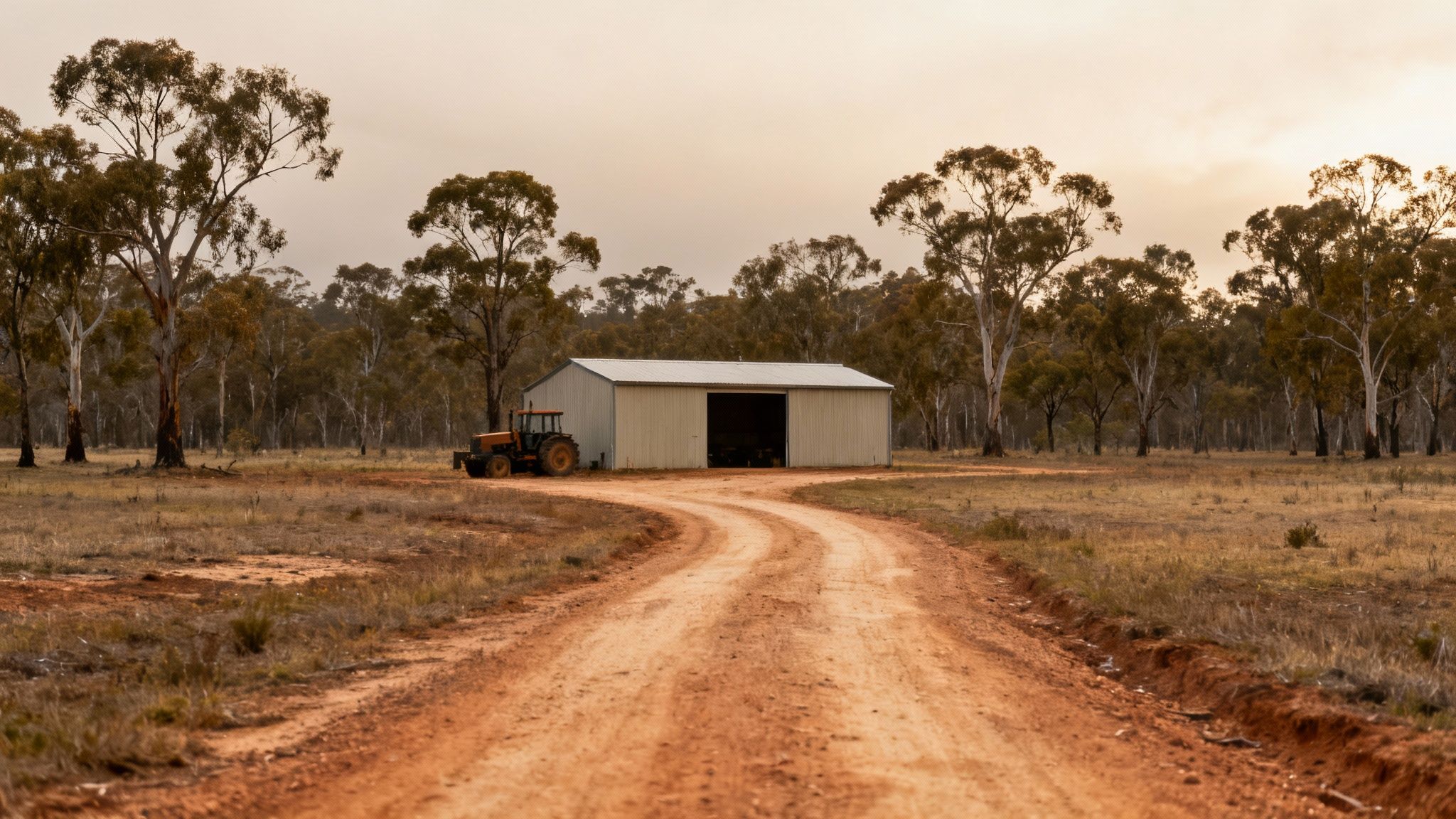
The reality on the ground is about more than just kilometres. It’s about dealing with unsealed dirt tracks that become impassable mud pits after a bit of rain. It’s about crossing creeks that can flood without warning and factoring in weeks-long lead times for materials. These aren't just minor hiccups; they're core project variables that need to be expertly managed to keep your budget and timeline from blowing out.
Beyond the Paved Road
Your average delivery truck or a tradie’s ute often can’t handle the final leg of the journey to a remote homestead or farm. A builder without the right gear will face serious delays, hit you with extra costs for specialised transport, or might not even be able to get their team and materials to your site at all.
This is where having the right equipment is non-negotiable. At Awesim, we run a 10-tonne 4×4 truck for exactly this reason. It's the workhorse of our operation, letting us haul everything from structural steel to kitchen cabinetry to the most isolated properties across NSW, no matter how rough the track is.
This kind of logistical grunt is the backbone of successful rural construction. It turns site access from a potential project-killer into just another managed part of the process, keeping your build moving forward.
The Demands of the Land
It’s not just about getting there. The environment itself puts unique pressures on the build and the finished structure. A truly experienced rural builder knows how to handle:
- Harsh Weather Conditions: Materials and building methods have to be selected for resilience, ready to stand up to everything from scorching summer heat to intense storms.
- A Deeper Understanding: A builder needs to get the practicalities of a working farm or a secluded family home. They need to design and build spaces that are tough, functional, and fit for country life.
- Limited Infrastructure: Power and water aren't always on tap. Builders often have to be completely self-sufficient and resourceful on-site during the construction phase.
Ultimately, a successful build comes down to hiring a team that doesn't just work in the country but truly understands it.
If you’re just starting to explore what's involved, our guide on building on rural land in NSW is a great resource for navigating the planning and approval stages. Trust me, choosing a specialised rural builder isn't a luxury—it's essential for getting your project finished to a high standard, on time, and on budget.
Your Pre-Construction Project Checklist
Before the first post hole is dug or a single nail is hammered, the success of your rural build is really decided by how well you’ve planned. A solid pre-construction phase gets you, your family, and your chosen builder all on the same page. It’s this foundational work that prevents those costly surprises and keeps the project on track from day one.
Think of this planning stage as translating your vision into a practical, actionable brief. It’s what allows you to have clear, productive chats with potential rural building companies and sets realistic expectations for everyone from the get-go.
Define Your Project Scope Clearly
First things first, you need to get specific about what you’re trying to achieve. Are you after a new machinery shed, a homestead kitchen renovation, or a new deck to enjoy the view? Vague ideas often lead to vague quotes and, almost certainly, misunderstandings down the line.
Your scope should really nail down the essentials:
- Primary Goal: What’s the main reason for the build? A Colorbond shed for hay storage is a very different beast from one designed as a workshop, for example.
- Key Features: Jot down your non-negotiables. This could be anything from the number of bays in a shed to the type of benchtops you want in the kitchen.
- Desired Finishes: Have a think about materials. Are you leaning towards the classic look of treated timber, or is low-maintenance steel cladding more your style?
Having this clarity helps a builder properly understand what you’re after and give you a far more accurate estimate from the start. It’s the difference between asking for "a shed" and asking for "a 15×9 metre, three-bay, open-front Colorbond machinery shed with a concrete slab." See the difference?
Understand Local Council Regulations
Don't get caught out by council rules. Building regulations in regional NSW can be a world away from what you’d find in the city. Councils in areas like Tamworth or Armidale have their own specific requirements for rural properties, covering everything from zoning and environmental impact to Bushfire Attack Levels (BAL).
Don’t just assume the rules are the same everywhere. A good local builder will be all over the local council codes, but having a basic understanding yourself is vital for making smart decisions early on.
Getting through the council process is a critical step. An experienced local builder will handle the heavy lifting here, but knowing the potential hurdles helps you appreciate the true value they bring to the job.
Set a Realistic Budget
Budgeting for a rural project is about more than just timber and nails. You have to factor in the unique costs that come with working on a rural block, like higher delivery fees for materials and travel time for tradies. These things can definitely add up.
The Australian construction market is always shifting, especially with more people moving from the city to the country. This trend is driving demand for new and improved regional infrastructure. It also highlights how important it is to work with builders who know the local landscape and can source the right materials—from roofing to cladding—that are built to handle our tough Aussie conditions. If you're interested, you can read the full research about these construction market trends to get a better sense of the bigger picture.
When you’re pulling your budget together, make sure you build in a buffer for the unexpected. A good rule of thumb is to set aside an extra 10-15% of the total estimated cost as a contingency. It’s a bit of a safety net for any surprises that might pop up, which can happen on any build, but especially on a remote site.
How to Find and Vet the Right Rural Builder
Now that your project plans are coming together, it's time for the most critical step: finding the right builder to bring it all to life.
Finding and vetting great rural building companies is a totally different ball game compared to building in the city. Forget the flashy websites and slick marketing. What you're looking for is proven grit and genuine, hands-on experience navigating the unique challenges of building in rural NSW. Your mission is to find a true specialist, not a generalist trying their hand at a country job.
This means you need to dig into their past work, and not just for aesthetics. You’re looking for relevance. A builder whose portfolio is exclusively suburban estates simply won't have the practical know-how for a project that's miles down a winding dirt track.
Scrutinising Portfolios and Past Work
When you start looking through a builder’s portfolio, put on your detective hat. You want to see hard evidence of projects that are similar to yours, both in what was built and where it was built.
Ask yourself a few key questions:
- Have they actually built large machinery sheds on properties with tricky, unsealed access?
- Can they show you homestead renovations they've completed in properly remote locations?
- Do their finished projects look like they've been built to withstand the harsh local climate?
A gallery full of inner-city extensions is a major red flag. You need to see photos of projects on properties that look just like yours. This is your proof that they understand the right materials, the necessary techniques, and the logistical gymnastics required to get the job done out here.
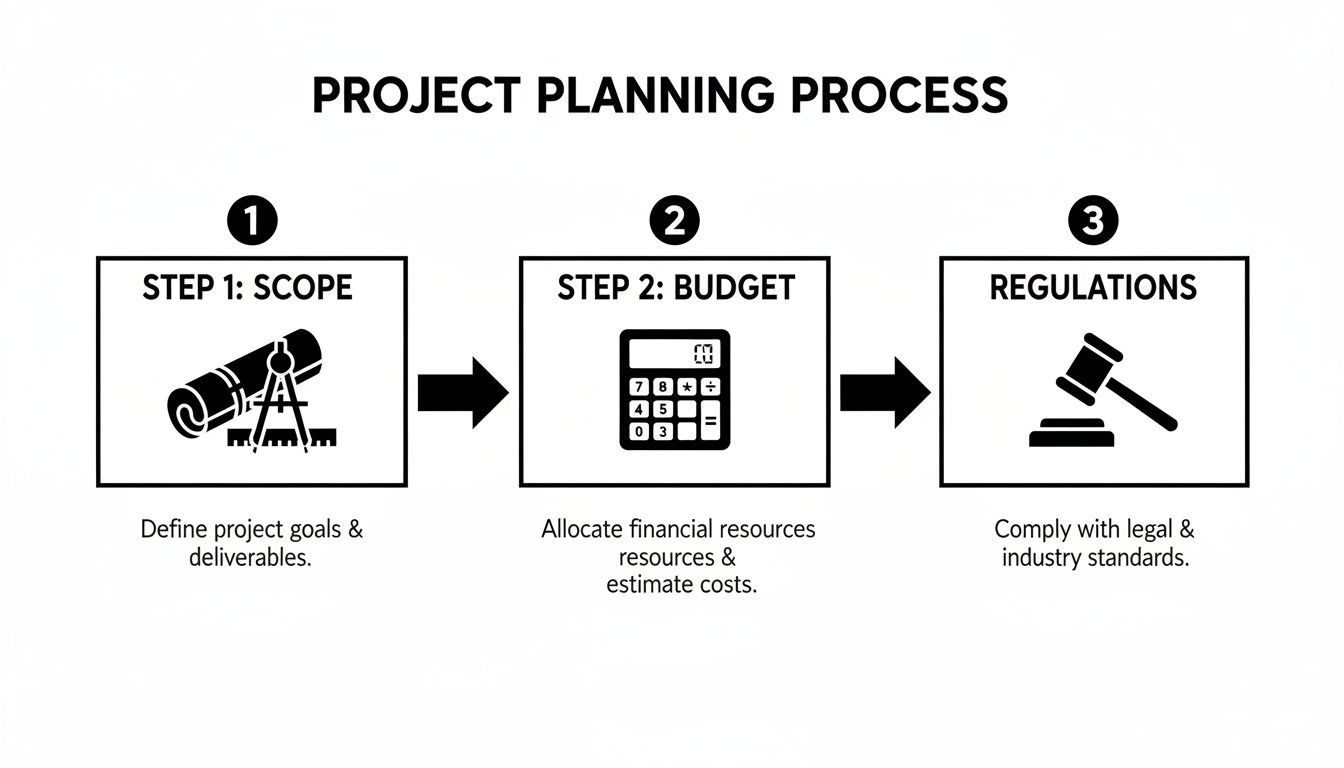
This process is a good reminder of why a builder's direct experience is so vital. They need to have managed every one of these phases in a rural context before to keep your project on schedule and on budget.
Verifying Licences and Insurance
This part is non-negotiable. Never, ever just take a builder's word that they are "fully licenced and insured." It's up to you to check, and luckily, it's pretty straightforward.
For any builder in New South Wales, you can jump online and check their contractor licence status through the Fair Trading NSW website. It only takes a minute and confirms they're legally allowed to do the work.
Insurance is just as crucial. Your builder must have, at a bare minimum:
- Public Liability Insurance: This is for accidents or damage to other people or property.
- Contract Works Insurance: This covers the actual build itself against things like fire, storms, or theft of materials.
- Workers Compensation Insurance: A legal requirement that covers their team if anyone gets injured on your property.
A true rural specialist knows that good insurance isn't just a box to tick. It's an essential safety net for everyone involved when you're working in unpredictable environments far from town.
Before you start interviewing, it’s worth getting your head around what is contractor management. Understanding this helps you recognise the systems a professional builder should already have in place for managing their crew, ensuring your project runs safely and efficiently.
A trustworthy builder will have no problem showing you their licence and providing you with certificates of currency for all their insurance policies. This transparency is a good sign you’re dealing with a professional.
For a deeper dive into the specifics, have a look at our guide on choosing the perfect rural builder for your project. This vetting process is what makes the difference between a smooth, successful build and a project plagued with stress. It’s all about finding a team you can genuinely rely on.
Solving Remote Logistics and Site Access Hurdles
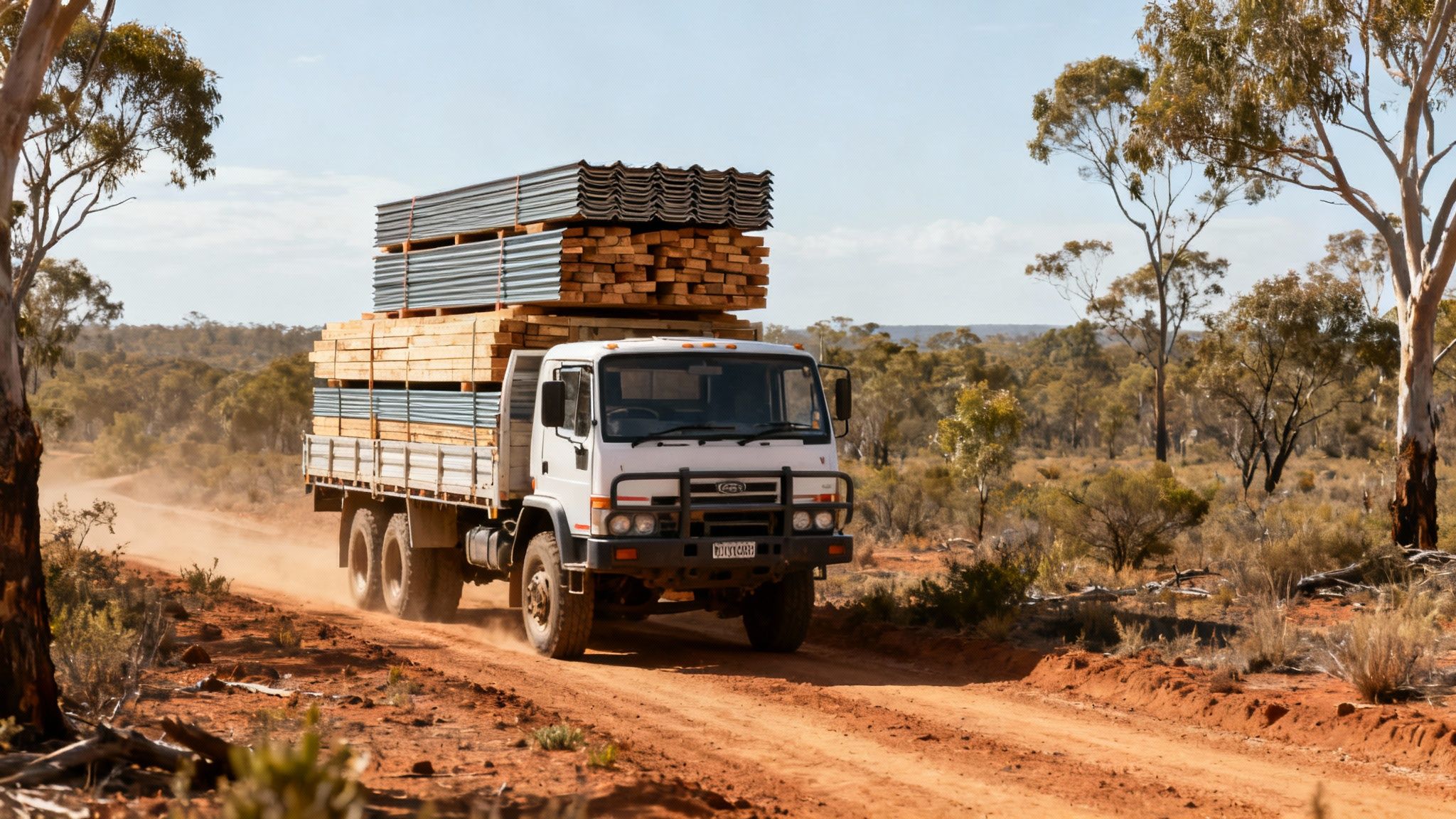
Beyond checking a builder’s licence and past projects, you need to dig into their logistical muscle. A brilliant plan is one thing, but it’s not worth much if the builder can’t get materials, machinery, and their team to your property on time, every time. This is where a lot of rural NSW projects come to a grinding halt.
Site access isn’t just a tick-box item; it’s the backbone of the entire operation. An inexperienced builder might see a dirt track as a minor hurdle. A seasoned rural builder, however, sees a potential bog after a bit of rain, a track that demands high clearance, or a route that’s a flat-out "no-go" for a standard delivery truck.
These small misjudgements can blow your timeline and budget out of the water. Imagine your project stalling because a semi-trailer full of framing timber is stuck axle-deep miles away, or the courier company simply refuses to make the final run. It’s a common and costly headache when your builder isn’t properly equipped for the bush.
The Right Equipment Is a Game Changer
This is exactly why a builder’s fleet is so important. A couple of standard utes just won't cut it when you’re hauling tonnes of steel, concrete, and cladding to a remote station. True rural building companies know they need to invest in heavy-duty, all-terrain vehicles—it’s the only way to guarantee progress.
To tackle this problem head-on, we operate a purpose-built 10-tonne 4×4 truck. This beast is the workhorse of our operation, specifically chosen to haul all materials, supplies, and even our team directly to the most remote properties across New South Wales. It gets us through rugged station tracks and across creek crossings, ensuring everything arrives when and where it’s needed.
Having our own heavy-duty transport means we aren't at the mercy of third-party freight companies and their access restrictions. It gives us—and our clients—the confidence that work will continue, no matter how isolated the property is.
This kind of logistical independence is critical in areas like Bourke and Walgett, where distance and difficult terrain add layers of complexity. Managing our own supply chain right to the worksite is how we keep projects on schedule and prevent nasty surprises in transport costs.
For property owners, the value is clear. With 60,899 house construction businesses operating in Australia as of 2025, it’s vital to find a team that has the right gear for the job. Specialised equipment is what keeps farm maintenance projects or homestead renovations on track and on budget, protecting your investment.
When interviewing builders for a project on a hard-to-reach block, get specific. Ask them about their vehicles and their exact plan for getting materials to you. To learn more, check out our article on the unique challenges facing outback builders in regional NSW.
From Contract to Keys: Managing Your Rural Build
You’ve done the hard yards and found a builder you trust. Now, the project shifts from spreadsheets and sketches to the real thing: active construction. This is where a great client-builder relationship really proves its worth, turning plans into a physical structure through clear communication and good old-fashioned oversight.
It all starts with the contract. Think of it as the ultimate rulebook for your project. A solid contract leaves no room for guesswork—it should clearly map out the scope of work, key timelines, and a transparent payment schedule. Crucially, it must also detail how any changes or variations will be handled. This single clause can save you major headaches and budget blowouts down the track.
A well-drafted contract is there to protect both you and your builder, making sure everyone is on the same page from the get-go.
Keeping the Lines of Communication Open
Good communication is what separates a smooth project from a stressful one, especially when you can’t be on-site every single day. Regular, honest updates are the key to catching small hiccups before they snowball into big problems. This is doubly true for rural builds where a forgotten delivery can set a project back days.
Once the tools are out, consistent communication is absolutely non-negotiable. Set up a regular rhythm for updates right from the start. Whether it’s a weekly phone call, a Friday email with photos, or scheduled site meetings, this simple habit keeps you connected to the progress and ensures the final build is exactly what you envisioned. If you want to dive deeper, there's a lot to learn about how strategic communication in construction is the secret ingredient to a successful outcome.
Site Visits and What to Expect
Even with the best photos and phone calls, nothing replaces putting your boots on the ground. Try to schedule regular site inspections to walk the property with your builder. It’s your chance to ask questions in the moment, see the quality of the work up close, and get a real feel for how things are taking shape.
These visits are also brilliant for managing your own expectations. Let’s be honest—a building site can look chaotic and progress can sometimes feel slow. A good builder will walk you through what’s happening, explain the controlled chaos, and give you confidence that everything is moving along exactly as it should be.
Remember, rural building companies in New South Wales are a vital part of a massive industry. IBISWorld estimates Australia's total construction industry revenue will reach $521.2 billion by 2025. In regional hubs from Moree to Parkes, this drives huge demand for builders who get the unique challenges of rural work. For farm owners, a well-managed project like a new machinery shed or homestead upgrade can boost operational efficiency by 15-25%—a fantastic return on investment.
The Final Handover: Ticking the Last Boxes
As the dust settles, the project moves into its final, critical phase: the handover. This is where your builder ties up all the loose ends, does a final site clean-up, and prepares to hand you the keys.
Here’s what should happen during the handover:
- A final walkthrough: You and the builder will inspect every detail to create a "punch list" of any minor defects that need attention.
- All the paperwork: You should receive a folder with all necessary certifications, including those for electrical, plumbing, and waterproofing.
- Compliance confirmation: The builder will provide evidence that the build meets all local council regulations and Australian Standards.
This final check is what guarantees your new structure isn’t just well-built and functional, but also safe, compliant, and ready to serve you for decades to come.
Your Rural Building Questions, Answered
Building out in the country always brings up unique questions. We get it. Over the years, we've heard just about everything from landowners across New South Wales, so we've put together some straight answers to the most common queries we encounter.
How Much More Does It Cost to Build in a Remote Area?
It’s no secret that rural projects can come with a higher price tag. The main drivers are usually the logistics of getting materials to a remote site and the travel time for the crew. Preparing a site that's off the beaten track can also add to the budget.
But here’s the thing: a builder who specialises in rural work knows how to keep these costs in check. Smart logistics make all the difference. For instance, we use our own 10-tonne 4×4 truck to haul materials and supplies to even the most isolated properties in NSW. This means we can do bigger, less frequent drops, saving you money on transport and keeping the project on schedule. A good builder will always give you a transparent, itemised quote so you see exactly where every dollar is going.
What Happens If My Property Access Is Cut Off by Rain?
That’s a very real concern when you're working in the bush, and something a seasoned rural builder is always prepared for. It's not about just hoping for sunny skies; it's about having a solid plan for when the weather turns.
Any builder worth their salt will have a fleet of proper 4x4s and heavy-duty trucks ready to tackle muddy tracks and tricky terrain after a storm.
Our ability to bring in labour, materials, and equipment where and when it's needed most is a core part of our service. This logistical strength means that weather delays, while sometimes unavoidable, are minimised because we have the right gear to navigate tough conditions.
Make sure you talk about weather contingency plans before you sign anything. A professional crew will have a clear strategy to keep things moving.
Can I Save Money by Sourcing My Own Materials?
It can be tempting to try and source materials yourself to trim the budget, but it often ends up costing more in the long run and introduces a lot of headaches.
Builders who've been in the game for a while have solid relationships with their suppliers. This usually means they get better trade pricing and can vouch for the quality of what's being delivered.
More importantly, they handle all the tricky logistics. When your builder sources the materials, everything is covered by their insurance and warranties. If you provide them and something gets damaged on the way or isn't right for the job, that responsibility falls squarely on your shoulders.
Ready to start a project on your rural NSW property with a team that’s fully equipped for the challenge? Contact Awesim Building Contractors to discuss how our specialised equipment and expertise can bring your vision to life. https://awesim.au