Building on a rural block in New South Wales isn't like building in the suburbs. You're dealing with everything from rugged terrain and unsealed roads to the sheer distance from suppliers. Getting it right hinges on finding a specialist rural building company that's truly equipped for the job.
This guide will walk you through what to look for, so you can find a builder who will turn your vision into a reality, not a headache.
Finding the Right Rural Building Partner in NSW
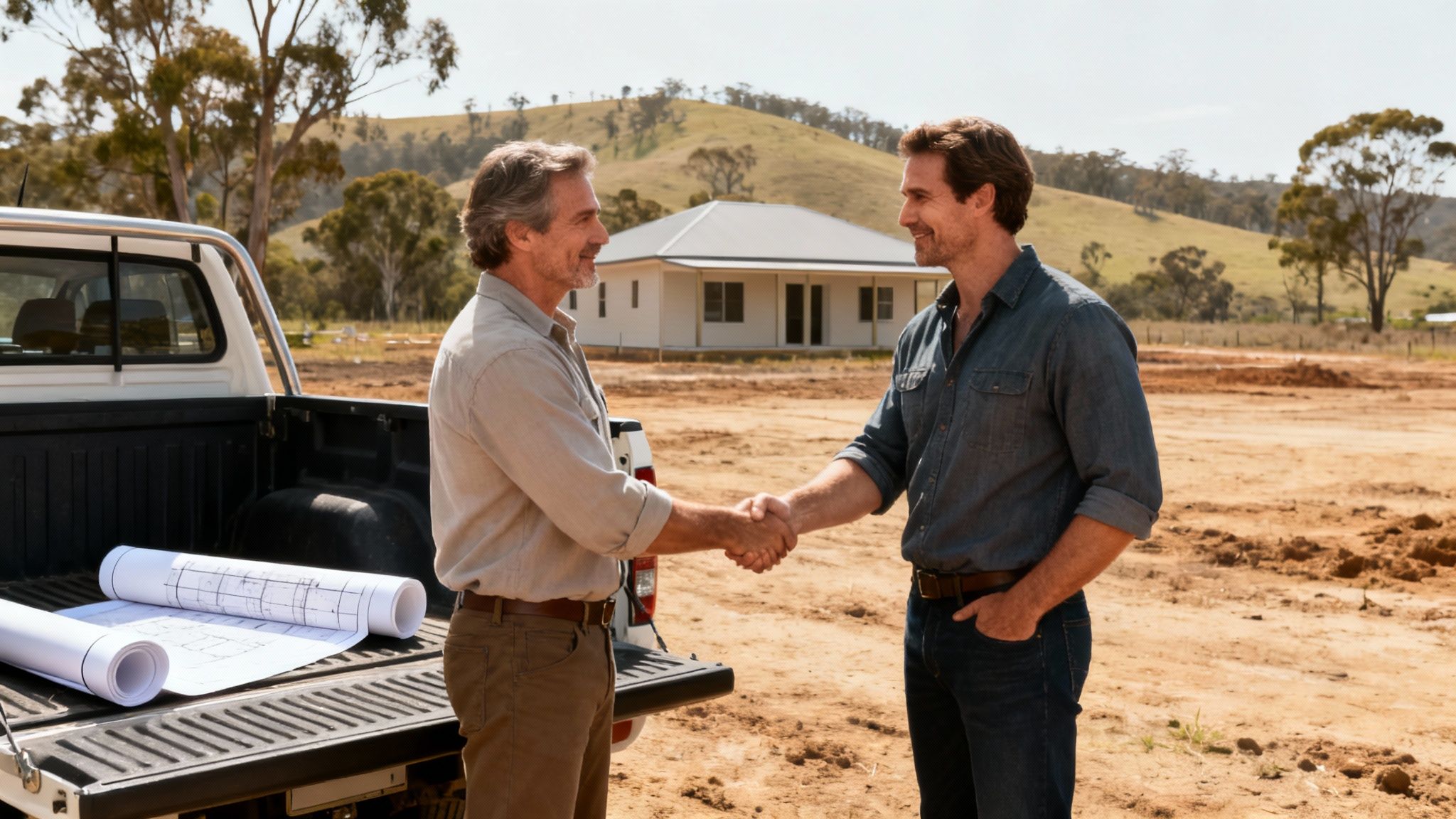
Choosing a builder for your rural project is about more than just looking at floor plans and picking out colours. It's about finding a team with the practical, on-the-ground experience to manage a build site far from the conveniences of the city.
The right partner understands that the real work starts long before the first post hole is dug. On a rural property, something as simple as getting materials delivered can become a major logistical puzzle, especially if you're dealing with dirt tracks, creek crossings, or steep gradients. This is where a builder's experience and equipment really show their worth.
The Importance of Logistical Capability
Logistics can make or break a rural project. If your builder is relying on standard delivery trucks, you’re setting yourself up for delays and budget blowouts the first time it rains or a truck gets bogged. Many properties across regional NSW are simply inaccessible to conventional vehicles.
We learned this lesson firsthand years ago. It’s exactly why we invested in our own 10 tonne 4×4 truck to bring in materials and supplies for the most remote properties around New South Wales. This bit of gear isn't a luxury for us; it's the core of our operation, allowing us to bring in labour, materials and equipment where and when it's needed the most.
Being able to bring everything we need directly to your block means your project keeps moving forward, no matter how far off the beaten track you are. It’s about having a solution before the problem even arises.
This kind of logistical foresight is what separates a true rural specialist from a city builder trying their hand in the bush. It's a sign that they genuinely understand the environment they’re working in.
If you're ready to start the conversation, our guide on what to ask a rural builder can help you make sure you're choosing a partner who's properly equipped for the unique challenges of building out here.
How to Verify a Builder's Rural Experience
Any builder can pull up a gallery of impressive finished projects. But when you’re building on a rural property, you need to see more than just pretty pictures. You need solid proof they can actually handle the unique grind of building in the bush.
Sorting the genuine specialists from the city-slickers is probably the most important step you'll take. A real rural expert won't just talk about past jobs; they'll show you specific, verifiable examples. If you’re planning a large machinery shed, ask to see the steel-frame structures they’ve put up in similar country. For a homestead renovation, you’ll want to see case studies of older, character-filled properties they’ve brought back to life.
This is about digging much deeper than a standard portfolio. You're looking for tangible evidence that they truly understand the environment you live in.
Beyond the Portfolio Pictures
A builder’s real experience isn't in the glossy photo of a finished deck. It's in the story behind it. How did they get materials across a flooded causeway during a wet winter? Did they know how to prepare a slab on the reactive black soil common to the plains?
You need to probe their practical knowledge. Ask them to walk you through a particularly challenging project they tackled out in the New England Tablelands or the Far West. Listen for the details—how they managed logistics, adapted to a sudden heatwave, and wrangled tradespeople across vast distances.
A builder who can confidently talk about setting up off-grid power, installing septic systems, and integrating water tanks is showing you they’ve been there and done that. This is the kind of hard-won expertise that prevents costly mistakes down the line.
Their answers will quickly tell you whether you’re talking to a seasoned professional or someone who is about to get a very expensive education at your expense.
Questions to Ask a Potential Rural Builder
When you start talking to potential builders, don't just have a casual chat. Go in with a list of targeted questions. This forces the conversation into specifics and helps you compare companies apples-to-apples.
Here are a few essential questions to get the ball rolling:
- Project Similarity: Can you show me a couple of projects you've done that are similar to mine in scale and complexity?
- Geographic Experience: Have you worked in our part of NSW before? What were the biggest challenges out here, and how did you handle them?
- Material Sourcing: How do you get materials and supplies to remote sites? What’s your backup plan if a delivery gets delayed or can’t get through?
- Site-Specific Challenges: Tell me about your experience managing sites with tricky soil types, high bushfire risk, or difficult access.
- Subcontractor Network: Do you have a solid network of plumbers, electricians, and other trades who are reliable and actually service remote areas?
Pay close attention to how they answer. Vague, hand-waving responses are a major red flag. Detailed, confident answers backed by real examples are what you’re listening for.
The Litmus Test: A Builder's Own Equipment
Here’s a big one. A serious indicator of a builder's commitment to rural work is their investment in their own specialised equipment. Many builders just hire third-party transport, which can become a massive weak link on a remote project. Your average delivery truck simply can't handle unsealed roads, steep pinches, or creek crossings.
We learned this lesson early on, which is why we invested in our own 10 tonne 4×4 truck. It's a purpose-built beast designed to tackle the toughest access tracks in New South Wales, and it’s the backbone of our logistics.
Having this truck means we can bring all our labour, materials, and gear exactly where they need to be, when they need to be there. Whether we're hauling heavy steel beams for a shed near Walgett or delicate joinery for a homestead renovation outside Bourke, we have direct control.
This logistical independence is how we guarantee your project stays on schedule, no matter how far off the beaten track you are. When you’re vetting rural building companies, ask them point-blank how they plan to get everything to your site. Their answer will tell you a whole lot about their real-world experience.
Gauging a Builder's Logistical Strength
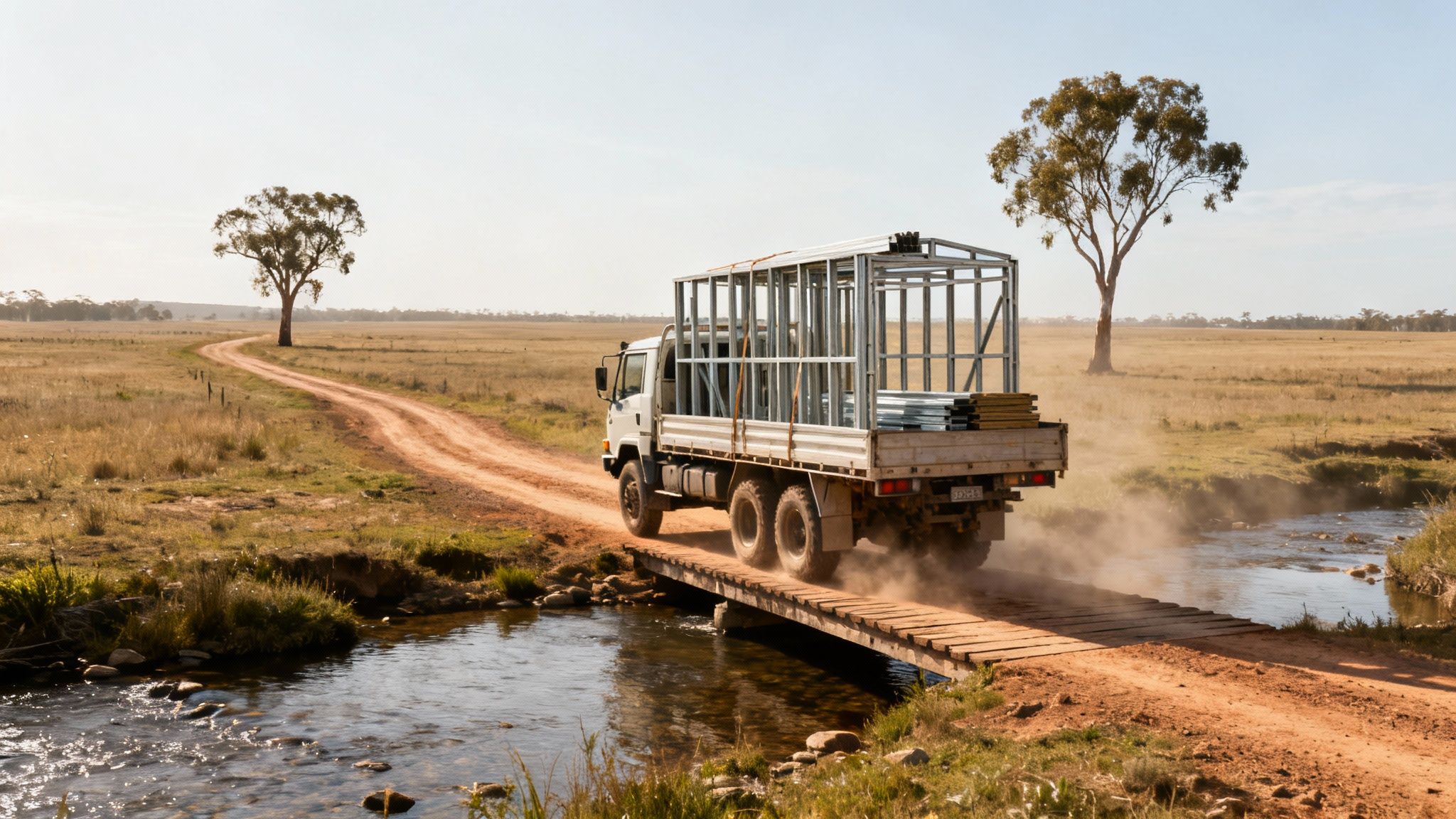
When you’re building out on the land, one of the most vital pieces of equipment isn’t a saw or a hammer—it’s the truck. Here in rural New South Wales, the success of a project often comes down to the simple, rugged ability to get materials and people from A to B. This is where a builder's logistical muscle becomes non-negotiable.
The reality is that many properties are tucked away down long, unsealed roads, across seasonal creeks, or up steep pinches that would stop a standard delivery van dead in its tracks. A builder without the right transport is a project just waiting for a delay, which is why checking out their logistical capability is as important as looking at their finished work.
The Vehicle Is the Strategy
When you're vetting rural building companies, you need to think like a transport manager. Ask them straight up about their fleet and how they plan to tackle the specific access challenges on your block. A builder who just shrugs and says they'll use third-party couriers is adding a huge weak link to your project's timeline and budget.
Picture this: a semi-trailer loaded with your shed frame gets bogged halfway down your driveway after a bit of rain. The whole job grinds to a halt. The builder might blame the weather or the courier, but the truth is, it was a failure in logistical planning. A genuine rural specialist sees these problems coming because they've dealt with them countless times. They have a plan, not an excuse.
This is precisely why we invested heavily in our own specialised gear. Our 10 tonne 4×4 truck is the backbone of our operations. It's built to handle the demanding terrain across regional NSW, letting us bring in labour, materials, and equipment exactly where and when they’re needed.
Having our own transport means we aren't at the mercy of outside delivery schedules or vehicle limitations. We can load up everything—from heavy steel frames for a machinery shed near Moree to renovation supplies for a homestead outside Cobar—and know it will get to site, on time.
Overcoming Access Hurdles
Every rural property has its own set of challenges, and a seasoned builder will want to know about them upfront. More importantly, they'll have clear, practical solutions. How they plan to manage access is a dead giveaway of their overall competence.
A builder's logistical strength also extends to their ability to handle crucial site prep, like getting the site grading and drainage right, which is fundamental for the long-term stability of any structure.
Think about these common scenarios and how a well-equipped builder should respond:
- Unsealed Roads: They should have their own 4×4 vehicles that can handle rough, corrugated, or muddy tracks without a second thought.
- Creek Crossings: Their team needs to be experienced in judging water levels and have vehicles with the clearance and grunt to cross safely.
- Steep Gradients: They'll need trucks and utes with the low-range gearing and braking power to manage heavy loads on steep country.
- Remote Locations: For really isolated sites, they must be able to transport not just materials but also their crew, tools, and even temporary site facilities if needed.
This level of readiness is the standard you should expect. It’s what separates a frustrating, delay-riddled build from a smooth, professionally run project.
The Real-World Impact on Your Project
Logistics isn't just some boring background detail; it has a direct and measurable impact on your build. When a builder has their own transport solutions sorted, you reap the benefits.
First, it dramatically cuts down the risk of expensive delays. Materials arrive when they're supposed to, so work can keep moving. Second, it can save you money by avoiding the premium fees couriers often charge for difficult-access deliveries. And finally, it gives you peace of mind, knowing your builder has full control of the process from start to finish.
If you’re planning a project in a particularly remote area, you might find our insights on outback builders useful, as they face the most extreme logistical tests. By picking a partner with proven logistical strength, you're choosing a team that has already solved one of the biggest hurdles in rural construction before they even turn a sod of dirt.
Keeping Your Rural Build On-Time and On-Budget
Let’s be honest: any successful building project boils down to two things—a realistic budget and a well-managed timeline. When you’re building out in the country, the goalposts can shift pretty quickly. You've got variables like material transport and unpredictable weather that can derail things if you’re not thinking a few steps ahead.
Managing costs and schedules on a rural property isn't about reacting to problems; it's about having a solid, proactive strategy from day one. It’s also about more than the number on the initial quote. You're making a long-term investment, and that means looking at the bigger picture, especially when choosing materials tough enough for the Australian climate. Cutting corners now often just leads to expensive headaches down the track.
Build It Once, Build It Right: Investing in Durability
One of the smartest financial decisions you can make is choosing the right materials from the very beginning. Going for robust, Australian-made products isn’t an expense—it's an investment in the resilience and longevity of your build.
- Treated Timber: For any framing, decking, or pergolas, properly treated timber is non-negotiable. It’s your front-line defence against termites, rot, and decay, making sure your structure stays solid for decades.
- Colorbond Steel: There’s a reason you see it everywhere out here. It’s proven to handle everything from scorching heat to driving rain and high winds. For roofing, cladding, and sheds, Colorbond is the benchmark. Its baked-on finish doesn't easily chip or fade, which means far less maintenance for you over the years.
When you prioritise quality materials, you're not just building for today. You're protecting your property’s value and saving yourself a lot of future repair bills.
What About the Hidden Costs?
If there's one thing that can sour a building project, it’s unexpected costs popping up out of nowhere. On rural builds, these surprises are often tied to the unique challenges of your site and its location. A good, transparent quote from an experienced rural builder should always account for these potential curveballs upfront.
Make sure you have a frank discussion with your builder about a few key areas:
- Site Preparation: This can be a lot more involved than just levelling a patch of dirt. You might be looking at significant earthworks, clearing dense vegetation, or sorting out soil compaction issues before you can even start.
- Material Transport: Getting tonnes of materials to a remote property has its challenges. That's exactly why we run our own 10 tonne 4×4 truck. It allows us to haul all the labour, materials, and gear directly to even the most isolated properties across New South Wales. We control the logistics, which means we control the transport costs that can otherwise spiral.
- Contingency Planning: What’s the plan if you get a solid week of rain and the site turns to mud? A true professional builds a contingency—for both time and budget—into the project plan. It’s there to absorb those unforeseen delays without turning everything into a crisis.
A detailed quote that breaks down these potential costs is a sign of a builder who understands the realities of rural construction. It allows for an honest conversation about the total investment required, preventing nasty surprises later on.
Setting Realistic Financial Expectations in NSW
The construction market is always in flux, and regional New South Wales is no different. Knowing the current trends is vital for setting a budget that makes sense. Rural building companies across the state are navigating market pressures that have a direct impact on what your project will cost and how long it will take.
While some of the major supply chain dramas have calmed down, the shortage of skilled trades is still a big factor. For property owners, this means you need to factor in steady cost increases. A recent market update from Slattery Australia noted that construction escalation rates in NSW are sitting at 4-5% per annum. They're forecasting a slight drop to 3-4% next year, but persistent skilled labour shortages will keep prices firm. You can read the full breakdown in their national construction market findings.
Understanding this context is crucial. It helps you see that a quote from a reputable builder isn't just pulled out of thin air—it reflects the real-world economic environment. Armed with this knowledge, you can have a much more productive and transparent chat about your budget and timeline. To get a better feel for the numbers involved, take a look at our guide on home build costs in the region.
Getting Through Council: Permits and Paperwork in Rural NSW
Building out in the country isn't like building in the city. The rules are different, the land has its own demands, and getting council approval can feel like you're trying to solve a puzzle with half the pieces missing. Each local council in regional New South Wales has its own set of requirements, on top of the state-wide building codes.
Getting this right isn't just about ticking boxes. It’s about making sure your new shed, stables, or home is safe, legal, and built to withstand everything the rural environment can throw at it.
For any significant project—think a new house, a big machinery shed, or a major extension—you'll almost certainly need to lodge a Development Application (DA). This isn't a simple form. It requires detailed plans, site reports, and a solid grasp of local planning laws. One small mistake on the paperwork can set your project back months and add unexpected costs.
This is where a good rural builder proves their worth. A builder who knows the local area also knows the local council. They've been down this road before, understand the specific rules for different shires, and can handle the entire process for you—from drafting plans that comply to lodging the application and dealing with the final inspections.
The Rules of the Land
Every build in Australia has to meet the standards of the Building Code of Australia (BCA). But on a rural block, there are often extra layers of regulations you need to navigate.
These aren't just red tape; they exist for good reasons. They’re there to manage bushfire risk, protect the local environment, and make sure new buildings suit the land they're on.
- Bushfire Attack Level (BAL) Ratings: If your property is in a bushfire-prone zone, your build must meet specific BAL requirements. This dictates everything from the type of glass in your windows to the materials you can use for your deck and cladding. It's non-negotiable.
- Environmental Protection Zones (EPZs): Many rural properties contain zones designed to protect native bushland, creeks, or wildlife habitats. Building near these areas requires careful planning and often means getting an environmental impact assessment done.
- Water and Waste Management: You're not connecting to town water and sewer out here. That means getting council approval for septic systems, wastewater treatment, and your rainwater tank setup is a critical step.
Let Your Builder Do the Heavy Lifting
Trying to tackle the approvals process on your own can quickly turn into a frustrating, full-time headache. A specialist rural builder, on the other hand, bakes compliance into the project from day one. They're not just builders; they're your project manager and your guide through the maze of regulations.
Choosing a builder who handles all the permits and paperwork isn't a nice-to-have, it's essential. It saves you an incredible amount of stress and ensures your project starts on a solid, legal foundation, avoiding expensive rework orders from council inspectors down the line.
This local expertise is particularly important when you realise how the construction industry is structured. An IBISWorld industry report on house construction in Australia reveals that while there are 59,836 building businesses nationwide, the top 100 big players only handle about 36% of housing starts. The remaining 64% is covered by smaller, local builders—the very experts who live and breathe regional compliance.
When your builder takes ownership of the paperwork, you can relax. You know that every detail, from the engineering of the slab to the pitch of the roof, is designed to meet or exceed the codes. It allows you to focus on the exciting parts of bringing your vision to life, knowing the complex stuff is in experienced hands.
Your Checklist for Hiring a Rural Builder
Choosing the right partner is hands down the most critical decision you'll make for your rural building project. To help you get it right, we’ve put together a practical checklist based on years of experience in the field.
Think of these prompts as your guide while researching and talking to potential rural building companies. A methodical approach now is your best defence against major stress and budget blowouts down the track. This is about more than just comparing quotes—it's about verifying real-world capability and finding a team that truly understands the unique demands of building in regional NSW.
Phase 1: The Initial Research and Vetting
Before you even think about picking up the phone, it’s time to do some homework. A builder’s digital footprint and local reputation speak volumes about their professionalism and experience. This initial screening will help you build a solid shortlist of candidates actually worth your time.
-
Review Their Portfolio: Don't just glance at the photos. Look for specific examples of projects that mirror what you have in mind. If you need a machinery shed, do they have a gallery full of steel-frame structures? For a homestead renovation, can you see evidence of their craftsmanship on older, character-filled properties?
-
Check Their Local Reputation: This is where the bush telegraph comes in. Ask around in local community groups or chat with other landowners. A builder’s reputation out here travels fast, and good old-fashioned word-of-mouth is often the most honest reference you’ll ever get.
-
Verify Licences and Insurance: This is non-negotiable. Head to the NSW Fair Trading website and use the public register to confirm their builder’s licence is current. You should also ask them for copies of their public liability insurance and Home Building Compensation Fund (HBCF) insurance certificates.
Phase 2: The Interview Process
Right, this is where you get to dig into the nuts and bolts. Your goal is to see if their practical knowledge lines up with the realities of your property. Vague, hand-wavy answers are a massive red flag. You're looking for confident, detailed responses that can only come from hard-won experience.
"A builder’s true expertise isn't just in their finished work—it’s in their ability to anticipate and solve the unique logistical challenges of a rural site. How they plan to get materials to your property is just as important as how they plan to build with them."
-
Drill Down on Access and Logistics: Be completely upfront about your property's access—describe the unsealed roads, creek crossings, and any steep grades. Then, ask them directly: "How will you get materials and heavy equipment to my site?" This is a deal-breaker. A seasoned rural builder will have a clear, well-thought-out strategy. As an example, we run our own 10 tonne 4×4 truck for the specific purpose of getting labour, materials, and gear to the most remote properties across New South Wales. For us, logistics are never a barrier.
-
Ask About Their Team: Find out if they have their own dedicated crew or if they rely heavily on a rotating cast of subcontractors. A builder with a consistent, in-house team generally has far better control over quality and timelines.
-
Enquire About Weather Protocols: The weather in the country is unpredictable. Ask them, "What’s your standard procedure when the weather turns bad?" Experienced rural building companies will have a plan for managing delays, communicating schedule changes, and building contingencies right into the project timeline.
Phase 3: The Contract and Quote Review
The final hurdle is to scrutinise the quote and contract. This document is the blueprint for your entire project, so it needs to be detailed, transparent, and fair.
-
Look for an Itemised Breakdown: A professional quote is never just a single figure. It should be fully itemised, breaking down the costs for materials, labour, permits, site prep, and transport. If it's not, ask why.
-
Check the Payment Schedule: The contract must outline a clear payment schedule tied to completed project milestones, not just arbitrary dates. Be wary of anyone demanding a massive upfront deposit.
-
Confirm the Scope of Work: Make sure the contract spells out exactly what is included—and just as importantly, what is excluded—from the scope of work. This clarity prevents expensive misunderstandings later on.
Common Questions About Building in the Bush
If you're planning a build on a rural property, you've probably got a few questions. It’s a different world out here compared to building in the city. Here are some of the things we get asked most often by landowners, along with straight-up answers from our years of experience.
How Can I Get an Accurate Quote for My Property?
Honestly, anyone who gives you a fixed quote over the phone for a remote project isn’t being realistic. A proper, accurate quote is impossible without someone putting their boots on your ground.
A serious rural builder will always insist on coming out to your property. We need to see the lay of the land, check the access roads, assess the ground conditions, and figure out what we’re dealing with in terms of services like power and water. Be very cautious of a "ballpark figure" given without a site visit—it's often a recipe for unexpected costs down the track. Your final quote should be itemised, breaking down the costs for materials, labour, transport, and a sensible contingency for those little surprises that rural projects often throw at you.
What Happens if Bad Weather or Supply Issues Cause Delays?
Delays are part of the game when you’re building out in the country, but how they’re handled makes all the difference. A professional builder anticipates these things and plans for them from the start.
Your building contract should spell out exactly how delays are managed. This includes who communicates what and when, and how any potential cost impacts are handled. We try to get ahead of this by ordering materials long before they're needed and building a schedule with enough buffer to handle a week of rain or a supply hiccup. It all comes down to good planning and clear communication.
Can You Work with the Old Sheds and Buildings Already on My Farm?
Absolutely. Working with existing structures is what we do. Whether it's restoring an old heritage homestead, extending a machinery shed, or shoring up an old outbuilding, integrating the new with the old is a huge part of improving a farm's functionality.
It always starts with a proper structural assessment to make sure what's there is sound enough to build on or around. A good builder has the skill to match new materials and architectural styles to the existing ones, so everything looks like it belongs together.
The biggest challenge, whether it’s a new build or a renovation, is always logistics. Getting people, materials, and machinery to your site safely and efficiently is the bedrock of a successful project, especially when the access track is a bit rough.
How Do You Even Get Materials and Equipment to a Remote Site?
This is the question that really sorts the specialists from the general builders. If a company can’t confidently answer this, they’re not the right fit for a rural job. For us, solving tricky access problems is a point of pride.
We’ve invested in equipment specifically for this purpose. Our 10 tonne 4×4 truck is the workhorse of our operation. It’s custom-built to handle rough bush tracks and allows us to haul everything—steel frames, concrete, tools, and the team—to some of the most out-of-the-way properties in New South Wales. It means we don't have to make excuses; we can just get the job done, wherever it is.
Ready to talk about your rural project with a team that has the right gear and know-how? Contact Awesim Building Contractors today and we'll come out for an on-site consultation.