Building your dream home in a rural or remote part of New South Wales is an incredible journey. But it comes with a set of challenges that city builds just don't encounter. The success of your project really hinges on finding a rural building company that gets it—a team that understands everything from local council quirks to the very real logistical hurdles of the Aussie bush.
Our key advantage? It's our equipment, specifically chosen to tackle the single biggest roadblock in remote construction: access. Our 10-tonne 4×4 truck allows us to bring in labour, materials, and equipment for the most remote properties around New South Wales, ensuring your project moves forward where and when it's needed most.
Why Your Rural NSW Build Needs a Specialist
Constructing a home in a neat suburban subdivision is one thing. Building on a sprawling rural block with unsealed roads, steep slopes, or tricky creek crossings? That’s a whole different ball game. Standard delivery trucks and the average tradie's ute often can't cope, which can lead to frustrating delays, damaged materials, or projects that stall before a single nail is hammered.
A genuine rural builder sees these challenges coming a mile off. They don’t just plan for the house itself; they map out the entire supply chain needed to make it happen. This foresight is absolutely essential in regions across New South Wales, whether you're in the rugged hills around Tamworth and Armidale or on a vast property out towards Bourke.
Overcoming Remote Access Challenges
If there’s one thing that can derail a remote build, it's the simple act of getting people and materials to the site. A builder without the right gear might try to manage with countless small trips, hire expensive third-party transport, or even throw their hands up and declare a site "too difficult."
We've invested in our own purpose-built solutions to avoid all that drama.
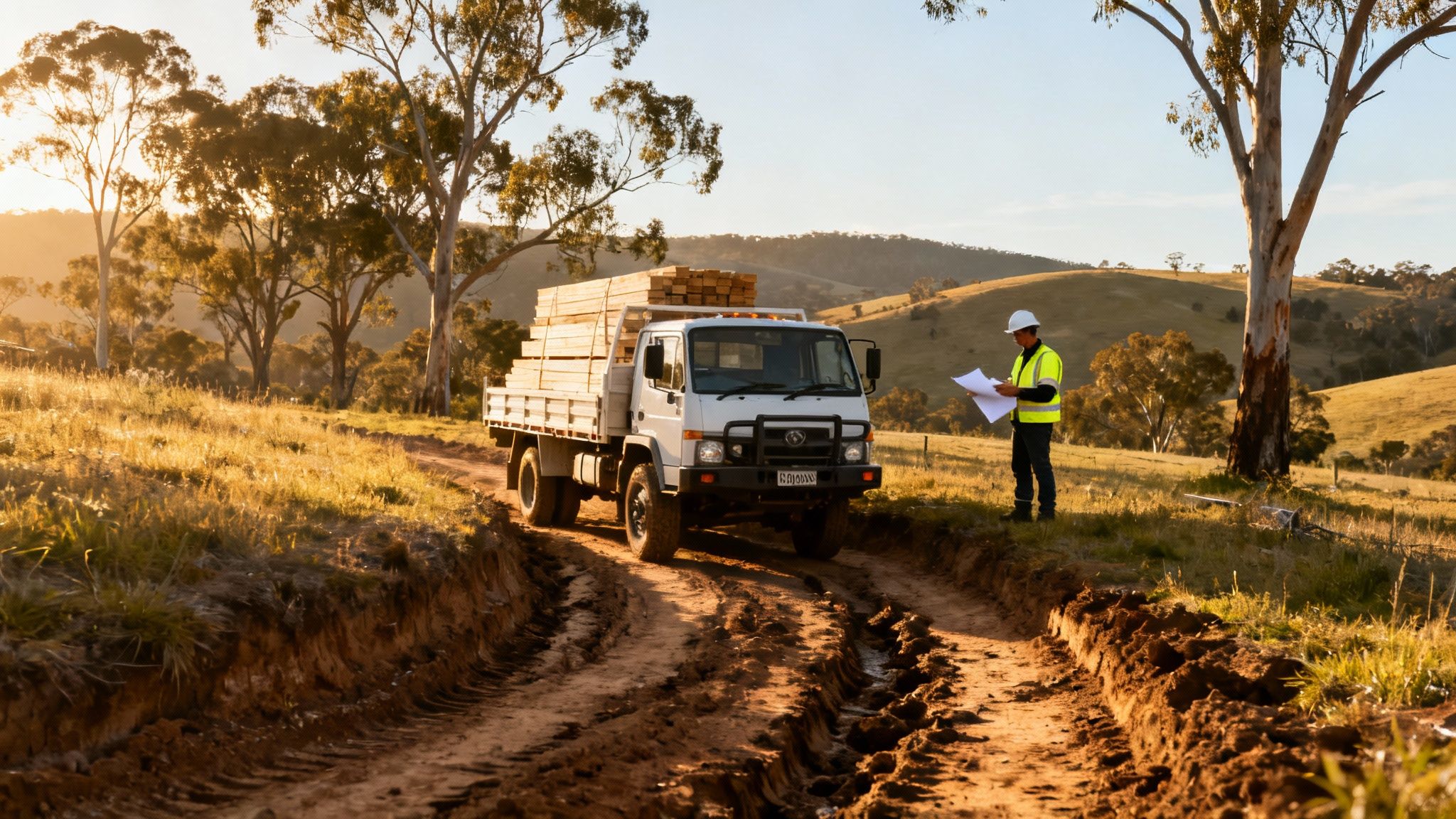
Our 10-tonne 4×4 truck is the workhorse of our operation. It's a heavy-duty, all-terrain beast that gets us to places others simply can't reach, bringing in materials and supplies for the most remote properties around New South Wales.
This truck is our answer to one of the biggest headaches in remote construction. It means we can get labour, materials, and vital equipment exactly where they need to be, right when they're needed. It keeps your project on track when others would be stuck.
The Practical Edge of Specialised Equipment
Having the right truck is about more than just convenience—it directly impacts your project's timeline and budget. Here’s what our in-house logistics mean for your build:
- Reliable Material Delivery: We can bring in heavy loads like steel frames, timber packs, roofing, and concrete supplies directly to the building site, no matter how rough the track is.
- Efficient Team Transport: Our crew and trusted subbies can get to your property reliably. No more lost days because a 2WD ute couldn't make it up the driveway after a bit of rain.
- Equipment Mobilisation: From the excavator for the site cut to the specialised tools for the fit-out, our truck ensures everything arrives on schedule.
By managing our own logistics, we cut out the middleman and drastically reduce the risk of supply chain holdups. It’s this capability that allows a dedicated rural building company like us to confidently tackle ambitious projects on the most remote properties around New South Wales. It's a fundamental difference that sets a specialist apart from the rest.
Getting it Right: How to Properly Vet a Rural Building Company
Finding the right builder for your rural project is hands down the most critical decision you’ll make. This isn’t about just hiring someone who can frame a wall; it's about partnering with a team that gets the unique rhythm and challenges of building away from the city grid. You need a pro who's seen it all—from unpredictable access roads to navigating local council quirks.
Doing your homework properly means going much deeper than just comparing quotes. It’s a process of checking their credentials, understanding how they work on the ground, and making sure they have the real-world experience your property demands.
The Non-Negotiables: Checking the Essentials First
Before you get carried away with floor plans and colour swatches, you need to tick a few essential boxes. Any legitimate builder will have this information on hand and be happy to share it. If they hesitate, that’s a massive red flag.
Here's what you need to verify from the get-go:
- Builder’s Licence: Every builder in NSW needs a current contractor licence for the type of work they’re doing. Don't just take their word for it—look them up on the Service NSW public register. It's a quick check that confirms they're legally allowed to operate.
- HBCF Insurance: For any residential project valued over $20,000, your builder must show you proof of their eligibility for the Home Building Compensation Fund (HBCF). This is your safety net if the builder goes under, disappears, or can't fix major defects.
Think of these checks as your first line of defence. They weed out the cowboys and ensure you're only talking to serious, professional builders who play by the rules. Skipping this step is a gamble you can't afford to take.
Beyond the Paperwork: Gauging Real-World Experience
Once you've confirmed the legal and insurance basics, it's time to dig into their actual track record. A slick website with a few nice photos doesn't tell you the whole story. You need solid proof they can handle the specific headaches and hurdles that come with a rural NSW build.
Your goal here is to ask pointed questions that get to the heart of their experience. You want to see how they think on their feet when faced with common rural problems. A great rural builder is a proactive problem-solver who communicates clearly, especially when you might be hundreds of kilometres away.
If you’re looking for a broader overview of this process, our detailed guide on how to choose a builder is a great place to start.
It's also worth remembering that rural builders are specialists in a huge industry. Australia's construction sector is projected to hit AUD 521.2 billion in revenue by 2025, with over 411,000 businesses competing. A dedicated rural builder's value is in their specific expertise and willingness to tackle jobs that larger city-based firms simply won't touch.
Asking the Questions That Truly Matter
When you start talking to a builder and their references, make your questions count. Vague questions will get you vague, polished answers. Instead, focus on real-world scenarios that could easily happen on your property.
A builder’s portfolio shows you what they’ve built. Their references tell you how they built it. And the 'how' is what makes the difference between a successful project and a total nightmare.
A great way to structure your interviews is to have a checklist of key questions ready. This ensures you cover all the critical areas and can compare different builders fairly.
Key Questions to Ask a Rural Building Company
Use this checklist during interviews to gauge a builder's expertise and suitability for your remote construction project.
| Category | Essential Question | What a Good Answer Looks Like |
|---|---|---|
| Logistics & Access | "Describe a time a remote site had difficult access. How did you manage material and team delivery?" | "The last project had a causeway that often flooded. We used our own 4×4 truck for smaller loads and carefully timed heavy deliveries with the weather, keeping the client in the loop daily." |
| Budget Management | "How do you handle unexpected costs or client-requested changes in a remote build?" | "We use a clear variation process. Any change is costed, explained, and approved by you in writing before we start the work. No surprises on the final invoice." |
| Problem Solving | "Tell me about an unexpected site issue you had to solve, like hitting rock or uncovering soil problems." | "We hit shale during excavation. We paused immediately, brought in a trusted local geotechnical engineer, and presented the client with three clear options and their costs to move forward." |
| Communication | "What is your process for keeping remote clients updated on progress?" | "We send a weekly email with a progress summary, site photos, and a look at the next two weeks. We also schedule a regular fortnightly call to run through everything and answer questions." |
By focusing your questions on these practical areas, you cut through the sales pitch. Their answers will give you a genuine feel for their experience, how they communicate under pressure, and their overall approach to making sure your project is a success.
Preparing Your Remote Site for Construction
A successful rural build kicks off long before the first slab is ever poured. Think of it this way: smart, thorough site preparation is the real foundation of your entire project. It’s the critical stage where we turn a raw piece of land into a build-ready canvas.
This means carefully assessing everything from access tracks and building placement to essential services and bushfire safety. Getting these elements right from the very beginning saves a world of costly headaches and frustrating delays down the track.
The first steps are all about getting to know your land's unique personality. A specialist rural building company doesn't just glance at where the house will sit; we analyse the entire property to map out potential challenges and opportunities. This groundwork is absolutely essential for creating a home that feels like it truly belongs in its environment.
Mastering the Logistics of Remote Site Access
One of the first and most significant hurdles for any rural construction project in New South Wales is simple logistics. How do you get surveyors, excavation gear, building materials, and skilled tradespeople to a site that might be kilometres down an unsealed road, across a creek bed, or up a steep, winding track? This is where standard, city-based solutions just don't cut it.
Frankly, it's why we’ve invested in specialised equipment to solve these access problems before they even start. Our 10-tonne 4×4 truck is the workhorse that makes even the most remote properties accessible. It’s not just a delivery vehicle; it’s a core part of our strategy for getting the job done efficiently.
This heavy-duty, all-terrain truck allows us to bring in everything needed for the initial phases—from the surveyors and their gear to the first loads of materials and even smaller excavation equipment. It lets us get labour, materials, and machinery where they need to be, when they need to be there, ensuring your project starts on schedule, no matter how isolated your block is.
Establishing Your Building Envelope and Services
Once we've nailed down access, the next job is to pinpoint the ideal building envelope. This is the designated area on your property where all construction will happen. Its placement is a careful balance of factors, including council setbacks, solar orientation for passive design, maximising views, and ensuring your privacy.
A major part of this phase is navigating your property’s Bushfire Attack Level (BAL) rating. In NSW, the BAL rating is non-negotiable and dictates the specific construction standards and materials required to protect your home. An experienced rural builder will guide you through your BAL assessment and ensure the design and materials are fully compliant—a critical step for gaining building approval.
At the same time, we need a solid plan for essential services:
- Power: Will you connect to the grid? Or does an off-grid solar system make more sense for your property, both practically and financially?
- Water: We'll help you plan for rainwater tanks or look into the viability of drilling a bore for a reliable, independent water supply.
- Wastewater: Most rural properties need an on-site septic system. We’ll manage the whole process, from designing to installing a system that meets all local health and environmental regulations.
This infographic lays out a simple but effective process for vetting a builder who can actually manage these complex preparations.
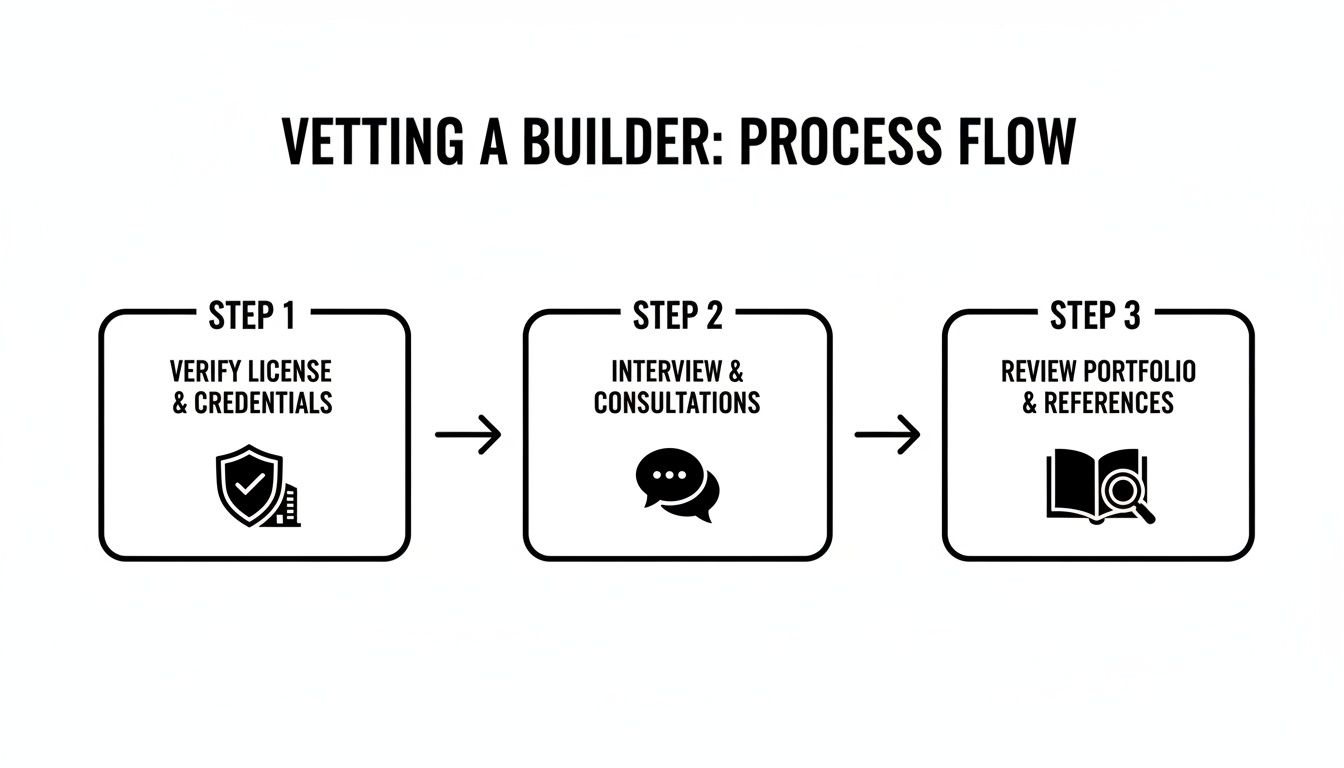
Following a clear verification and interview process ensures you partner with a company genuinely equipped for the unique demands of your site.
The Power of Proactive Site Management
Effectively preparing a remote site all comes down to proactive problem-solving. It’s about having the experience to see challenges coming and having the right tools on hand to deal with them. A builder who manages their own logistics with vehicles like our 4×4 truck can sidestep the kinds of delays that often plague less-equipped companies. For a deeper look into the rules and regulations, you can find more information about building on rural land in NSW in our detailed guide.
This hands-on approach means that when it’s finally time to break ground, your site is genuinely ready to go. Access roads are in place, the building pad is cleared and level, and the plans for power and water are already in motion. It’s this level of thorough preparation that sets the stage for a smooth and successful build, turning your vision for a country home into a reality. It all starts with a partner who can get the job done, from the front gate to the final nail.
Designing a Home That Thrives in the Australian Climate
Building a home in the Aussie bush isn’t just about creating a beautiful house; it's about building a resilient sanctuary that can handle everything our climate throws at it. From scorching summer heatwaves to the ever-present threat of bushfires, your home's design is its first line of defence. This isn't an optional extra—it's the absolute key to a comfortable, sustainable, and safe life out here.
A good rural building company knows this instinctively. We don't just plonk a generic design on a block of land. We get to know the site, analysing its unique quirks to create a home that works with the environment, not against it. This means making smart, deliberate choices on everything from the direction the house faces to the specific cladding you choose.
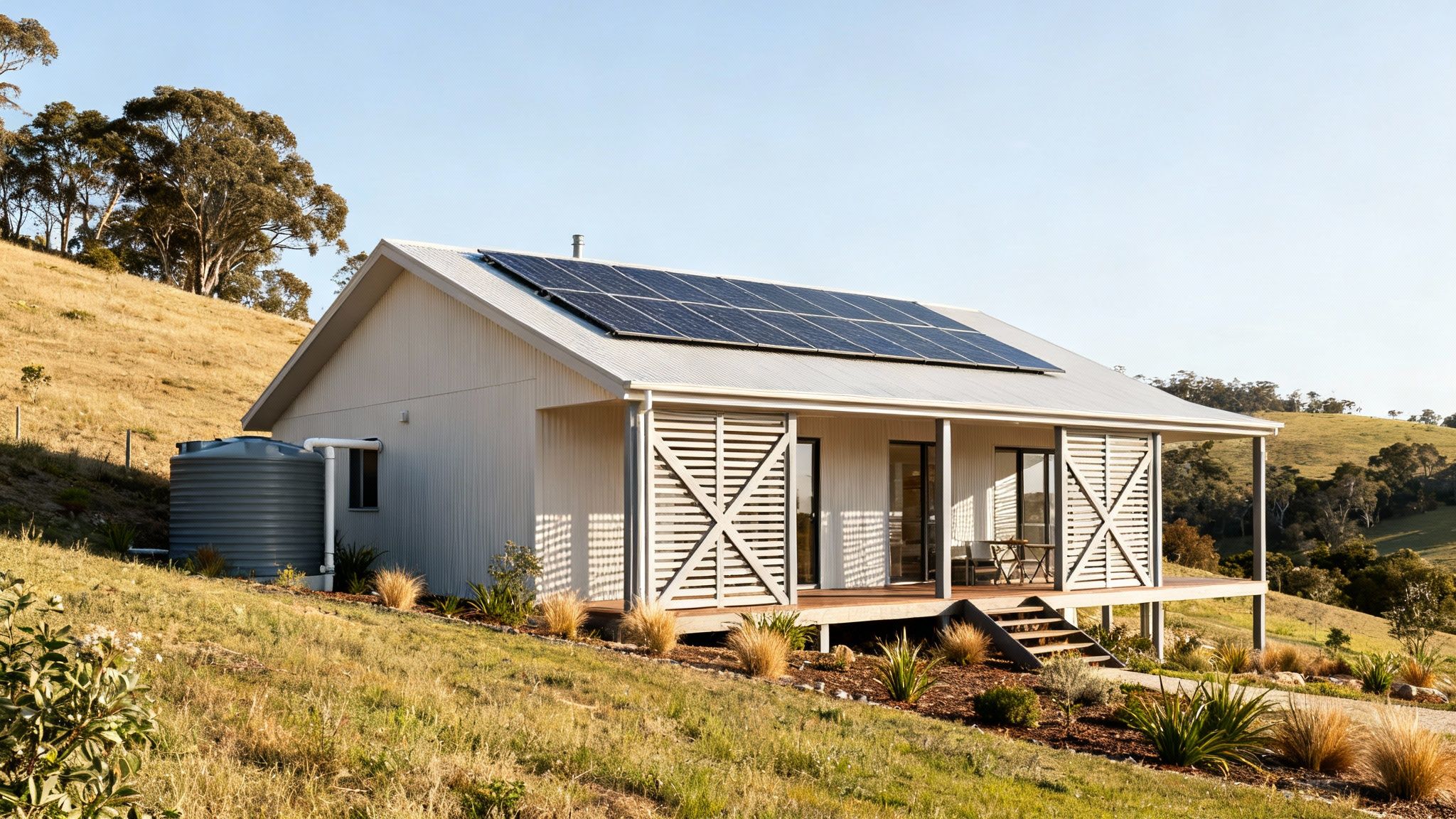
Harnessing Passive Design Principles
Passive design is one of the most powerful tools in our arsenal for building an energy-efficient rural home. It’s a simple but brilliant philosophy: use natural heating and cooling—like the sun and local breezes—to keep your home comfortable year-round. Get it right, and you’ll drastically slash your reliance on power-hungry air conditioning and heaters.
The core ideas are straightforward but make a huge difference:
- Orientation: This is the big one. Positioning your home to soak up the winter sun while shielding it from the brutal summer sun is crucial. In NSW, this usually means having your main living areas facing north and keeping windows on the east and west sides to a minimum.
- Insulation: Think of high-quality insulation as an Esky for your home. It's non-negotiable in the ceiling, walls, and even under the floor to keep you warm in winter and cool in summer.
- Ventilation: Clever placement of windows and doors to capture cooling breezes is your best friend on a hot summer afternoon. By creating cross-flow ventilation, you can cool the entire house down without even touching the air-con remote.
These principles are the backbone of a truly great rural home. You can see how these ideas come to life in our gallery of rural homestead designs.
Choosing Materials for Resilience and Safety
This is where theory meets the real world. In rural NSW, your building materials need to be tough. They must stand up to extreme weather and, most importantly, provide real protection against bushfires. Your property’s Bushfire Attack Level (BAL) rating will be the deciding factor for many of these choices.
A higher BAL rating means you'll need tougher, more fire-resistant materials. For example, a home in a BAL-40 or BAL-FZ (Flame Zone) area has incredibly strict rules we have to follow.
Choosing the right materials is about more than just looks or budget. It's a critical safety decision that protects your family and your investment. In a fire-prone landscape, non-combustible materials are your first line of defence.
Here’s what we typically look at for key parts of the home:
- Cladding: Forget flammable materials. We lean heavily on non-combustible options like fibre cement sheeting, brick veneer, or steel cladding like Colorbond. These resist ignition and stop embers from getting into the wall cavity.
- Windows: In high-BAL zones, windows need toughened safety glass and metal frames. Timber frames are rarely an option unless they’re made from specific, approved fire-resistant species.
- Decking: A classic timber deck can be a massive fire risk. We now have much safer alternatives, like compressed fibre cement sheeting or specially treated, fire-retardant timber built over an enclosed subfloor.
Making these decisions early in the design process is vital. Trying to retrofit a home for bushfire compliance later on is a far more expensive and complicated headache.
Embracing Water Conservation and Off-Grid Solutions
Living rural often means you're the master of your own essential services. While that can seem daunting, it's also a fantastic opportunity for self-sufficiency. Water is the most precious resource on any rural block, and smart design is the key to managing it.
Large-capacity rainwater tanks are a given, but we also design rooflines and guttering to capture every last drop. We can even incorporate greywater recycling systems to give you a sustainable source for watering the garden, saving your precious tank water for inside the house.
This focus on resilience has never been more important, especially with the pressures the construction industry has faced. Between 2020 and 2025, market instability created significant risks, particularly in regional areas. Industry reports showed residential project abandonment rates in Victoria hitting 8.6% in a single quarter, a stark reminder of the risks builders face with tight margins and labour shortages. Partnering with a stable, experienced local builder is more crucial than ever.
Ultimately, designing a home for the Australian climate is about creating a symbiotic relationship between your house and its surroundings. By making intelligent, climate-smart choices from the get-go, you’re not just building a house. You're creating a home that’s beautiful, functional, safe, and sustainable for generations to come.
Managing Your Budget and Timeline from a Distance
Keeping a handle on costs and timelines is crucial for any build, but it takes on a whole new level of importance when you’re not on-site every day. When you're managing a rural project from afar, the relationship with your builder becomes a true partnership built on trust and crystal-clear communication.
Right off the bat, you need to know that a realistic budget for a rural build looks very different to its urban cousin. You're not just factoring in the structure itself. Think about the added costs for tradespeople travelling long distances, higher delivery fees for materials, and unique site prep expenses like grading a kilometre-long driveway.
A good rural building company won’t shy away from these conversations. They’ll be upfront about these variables from the very beginning, making sure there are no nasty surprises tucked away in the fine print.
Staying Connected and in Control
Just because you’re managing the project from a distance doesn’t mean you should feel disconnected. Modern tech and a builder committed to transparency can make you feel like you're right there on site. Your builder should have a solid system for keeping you in the loop, ensuring you're always up-to-date on progress and a part of key decisions.
So, what does that actually look like?
- Scheduled Progress Updates: Regular weekly or fortnightly updates are non-negotiable. These should include a quick summary of what’s been done, what’s coming up next, and plenty of high-quality photos or short video clips from the site.
- On-Site Video Calls: A scheduled video call while your builder is actually walking the site is invaluable. It lets them show you specific details, talk through challenges in real-time, and answer your questions with the project right there in front of you both.
- Shared Project Hubs: Some builders use simple cloud-based software to share schedules, track approvals, and manage financial documents. This creates a single point of reference that both you and the building team can access anytime, from anywhere.
Even with the best intentions, remote communication can hit snags. Knowing how to troubleshoot these is key, and you can find some great advice on solving remote work communication problems to keep things running smoothly.
How Logistics Can Make or Break Your Project
Logistics are the invisible engine of a rural build. When they stall, everything grinds to a halt. A builder who’s constantly relying on third-party transport or standard vehicles is often at the mercy of factors outside their control. A bit of rain turns the track to mud, a truck gets bogged, or a delivery is delayed, and suddenly your whole schedule is thrown into chaos.
This is where a well-equipped rural builder with their own heavy-duty gear really proves their worth.
Our 10-tonne 4×4 truck is a perfect example. It's more than just a convenience; it's a strategic tool for managing risk. Having the ability to get our crew, materials, and equipment exactly where they need to be—no matter how remote the property is—gives us incredible control over the project's flow across New South Wales.
Having our own heavy-duty, all-terrain transport means we can sidestep the common logistical bottlenecks that cause budget blowouts and frustrating delays. It allows us to maintain control over the supply chain, ensuring your project stays on a predictable and efficient schedule.
This in-house capability translates directly into a more reliable timeline and a more stable budget for you. It’s a practical solution to one of the biggest headaches in remote construction. In today’s market, where the total Australian construction industry revenue is expected to be near AUD 521.2 billion by 2025, a builder's ability to control its own logistics is a major advantage. You can read more about the 2025 Australian construction market forecast on BusinessWire.com.
Ultimately, successfully managing a build from a distance comes down to one thing: partnering with a builder who values transparency and has the right tools for the job. When you have open lines of communication and a team with robust, in-house logistics, you can relax and actually enjoy the process, knowing your project is in truly capable hands.
Your Rural Building Questions, Answered
If you’re thinking about building in a rural area, you’ve probably got a long list of questions. After years of working with landowners all over New South Wales, we’ve heard just about everything. The goal here is to give you some clear, practical answers to the most common queries we get, helping you turn that big vision into an achievable plan.
Let's dive into some of the key things that are likely on your mind.
How Much More Does It Cost to Build in a Rural Area?
There’s no magic number, but building in the country almost always involves costs you just don't see on a suburban block. These aren't necessarily about the house itself, but about what it takes to get your land ready and serviced for construction.
A good rural building company won't shy away from these conversations. They’ll be upfront about these costs and factor them into your initial quote, so there are no nasty surprises down the track.
Common costs unique to rural builds often include:
- Getting Services Connected: This can be a major expense, covering everything from extending mains power lines, installing a full off-grid solar setup, drilling a bore for water, or putting in a new septic system.
- Site Preparation: Depending on your block, you could be looking at significant costs for clearing trees, cutting a level building pad, and creating or upgrading an access road just to get machinery in.
- Logistics and Travel: It’s easy to forget, but you need to account for the travel time for every single tradie and the higher delivery fees for materials coming from regional hubs.
What Happens If My Property Has Difficult Access?
Challenging access is a classic rural hurdle, but it's one a specialist builder should be well-prepared for. In fact, how a builder answers this question tells you a lot about their real-world experience.
This is exactly why we've invested in purpose-built equipment. We don’t just cross our fingers and hope a standard delivery truck can make it.
We run a 10-tonne 4×4 truck specifically for getting people, materials, and gear to the most remote sites around New South Wales. It's an all-terrain workhorse that lets us handle dirt tracks, steep grades, and creek crossings, keeping your project on track when others would be stuck.
This isn't just about convenience; it’s a critical part of managing risk. It means we can get supplies where they need to be, when they need to be there, turning a potential project-stopper into just another part of the process.
How Do I Manage a Project If I Don't Live Nearby?
Managing a build from a distance is more common than you'd think, and it's entirely possible with the right team. The whole thing comes down to two key ingredients: complete trust and a bulletproof communication plan. A professional builder should have a clear system for keeping you in the loop.
Before you sign anything, ask a potential builder to walk you through exactly how they communicate with remote clients. A great system will always include:
- Regular, scheduled updates with detailed progress notes and plenty of site photos.
- Transparent financial tracking so you can see exactly where your budget is at all times.
- Scheduled video calls from the site itself, so you can see the progress and make decisions as if you were there.
This kind of proactive communication is what makes you feel connected and in control, no matter how many kilometres away you are.
Are There Special Building Requirements for Rural NSW?
Absolutely. Building in rural NSW comes with a whole layer of specific regulations, and bushfire safety is right at the top of the list. Every property is given a Bushfire Attack Level (BAL) rating, and this rating determines the construction methods and materials you are legally required to use.
But it doesn't stop with the BAL rating. Your local council will also have strict rules about:
- Environmental protection and how much land you can clear.
- Wastewater management and septic system installation.
- How far your home must be set back from boundaries and waterways.
An experienced local builder is worth their weight in gold here. They'll know the ins and outs of your specific council’s requirements and ensure your project is designed and built to be compliant from day one, saving you the headache and cost of regulatory issues later on.
Ready to start the conversation about your rural building project? The team at Awesim Building Contractors has the experience, equipment, and local knowledge to bring your vision to life, no matter how remote your property. Contact us today to discuss your plans.