Picking a builder for a remote property or a farm is a different beast altogether compared to hiring one in town. A proper rural country builder comes to the job with a unique set of skills, honed by the specific challenges that only regional New South Wales can throw at you. They're masters of navigating the hurdles of distance, tricky terrain, and unpredictable weather—things an urban contractor might never even think about.
What Sets a Rural Country Builder Apart
The best way to think about it is like this: a rural builder is the seasoned 4×4 expert in a world of city sedans. Sure, a standard car is perfect for smooth, paved suburban streets. But you wouldn't take it down a corrugated, washed-out track after a downpour. For that, you need a purpose-built machine and a driver who knows how to handle it. A builder who's only ever worked on suburban blocks can easily get bogged down, literally and figuratively, by the complexities of building in the bush.
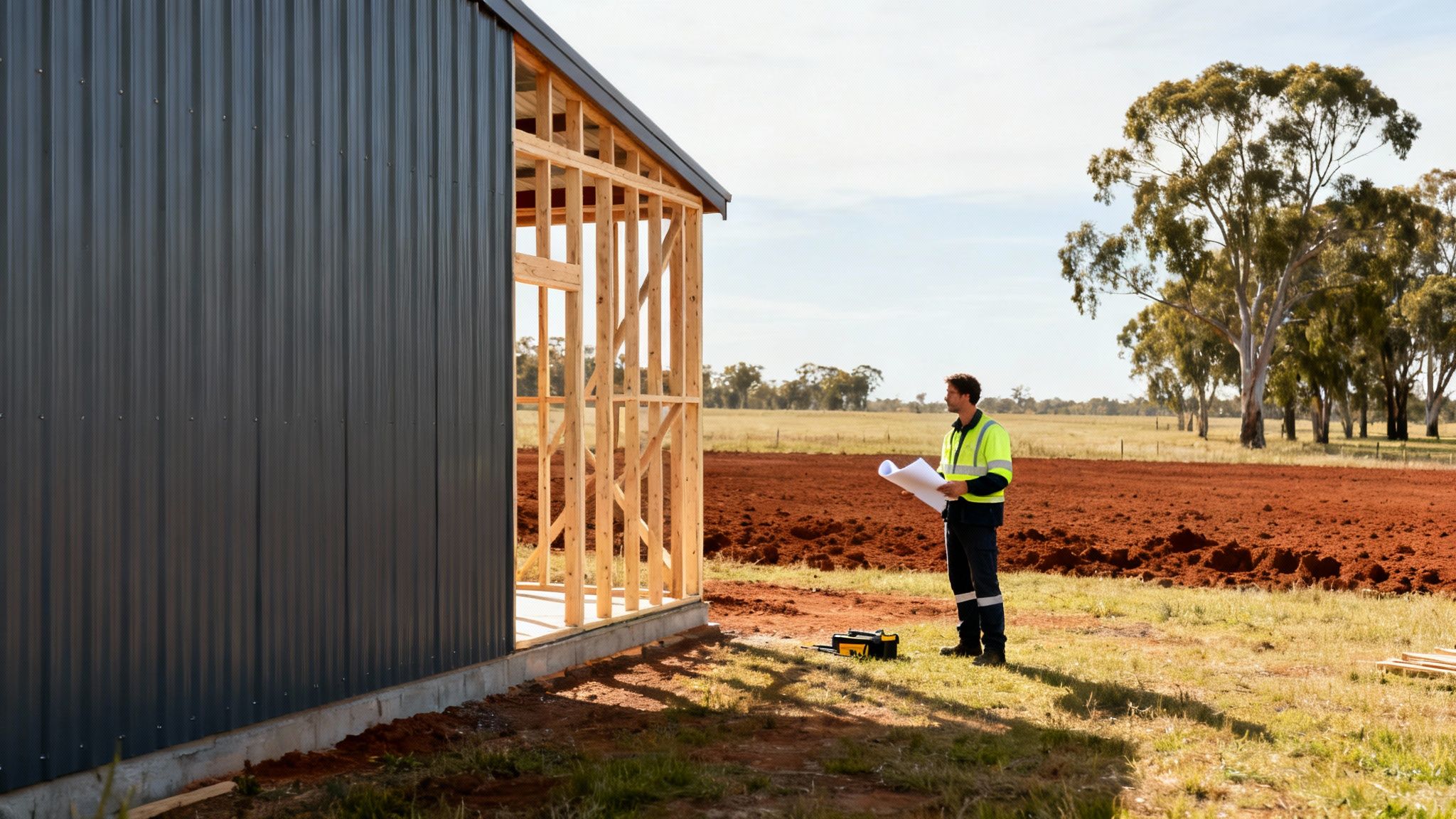
What it really comes down to is hands-on experience with the land itself. A genuine country builder understands the subtle but critical details of regional NSW. They know all about the reactive clay soils around the Riverina that can shift a foundation, or the relentless heat and fine red dust of the Far West that can wreak havoc on machinery and materials. This isn't knowledge from a textbook; it’s earned from years of solving real-world problems on the ground.
Experience Forged in the Bush
This hard-won experience shapes every single part of a project, from the initial site plan and material choices right through to the final nail. A builder with genuine local insight can see potential problems coming a mile off, which ends up saving you a huge amount of time, money, and stress down the line.
This deep understanding gives them a massive edge:
- Logistical Mastery: Getting the right crew, materials, and heavy equipment to a remote site on schedule is a military-grade operation. They know how to make it happen without a hitch.
- Material Suitability: They’ve seen what lasts and what doesn’t. They know precisely which materials will stand up to decades of harsh Australian sun and storms and which ones will look shabby in five years.
- Environmental Acumen: A good rural builder works with the landscape, not against it. They’re always thinking about things like water runoff, bushfire risks, and soil stability.
When you're building out in the country, logistical know-how is every bit as critical as the construction skill itself. The ability to get the right people, tools, and materials to an isolated site—on time and in one piece—is what makes or breaks a project.
Built to Endure Generations
We’ve spent 35 years focused exclusively on rural construction. That's not just a number; it represents three and a half decades of putting up structures that are genuinely built to last. We learned a long time ago that out here, durability isn't a luxury, it's an absolute necessity. That’s why we’re uncompromising when it comes to using tough, Australian-made materials.
We build with proven products like Colorbond steel, because nothing else handles the extreme sun and wild storms better. We use properly treated timbers that stand up to termites and rot. Every single decision is made with longevity front of mind, ensuring what we build today will still be serving your family and your property for generations. That commitment to quality and deep respect for the rural landscape is what really defines a specialist country builder.
Overcoming the Challenges of Building Remotely
Building in the city follows a pretty predictable script. You've got paved roads, reliable supply chains, and a hardware store just around the corner. That safety net completely vanishes when your property is miles down a dirt track, surrounded by the sheer scale of the New South Wales bush. For a true country builder, the real work starts long before we even think about digging a post hole; it starts with solving the immense logistical puzzle of remote construction.
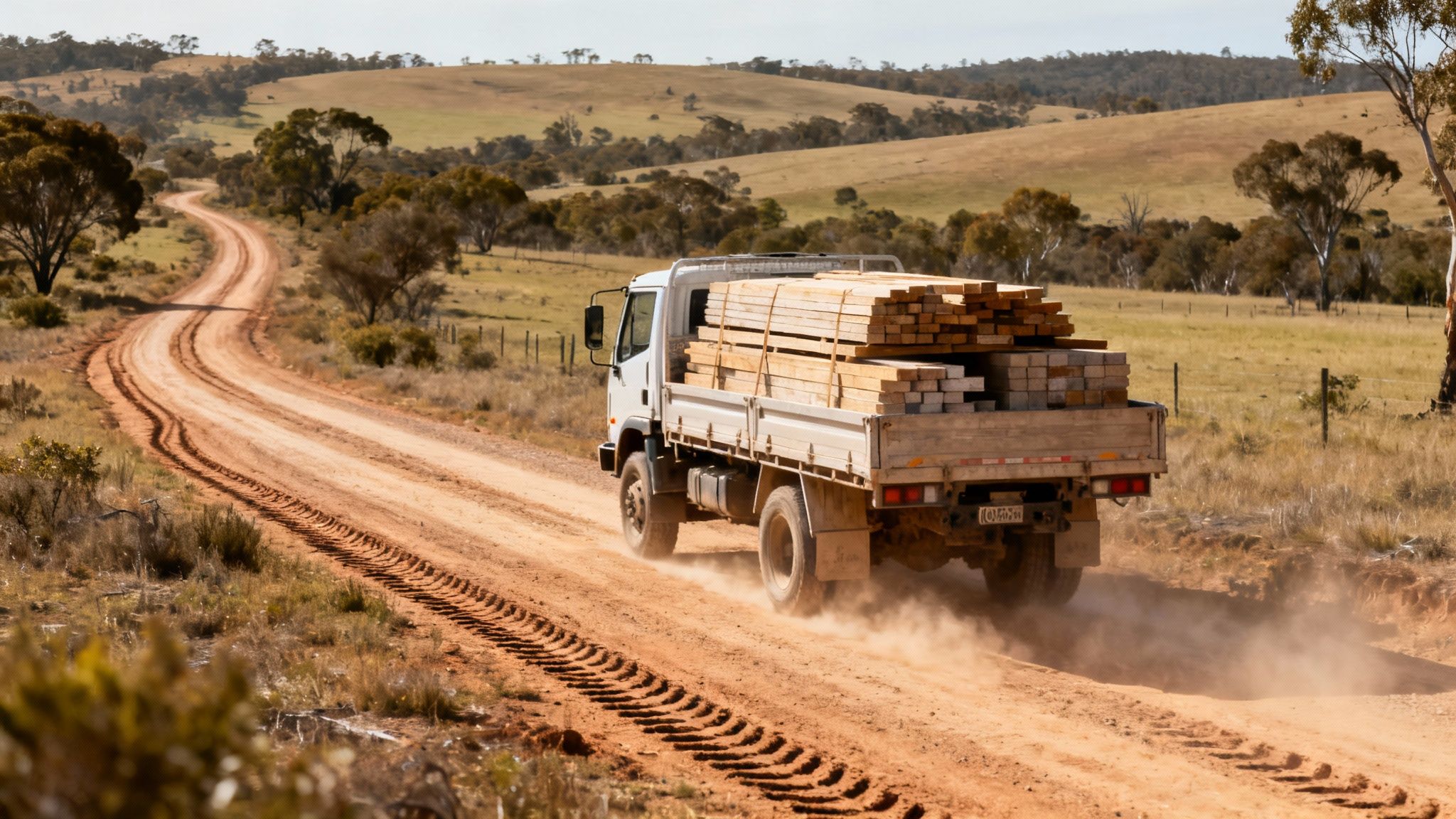
Just picture it: trying to get a semi-trailer loaded with delicate plasterboard or heavy steel beams across a washed-out creek after a week of solid rain. Or maybe coordinating deliveries of concrete, timber, and roofing to a site with zero mobile reception. These aren't just hypotheticals. They're the day-to-day realities that define what it means to build in regional Australia.
Navigating Unseen Hurdles
The challenge goes way beyond just getting materials to the site. Building out here involves a whole unique set of obstacles that demand foresight, specialist knowledge, and a healthy dose of patience. A builder who's been around the block anticipates these things as just part of the job.
- Site Accessibility: Unsealed roads, steep station tracks, and water crossings can make a property completely off-limits to standard delivery trucks.
- Unpredictable Weather: A sudden downpour can turn a perfectly good worksite into a mud pit, grinding everything to a halt for days and trapping equipment.
- Local Council Nuances: Every regional council has its own rulebook for agricultural zones, from environmental overlays to Bushfire Attack Level (BAL) ratings that need to be navigated.
- Environmental Factors: You have to know the land. This means everything from the soil composition, which dictates your foundations, to understanding local frost depth, which can impact the stability of footings over the long run.
These things all weave together, creating a high-stakes game where a bit of poor planning can lead to massive budget blowouts and seriously frustrating delays. A builder without that deep rural experience can easily underestimate these factors, and that's where costly mistakes happen.
The Right Equipment Is Non-Negotiable
Having the right tools is one thing, but in the bush, "tools" often means heavy-duty, all-terrain machinery. You simply can't service a remote property with a standard ute and a trailer. This is where a rock-solid logistical strategy becomes the absolute cornerstone of a successful project. If you can't reliably move people and materials, even the best plans are dead in the water.
At Awesim, our logistical backbone is our 10-tonne 4×4 truck. This isn't just a vehicle; it's our mobile supply line, purpose-built to conquer the rugged terrain of New South Wales. It's the key that unlocks the potential of even the most remote properties.
This truck gives us the freedom to bring everything we need for the job, exactly when and where it's needed. We can confidently move a full team of tradies, bulky materials like steel frames and timber packs, and all our essential equipment to sites that other builders might simply write off as unreachable.
A Proven Logistical Strategy in Action
Think of it this way: a regular delivery truck is like a city bus, designed for smooth, predictable routes. Our 4×4 truck is an expedition vehicle, built to forge its own path. It doesn't matter if we're heading out to the black soil plains near Walgett or navigating the rocky tracks past Broken Hill—our gear ensures the project never stops moving forward.
This capability completely changes how we approach a build:
- Reduced Delays: We aren't at the mercy of third-party couriers who might take one look at an unsealed road and turn back. This control over our own supply chain slashes the costly downtime spent just waiting for materials to show up.
- Increased Efficiency: By consolidating loads, we can haul more materials in a single trip. This cuts down on travel costs and shrinks the project's overall carbon footprint.
- Guaranteed Access: From floodways to steep farm tracks, our 4×4 means we get through. We can bring in all the necessary resources to keep your build on schedule, no matter what the conditions are like.
This is about more than just owning a big truck. It's about having a proven logistical system that's been fine-tuned over decades of working on the ground, right here in NSW. It gives property owners peace of mind, knowing that distance and difficult terrain won't become roadblocks for their project. As true https://awesim.au/outback-builders/, we've invested in the right equipment because we know that in the country, solving the challenge of distance is the first, and most important, step to getting the job done right.
What Can a Rural Builder Do for Your Farm or Homestead?
Life on a rural property means juggling a massive to-do list. One day you’re dealing with a roof ripped up by a freak storm, the next you’re sketching out plans for a new machinery shed to house that expensive new header. A dedicated rural country builder gets this. They're not just about one-off jobs; they're equipped to handle the whole spectrum, from urgent repairs to full-scale construction projects.
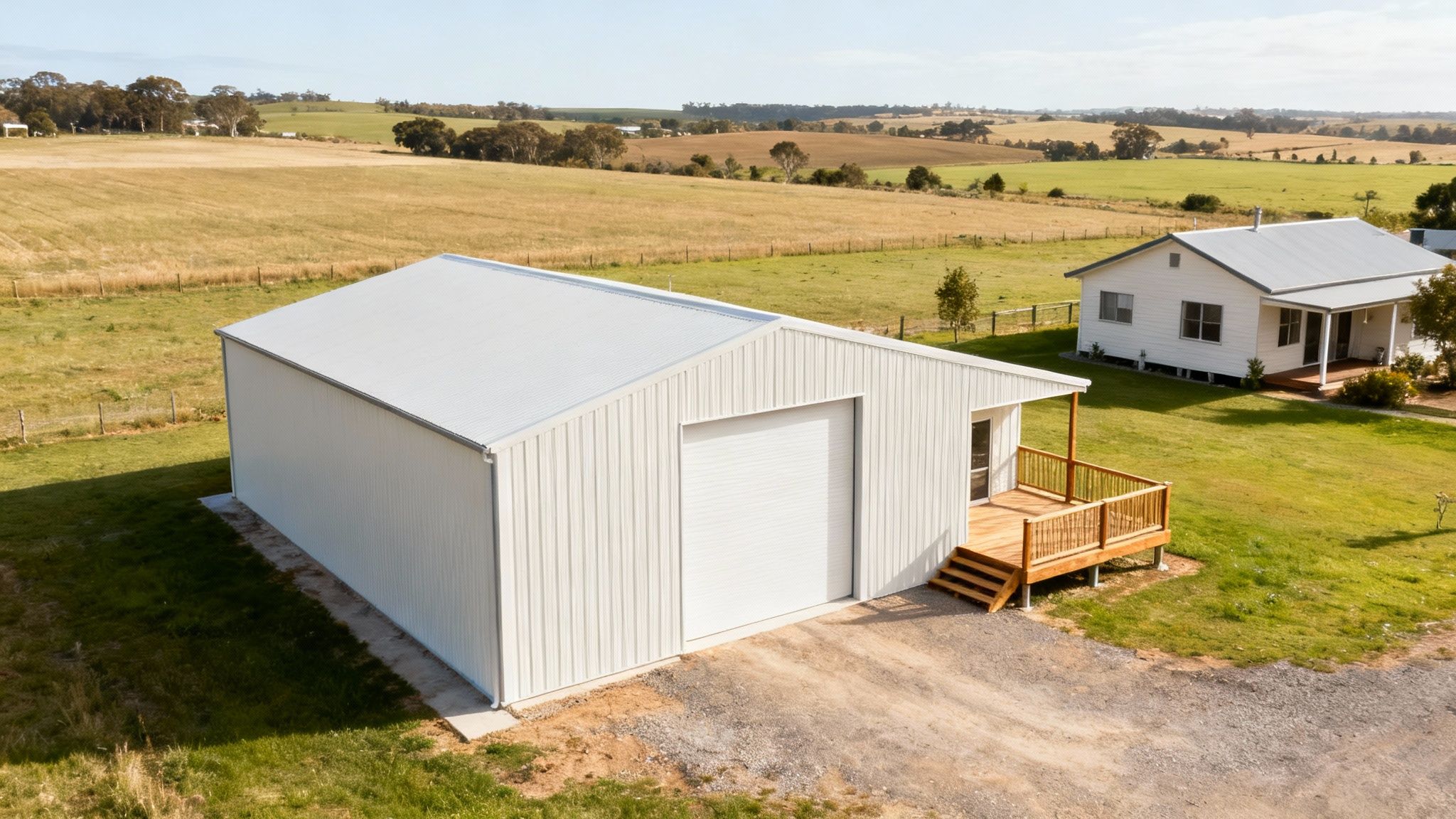
Unlike city projects where you might call three different tradies for three different problems, having a single, reliable rural builder on your contacts list is a game-changer. It saves a heap of time and stress, ensuring every job is done to the same high standard by someone who actually understands the lay of your land.
The following table gives a quick overview of the kinds of jobs a rural builder typically handles, broken down by scale.
Rural Building Project Scope At a Glance
| Project Category | Common Services | Key Rural Consideration |
|---|---|---|
| Repairs & Maintenance | Roof and gutter repairs, cladding fixes, door and window replacement, minor structural work (e.g., veranda posts, plasterboard). | Urgency and durability are paramount. Materials need to withstand harsh weather, from scorching sun to heavy downpours. |
| Homestead Upgrades | Kitchen and bathroom renovations, deck and pergola construction, new flooring, laying concrete slabs for extensions or carports. | Logistics are key. Getting materials and trades to remote sites requires careful planning and specialised transport. |
| New Constructions | Designing and building machinery sheds, workshops, stables, animal shelters, and ancillary dwellings (e.g., worker's quarters). | Involves navigating council regulations specific to rural zoning, managing the entire build from foundation to final inspection. |
This range of services means you can rely on one team to maintain, improve, and expand your property's infrastructure over the years.
Essential Property Maintenance and Repairs
On a farm or homestead, keeping your buildings in good nick isn't just about appearances—it's about asset protection. A small leak or a busted door can escalate into a major headache in the bush, causing costly damage and disrupting your work. These bread-and-butter maintenance jobs are the first line of defence.
A good builder will have these fundamentals covered:
- Roofing, Gutters, and Cladding: This is your shield against the elements. Whether it's replacing a few sheets of Colorbond after a hailstorm or doing a full re-roof, keeping things watertight is priority number one. This also means fixing up damaged gutters and compromised wall cladding before water gets in and rots the frame.
- Doors and Windows: You need doors and windows that actually work—for security, keeping the heat in or out, and stopping pests from moving in. This could be a simple screen repair or a full replacement with modern, energy-efficient units tough enough for the country.
- Minor Structural Fixes: This covers all those "I'll get to it later" jobs, like patching a hole in the plasterboard, sorting out a sagging floor, or reinforcing a wobbly veranda post. Nipping these in the bud stops them from turning into big, expensive structural problems.
Homestead and Lifestyle Upgrades
Your home is the heart of the property, your retreat after a hard day's yakka. Upgrading your living spaces doesn't just make life more comfortable; it adds real value to your place. But renovating a house out on a remote station is a whole different ball game to a suburban makeover.
A renovation on a working property requires serious planning. You need materials that can handle the red dust and daily wear-and-tear, and the logistics have to account for getting everything—from tiles to benchtops—out to a remote site.
A big part of what we do is making sure we can get materials and our crew to the most isolated properties across New South Wales. We have a 10-tonne 4×4 truck to bring in materials and supplies for the most remote properties. It's built to handle dirt roads, creek crossings, and rugged station tracks, allowing us to bring in labour, materials, and equipment where and when it's needed the most.
Some of the most popular upgrades we handle include:
- Kitchen and Bathroom Renovations: Bringing these high-traffic areas up to date with modern, functional designs and hard-wearing materials that are a breeze to clean.
- Decks and Pergolas: Creating great outdoor living areas that connect your home to the landscape, built tough with treated timbers that can stand up to the Aussie climate.
- Flooring and Concrete Slabs: Whether it’s pouring a new slab for a workshop or putting down durable flooring inside the house, getting the foundations right is crucial for any project.
New Farm Structures and Buildings
As your operation expands, so does your need for solid, purpose-built infrastructure. A seasoned rural builder can take a new structure from a rough idea to a finished, council-approved building. They handle everything—the design, the approvals, the build, and the final sign-off—so you end up with a shed or shelter that's not just practical but also fully compliant.
Here are the core new-build services:
- Machinery Sheds and Workshops: Designed to keep your expensive gear out of the weather and give you a secure, practical space for maintenance. To get a better feel for what’s involved, you can learn more about our process for custom farm shed design.
- Stables and Animal Shelters: Creating safe, well-ventilated, and durable structures for your livestock, designed specifically for your animals' needs and the layout of your property.
- Ancillary Dwellings: Building secondary homes, like worker's quarters or a granny flat, that tick all the boxes with the local council for rural zone requirements.
How to Budget for Your Rural Building Project
Budgeting for a building project out in the New South Wales bush is a completely different ball game compared to planning a build on a suburban block. The final number on your quote isn't just about square metres or fancy finishes; it’s shaped heavily by the simple, practical realities of building in the country. Getting your head around these variables is the first, and most important, step in creating a financial plan that won’t fall apart.
Often, the first major cost is just getting to your property. A site that’s an hour down a corrugated dirt track will have a wildly different cost profile than one just off the bitumen. Every delivery, every trip a tradie makes, and every bit of machinery that has to be floated in adds up. This is where a builder’s logistical planning—or lack of it—really shows.
The Core Variables of a Rural Budget
At the end of the day, your project's cost will hinge on three main things: access, materials, and labour. A good rural country builder knows how to juggle these elements to keep your project from running off the rails.
- Site Accessibility and Logistics: Can a standard delivery truck even get to your building site? Are there dodgy creek crossings or steep, slippery tracks to deal with? The tougher the access, the more specialised—and expensive—the equipment needed to get the job done.
- Material Choices and Sourcing: Choosing robust materials like Australian steel frames is a brilliant long-term move for durability against the elements. But, you have to account for the cost of physically hauling those heavy, bulky items to a remote property.
- Labour and Team Management: Getting a crew of skilled tradespeople to a remote project and keeping them productive requires airtight planning. Travel time, sometimes accommodation, and making sure every hour on-site counts all factor into the final labour bill.
The single biggest way to avoid logistical budget blowouts is to have the right gear for the job. Our purpose-built 10-tonne 4×4 truck was designed specifically to handle the rough terrain we see all over rural NSW. It lets us bring in labour, materials, and equipment in one go, cutting down on trips and delays. For the most remote properties, that efficiency directly translates into keeping costs under control.
Navigating Economic Headwinds
Beyond the specifics of your own patch of land, the wider economy is also throwing a few curveballs that can impact your budget. Right now, the two biggest headaches are volatile material prices and a serious shortage of skilled construction workers.
The building industry right across Australia is facing a massive workforce shortage, and that pain is felt even more keenly in farming communities. Some projections suggest Australia's construction worker shortfall could hit 300,000 by 2027, which affects every builder from Tamworth to Broken Hill. This is made worse by a huge $242 billion public infrastructure pipeline planned from FY2025 to FY2029, which is pulling skilled labour away from private jobs.
How an Experienced Builder Protects Your Budget
This is precisely where a seasoned rural builder earns their keep. They don’t just put up sheds and houses; they manage risk. Thanks to supply chains they've built up over decades, they can often source quality materials at more stable prices, giving you a buffer against the worst of the market swings.
Their project management is also tuned to the rhythms of the bush. They'll create a schedule that gets the most out of every single day the team is on-site, making sure no time is wasted. By thinking ahead and anticipating the roadblocks—a freak storm, a supplier delay—they can build buffers into the plan, keeping your project as close to the original budget and timeline as humanly possible.
For a more detailed breakdown of the numbers, have a look at our guide on understanding home build costs in today's market.
How to Find and Vet the Right Builder
Picking the right builder is hands down the most critical decision you'll make for your rural project. This isn’t just about finding someone who can swing a hammer; it's about finding a partner who genuinely gets the unique challenges and opportunities of building in regional New South Wales.
Taking the time to properly vet your options will help you sort the true country specialists from those who might just be chancing their arm.
First things first, cover your bases. Any builder you consider must have a current, valid licence with Fair Trading NSW. They also need to be fully insured, with public liability and workers' compensation as a bare minimum. Don't just take their word for it—ask for the paperwork. A pro will have it on hand and won't hesitate to share it.
Next, look at their past work. Ask to see a portfolio of completed projects, and really focus on jobs that are similar to yours in size, style, and setting. A builder who's brilliant at new homesteads might not have the finesse for a delicate heritage renovation, and the other way around. Look for proof of quality craftsmanship and materials that can handle country conditions.
Asking the Right Questions
Once you’ve sorted the essentials, it's time to ask the questions that really test their rural know-how. The way they answer will tell you everything about whether they're truly prepared for the realities of building off the beaten track.
Here are a few questions I always recommend asking:
- Logistics and Site Access: "Our property has a tricky access road. How do you plan for getting materials and your team here, especially if we get a week of rain?"
- Council Knowledge: "What’s your experience with our local council? How do you typically manage the DA process for rural properties like this one?"
- Weather Contingencies: "When a 40-degree heatwave or a major storm rolls in, what’s your plan to protect the site, the materials, and your crew?"
- Pest-Proofing: It's also worth asking about their approach to keeping unwanted guests out. For instance, ask about their strategies for preventing mice in walls, because sealing up a new build properly from the start saves a lot of headaches later on.
These aren't just tick-a-box questions. They get to the very heart of what makes a successful rural country builder.
A builder who can confidently and clearly explain how they handle these rural-specific issues is showing their experience. If you get vague, hand-wavy answers, that’s a massive red flag.
Where Do They Get Their Materials?
Finally, have a real conversation about materials. Ask where they source them and why they recommend certain products over others. This is especially important right now.
With building infrastructure in NSW set to hit $77 billion—that’s 32% of the major public pipeline and up $6 billion on last year—a lot of that investment is flowing into the regions. For homesteads and farm buildings in places like Moree or Nyngan, you need materials that can withstand punishing conditions, like heavy-duty treated timbers and tough-as-nails cladding.
A good builder will have established relationships with reliable suppliers and will be able to justify their choices based on performance, not just price. You can get a better sense of these trends in the full Australia's infrastructure market capacity report.
Why Local Knowledge Is Your Greatest Asset
When you're building out in regional New South Wales, it's not just about timber and steel—it’s about deeply understanding the land itself. We've talked about the unique challenges, the services you'll need, and how to pick the right team. But after all that, one thing should be crystal clear: hands-on local experience isn't just a nice-to-have. It's the most valuable asset you've got.
This is what makes the difference between a building that simply stands on the land and one that truly belongs to it.
An experienced rural country builder sees the whole story. They know instinctively how a black soil plain will behave in a flash flood or which materials will hold up after decades under the scorching western sun. That kind of foresight only comes from years spent solving real problems on the ground, turning potential disasters into simple adjustments.
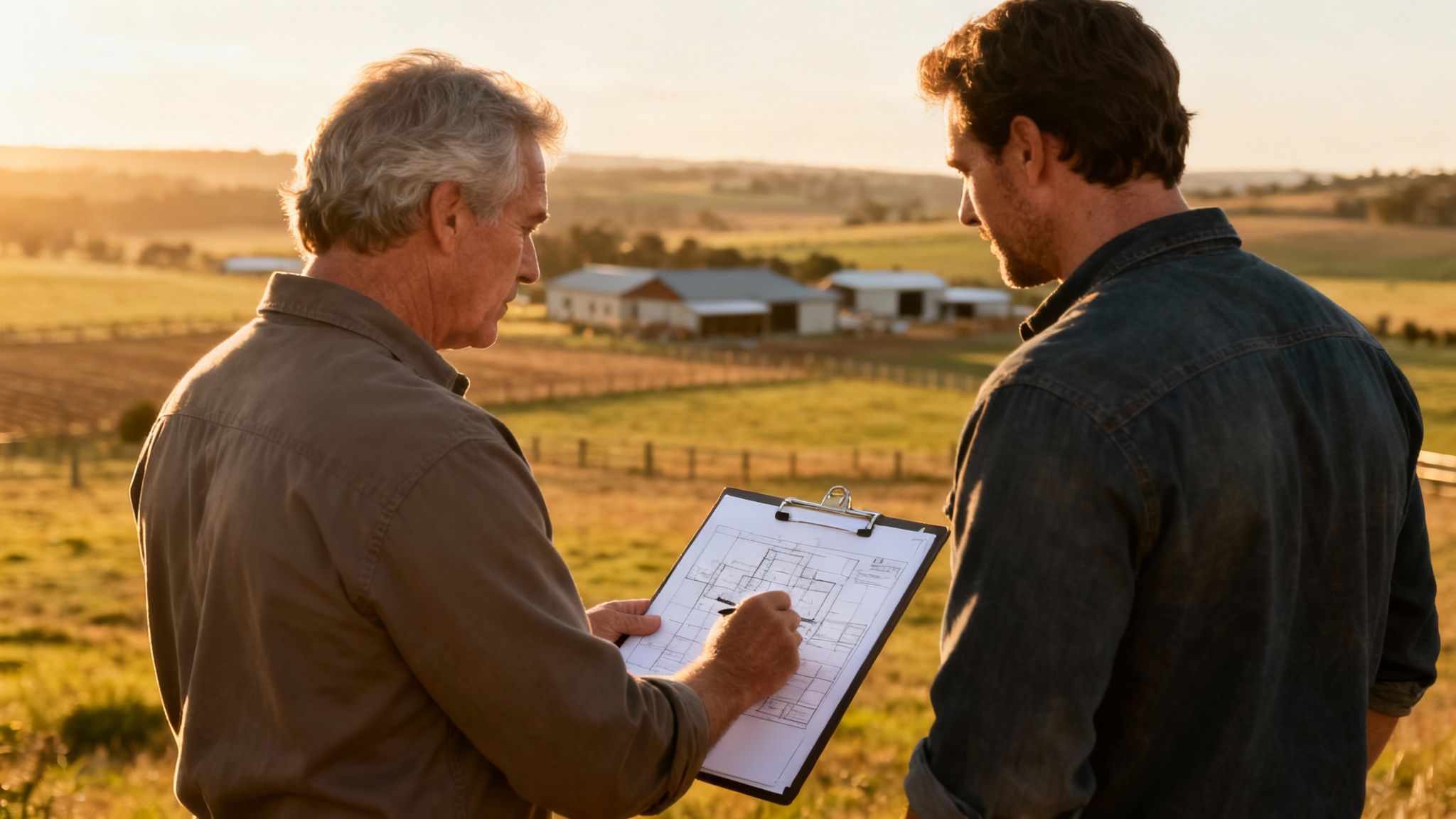
This practical wisdom feeds directly into a smarter, more resilient build. It shapes every decision, from the first survey of the site to the final coat of paint, making sure your investment is built to last.
The Right Tools for a Tough Job
Of course, all the knowledge in the world won't help if you can't get the gear to the job site. Getting out to isolated properties takes a lot more than just a ute and a good attitude. It calls for specialised equipment built for the rugged, often unforgiving, terrain of the Aussie bush.
That is precisely why we invested in our 10-tonne 4×4 truck. It’s our commitment to serving the most remote properties across New South Wales. This purpose-built vehicle allows us to bring in labour, materials, and equipment exactly where and when it's needed most, overcoming washed-out tracks and rough station access that would stop other projects cold.
Having that capability isn't a minor detail; it's fundamental to keeping our promises. It means fewer delays, less mucking around, and the confidence that your project moves forward, no matter how far off the bitumen you are.
A Long-Term Partner in Your Property
Choosing your builder is about more than just the current project. It's a long-term investment in your property's future. You're not just looking to get a job done; you're looking for the peace of mind that comes from building something that will add value for generations to come. A structure built with genuine skill and local insight becomes part of your family’s legacy.
At Awesim Building Contractors, we don't just build things. We aim to be long-term partners for our clients. With 35 years of dedicated experience under our belts, we bring a legacy of quality workmanship and practical, farm-friendly solutions to every single job.
If you’re ready to build something that will stand the test of time, let’s have a yarn.
A Few Common Questions We Get Asked
Building out in the country, especially when you're a good distance from the nearest town, naturally brings up a few questions. We've put together some straightforward answers to the queries we hear most often from property owners across New South Wales, cutting through the jargon to give you the practical details you need.
How Do You Manage a Project if My Property Is So Remote?
The short answer? Meticulous planning and good, solid logistics. It all starts with us getting our boots on the ground for a thorough site assessment. We need to see everything – the unsealed roads, the creek crossings, the tricky access points – to understand exactly what we're working with. From there, we map out a detailed schedule that syncs up labour, material deliveries, and machinery transport in smart, efficient phases.
Our secret weapon is our 10-tonne 4×4 truck. It's the absolute lifeline for our remote projects, purpose-built to handle the rugged NSW terrain. It means we can get the crew, the materials, and the gear exactly where they need to be, when they need to be there, keeping your build on track no matter how far out you are. This allows us to bring in labour, materials and equipment where and when it's needed the most.
We also make sure we've got a clear line of communication open with you. You'll get regular updates with photos, calls, and emails, so you're never left wondering what's happening on-site.
Are You Familiar With Building Codes in My Council Area?
You bet. After 35 years of building everywhere from Tamworth and Armidale out to Bourke and Dubbo, we've pretty much seen it all when it comes to local council rules. We have a deep understanding of the specific regulations for rural and agricultural zones, which can often catch out builders who stick to the city.
We handle the whole compliance headache for you. This includes:
- Lodging the Development Application (DA) correctly from the get-go.
- Making sure every part of the build meets the Building Code of Australia (BCA) and all relevant Australian Standards.
- Navigating the tricky requirements for septic systems, environmental management, and those all-important Bushfire Attack Level (BAL) ratings.
Having this ingrained local knowledge means we build it right the first time, saving you from the stress of costly delays and rework.
What Materials Do You Recommend for Farm Buildings?
Out here, things need to be tough. Durability and low maintenance aren't just nice-to-haves; they're essential. That’s why we stick to hard-wearing, Australian-made materials that are proven to stand up to the harshest regional conditions. Every choice we make is about longevity and practicality for a working property.
For sheds, machinery bays, and roofing, we use nothing but genuine Colorbond steel. Its track record for surviving decades of relentless sun, wind, and rain is second to none. For structural work like decks, verandas, and pergolas, we only use high-grade treated timbers, specifically selected to fend off termites and rot. Every single component is chosen to handle the day-in, day-out reality of life on a farm or station, making sure your investment is built to last for generations.
Ready to start a conversation about your rural building project? The team at Awesim Building Contractors has the experience, equipment, and local knowledge to bring your vision to life. Get in touch with us today.