A lot of rural property owners put up with a bad bathroom for too long. The shower leaks but still works. The floor feels a bit soft near the vanity. The layout never suited farm life in the first place, but there’s always fencing, stock, harvest, weather, or another repair that takes priority.
That approach usually costs more in the end. A bathroom on a rural property doesn’t fail gently. Once water gets into a timber floor, wall frame, or poorly sealed junction, the repair moves well beyond tiles and tapware. If you’re searching for a rural new south wales bathroom builder, you’re not just looking for someone who can make a room look better. You need someone who understands access, waterproofing, approvals, service coordination, and what holds up on a working property.
Starting Your Rural Bathroom Renovation Journey
A tired rural bathroom usually shows the same warning signs. Cracked grout. Swollen skirtings. Mould that keeps returning no matter how often it’s cleaned. A shower hob that’s moved. A room that was laid out for a different era, not for muddy boots, tank water, farm schedules, or a busy homestead.

Start with function, not finishes
Before choosing tiles or a vanity colour, get clear on how the bathroom needs to work.
- Daily use: Is this the main family bathroom, an ensuite, or the wash-up room everyone uses after outdoor work?
- Water supply: If you rely on tank or bore water, fixture choice matters more than it does in town.
- Cleaning load: Textured surfaces and delicate finishes often look good in a showroom and become annoying fast on a farm.
- Future repairs: In remote areas, simple systems with accessible plumbing usually age better than fussy designs.
That practical starting point protects your budget. It also stops the common mistake of spending heavily on cosmetic finishes while leaving the hard parts untouched.
Why the renovation is bigger than a cosmetic upgrade
A bathroom renovation can improve day-to-day life and still make financial sense. The Australian home renovation market saw over $48 billion invested nationwide in 2025, with NSW recording the highest average spend at $78,500 per major renovation, and a bathroom renovation offers an average 68% return on investment, second only to kitchens, according to Australian renovation market figures.
That doesn’t mean every project should be oversized. It means a well-planned bathroom upgrade on a rural property is often doing two jobs at once. It fixes a vulnerable wet area and strengthens the overall value and usability of the homestead.
Practical rule: Fix what can fail behind the tiles before paying for what sits in front of them.
A sound renovation usually includes more than new fittings. It may involve substrate repairs, better ventilation, floor re-levelling, updated plumbing locations, improved drainage, and a layout that works for the people who use it. That’s where a specialist rural builder earns their keep. Rural bathrooms aren’t just suburban bathrooms with a longer driveway.
Planning and Approvals for Your Farm Homestead
A good renovation starts on paper. Not because paperwork is exciting, but because rural jobs get expensive when assumptions replace planning. On a farm homestead, the scope of works has to cover more than demolition and rebuild. You may be dealing with septic connections, older plumbing runs, uneven subfloors, bushfire-related material choices, or access constraints that affect how materials reach the site.
Lock in the real scope early
The first step is deciding whether you’re doing a surface refresh or a proper rebuild. Those are not the same job.
A refresh keeps most of the room in place. A full rebuild usually means stripping the bathroom back, checking the floor and walls, adjusting services, rebuilding wet areas correctly, and then refitting the room. If there’s any sign of movement, water damage, or poor original waterproofing, a full rebuild is often the safer path.
Use these questions to define the job:
- Are the current walls and floor sound? If not, no finish will hide that for long.
- Will plumbing points stay where they are? Moving a toilet, shower waste, or vanity line affects labour and approvals.
- Does the bathroom connect to septic or on-site waste systems? That can affect compliance and design.
- Does access to the property limit delivery size or timing? This matters before the quote, not after it.
Rural approvals are rarely a copy of town projects
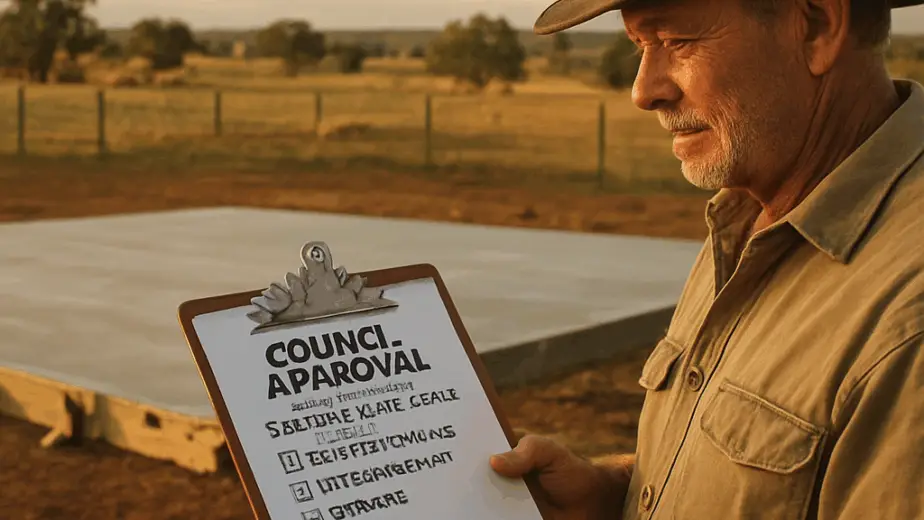
Many owners assume an internal bathroom renovation will follow the same path everywhere. It doesn’t. Regional councils can apply different expectations around fire safety, wastewater, and property-specific constraints.
Regional councils like Tamworth Regional impose stricter bushfire (BAL) ratings and septic compliance under NSW Planning Portal guidelines. With 28% of the NSW population living rurally, these hurdles are common but often missed by urban-focused builders, risking fines up to $110,000 under the EP&A Act, as outlined in this discussion of regional renovation and planning issues.
That’s why the approval question needs to be sorted before materials are ordered.
What to check before work starts
| Planning item | What to confirm | Why it matters |
|---|---|---|
| Property constraints | Bushfire, septic, access, and any local council requirements | These can change materials, methods, and approval pathways |
| Existing services | Plumbing locations, drainage condition, electrical capacity | Old services often drive hidden cost |
| Room structure | Floor level, moisture damage, wall condition | Wet area work fails when the substrate is ignored |
| Site access | Delivery route, turning room, weather impact | Remote logistics affect timing and material handling |
For a broader look at the approval side of country projects, this guide to building on rural land in NSW is worth reading before final design decisions are locked in.
If your builder can’t explain how your bathroom ties into your wider property conditions, they’re treating a rural renovation like a suburban one.
The Remote Access Advantage How We Reach Any Property
The job can be well designed, properly approved, and fully budgeted. None of that matters if the site can’t be serviced properly. Consequently, many remote bathroom projects stall. Materials don’t arrive together. Trades are delayed because the road is cut up. A delivery truck won’t cross a water crossing. A supplier gets to the gate and refuses the final stretch.
That’s the difference between a builder who works in rural NSW and one who only says they do.

Access is part of the build, not an afterthought
Remote bathrooms come with predictable problems:
- Unsealed roads: Heavy vehicles can lose access after rain.
- Water crossings: Standard delivery setups may stop short of the site.
- Long distances from suppliers: Miss one item and the whole sequence slips.
- Tight work windows: Farm operations and weather can narrow the time available.
A rural new south wales bathroom builder needs to solve those issues as part of the contract, not leave them to chance.
The practical advantage of the right vehicle fleet
For remote work across NSW, we use 4×4 utes and a 10 tonne 4×4 truck to move labour, materials, and equipment where they’re needed most. That matters because bathroom work isn’t just a few boxes of fittings. You may need sheeting, waterproofing materials, timber, plumbing gear, demolition tools, tile loads, vanities, screens, and waste removal managed over rough access routes.
The 10 tonne 4×4 truck changes what’s possible on remote properties. It lets us service sites that stop urban builders before they begin, and it reduces the stop-start pattern that causes delays and rehandling damage.
For owners in western and regional NSW, that means one less major project risk. We can bring in labour, materials and equipment where and when it’s needed most, even when access is difficult.
A lot of people outside the industry underestimate how much scheduling depends on transport sequencing. If you want a plain-English overview, this article on understanding route optimization explains why delivery order and route planning matter so much once distance and access become part of the job.
For more on remote project capability, see these outback builders working across regional NSW.
On a remote build, the truck isn’t a side detail. It’s part of the construction system.
Choosing Farm-Friendly Materials and Fixtures
Rural bathrooms need to cope with harder use and wider temperature swings than many town bathrooms. Good selections aren’t always the most expensive. They’re the ones that keep working, clean up easily, and don’t become fragile after one hot summer or a wet season.
What works on a property and what usually doesn’t
The best material choices often come down to maintenance.
Flooring
Porcelain tiles are usually the safer choice for a working homestead bathroom. They’re durable, easy to clean, and available in finishes that give better grip under wet boots. Highly polished tiles can look sharp in a display room and become slippery the first week they’re in service.
Cabinetry
Moisture-resistant board and durable hardware matter more than decorative profiles. Thin vinyl wraps and lightweight hinges often age poorly in rooms that see humidity swings and daily use. Simpler door styles are easier to wipe down and easier to match later if one panel is damaged.
Wall finishes
Full-height tiling in heavy splash zones can make sense, but not every wall needs the same treatment. The right balance depends on cleaning needs, ventilation, and budget. What doesn’t work well is mixing premium wall finishes with poor waterproofing behind them.
Water use and service reliability
On properties using tank or bore water, fixture choice should be practical.
Consider these points:
- Shower fittings: Choose models that are easy to service and not overly delicate.
- Tapware: Standard, well-supported brands are usually better than obscure designer products.
- Toilets: Reliable flushing performance matters more than visual gimmicks.
- Vanities: Wall-hung units look clean, but floor-mounted designs can be more forgiving on uneven walls and older structures.
The best setup is often the one a local trade can repair without waiting on niche parts.
Materials worth considering for rural conditions
Australian-made, heavy-duty materials often make sense in remote NSW because they’re built for hard weather and practical use. Products such as Colorbond steel and treated timbers are commonly chosen for durability in harsh climates on broader rural projects, and that same mindset helps in bathroom adjoining works such as external cladding transitions, service enclosures, and associated structural repairs.
A useful way to choose is to compare each item against three filters:
| Item | Better choice for many rural jobs | Why |
|---|---|---|
| Floor tile | Matte or low-sheen porcelain | Better wear and safer underfoot |
| Vanity finish | Durable, easy-clean surfaces | Less fuss, better for frequent cleaning |
| Hardware | Standard serviceable fittings | Easier replacement in regional areas |
| Adjacent building materials | Heavy-duty products suited to climate | Better long-term resilience |
If you’re still shaping the look and function of the room, these bathroom renovation ideas for practical NSW homes can help narrow choices without drifting into showroom-only decisions.
A farm-friendly bathroom should still look good. It just needs to look good after years of use, not only on handover day.
Understanding the Rural Renovation Timeline
Rural bathroom work runs better when everyone knows the order of operations. Owners usually don’t need a complicated program. They need a realistic one. The main issue isn’t only how long each trade takes. It’s how demolition, drying times, access, deliveries, and inspections fit together on a property that may be hours from suppliers.

The five phases that matter
Most bathroom renovations on rural properties follow the same broad sequence, even though the details vary.
Planning and design
Measurements, selections, access review, and scope confirmation happen here. This is also when long-lead items should be identified.Site preparation
The room is emptied, protected, and stripped out. Access routes, waste removal, and material staging are sorted before the heavier work starts.Rough-in and structural work
Plumbing and electrical changes happen at this stage. If the subfloor, wall framing, or sheet substrate needs repair, this is when it’s done.Fixtures and finishes
Waterproofing, screeding where required, tiling, painting, joinery, and fixture installation follow in sequence. This stage only works when the earlier work has been done properly.Final walkthrough and handover
The room is checked, adjusted, cleaned, and handed over with the relevant documentation.
What slows rural jobs down
A remote renovation usually slips for one of a few practical reasons:
- Missing materials: One overlooked part can hold up the room.
- Wet weather access: Roads and crossings can affect delivery timing.
- Hidden damage: Demolition may reveal subfloor or wall issues.
- Service updates: Older rural homes often need more adjustment than expected.
That’s why experienced builders front-load the schedule. Materials are ordered earlier, site access is checked before start day, and trades are booked around realistic lead times rather than best-case assumptions.
How to make the timeline easier on your household
You can reduce disruption by making a few decisions early.
- Choose fittings before demolition starts: Late selections create idle time.
- Clear a staging area: Give trades a dry, usable spot for materials and tools.
- Discuss stock or farm movement: Access for vehicles should be predictable.
- Plan around your busiest property periods: Lambing, harvest, and major maintenance windows matter.
A rural bathroom timeline doesn’t need to feel chaotic. It needs to be organised around the realities of the site.
Warranties and Building Compliance in New South Wales
The part of a bathroom you can’t see is usually the part that decides whether the job lasts. Compliance isn’t a paperwork exercise. It’s what protects the room from leaks, rot, insurance trouble, and expensive rework.
Waterproofing rules are not flexible
In NSW, bathroom builders must comply with AS 3740-2010. That standard requires specific waterproofing membrane heights and floor coverage, including wet area detailing that has to be done correctly before finishes go on. According to this summary of bathroom building standards and approvals, non-compliance can escalate repair costs by 300-500%, and certified installations are shown to reduce leak claims by 85%.
For rural owners, the main point is simple. If the waterproofing is wrong, distance makes the aftermath worse. A small leak in town is inconvenient. A leak in a remote homestead can keep causing damage before anyone gets back to fix it.
What to insist on from your builder
You should expect clear answers on these items:
| Compliance item | What you need |
|---|---|
| Waterproofing | Installation to AS 3740-2010 |
| Certification | Waterproofing certificate from the licensed professional |
| Insurance | Evidence that the builder is properly insured |
| Handover documents | Records relevant to the completed works |
The waterproofing certificate matters because it proves the wet area was completed by the right person to the required standard. Without proper certification, owners can run into problems later with occupancy, future sale questions, or insurance claims.
Poor waterproofing hides well at handover. It shows up later, when the builder is gone and the floor starts moving.
Why broader regulations still matter on a bathroom job
Even if your project feels straightforward, it still sits inside the wider framework of building law, approvals, and required inspections. If you want a plain-language overview of that bigger picture, this guide on building regulations is a useful companion read.
A compliant bathroom isn’t just neat tiling and silicone lines. It’s the full chain of correct preparation, installation, certification, and record-keeping.
Hiring Your Builder and Why Awesim is the Right Choice
Hiring well is less about comparing polished quotes and more about checking whether the builder can handle your actual site. A rural bathroom builder has to manage access, sequencing, compliance, and communication, not just demolition and fit-off.
Rural builder hiring checklist
Use this table when you speak with any builder.
| Verification Point | What to Ask / Check | Why It Matters |
|---|---|---|
| Licensing | Ask who will carry out and supervise the work | You need the right people responsible for regulated work |
| Insurance | Request current insurance details | Protects you if something goes wrong |
| Waterproofing process | Ask how waterproofing will be handled and certified | Wet area failure is one of the biggest long-term risks |
| Remote experience | Ask what remote or regional properties they’ve worked on | Country projects fail when builders treat them like town jobs |
| Site access capability | Ask how labour, materials, and equipment will reach your property | A builder without a logistics plan can’t control the schedule |
| Scope clarity | Ask what is included, excluded, and assumed | Vague quotes create disputes and variations |
| Material selection | Ask what products they recommend for rural use | The wrong finishes won’t last in farm conditions |
| Documentation | Ask what certificates and handover documents you’ll receive | Compliance paperwork protects your investment |
| Communication | Ask who your point of contact will be during the build | Rural owners need clear updates, not guesswork |
What a specialist should already understand
A capable rural new south wales bathroom builder won’t need to be taught the basics of your property. They should already understand why access matters, why material choice changes on a farm, and why wet area compliance can’t be left to chance.
That matters even more because waterproofing defects affect 42% of buildings with serious defects in New South Wales, according to NSW rural building defect information. On remote properties, those failures are harder to catch early and harder to fix quickly.
The better builders are usually easy to identify because they ask stronger questions. They want to know about your road in, your crossings, your service layout, whether the home is occupied during works, and what condition the current floor is in. They don’t rush to tile selections while ignoring the structure underneath.
Why experience and equipment need to sit together
Experience alone isn’t enough if the builder can’t physically service the site. Equipment alone isn’t enough if the crew doesn’t know how to sequence a wet area properly. Rural work needs both.
That’s where the right contractor stands apart. You want a team that can manage the renovation end to end, understands rural approvals and certifications, selects materials that suit the property, and has the transport capability to reach remote sites without turning every delivery into a separate problem.
For owners across Tamworth, Armidale, Dubbo, Bourke, Parkes, Moree, Walgett, Nyngan, Broken Hill and beyond, that combination matters more than polished marketing ever will.
The best rural builder is usually the one who makes the hard parts look organised. Access, compliance, sequencing, and repair risk are all handled before they become your problem.
If you want a bathroom renovation done by a team that understands rural properties properly, talk to Awesim Building Contractors. Glen and the team bring 35 years of hands-on building experience, farm-ready practical knowledge, and the transport capability to reach remote NSW sites with 4×4 utes and a 10 tonne 4×4 truck. That means labour, materials, and equipment can get where they’re needed, when they’re needed, whether your property is near Tamworth or well off the beaten track.