Embarking on a bathroom renovation in the Tamworth region can feel like a massive undertaking, but with a solid plan, it quickly turns from daunting to exciting. The journey from a rough idea to a fully realised, beautiful space starts with a few crucial first steps. This is where you lay the groundwork—defining what you want, what you can realistically achieve, and what it’s all going to cost.
Kicking Off Your Tamworth Bathroom Renovation
Any successful renovation, whether it's for a modern home in town or a classic homestead out on the farm, begins with a well-thought-out plan. This initial phase is, without a doubt, the most important part of the entire project. It's the blueprint that guides every single decision from here on out.
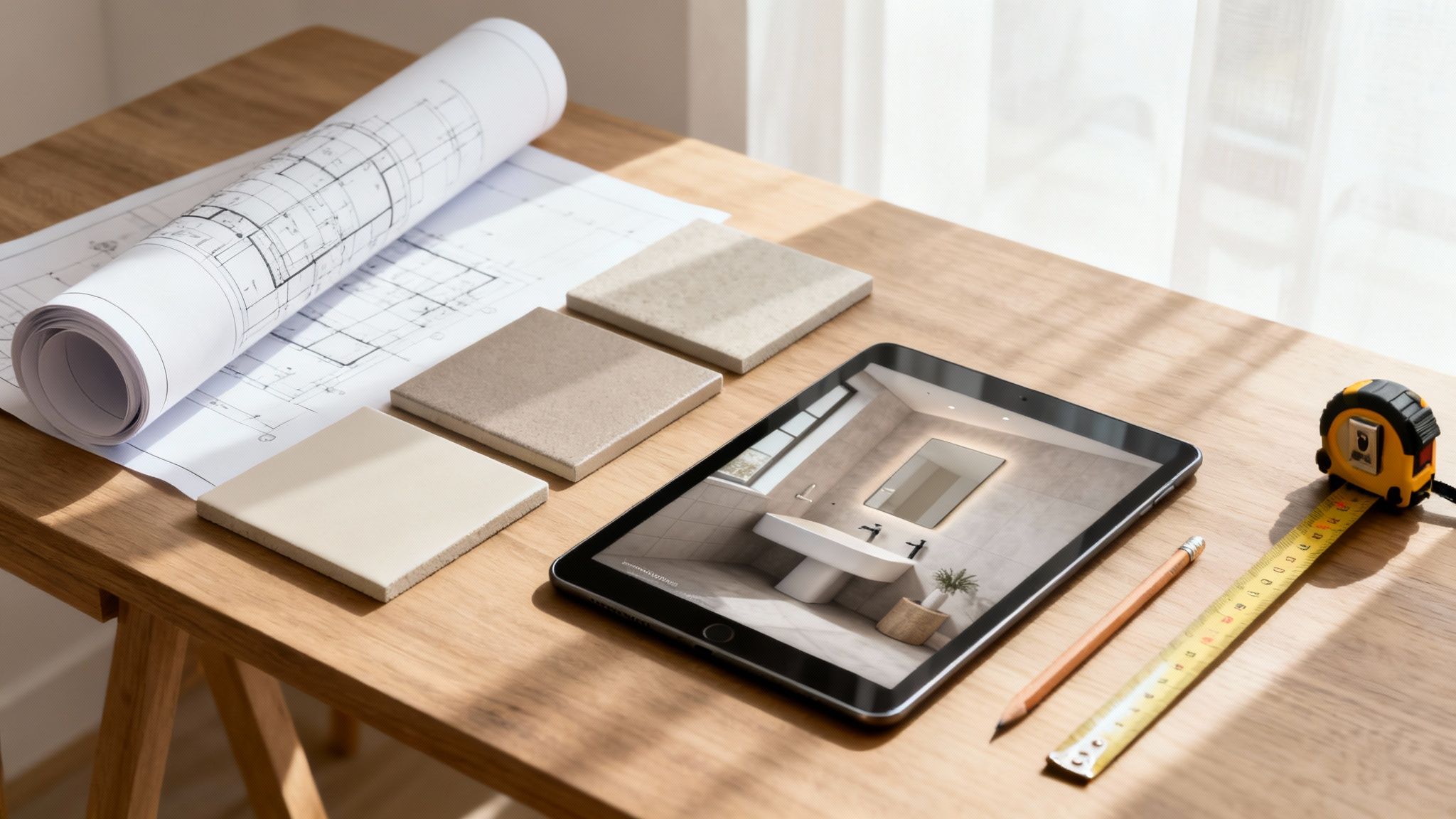
The very first thing to nail down is why you're renovating. Is it purely for looks, to finally get rid of those 80s tiles? Are you trying to create a more functional layout for a growing family? Or, for many on rural properties, is the goal to improve water efficiency and durability against the harsh climate? Your answer will shape the entire project.
Nailing Down Your Vision and Scope
With your main goals sorted, it’s time to flesh out the project's scope. Think of this as your detailed wishlist. This is the fun part where you get to gather inspiration from magazines, Pinterest, and local showrooms.
To get a clearer picture of how your ideas will come together, you might want to play around with modern AI bathroom design tools. These can help you visualise different layouts, colour schemes, and fixtures, giving you the confidence to lock in your choices before a single tile is pulled up.
A few key questions to ask yourself at this stage are:
- Are we moving things around? Keeping the toilet, shower, and vanity in their current spots is the most budget-friendly option. Shifting plumbing points adds significant cost and complexity.
- What new fixtures are on the list? This covers everything from the big-ticket items like a freestanding tub down to the tapware, lighting, and a good-quality exhaust fan.
- How can we get more storage? Think about a bigger vanity, a recessed shower niche, or a mirrored cabinet to keep clutter at bay.
Having a clearly defined scope from the get-go is your best defence against "scope creep"—that all-too-common problem where a project slowly expands, taking your budget with it.
Setting a Realistic Budget
Now for the brass tacks: the budget. It’s easy to get caught up in the cost of tiles and taps, but a realistic budget has to cover everything—labour, all materials, fixtures, and a buffer for the unexpected.
Here in the Tamworth region, the average cost for a full bathroom renovation has climbed. As of June 2023, homeowners were looking at around $26,000 for a complete overhaul, a noticeable jump from the $21,000 average just a few years prior. This reflects the rising costs of both materials and skilled labour in our area.
To help you see where the money goes, here's a typical breakdown.
Typical Tamworth Bathroom Renovation Budget Allocation
This table shows how a standard renovation budget is typically distributed across the different components of the project.
| Renovation Component | Estimated Percentage of Total Budget |
|---|---|
| Labour & Installation | 40-50% |
| Waterproofing | 2-3% |
| Tiling (Labour & Materials) | 15-20% |
| Fixtures & Fittings | 15-20% |
| Vanity & Cabinetry | 10-15% |
| Electrical & Plumbing | 5-10% |
Keep in mind that these are just estimates. The final costs will depend on the size of your bathroom, the quality of your selections, and the complexity of the work involved.
One non-negotiable part of any renovation budget is the contingency fund. For older homes, and especially for rural farmhouses, we can't stress this enough: set aside 15-20% of your total budget for surprises. You just never know what you'll find behind the walls—from hidden water damage to old, non-compliant wiring.
This bit of financial foresight ensures that a surprise discovery doesn’t bring your project to a grinding halt. Working with an experienced https://awesim.au/bathroom-builder/ is the best way to get a detailed, accurate quote and expert advice on where to best invest your money for a result that lasts.
Navigating Council Approvals and Building Standards
Getting your head around the local rules is the foundation of any successful bathroom renovation in the Tamworth region. It can feel like a maze of paperwork, but understanding council requirements and Australian Standards is what makes the difference between a professional, long-lasting job and a project that causes massive headaches later on.
Try to think of these regulations less like red tape and more like a quality guarantee for your home. They’re not there to slow you down; they’re in place to protect your family, your property, and your investment. For anyone in Tamworth and the surrounding rural areas, getting this part right from day one is the best way to avoid fines, insurance nightmares, or the gut-wrenching cost of tearing out and re-doing work that wasn't up to code.
Exempt Development vs. Development Application
The very first question we need to tackle is whether your renovation actually needs formal council approval. The good news is that in New South Wales, many minor bathroom upgrades are considered exempt development.
This means you can get started without lodging a full Development Application (DA), provided the work fits within a specific set of rules. As a general guide, if you're just doing a simple 'like-for-like' replacement—swapping out a vanity, toilet, or shower in the exact same spot without touching the walls—your job is probably exempt.
On the other hand, you'll almost certainly need to lodge a DA if your project involves:
- Structural Changes: Things like moving walls, making a window bigger, or changing the bathroom's overall footprint.
- External Impact: Any work that changes how the outside of your house looks or affects its weatherproofing.
- Heritage Properties: Renovations on a heritage-listed property always come with a much stricter set of approval steps.
Figuring all this out can be tricky, especially on rural properties with their own unique zoning or environmental overlays. For a deeper dive, check out our guide on building on rural land in NSW.
Key Australian Standards You Must Follow
Here’s a critical point: even if your renovation is an exempt development, all the work still has to comply with the National Construction Code (NCC) and several non-negotiable Australian Standards. This is standard practice for any licensed tradie worth their salt.
A compliant renovation isn't just about ticking boxes. It's about ensuring your new bathroom is safe and built to last. These standards are the industry benchmarks for genuine quality.
For any bathroom project, there are three standards that are absolutely essential:
- AS 3740 – Waterproofing of Domestic Wet Areas: This is the big one. It’s the bible for preventing leaks and water damage, which can be catastrophic. This standard sets out the exact requirements for applying waterproof membranes in showers, around baths, and across the floor.
- AS/NZS 3500 – Plumbing and Drainage: This covers everything to do with your pipes. It ensures your plumbing is installed correctly, the water pressure is right, and the drains work properly to stop leaks and blockages before they start.
- AS/NZS 3000 – Electrical Installations (Wiring Rules): All electrical work—from power points to lighting and heated towel rails—has to follow strict safety rules. This standard is especially important in a bathroom, specifying safe distances for electrical fittings from water sources to prevent any risk of electric shock.
When you work with a licensed and insured builder, you're not just getting a new bathroom; you're getting the assurance that every single tradesperson on site is working to these critical standards. That’s real peace of mind.
The Logistics of Renovating in the Bush: Overcoming the Distance
Renovating a bathroom on a farm or station outside Tamworth comes with a unique set of hurdles you just don't find in town. The sheer distance, the corrugated dirt roads, the sprawling properties—it can all conspire to turn what should be a straightforward job into a logistical nightmare. For many out here, this is the biggest thing stopping them from even starting.
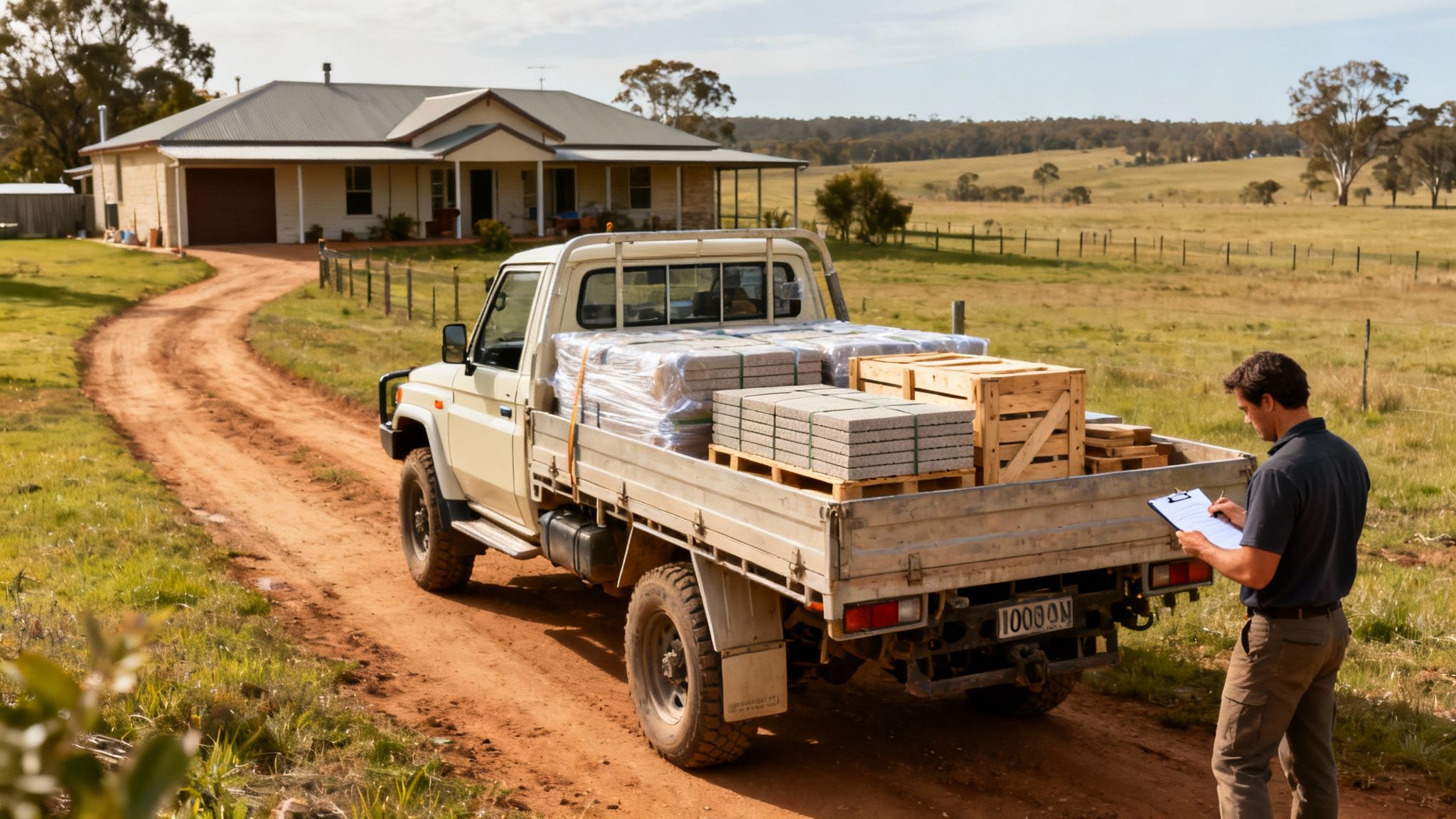
We've spent years figuring out how to solve this exact problem. We learned early on that a successful remote project isn’t just about the tools and the trade skills; it’s about mastering the entire supply chain. That takes a lot more than a good ute and a can-do attitude—it demands serious planning and the right gear. To service the most remote properties around New South Wales, we have a 10-tonne 4×4 truck to bring in materials and supplies. This allows us to bring in labour, materials, and equipment where and when it's needed the most.
Our whole operation is built to handle the specific challenges of rural New South Wales, ensuring your property’s location is never a barrier to getting a top-quality renovation.
Our Mobile Base Camp: The 10-Tonne 4×4 Truck
The absolute linchpin of our remote work is our custom-built, 10-tonne 4×4 truck. This isn't your average delivery van. It’s a beast, an all-terrain workhorse designed to handle everything from washboard roads and creek crossings to muddy farm tracks. It's essentially a mobile workshop and warehouse, all in one.
This truck lets us leap over the single biggest hurdle in remote renovations: getting everything and everyone to your site, on time and in one piece.
Your postcode shouldn't limit the quality of your home. We've invested in our logistics so we can bring the same standard of work to a cattle station hours from anywhere as we do to a house in the middle of Tamworth.
With this setup, we can haul absolutely everything needed for your Tamworth bathroom renovations right to your door. That self-sufficiency is what makes a smooth, hassle-free remote build possible.
What Our Heavy-Duty Truck Brings to Your Property
Having this kind of capacity completely changes the game for a remote renovation. Instead of being at the mercy of couriers and suppliers who might not even service your area, we take full control of the entire process.
- All Your Materials in One Go: We load up everything from delicate tiles and heavy vanities to bags of adhesive, timber, and waterproofing gear. This puts an end to the frustrating delays that happen when one crucial delivery doesn't show up.
- The Right Tools for the Job: The truck is packed with all the specialised equipment we need, like tile saws, demolition tools, and even generators if site power is an issue. We arrive ready to work, not to make trips back to town for a tool we forgot.
- The Team Arrives Together: Most importantly, it gets our skilled team to you efficiently. We can bring multiple tradespeople out for consolidated work blocks, which means we get more done in less time and cause far less disruption to your life.
By bringing the labour, materials, and equipment all at once, we transform what could be weeks of logistical chaos into a predictable, well-oiled project.
Kissing Common Rural Reno Headaches Goodbye
The real-world benefits of this system are huge. It directly solves the everyday frustrations that can completely derail a project on a rural property.
Think about it. A standard supplier might refuse to drive down a 5km unsealed driveway, leaving you to figure out how to get your new bathtub from the front gate to the house. Our 4×4 truck handles those tracks without a second thought. Trying to get a plumber, electrician, and tiler to show up on the same day when they're all travelling hours from different towns is next to impossible. We bring our core team together, ensuring no one is standing around waiting for someone else to finish.
This integrated approach means we’re more than just builders; we’re expert project managers who are properly equipped for the unique challenges of building in the bush. It's how we ensure your Tamworth bathroom renovations project runs smoothly, stays on budget, and is built to last—no matter how far off the beaten track you call home.
Picking Materials That Can Handle the NSW Climate
A bathroom out here in rural New South Wales has a much tougher life than one in the city. It’s not just dealing with the usual steam from a hot shower. It’s a constant battle against massive temperature swings, that fine red dust that gets into everything, and bore water that can be incredibly hard on your fixtures.
Choosing the right materials isn't just about what looks good—it's a practical decision, a long-term investment in your home. We're talking about picking finishes, fixtures, and surfaces that are genuinely built to withstand the unique pressures of life on the land. This is how you make sure your new bathroom doesn't just look great when we finish, but stays that way for years to come, no matter what the bush throws at it.
Walls and Floors: Your First Line of Defence
When it comes to the surfaces that make up most of your bathroom, you want something bulletproof. Your floor and wall coverings are the backbone of the room's durability, so they need to handle moisture, temperature changes, and a good scrub without any fuss.
Porcelain tiles are, without a doubt, one of the best choices you can make for flooring in a rural home. They're fired at much higher temperatures than standard ceramic tiles, which makes them incredibly dense and less porous. With a water absorption rate of less than 0.5%, they barely let any moisture in. That density also makes them seriously tough and far less likely to chip or crack under pressure.
For the walls, especially inside the shower, think about using large-format porcelain tiles or even composite wall panels. Fewer grout lines mean fewer places for mould and grime to build up. It makes cleaning a breeze and gives the room a clean, modern look that won't date.
Choosing the right materials from the very start is the single most effective way to future-proof your bathroom. It’s about building a space that truly works for your lifestyle and your environment, not just one that follows a fleeting trend.
This focus on tough, fit-for-purpose materials is at the heart of any successful Tamworth bathroom renovation, guaranteeing a result that really does stand the test of time.
Vanities and Taps That Won’t Quit
The things you touch every day—your vanity and taps—need to be especially tough. A vanity on a rural property has to cope with more than just humidity; it needs to stand up to that fine dust that inevitably creeps in and be simple to wipe down.
Look for vanities built from high-moisture-resistant (HMR) particleboard or quality plywood, finished with something durable like a two-pack polyurethane or a high-end laminate. These surfaces are non-porous and strong, so they won't swell in the humidity or scratch easily with daily use.
Choosing the right tapware is just as crucial, particularly if you're on bore water. The high mineral content in untreated water can lead to ugly calcium buildup and will eat away at standard chrome finishes over time. To get around this, we recommend looking at tougher finishes:
- PVD (Physical Vapour Deposition): Finishes like brushed nickel, gunmetal, or brass are exceptionally hard-wearing and resistant to scratching and tarnishing.
- Matte Black Electroplated Finishes: A quality electroplated finish provides a durable coating that stands up well against mineral deposits.
- 316 Marine Grade Stainless Steel: This is the top-tier choice for corrosion resistance. It offers unmatched longevity when dealing with harsh water conditions.
Investing in quality fixtures from the get-go helps you avoid the common problems we often see in older farm bathrooms. We dealt with exactly these issues in our case study on a complete bathroom renovation for a NSW cattle station.
To help you weigh the options, here's a quick comparison of materials we often recommend for rural NSW bathrooms.
Material Durability Comparison for Rural NSW Bathrooms
| Material Type | Pros for Rural Climate | Cons/Considerations | Best Use Case |
|---|---|---|---|
| Porcelain Tiles | Extremely durable, water absorption <0.5%, resists scratches and stains, easy to clean. | Can be harder and more expensive to install than ceramic. Grout lines need sealing. | Floors, shower walls, and general wall tiling. |
| Composite Wall Panels | No grout lines, 100% waterproof, very low maintenance, quick to install. | Higher upfront cost than tiles, limited design options compared to tiles. | Shower enclosures and wet area walls. |
| HMR Cabinetry | Resists swelling and damage from high humidity and moisture. | Not fully waterproof; needs a durable surface finish like two-pack or laminate. | Vanities and storage cabinets. |
| PVD/Electroplated Tapware | Highly resistant to scratching, tarnishing, and corrosion from hard water. | Can be more expensive than standard chrome. Quality varies between manufacturers. | Taps, showerheads, and accessories. |
| 316 Stainless Steel | The ultimate in corrosion resistance, ideal for very hard or saline water. | Higher price point, often has a more industrial look which might not suit all styles. | Tapware and fixtures in extreme conditions. |
Ultimately, selecting materials that are proven to perform in our local climate is the smartest way to protect your investment and ensure your new bathroom serves you well for decades.
Smart Investments for Real Long-Term Value
While picking the right materials is a huge piece of the puzzle, you also have to think about the overall cost and the return you're getting on your investment. Let's be honest—renovations aren't getting any cheaper, which makes every choice you make even more important.
Looking at Australia-wide data for 2025, the average cost for a bathroom renovation has climbed to around $26,747. This is being driven by the rising price of materials, higher labour rates, and more people opting for premium features.
It's why most experts now recommend setting aside an extra 10–20% of your budget as a contingency fund. It’s just smart planning to cover those little surprises you can uncover in older homes. This financial reality really underlines the importance of choosing durable, quality materials from the start. It helps you avoid the pain and expense of having to replace things down the line, ensuring your renovation adds genuine, lasting value to your property.
Understanding Your Project Timeline and Construction
Knowing what to expect during the construction phase is hands down the best way to reduce the stress that comes with any renovation. A well-planned timeline turns what seems like a complex job into a series of clear, manageable steps. It gives you confidence and clarity, right from the first day of demolition to the final handover.
A proper bathroom renovation isn’t just a random sequence of events; it's a carefully orchestrated process. Each trade—from the plumber and sparky to the tiler and painter—has to come in at a specific time. Getting this order right is critical for a high-quality, compliant, and durable result, preventing costly mistakes and frustrating delays.
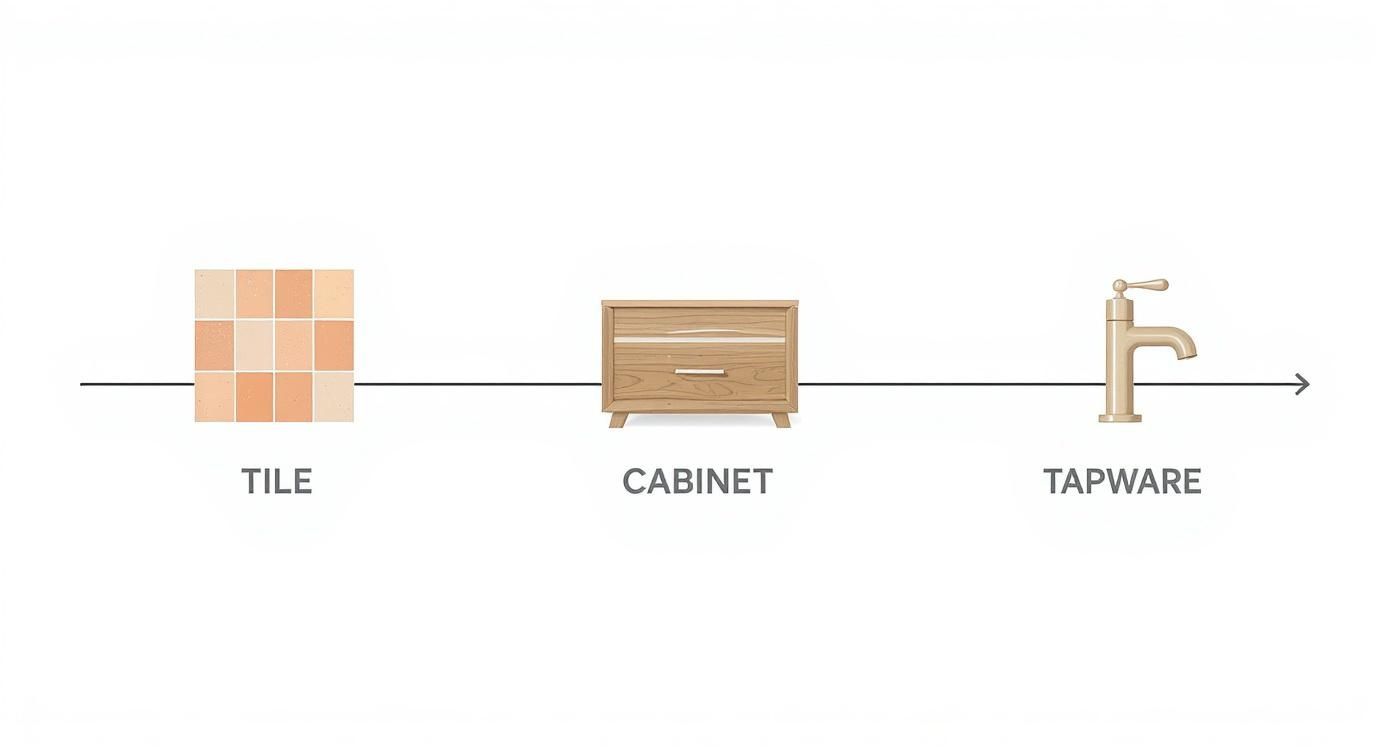
Getting key decisions like tiles, vanities, and tapware sorted early on is one of the most important things you can do. It helps lock in the timeline and stops the whole project from grinding to a halt while we wait for materials to arrive.
The Week-by-Week Construction Sequence
While every project has its own quirks, a standard full bathroom renovation generally follows a predictable rhythm over several weeks. Here’s a typical timeline to give you an idea of what happens and when.
Week 1: Demolition and Rough-In
This is where the real action begins. We start by carefully demolishing the old bathroom—pulling out tiles, fixtures, and cabinetry. Once the space is stripped back to the bare frame, our plumbers and electricians get in to complete the "rough-in," which means shifting pipes and wiring to their new spots before the walls are closed up again.
Week 2: Sheeting, Plastering, and Waterproofing
With the new services in place, we get the new wall and ceiling linings up. This is followed by plastering and sanding to create those perfect, smooth surfaces ready for tiling and painting. Then comes the most critical step of all: applying the waterproof membrane to the floor and shower walls, done strictly by the book according to Australian Standard AS 3740.
A renovation timeline is more than just a schedule; it’s our commitment to transparency. Knowing exactly what’s happening each week means you’re always in the loop and can see real, consistent progress towards your new bathroom.
Week 3: Tiling
After the waterproofing has had enough time to cure properly, our tilers get to work. This is the stage where your bathroom’s personality really starts to shine through as the floor and wall tiles are meticulously laid. It’s a job that requires precision and patience, as it sets the visual foundation for the entire room.
Final Fit-Out and Handover
The last couple of weeks are all about bringing the elements together and adding the finishing touches that make the space both functional and beautiful. This is often the most exciting part of any Tamworth bathroom renovations project, as you see your vision become a reality.
Week 4: Grouting and Fit-Out
The tiling is finished off with grouting and sealing. Now, we can start installing the big items: the vanity, toilet, shower screen, and bath. Our electrician returns to connect lights, power points, and the exhaust fan, while the plumber hooks up all the tapware and drainage.
Week 5: Painting and Final Touches
The last major step is giving the room a fresh coat of paint. Once that's dry, we install the final details like mirrors, towel rails, and other accessories. We finish with a thorough site clean-up and a final inspection to make sure every little detail meets our high standards. Once you’re completely happy, we officially hand over your beautiful new bathroom.
Recent Australian research shows just how much we love to renovate, with bathroom projects costing around $19,000 on average. While timelines can vary, a simple cosmetic upgrade might only take four weeks, but more substantial renovations can easily stretch to five months or more. It all depends on the scale and complexity of the job. You can dig deeper into these trends in the full home renovation research findings.
Frequently Asked Questions About Bathroom Renovations
Taking on a bathroom renovation, especially when you're out on a rural property, is bound to stir up a lot of questions. From the nitty-gritty logistics to the budget, getting straight answers is the first step to feeling confident. We’ve put together some of the most common queries we get from homeowners across Tamworth and regional New South Wales to help you get started on the right foot.
How Do You Manage Renovations on Remote Properties?
This is the big one, and it’s a question we love to answer because it’s where we really shine. We’re specialists in remote and rural projects, and our whole business is built around solving the challenges of distance. Our secret weapon? A custom-built 10-tonne 4×4 truck.
This beast isn’t just for getting from A to B; it’s our mobile workshop and command centre all in one. It’s built to handle rough tracks, creek crossings, and those long, winding dirt driveways. This means we can bring every single thing we need—labour, materials, and equipment—directly to your doorstep. That self-sufficiency is what makes a smooth renovation possible, no matter how far out you are.
We plan the logistics of every remote job down to the last detail. Often, this means scheduling our tradies to stay on-site for a block of time, which cuts down on endless travel and keeps your costs in check. It’s this kind of planning that ensures your project runs like clockwork, whether you’re on a small acreage or a sprawling station. We handle it all, from picking up the tiles to hauling away the rubbish at the end.
What Are the Biggest Hidden Costs in a Rural Renovation?
With older farmhouses and rural properties, the most common surprises almost always pop up after we’ve started demolition. You just can’t see what’s lurking behind the walls until they’re open, and old homes can hide some real doozies.
The usual culprits we come across are:
- Serious Water or Termite Damage: Decades of a slow leak or a termite feast can completely rot out timber wall frames, turning a simple job into a structural repair.
- Dodgy Old Plumbing or Wiring: It's common to find old, non-compliant services that simply have to be ripped out and replaced to meet current Australian Standards.
- Asbestos: If your home was built before the late 1980s, there’s a chance asbestos is hiding in wall sheeting or old vinyl flooring. This requires licensed specialists to remove it safely, which adds to the cost.
- Hard Water Woes: The quality of your water can’t be ignored. Hard bore water, with its high mineral content, can destroy tapware. We might need to look at installing a water softener or choosing specific fittings that can handle the tough conditions.
Because these issues are so common in older rural homes, we always recommend setting aside a contingency fund of 15-20% of your total project budget. Think of it as your project’s insurance policy—it’s the best way to make sure a surprise doesn’t throw your entire timeline and budget off track.
How Long Will I Be Without a Bathroom?
This really depends on how big the job is. For a standard, full-gut renovation—where we strip the room right back to the frame and start over—you can expect the bathroom to be out of action for around 3 to 5 weeks.
That timeframe gives us the breathing room to do things properly. It covers demolition, any structural changes, running new pipes and wires, the critical multi-day waterproofing and drying process, tiling, and then finally installing all your new fixtures and fittings.
We know what a massive pain this is, especially if it’s the only bathroom in the house. Our team works as efficiently as humanly possible to keep this downtime to a minimum. For properties with a bit more space, we can even talk about setting up temporary bathroom and shower facilities to make life easier. Before a hammer is swung, we’ll give you a detailed schedule so you know exactly what to expect and for how long.
Is a Bathroom Renovation a Good Investment?
Without a doubt. A well-done bathroom renovation is still one of the smartest ways to add real, lasting value to your property. In the Tamworth real estate market, a modern, functional, and tough-as-nails bathroom is a huge drawcard that can make your home stand out from the crowd.
But it’s not just about the sale price. The immediate improvement to your day-to-day life is priceless. On top of that, you’ll see a solid return on investment. Study after study has shown that homeowners typically get back a huge chunk of what they spend on a bathroom when it comes time to sell.
This is especially true for rural homesteads. Bringing a tired, old bathroom into the 21st century can lift the appeal and value of the entire property. It turns a potential negative into a standout feature, making it a very savvy move for the long run. A quality Tamworth bathroom renovations project is an investment in your lifestyle now and your property's value later.
Ready to transform your rural or Tamworth bathroom with a team that’s built for the job? Contact Awesim Building Contractors today to talk about your project and see how we make beautiful renovations happen, no matter how far off the beaten track you are.